this post was submitted on 30 Dec 2025
87 points (100.0% liked)
HistoryPhotos
833 readers
258 users here now
HistoryPhotos is for photographs (or, if it can be found, film) of the past, recent or distant! Give us a little snapshot of history!
Rules
- Be respectful and inclusive.
- No harassment, hate speech, or trolling.
- Foster a continuous learning environment.
- No genocide or atrocity denialism.
Related Communities:
- !militaryporn@lemmy.world
- !forgottenweapons@lemmy.world
- !historymusic@quokk.au
- !historygallery@quokk.au
- !historymemes@piefed.social
- !historyruins@piefed.social
- !historyart@piefed.social
- !historyartifacts@piefed.social
- !historyphotos@piefed.social
founded 6 months ago
MODERATORS
you are viewing a single comment's thread
view the rest of the comments
view the rest of the comments
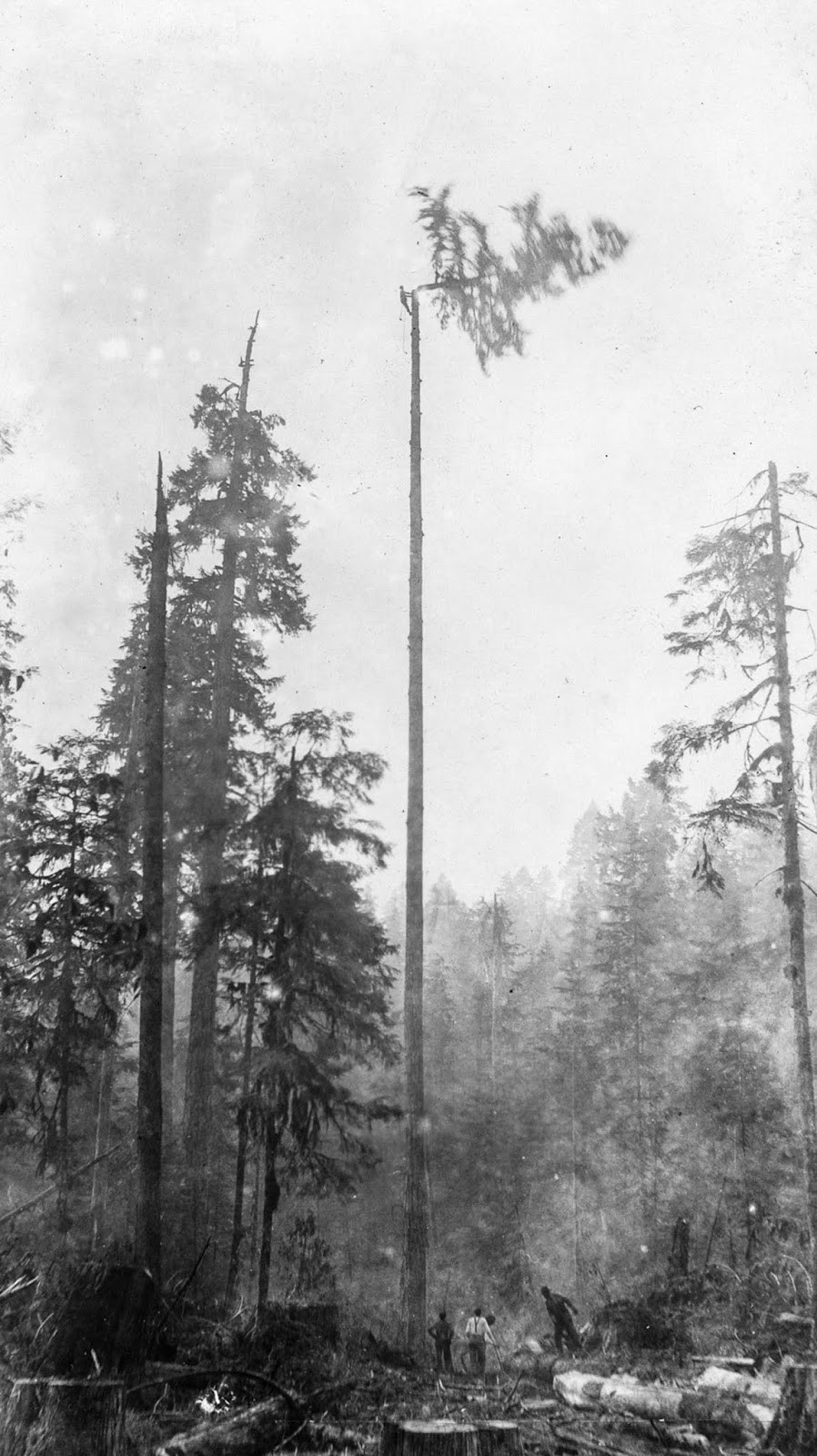
Why not just fell it, then cut it in to pieces afterwards? Wouldn't that be safer and easier work?
If the tree falls onto an adjacent tree and gets hung up, then you have an unstable and dangerous situation. You can try to cut your target tree free, but when it breaks loose it might come crashing down in unexpected ways.
Good points.
There's more than a few videos on YT in which we can see folks who completely underestimated or just whiffed upon the amount of potential force involved in lumber-resting-on-lumber.
Might be something so tall and large is more dangerous - or ruins in some way the lumber.
Don't know. I'm just happy I never had to do much of it. When the machines came along there were fewer tree's like that left. Its all one big plantation around here now. The old growth tree's have been replaced by fast growing pine. No more lumberjacks and no more deer hunters. Just machine operators and deer farmers left.
They would normally do that, especially in those days. They topped trees to use them for rigging lines to help skid felled trees to rail lines, water or the mill.