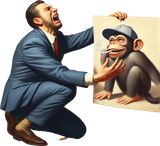
According to recent reports by Fortune and Wall Street Journal, and court testimonies, the 48-year-old entrepreneur aims to father at least 20 US-born kids specifically to inherit his video game fortune. Bo wants to leverage US-based surrogacy to bypass domestic birth restrictions and secure American-born heirs.
Citing Xu’s video game company, a Wall Street Journal reported that Xu has more than 100 children born through surrogates based in the US, and has been allegedly seeking “50 high-quality sons,” as per accounts linked to Xu on Chinese microblogging website Weibo. One of the accounts also claim that according to Xu, “having more children can solve all problems.”

Calling monopoly capitalism "techno-feudalism" only serves to whitewash capitalism. What we are seeing is capitalism returning to form, now that the last shreds of Cold War pretense that capitalism can be humane and lawful have been shed. Haute bourgeoisie have always been this weird, they just used to have better PR.
Yeah I read Vaurofakis's book, he basically just described normal rent seeking in the monopoly stage of capitalism but pretended like it was a novel break from all the capitalism that came before it. As if railroads weren't just the datacenters of yesteryear.
The distinguishing feature of capitalism, in contrast with feudalism with banks, is that under capitalism there is a tradable promise of social mobility and a competition for the same top of the pyramid instead of inheritance of it.
The "free market" phase of capitalism is just an early, and pretty brief stage of capitalist development. For most of its life cycle afterward, the promise of social mobility is a scam.
The Cold War was a state of exception in which capitalism temporarily distorted itself to survive a strong international labor movement, embodied by the USSR; conditions favoring greater social mobility were tolerated as a concession then. Only the appearance of another militant labor front on that scale has even the remotest chance of bending the capitalists that far ever again.
Even back in their time, Marx and Engles observed that capitalism's liberatory role was limited and short-lived, and that if it outlived its time, the result would be "the common ruin of the contending classes;" and the prosperity capitalism opens the way for could only be completed by the production mode to come: socialism.
This is exactly the kind of reasoning that "capitalism built your iphone" people use. Capitalism doesn't open the way for anything; human technology builds upon earlier human technology largely independently of who controls the profits and how.
It's not unambiguously liberatory compared to its coincidental historical predecessor in Northwest Eurasia, its full development is not a prerequisite for building socialism, and as you've acknowledged, it does have the ability to turn humans into permanent subordinates that are structurally stripped of virtually all consequential agency.
During the Industrial Revolution, neither the feudalists nor the socialists were prepared to build the social organization to make 'iphones'. Maybe there are timelines where they were, but in this one the feudalists lacked the incentive to drive change and the socialists had not matured to the point of making a USSR yet, and so the capitalists were able to capture the space. Socialists have certainly since demonstrated that they can spoof whatever parts of capitalism might have been needed, to transition out of feudalism directly, and it's only more so now with the availability of computers to solve distribution problems.
Something feudalists and monopolists have in common is that they have little reason to build or improve capital, they'd prefer to just collect rents on what there already is. As long as there are any socialist or industrial capitalist powers on earth, they will have the advantage of the actual production and reproduction of capital, which shows sooner or later.
To address the present state of affairs more specifically, it seems a matter of time before the erratic decline of the US drives countries to abandon or weaken copyright treaties made with it. All my digital rental properties gone!