Programming

26405 readers
73 users here now

Welcome to the main community in programming.dev! Feel free to post anything relating to programming here!

Cross posting is strongly encouraged in the instance. If you feel your post or another person's post makes sense in another community cross post into it.

Hope you enjoy the instance!

Rules

Rules

  • Follow the programming.dev instance rules
  • Keep content related to programming in some way
  • If you're posting long videos try to add in some form of tldr for those who don't want to watch videos

Wormhole

Follow the wormhole through a path of communities !webdev@programming.dev


founded 2 years ago
MODERATORS
1251


Lots of new features being added.

But the most interesting part is that they seem to want to change the configuration format from JS to using a CSS.

1252
 
 
1253
1254


cross-posted from: https://lemmy.ml/post/23703703

Hey all.

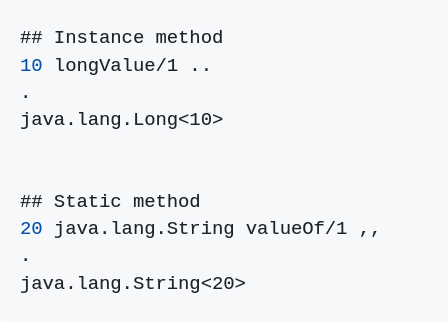
First off, bjForth is a Forth written from the ground up with modern Java and its execution model is largely influenced by that of JONESFORTH.

Currently I'm working on Java inter-op and would like to ask for your opinions/experience on semantics and syntax.

The relevant GitHub issue.

Thanks in advance.

1255


It was merged after they where rightfully ridiculed by the community.

The awful response to the backlash by matwojo really takes the cake:

I've learned today that you are sensitive to ensuring human readability over any concerns in regard to AI consumption

1256


Hi all, I have been pretty frustrated with how I had to bring together bunch of different tools together, so I built a CLI tool that brings together data ingestion, data transformation using SQL and Python and data quality in a single tool called Bruin:

https://github.com/bruin-data/bruin

Bruin is written in Golang, and has quite a few features that makes it a daily driver:

it can ingest data from many different sources using ingestr it can run SQL & Python transformations with built-in materialization & Jinja templating it runs Python fully locally using the amazing uv, setting up isolated environments locally, mix and match Python versions even within the same pipeline it can run data quality checks against the data assets it has an open-source VS Code extension that can do things like syntax highlighting, lineage, and more. We had a small pool of beta testers for quite some time and I am really excited to launch Bruin CLI to the rest of the world and get feedback from you all. I know it is not often to build data tooling in Go but I believe we found ourselves in a nice spot in terms of features, speed, and stability.

Looking forward to hearing your feedback!

1257
1258
1259
1260


So basically I built a backend with some working endpoint and I built a React Frontend. I can run both things locally and I hosted the page on Cloudflare pages which is working. But now I’m wondering if that’s a good idea?

I have never done this before and I’m wondering if it’s secure enough to host the backend on some server and allow a CORS header to let the Frontend generate requests?

The alternative would be to host Frontend and backend on a VPS and then route my domain that I bought on Cloudflare there, but then I’m thinking that in case my Frontend is insecure somehow the whole instance would be compromised, no?

I hope this is the right platform to ask as I’m pretty new here.

1261
-24
submitted 1 year ago* (last edited 1 year ago) by LabPlot@floss.social to c/programming@programming.dev


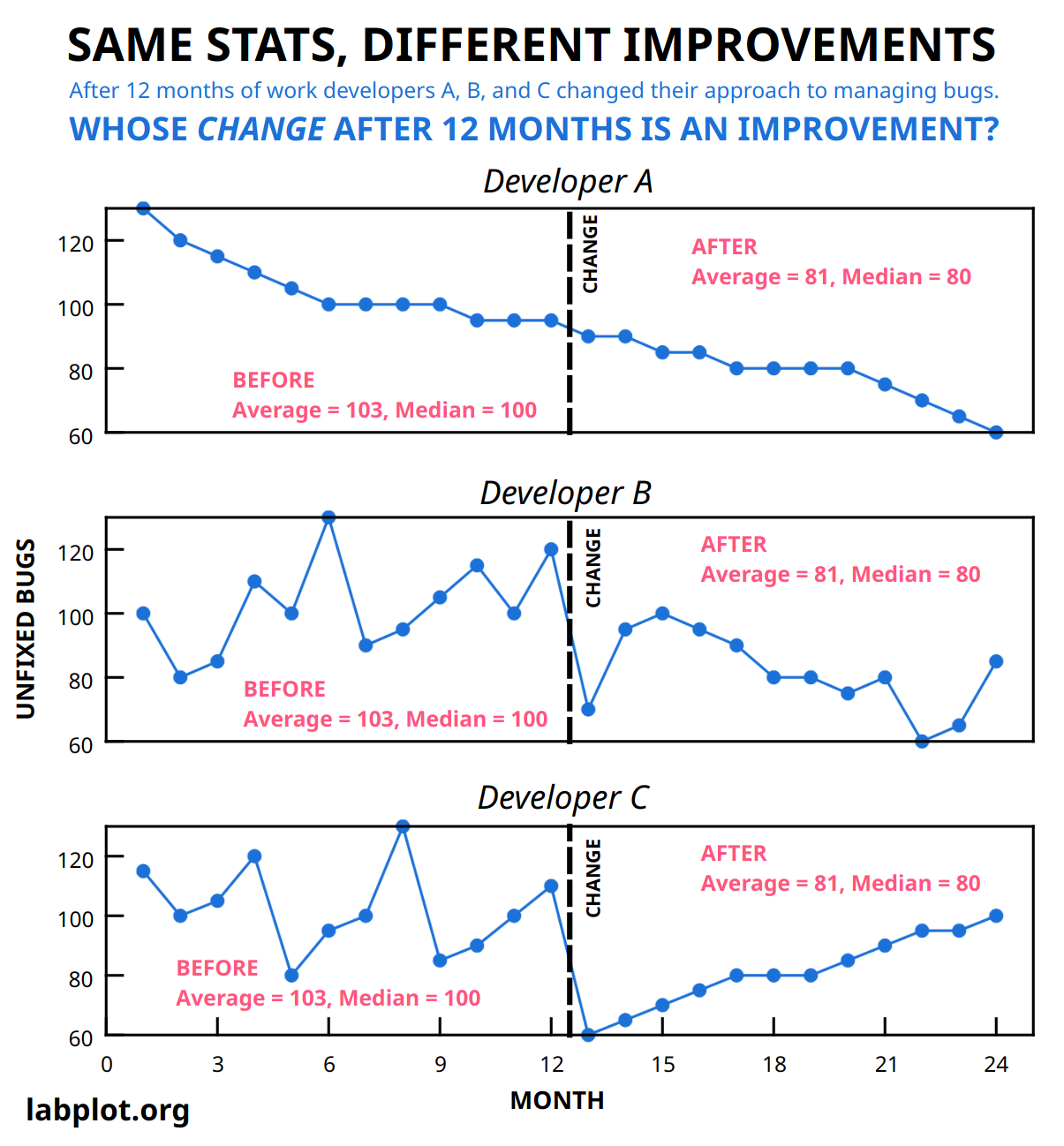
SAME STATS, DIFFERENT IMPROVEMENTS

@programming

After 12 months of managing #bugs, #developers A, B, and C changed their approach.

Assuming a steady flow of bugs of the same kind, whose change is an improvement❓

Boosts appreciated! 🙂 :boost_love:

More generally, the problem is domain independent.

#OpenSource #FreeSoftware #FOSS #FLOSS #Software #Tech #Development #Engineering #Business #Improvement #Software #Programming #Python #InfoSec #Statistics #Linux
1262
1263
10
submitted 1 year ago* (last edited 1 year ago) by xoron@programming.dev to c/programming@programming.dev


i wanted to see if we can create asynchronous bottom-up state management, we have the basics to put together a state management system. State management solutions in apps typically have ways to persist data.

I wanted to explore if there are any benefits to define and manage state in webcomponents with a bottom-up approach. I wanted to see if it could give a greater flexibility in developing a UI and not having to worry about persisted storage management.

https://positive-intentions.com/blog/bottom-up-storage

1264
1265
1266


Howdy Everyone. I'm 1hitsong. I'm on the Jellyfin team and programmed things such as the OSD, music support, and playlist support in the Jellyfin Roku client.

I've just started a series where I share things I've learned and helpful code I've created from programming Roku channels. It's very early - only 2 posts so far, but I hope you enjoy.

1267
1268
1269
1270


Posting this as it deeply resonates with me

1271
1272


cross-posted from: https://programming.dev/post/22672085

Earlier this year I gave this talk which is about how programmers can get the most of the Fediverse, particularly for dotnet/MAUI developers - some of the killer features which are available and how to use them. The focus of the examples are with dotnet/MAUI, but these things would undoubtedly also be available for other languages/ecosystems, I was just using dotnet/MAUI to illustrate the underlying functionality available to us here. This recording would be good for anyone who isn't familiar with these features (maybe anyone you want to convince to come here, or just if you feel you don't know everything that is available).

The first part of the recording is a different talk about MAUI, and the first link below will be where my talk starts, and then some more links for other key points, if you just want to see the parts you don't already know about.

Following these recording links will be links to resources that I talked about...

30:06 start/MAUI Lemmy community

31:31 overview of talk

33:20 what is the Fediverse?

38:15 Lemmy

42:08 Mastodon

43:40 Mastodon dotnet.social

46:33 Mastodon Local timeline

48:01 Mastodon Federated timeline

60:11 Mastodon Lists

56:28 Mastodon hashtags

56:25 Mastodon pinned posts

1:00:20 follow Twitter accounts from Mastodon

1:01:51 how to use Lemmy from Mastodon

1:07:25 Mastodon's killer feature for dev's - github bots

1:10:47 Guide to Mastodon for .NET and MAUI people

1:13:15 Pixelfed, UI comparison

1:15:41 Maho Pacheco's repo (federate static website, etc.)

1:17:52 Microsoft DevBlogs

Links to resources from this talk

Creating MAUI UI's in C#

fediverse.party

.NET MAUI @ programming.dev

.NET MAUI Mastodon bot

.NET Mastodon bot

@SmartmanApps@dotnet.social

Join dotnet.social

Join dotnet.social and auto-follow @SmartmanApps@dotnet.social

How to follow multiple hashtags in a column

@Microsoft@bird.makeup

Github bots by Carlos Sanchez of Microsoft...

Dotnet github bot

MAUI github bot

MastodonGitHubBot repo

Guide to Mastodon for dotNetMAUI and dotNet peeps

Github repo of Maho Paheco of Microsoft

Maho's guide to implement ActivityPub in a static site (or any website)

Follow Maho's blog from Mastodon (or almost any Fediverse service!)

Follow Microsoft DevBlogs (federated thanks to Maho)

1273
1274


edit: title

This book is efficient and answered questions the moment as I imagined asking, but to see its unique coolness -- we could do with some context on its literary genus.

Have you ever seen Kate Gregory's talk: Teach C++ not C?

The idea is, C++ has different habits than C, even if C++ is a "99% superset of C". But beginners can understand C++ just fine without learning C first. It's more ergonomic to learn about std::vector before using raw arrays and pointers, as Gregory puts it.

So, why do we teach vim before neovim, or before a well-regarded distribution like LazyVim? Because vim is "purer", installed everywhere? Because we learned it that way? What if we taught LazyVim/Neovim before raw vim, a la C++ before C? Modern features and ergonomics will keep a beginner listening -- surely you don't disagree.

Anyway, this book is that efficient and direct path to LazyVim. It covers the things that StackOverflow won't be the most useful pedagogues for (e.g. "what are those tab things on top of my window? How do I use the explorer thingamajig on the left -- should I even care about it, anyway?"). Plus, it keeps LazyVim as a first-class learning target, providing its mnemonics and habits alongside the typical vim stuff you'd normally learn with vimtutor.

I like this kind of learning :) good for the on-the-fencers like me

1275


Free tutorial

view more: ‹ prev next ›