Latin American Publications!

147 readers
25 users here now

A community for Latin American publications.

NOTE: All the publications in this feed are Latin American in origin; that does not mean they only report on Latin American news.

founded 6 months ago
MODERATORS
26


Every day, President Claudia Sheinbaum gives a morning presidential press conference and Mexico Solidarity Media posts English language summaries, translated by Mexico Solidarity’s Pedro Gellert. Previous press conference summaries are available here.

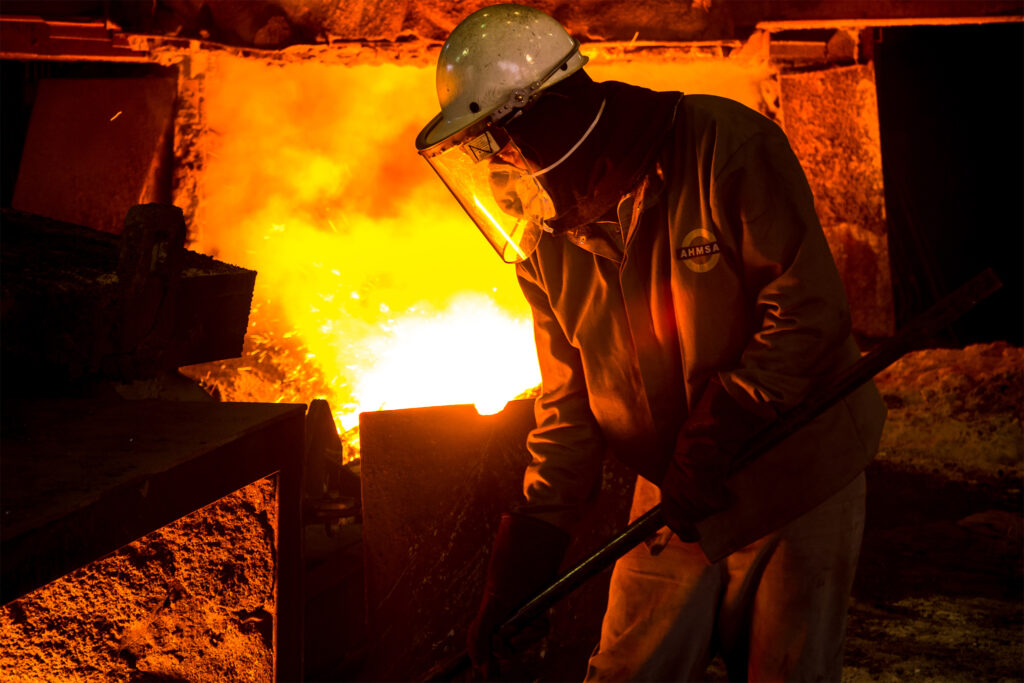
Mexican Steel: Historic Agreement to Produce More and Reduce DependencePresident Claudia Sheinbaum presided over the signing of the Agreement for the Promotion of the Mexican Steel Industry, together with representatives from the steel, housing, and construction sectors. The agreement seeks to prioritize domestic steel in public work projects, replace imports, and boost employment. Sheinbaum defined it as follows: “Perhaps an agreement like this has never been signed before; it is historic—an agreement to promote the national steel industry.”

The President summarized it as “an agreement that benefits everyone… it benefits the people of Mexico, workers, companies, and the country,” based on a central principle, namely, what is produced in Mexico is also consumed in Mexico.

State and Industry: Investment, Employment, and Productive SovereigntyAnti-Corruption and Good Governance Minister Raquel Buenrostro explained that the agreement coordinates public procurement processes, infrastructure financing, and industrial policy to substitute imports, ensuring supply, quality, and fair prices. From the industry’s perspective, it was highlighted that this alliance underpins nearly 90,000 direct jobs.

This consolidates a core principle of the Fourth Transformation (4T): when the state and the productive sector work together, the national economy is strengthened, well-being is generated, and dependence on foreign sources is reduced.

Moral economy in action: diesel at 27 pesos to protect the peopleSheinbaum explained that the agreement to set diesel prices at 27 pesos (US$1.55) per liter is the result of a coordinated effort between Pemex, the Ministry of Energy, the Ministry of Finance, the gasoline sector, banks, and voucher companies. The President explained the process as follows: “We were able to get diesel to be sold at 27 pesos next week… we spoke with them and they all said, ‘Yes, we’ll join in to support the economy of Mexican families.’”

This is a decision that reflects the central principle of the FT: when the government coordinates and works with all sectors, agreements are reached that directly benefit the people and counter external pressures.

People’s income first: decent wages as the foundation of well-beingSheinbaum made it clear that more than taxes, what matters most is how much people earn. Today, Mexico is among the Latin American countries with the highest minimum wage, whereas during the neoliberal era it fell below the level in Haiti.

This change is due to a policy implemented by the López Obrador government. The minimum wage has increased by about 150% since 2018, thereby raising overall income as well. The logic of the 4T is clear: first, dignify work and strengthen income, because that is where true well-being begins.


The post People’s Mañanera April 29 appeared first on Mexico Solidarity Media.


From Mexico Solidarity Media via This RSS Feed.

27


This article by Gaspar Vela originally appeared in the April 29, 2026 edition of Milenio.

The steel purchases made by the Mexican government will be exclusively domestic or produced in the country, following the signing of an agreement announced by President Claudia Sheinbaum Pardo with the steel industry.

“It’s essentially what the government buys in relation to steel, whether it’s Mexican steel or steel produced in Mexico , that’s it in a nutshell… It’s an agreement that benefits everyone, that’s its virtue. It benefits the people of Mexico , the workers of the national steel industry, it benefits the companies, and it benefits the country,” she stated.

During the morning press conference from the National Palace, the president stated that the objective is to strengthen national production and strengthen supply chains in the Mexican economy, through Plan Mexico.

Therefore, “the issue is very important; it is a signing, perhaps a signing like this has never been done before, it is historic, of an agreement to promote the national steel industry,” he said.

The United States – the main importer of Mexican steel – maintains tariffs on steel and aluminum from Mexico.

“So this agreement linking the national steel industry and the government in its entirety to acquire what is produced in Mexico , well, it helps everyone and that obviously implies acceptance from everyone, when everyone benefits, then obviously everyone feels included,” he explained.

The Secretary of Infrastructure, Communications and Transportation ( SICT ), Jesús Esteva, highlighted that this year, the plan is to use more than one million tons of steel for bridges, schools and trains, which will translate into an approximate investment of 18 billion pesos.

Meanwhile, the Secretary of Anti-Corruption and Good Governance, Raquel Buenrostro, explained that the agreement consists of coordinating working groups between institutions to ensure results, business meetings between public buyers and steel companies, as well as incentives such as points and percentages to promote national content in public purchases.

“We need to coordinate the public and private sectors to establish how we reach supply agreements, to guarantee supply, quality, fair prices and therefore promote the industry, and finally also incentives to promote this type of contracting and also establish negotiation tables, both between the steel industry and the construction industry to also strengthen dialogue and promote national purchasing,” she said.

Public Private Partnerships (P3s)

“The other focus is on public-private partnerships and the financing of infrastructure projects. In terms of financing, we want both public-private and mixed investments to receive support and be given special consideration by development banks, so that the Mexican steel industry can be strengthened,” he added.

Buenrostro stated that the industry is committed to guaranteeing product quality, fair prices, and timely supply.

For his part, the Secretary of Economy, Marcelo Ebrard, highlighted that the Mexican steel industry is important for the autonomy and security of the Mexican production chain, since it is responsible for the production of inputs.

“So, the agreement being presented today, in essence, is that, in government purchases, by all government institutions, we must be very clear that the preference is to buy what is produced in Mexico,” he said. “It’s not just the price, it matters a lot where it’s made. Sometimes we don’t make everything, right? We have to import some things, but we have to make the effort to, first, see what we can do here in our country,” he pointed out.

According to Sheinbaum, Raquel Buenrostro will be in charge of ensuring that the announced commitment is fulfilled.

“In short, Raquel will be the guardian of the agreement’s fulfillment, and she also helped us draft the agreement,” Sheinbaum stated.

Who participated in the agreement?

Also participating in the Treasury Room at the National Palace were Marcelo Ebrard, Secretary of Economy, and Jesús Antonio Esteban Medina, Secretary of Infrastructure, Communications and Transportation (SICT).

Sheinbaum stated that the SICT will guarantee that all public works carried out by the Mexican government will use steel produced in the country.

Edgar Amador Zamora, Secretary of Finance and Public Credit (SHCP), as well as Luz Elena Gonzalez, Secretary of Energy (SENER) on behalf of Pemex and CFE, also participated.

Also in attendance were Mario Delgado, head of the SEP, “for the construction of schools”, Martín Batres, “who builds hospitals”, and Alejandro Encinas Nájera, Undersecretary for Anti-Corruption and Good Governance.

Also present were Luis Rosendo Gutiérrez , Undersecretary of Commerce of the Ministry of Economy , Andrés Lajous, head of the Federal Government’s Railway Transport Regulatory Agency , and Martí Batres Guadarrama, Director General of the Institute of Security and Social Services for State Workers (ISSSTE), “who builds hospitals.”

Sheinbaum also introduced Efraín Morales, director of CONAGUA, Víctor Rodríguez Padilla, director general of  PEMEX, and Emilia Esther Calleja, director general of the Federal Electricity Commission (CFE).

Also present were Cuitláhuac García Jiménez, general director of CENEGAS, and Octavio Romero, general director of Infonavit and coordinator of the Housing Construction for Well-being program. Altagracia Gómez, coordinator of the Regional Economic Development and Relocation Advisory Council, who serves as a link between government and the business sector, was also among the attendees.

Representing the steel industry, Sergio de la Maza Jiménez, president of the National Chamber of the Iron and Steel Industry, attended.

Finally, Carlos Ramírez Capó, president of the National Chamber of Housing Development and Promotion Industry, and Luis Méndez Jared, from the Mexican Chamber of the Construction Industry (CMIC), among other representatives of steel companies, were in attendance.

The post President Sheinbaum Presents Steel Industry Supports appeared first on Mexico Solidarity Media.


From Mexico Solidarity Media via This RSS Feed.

28


This article originally appeared in the April 28, 2026 edition of Milenio.

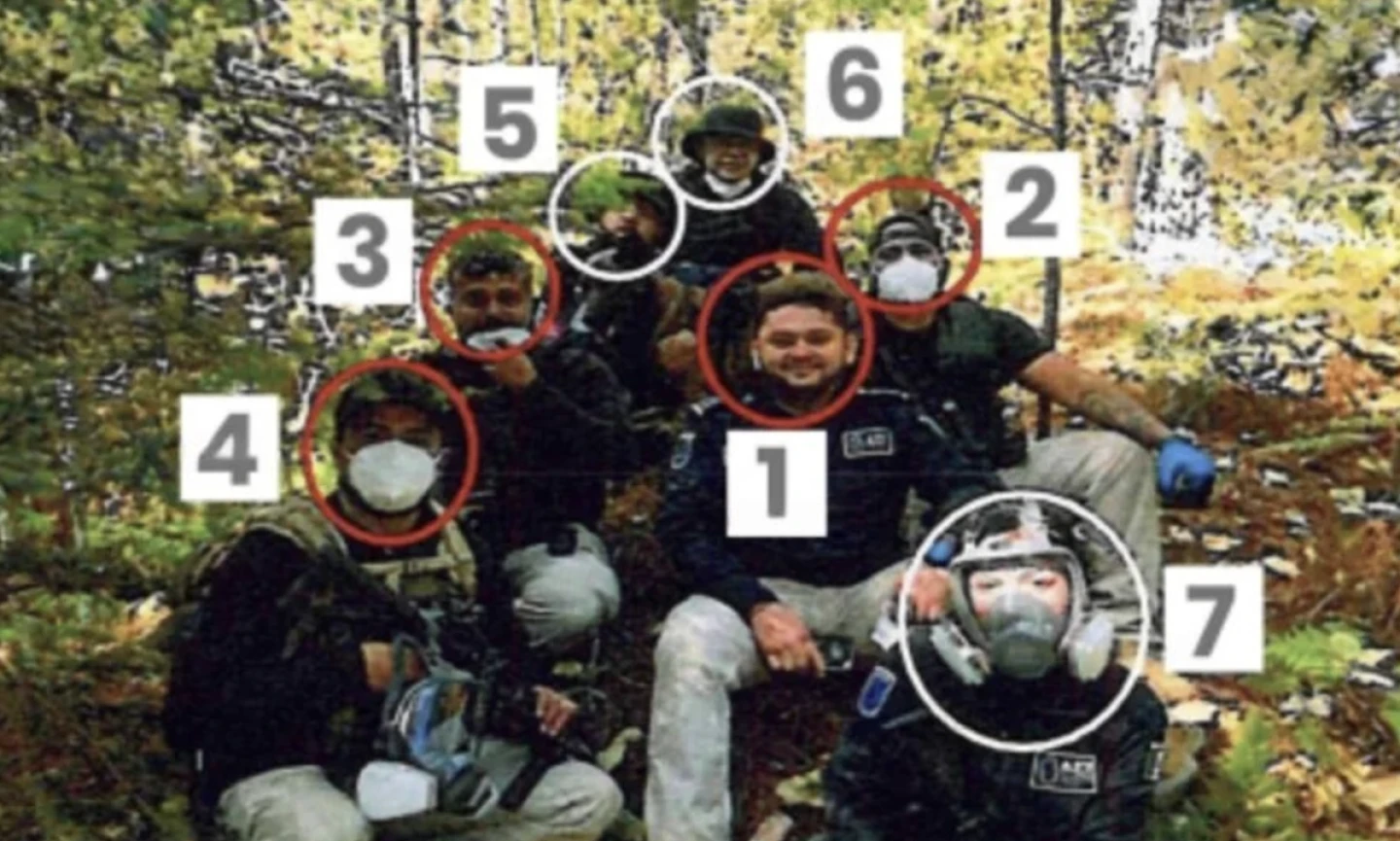
The CIA agents who died in Chihuahua were indeed carrying firearms and wearing uniforms of the State Attorney General’s Office (FGE), according to a photograph obtained by Milenio, in which they are seen alongside ministerial personnel.

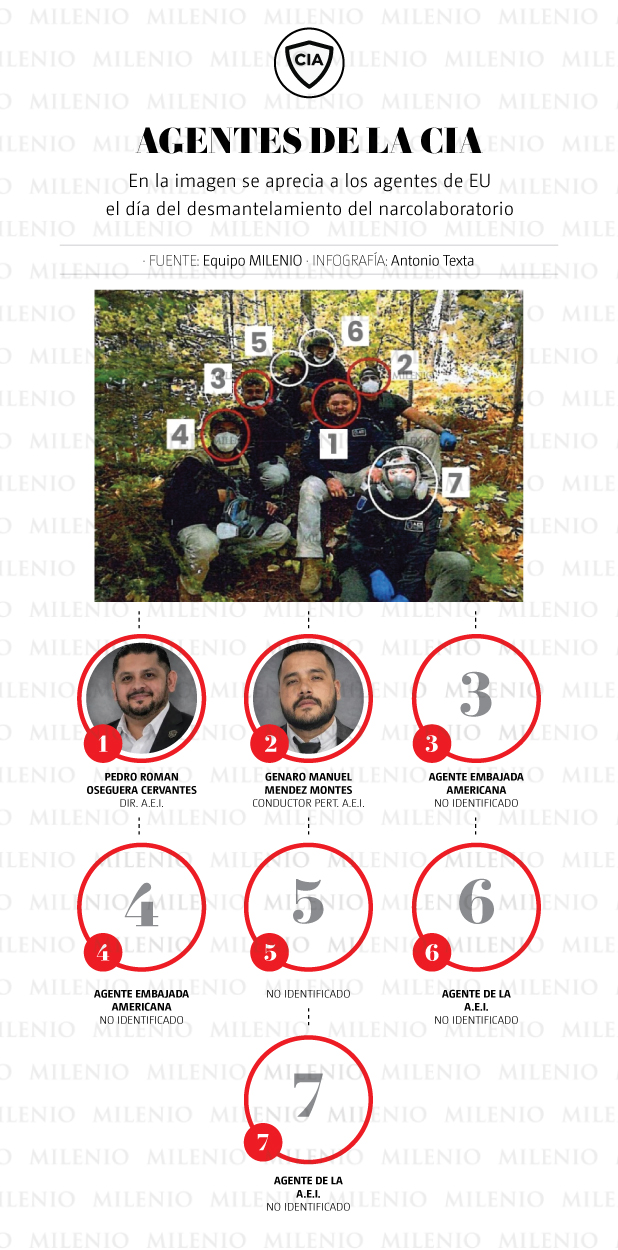
The image shows the four victims of the road accident: the two US agents, the then head of the State Investigation Agency, and the officer who was driving the truck that went off the road last Sunday. There are also two more members of the State Investigation Agency (AEI) and another unidentified person.

The photograph includes:

  1. Pedro Román Oseguera Cervantes , director of the State Investigation Agency (AEI)
  2. Genaro Manuel Méndez Montes , driver of the group belonging to the AEI
  3. American embassy agent
  4. American embassy agent
  5. Unidentified
  6. AEI Agent.
  7. AEI Agent.

The six individuals are wearing official uniforms of the Chihuahua Attorney General’s Office and carrying institutional weapons . Some are wearing blue latex gloves, others have gas masks, and some are wearing face masks—protective equipment typically used in drug lab raids.

The photograph was allegedly taken on April 18, the day the AEI located a drug lab, an operation after which the road accident occurred.

The image obtained by Milenio contradicts the version given yesterday by prosecutor Wendy Paola Chávez Villanueva, whom Governor María Eugenia Campos tasked with investigating the events that occurred from April 17 to 19.

“There is no indication that suggests that, during the operation, the people of foreign origin presented themselves, claimed to be, or acted as members or agents of any national or foreign security institution or agency,” Chávez Villanueva stated. “The testimonies agree that these people were not wearing the AEI tactical uniform nor carrying insignia of this corporation; that they kept their faces covered most of the time and that they were not carrying firearms.”

The special prosecutor also asserted that the US agents were not formally part of the institutional operational deployment and that their inclusion in the convoy was not reported to higher command.

“Statements from personnel involved in the operation indicate that the only interaction the foreign nationals had was with the director and the security team protecting him,” the special prosecutor stated. “There are elements that suggest a possible unofficial collaboration, the nature of which will have to be determined more precisely in the following stages of the investigation.”

This morning, at a press conference, the federal Secretary of Security, Omar García Harfuch, reported that the governor of Chihuahua, María Eugenia Campos, assured him that she was unaware of the presence of foreign agents, “The governor of Chihuahua told me that she had no knowledge of any operation being carried out with American agents in the field.”

The post CIA Agents Killed in Chihuahua Were Carrying Weapons & Wearing Uniforms appeared first on Mexico Solidarity Media.


From Mexico Solidarity Media via This RSS Feed.

29


This editorial by Arturo Huerta González originally appeared in the April 28, 2026 issue of La Jornada de Oriente, the Puebla edition of La Jornada, Mexico’s premier left wing daily newspaper. The views expressed in this article are the authors’ own and do not necessarily reflect those ofMexico Solidarity Mediaor theMexico Solidarity Project*.*

Editor’s note: Arturo writes that several Canadian cities have removed US alcoholic beverages from their stores but the move has been far more significant: all Canadian provinces with the exception of Alberta and Saskatchewan (which only represent about 14% of Canada’s population) have banned US alcoholic beverages. This includes Ontario’s LCBO, which is publicly-owned and operated by the provincial government and one of the largest buyers of alcohol in the world.

On April 21, 2026, Omar Mejía, Deputy Governor of the Bank of Mexico (Banxico), stated that “the effects of inflation in Mexico are concentrated in the non-core basket of goods and services—agricultural products, energy, and government-regulated tariffs—which is characterized by its high volatility and sensitivity to supply shocks. Monetary policy, specifically the interest rate, has limited influence over this basket… and therefore has little impact on reversing the rise in agricultural prices.” He is mistaken in this assertion. If the national economy faces significant production shortfalls in basic grains, as well as in fertilizers, gas, and gasoline (which are the products of non-core inflation), putting pressure on prices and leading us to depend on imports to meet domestic consumption, it is due to the prevailing high interest rates that make credit and investment more expensive, thus hindering national production. Added to this is the fact that high interest rates encourage capital inflows, which appreciate the national currency, make the dollar cheaper, and increase imports. These imports displace domestic producers, threatening food sovereignty and self-sufficiency in basic grains and energy products. The rise in international prices for gasoline, gas, fertilizers, and food, among many other products, will affect us due to the already present international inflation. Mexico depends on imports of these products as a consequence of the prevailing high interest rates, which, along with the cheap dollar and budget cuts and reduced private investment (resulting from the high cost of debt servicing due to high interest rates), undermine national self-sufficiency in these products. Therefore, the national economy will face inflationary pressures that will not be temporary, as the Deputy Governor of the Bank of Mexico stated.

For his part, the country’s Secretary of Economy [Marcelo Ebrard] acknowledged on April 23, 2026, that it is unlikely the United States will eliminate the tariffs it has imposed on the automotive sector and the steel and aluminum industries. He stated that “the new U.S. trade approach moves away from free trade and favors a system of selective tariffs and stricter rules that require a greater proportion of products to be manufactured in North America.” He reiterated that “the ideal world is to have virtually no tariffs or as few as possible, and to maintain an open flow of trade,” which reflects his neoliberal stance in favor of free trade, as if Mexico were doing well. He completely disregards the fact that this has led us to import more and export less, to have less manufacturing, less production of basic grains, lower economic growth, less formal employment, lower wages, high levels of foreign ownership of the economy, high levels of indebtedness, and dependence on capital inflows, for which economic policy is geared toward promoting capital inflows at the expense of economic policies that favor productive growth and employment.

The Secretary of Economy stated that “we see ourselves as a highly integrated region. The United States wants to reduce its dependence on Asia. Mexico can be the United States’ great ally in producing all of that.” This reflects wishful thinking, given that the national economy lacks the technological, productive, and financial capacity to domestically produce the goods that transnational corporations have been importing from Asia. There is no monetary, exchange rate, credit, fiscal, or trade policy to promote import substitution, so the U.S. will force Mexico to import goods from the U.S. that previously came from Asia in order to comply with the region’s rules of origin. This will not result in any growth for national industry or the country as a whole.

The Secretary of Economy said that “we have to get used to a new reality; we’re going to have tariffs, there’s no more free trade.” If this is already a reality, it means that Mexico must not only establish tariffs on products from China and the rest of Asia, but also on those from the US, and safeguard the nation’s production of staple grains and other strategic products that have a high domestic multiplier effect. Industrial and agricultural policies must be implemented, which requires low interest rates, subsidies, increased public spending and investment, tariffs, and a competitive exchange rate.

Mexico should follow Canada’s example. Its Prime Minister has stated that if the US imposes tariffs, they will do the same, and other Canadian officials have indicated they will not allow US companies to participate in public procurement bids. Furthermore, several cities have already removed American alcoholic beverages from their stores in response to the tariffs imposed by Donald Trump.

The US isn’t just coming to Mexico in the USMCA negotiations to buy more and sell less; it’s coming for energy, especially now because of the war in the Middle East. The president of the American Society of Mexico (AmSoc) said on April 22, 2026, that “energy integration between Mexico and the United States is structural and strategic.” He stated that “Mexico cannot develop its energy fields alone; it absolutely needs to partner with US companies if it wants to make progress in the energy sector.” He is mistaken. Our country can perfectly well develop the energy sector by financing it with its own currency. It’s simply a matter of Banxico (the Bank of Mexico) buying direct government debt so that the government can spend sufficiently on energy development. This wouldn’t be inflationary, nor would it put pressure on the external sector or the exchange rate, since it’s a sector that saves and generates foreign currency. And this official added that “the review and renegotiation of the United States-Mexico-Canada Agreement (USMCA) is a priority for the thousands of companies participating in AmSoc; maintaining it is and will be a priority.” This demonstrates that the companies that have benefited from the USMCA have been transnational corporations, not domestic ones. Domestic producers have been displaced by imports, and those who remain are junior partners of transnational corporations, without this translating into greater growth for the national economy.

The post Mexico’s Misguided Monetary & Trade Policies appeared first on Mexico Solidarity Media.


From Mexico Solidarity Media via This RSS Feed.

30


This article by Laura Arana and Rafael García originally appeared in the April 28, 2026 edition of El Sol de México.

The Secretary of Public Education (SEP), Mario Delgado, asserted that there is no need for members of the National Coordinator of Education Workers (CNTE) to protest during the FIFA World Cup in Mexico City, stating that a dialogue and technical forum is already in place to address their demands.

Today, the CNTE confirmed that the national strike during the sporting event is “already a done deal,” and indicated that they will go as far as the government allows.

“We don’t see the need for demonstrations aimed at disrupting an international event in our country. The President’s proposals are there, as is the dialogue forum, because the issue won’t be resolved in public squares,” said the head of the SEP.

He recalled that this technical working group, to which he called for representatives of the teachers’ union, has been available since October 2024, but for one reason or another, it has not yet been formed.

Therefore, he reiterated his call for dialogue and for the CNTE to designate its representatives, as well as experts and technical staff, to hold the meeting and address their demands. He stated that not everything can remain at the level of political debate, but must be addressed technically.

President Sheinbaum had promised to repeal the 2007 ISSSTE Law during her Presidential campaign.

Mario Delgado says Government Also Doesn’t Agree with Individual Afores System

Regarding the Coordinator’s main demand, which is the repeal of the 2007 ISSSTE Law that eliminated the solidarity pension systems so that workers now retire with what they manage to save throughout their lives, Mario Delgado assured that this government also does not agree with this individual Afores system.

However, he indicated that the money not saved over 19 years cannot be recovered, but there are alternatives. One of them, he explained, involves the Mexican government contributing resources to these pensions, so that the total fund can be larger.

He also noted that with the welfare pension system implemented by former President Andrés Manuel López Obrador, the situation is no longer what it was before.

Another demand of the CNTE is the elimination of certain aspects of the Education Reform presented in 2019 by López Obrador, such as the implementation of the Unit of the System for the Career of Teachers (USICAMM), a system for teacher admission and promotion. They argue that this system fails to recognize teachers’ tenure, seniority, and participation in obtaining appointments.

Regarding this, Mario Delgado asserted that USICAMM will indeed be eliminated, as it was one of the 100 promises made by the President of Mexico, Claudia Sheinbaum. However, he reiterated the call for a technical working group to conduct a thorough analysis.

He recalled that during neoliberal governments the demands of the CNTE were not met, so the dialogue that this government has established with them is already a step forward.

Photo: Jay Watts

The post Delgado Asks CNTE Not To Obstruct World Cup appeared first on Mexico Solidarity Media.


From Mexico Solidarity Media via This RSS Feed.

31


This editorial by La Jornada’s editorial board was originally published in the April 29, 2026 edition of La Jornada, Mexico’s premier left wing daily newspaper. The views expressed in this article are the authors’ own and do not necessarily reflect those ofMexico Solidarity Mediaor theMexico Solidarity Project*.*

The Attorney General’s Office (FGR) has opened an investigation into the alleged involvement of Central Intelligence Agency (CIA) agents in anti-drug operations, in collaboration with the Chihuahua State Investigation Agency (AEI). The FGR explained that it launched the investigation due to concerns about potential national security violations during “the events that occurred in recent days in the Sierra del Pinal region, following the confirmed presence of two U.S. citizens, apparently members of U.S. security agencies, who tragically died along with two other individuals after the discovery of a clandestine open-air drug production facility.”

The federal prosecutor’s action is necessary and even urgent given the mockery of national sovereignty by the state governor, María Eugenia Campos Galván, who refuses to explain her administration’s illegal and potentially seditious ties to the U.S. intelligence apparatus. Instead of appearing before the Senate so that the Mexican people could hear her account of the constitutional violations perpetrated by her government, the PAN (National Action Party) governor created a specialized unit to investigate the case, which in less than 72 hours of existence revealed itself to be a cover-up and a tool for seeking impunity. According to the head of this farce, Wendy Chávez Villanueva, the four (not two, as originally believed) CIA agents who participated in a supposed operation to dismantle drug labs in the mountainous region of Chihuahua were invited by the director general of the AEI (State Investigation Agency), Pedro Román Oseguera Cervantes, who died in the same incident. “Up to the time of the investigations, we have no record that the director of the state agency had requested authorization, or informed his superiors that these foreign individuals would be accompanying him in the convoy,” the official stated.

Besides the poor taste of blaming a dead person, Chávez Villanueva’s statements are patently false and attempt to portray as anecdotal what is systematic: the infiltration of U.S. forces into the Chihuahua government. In this regard, it should be recalled that the state’s Secretary of Public Security, Gilberto Loya Chávez, himself boasted that an entire floor of the agency’s headquarters is designated to serve as a bunker for agents belonging to the U.S. Drug Enforcement Administration, as well as the Federal Bureau of Investigation, Customs and Border Protection, and Homeland Security Investigations, among others. Furthermore, Loya Chávez expressed hee conviction that federal permits are not required “to cooperate with these agencies on a permanent basis,” which demonstrates a serious disregard for the letter of the Constitution and the Homeland Security Law.

Given this series of inconsistencies and attempts to bury a case of the utmost gravity, President Claudia Sheinbaum Pardo is right to point out that the investigation cannot be halted following the resignation of César Jáuregui Moreno, the Attorney General of Chihuahua, as it is a matter of upholding the law and the Mexican people’s right to know the truth. As part of this investigation, it is crucial that Campos Galván inform her constituents and the entire country about her motives in opening the state, which comprises more than 12 percent of the national territory, wide open to U.S. espionage—an unacceptable maneuver under any circumstances, and one that takes on the character of treason when the White House is headed by someone who has repeatedly threatened to launch violent incursions against our country.

The post Chihuahua: Silences & Lies appeared first on Mexico Solidarity Media.


From Mexico Solidarity Media via This RSS Feed.

32


Caracas (OrinocoTribune.com)—US Southern Command (SOUTHCOM) reported two new “kinetic strikes” in the Eastern Pacific this week, bringing the total number of deaths in its ongoing imperialist campaign to 173. Despite the persistent use of the term “survivors” in initial military reports, the lethal pattern of these operations continues to draw sharp condemnation from international legal experts and human rights advocates.

On Friday, April 24, US Joint Task Force Southern Spear conducted a strike against a small boat in the Eastern Pacific, resulting in two fatalities. This was followed by another engagement on Sunday, April 26, also in the Eastern Pacific, which resulted in three additional deaths. Both operations were carried out as part of the US military’s bloody maritime campaign, which US and international experts have long labeled as a spree of extrajudicial killings.

On April 26, at the direction of #SOUTHCOM commander Gen. Francis L. Donovan, Joint Task Force Southern Spear conducted a lethal kinetic strike on a vessel operated by Designated Terrorist Organizations. Intelligence confirmed the vessel was transiting along known… pic.twitter.com/br2znnUM1x

— U.S. Southern Command (@Southcom) April 27, 2026

Analysts have noted that the “survivor” designation is often a temporary label used by SOUTHCOM to deflect immediate criticism. Historically, individuals initially reported as survivors are almost invariably added to the death toll once search-and-rescue operations are terminated.

The lack of transparency, combined with the summary execution of individuals on small boats—frequently referred to as “vessels” by the military to circumvent maritime protections—violates international law and the right to due process.

The campaign has effectively turned SOUTHCOM into “judge, jury, and executioner” on the high seas. While the US characterizes these actions as necessary counter-narcotics measures, legal scholars have noted that the US’s systematic use of lethal force against unarmed individuals is similar to the Israeli approach which exhibits total disregard for human life and international legal frameworks.

Statistical analysis
According to the latest data tracked by Orinoco Tribune, the death toll from these maritime operations has reached a grim new milestone. Since the strikes began in September 2025, a total of 173 people have been murdered in 52 separate strikes.

The statistical breakdown of the 173 fatalities highlights the geographical distribution of the violence:

• Eastern Pacific: 109 deaths recorded in 36 strikes.
• Caribbean Sea: 64 deaths recorded in 16 strikes.

Venezuela and Barbados Consolidate Alliance for Integration and Shared Prosperity

The data continues to reflect a near-total death rate. While search-and-rescue operations are occasionally mentioned, they are typically terminated shortly after the “kinetic” engagement, leading to victims being presumed dead without trial, formal identification, or any further public update. This consistent lack of accountability has fueled international calls for an independent investigation into what is described as a systematic policy of extrajudicial executions.

Special for Orinoco Tribune by staff

OT/JRE/SL


From Orinoco Tribune via This RSS Feed.

33


This article by Darren Garcia originally appeared in the April 24, 2026 edition of Revista Contralínea.

The current minimum wage in Mexico, set at 9,582.47 pesos –excluding the northern border–, allows the purchase of 1.94 basic baskets of goods, compared to the 0.78 that could be bought at the end of 2018. This reflects the positive results in the recovery of workers’ purchasing power, celebrated the National Minimum Wage Commission (CONASAMI).

The cost of the basic food basket in March was 4,940.45 pesos, reflecting “a cumulative recovery of 152.4 percent above inflation,” which rose by 5.6 percent that month. This is according to data from the Urban Income Poverty Line, published by the National Institute of Statistics and Geography (INEGI).

As for the urban food basket, its value was 2,571.18 pesos in March, representing an 8.1 percent year-on-year increase. The statement—published by the Secretariat of Labor and Social Welfare—noted that, even with this increase, the minimum wage remained higher, with a 13 percent increase between 2025 and 2026.

However, CONASAMI also explained that the increase in the basket was mainly due to the rise in the price of tomatoes, lemons, chili peppers, and potatoes , attributed to “climatic factors in the United States and Mexico that reduced supply, as well as an increase in fuel prices internationally, resulting from conflicts and disruptions in supply chains in the Middle East”; although it stressed that the causes are temporary.

The post Mexico’s Current Minimum Wage Buys 1.94 Basic Basket of Goods; in 2018, it was 0.78 appeared first on Mexico Solidarity Media.


From Mexico Solidarity Media via This RSS Feed.

34


By Press TV Strategic Analysis Desk – Apr 28, 2026

Forty days of aggression. Forty days of defiance. And now, a new strategic reality.

When the ceasefire took hold after 40 days of unprovoked and illegal US-Israeli war against Iran, during which the Iranian armed forces imposed heavy costs on the enemy, many expected the Islamic Republic to go back to the negotiating table with the same old playbook.

Instead, Tehran launched a strong diplomatic push that has left Washington humiliated, its military threats in tatters, and its political leadership trapped in a dead end of its own making.

Even German Chancellor Friedrich Merz – who, until just a few months ago, was betting on ‘regime change’ in Iran – was forced to admit that the United States is being ‘humiliated’ by Iran’s leadership and outwitted at the negotiating table.

It is no small admission from one of the staunchest detractors of the Islamic Republic

Foreign Minister Abbas Araghchi’s three-nation diplomatic tour – to Pakistan, Oman, and Russia – just two weeks into the fragile truce, was no exercise in diplomatic courtesies.

It was a resounding show of diplomatic power. A masterclass in psychological warfare. A public humiliation of an arrogant enemy that had vowed to obliterate a proud ‘civilization.’

The message from the diplomatic tour was clear and decisive: You threaten us? We ignore you. You raise the stakes? We raise ours – on your own chessboard.

✍️ Analysis – Iran's principled red lines and Trump's desperation to exit the quagmire show who holds the cards

By Press TV Strategic Analysis Deskhttps://t.co/lxdFw4ObLy

— Press TV 🔻 (@PressTV) April 26, 2026

The symbolism that shattered American credibility
What happened in those first weeks after the guns fell silent? American officials had issued explicit threats to target and kill senior Iranian diplomats, even in the middle of talks.

Trump’s inner circle spoke of decapitation strikes. The usual script. The expected bullying.

And how did the Islamic Republic of Iran respond?

It sent its top diplomat on a high‑visibility, multi‑capital tour through Islamabad, Muscat, and Moscow. Not in secret. Not with apologies. Openly, proudly, as if to say: Your threats are worthless. Your red lines are invisible. We are here, and there is nothing you can do about it.

This is not usual diplomacy. This is power projection through a strong presence on the scene, refusing to be cowed down by hollow threats. With this, Iran effectively invalidated, in one stroke, every warning Washington had issued. The enemy’s intimidation was reduced to noise.

The Islamic Republic, holding a clear upper hand and all the cards after the 40-day war and its aftermath, turned American bluster into a backdrop for its own strategic advance.

FM Araghchi’s regional tour was not about symbolism. The substance of Iran’s communications with its allies, as confirmed by foreign media and even initial, begrudging reactions from the Trump administration, was nothing short of path-breaking.

While the United States expected a war‑weary Tehran to bargain, to trade nuclear concessions for relief, to slowly capitulate, Iran did the opposite. It declared, without ambiguity, that there will be no negotiations on nuclear matters or even missile capabilities. Those files are closed.

And in the same breath, Iran doubled down on the one chokepoint that terrifies global markets: the strategic Strait of Hormuz. Tehran’s position is now clear, immovable, and publicly stated: We will manage the Strait. We will set the terms. We are the gatekeepers.

✍️ Analysis – Iran's new calculus: Full Strait of Hormuz control, no retreat on nuclear rights, and unused cards – including NPT

By Press TV Strategic Analysis Deskhttps://t.co/JuJnfEKf7O pic.twitter.com/QnkIprd2g4

— Press TV 🔻 (@PressTV) April 25, 2026

United we stand, divided they fall
In the most telling contrast of this entire crisis, the Iranian political and military establishment stands united – in letter and spirit. Patiently, resolutely, it has advanced its strategic positions, whether on the battlefield, where tactical combat management kept the Israeli-American war machine off balance, or in the political management of the truce period.

As Iran’s top leaders recently made clear through a series of tweets, they stand united – more than ever – and the enemy’s desperate attempts to fracture that unity have already failed

Now look at the other side, which pretends that everything is hunky-dory. They seem to have traded reality for a caffeinated optimism.

The Trump administration is eating itself alive. Internal feuds among US military commanders and the inexperienced, impulsive Secretary of War Pete Hegseth are public, ugly, and paralyzing.

Navy Secretary John Phelan is the latest to be shown the door. But he is far from alone. Army Chief of Staff General Randy George, Army Transformation and Training Command chief General David Hodne, and Army Chaplain Corps head Major General William Green Jr. have all been removed or forced to resign.

That is not a war machine in control. That is a war machine in meltdown. And the rot continues.

Iran’s Foreign Minister Leaves Pakistan as Trump Cancels Visit by US Envoys ‌

Vice President JD Vance and the Secretary of War Hegseth are trading insults through the media. Trump’s own former allies – men like Tucker Carlson, the face of his presidential campaign – now openly express regret for ever supporting him.

Joe Kent, the former head of the so-called “counterterrorism” unit and a man once deemed extremely close to Trump, also resigned and is now leaking damaging revelations, protesting that Netanyahu pulls the strings on American foreign policy. The Democratic Party is savaging Trump daily. Figures like Wendy Sherman and John Kerry have launched blistering attacks.

This is not opposition. This is disintegration. Every time Iran states, clearly and publicly, that the Strait of Hormuz is permanently under its control, and that the nuclear file is forever off the table – every single declaration deepens the fractures in Washington.

The chaos inside the ‘Divided States’ is not incidental. It is a direct result of Iran’s refusal to bend. Tehran has made the dysfunction visible. And the world is watching.

✍️ Analysis – Trump’s unilateral ceasefire extension not a sign of goodwill, but fear of re-entering an unwinnable war

By Press TV Strategic Analysis Deskhttps://t.co/qrhcDPbT21

— Press TV 🔻 (@PressTV) April 22, 2026

The trap America built for itself
Let us count the ways the United States is trapped in a quagmire of its own making.

On one hand, returning to full‑scale war is a nightmare. The risks are astronomical. The Pentagon knows it. Trump may not admit it, but his generals reluctantly do.

A new war, a new escalation from the American side, would not produce a better deal. It would not force Iranian submission. It would close every door to future diplomacy of any kind – probably forever. The military option is, for all practical purposes, dead.

On the other hand, the current situation is a slow, grinding defeat. The Strait of Hormuz is effectively blockaded by Iran’s imposing presence. Oil prices are climbing relentlessly. Global economic indicators and stock markets are rattled, sliding, panicking.

Iran continues to hold 400 kilograms of 60‑percent enriched uranium. As Iranian officials have asserted, it’s not going anywhere. Enrichment has not stopped. Iran’s missile forces, its combat capacities, its strategic reserves – they are not only intact, but improved and upgraded.

And here is the kicker: Iran’s political system remains united, stable, steady, and stronger.

Think about that. Iran lost its beloved Leader – the supreme moral and strategic anchor of the Islamic Revolution. It lost dozens of senior military commanders, government officials, and thousands of ordinary citizens. It endured a 40‑day war of unprecedented intensity. And yet, the system stands. The decision‑making apparatus works. There is no collapse, no panic, no retreat.

That, more than any missile or centrifuge, is the true measure of victory. America has failed to achieve a single one of its strategic objectives. Not even one. And the world knows it.

✍️ Analysis – Iran wields leverage and strategic assets – concessions must flow from the embattled side

By Press TV Strategic Analysis Deskhttps://t.co/WP11YXygsw

— Press TV 🔻 (@PressTV) April 27, 2026

The inevitable conclusion: Surrender or more humiliation?
Trump’s strategic dead end is now so obvious that even some of his own allies and media supporters are advising him to give up and accept Iran’s current terms in order to stop struggling for concessions that will never come. It’s like chasing the mirage.

Why? Because time is not on America’s side. Every day that passes with the Strait of Hormuz under firm and unchallenged Iranian control, with Iranian nuclear progress intact, with its military capacity steadily growing, is another day of American failure.

The options presented to Trump either do not actually exist or are catastrophically risky. There is no winning move left on the board for the US. It has to retreat and abandon the adventurism.

Importantly, the world is beginning to understand – slowly, hesitantly, but unmistakably – that the Islamic Republic is calling the shots. One by one, global leaders are opening their eyes to a new dawn, a new era, which marks the quiet but irreversible twilight of American hegemony.

Consider Merz’s words. Read them again and again. Just weeks ago, this man saw the US and Israel as the rightful representatives of the entire world against Iran. Now he stands before the world and declares: Iran has humiliated Trump – and all of America. Let those words sink in.

Yes, many countries are still too afraid to speak openly. Decades of American bullying and coercion do not vanish overnight. But the tectonic plates are shifting.

As the scale of America’s defeat and the Zionist regime’s failure in this third imposed war becomes undeniable, a new wave will begin – a wave in favor of Iran and the resistance axis.

✍️ Analysis – Why no power can undermine Iran's eternal dominance over the Strait of Hormuz

By Mohammad Molaeihttps://t.co/ej1kJTj9FV

— Press TV 🔻 (@PressTV) April 10, 2026

Survival of the strongest
The 40‑day unprovoked war and the Islamabad talks that followed have produced a clear verdict. Iran has not only survived; it has emerged stronger, more respected by allies, and more feared by enemies. Its positions are now the baseline. Its red lines are now the world’s constraints. Its presence in the Strait of Hormuz is now a fact of global economics.

The United States, by contrast, has failed on the battlefield, failed at the negotiating table, and is now failing before our eyes on the domestic front – ripped apart by feuds, resignations, betrayals, and a president who cannot deliver on any front.

With midterm elections fast approaching in the US and his approval ratings plummeting to record lows, Trump has written an obituary – for himself and for his Republican Party.

The party could have stopped him over the past two months. They could have invoked a war resolution, even symbolically. But they chose to be mute spectators.

The Iranian leadership and its people stand buoyed with confidence, ready for all scenarios

(PressTV)


From Orinoco Tribune via This RSS Feed.

35


A $30-million plan aims to bring 6,000 Indian Jews by 2030, to expand illegal settlements, and replace the Palestinian workforce

Approximately 240 members of India’s Bnei Menashe Jewish community arrived in Israel on 24 April, marking the first phase of “Operation Wings of Dawn,” a government-supported initiative to expand Jewish settlements in occupied Palestine.

The arrivals mark the opening stage of a 90-million shekel (around $30 million) plan to import 1,200 Indian nationals annually, targeting a total of 6,000 by 2030, effectively replacing the Palestinian workforce that was cut off after October 2023.

Those brought in, who claim descent from a so-called “lost tribe,” are being funneled through mandatory Orthodox conversions to qualify under the “Law of Return,” a system that grants citizenship on religious grounds while denying displaced Palestinians the right to return to their land.

Officials said the initial group landed “this week,” with further flights already scheduled. Around 600 additional immigrants are expected in three waves over the coming weeks, continuing a process that is set to expand steadily.

Many of those arriving are expected to be placed in absorption centers in Nof HaGalil, where some will join relatives who had already moved to Israel in previous years, as part of efforts to plug the labor gap left by Israel’s genocide in Gaza and the subsequent cutoff of Palestinian workers.

The Indian Government Is ‘Choosing To Stand With Genocidal Israel’ Activists Warn Ahead of Modi’s Visit to Israel

The rollout reflects a structured state-led effort to import new labor and population groups while Palestinian workers remain excluded following Israel’s genocide in Gaza.

Israel had blocked Palestinian labor at scale after October 2023, cutting off over 100,000 workers who had previously entered from the occupied West Bank and depended on jobs inside Israel for their livelihood.

Prior to the genocide, Palestinians made up a significant share of the workforce, accounting for nearly 30 percent of the construction sector, with tens of thousands also employed in settlements and industrial zones.

Israel moved quickly to replace that labor pool, bringing in more than 20,000 Indian workers by mid-2025, including large numbers in construction roles, with the purpose of replacing Palestinian labor during the Israel’s genocide of Palestinians in Gaza.

A February 2026 agreement between India and Israel expanded that effort further, with plans to bring in up to 50,000 additional Indian laborers over the next five years.

(The Cradle)


From Orinoco Tribune via This RSS Feed.

36


The approval rating of Colombia’s president, Gustavo Petro, rose in April, one month ahead of the elections, reaching its highest level in the past two years, according to a recent survey by the Latin American Strategic Center for Geopolitics (CELAG Data).

According to the poll, 47.4% of Colombians approve of the South American leader’s performance—the highest figure since May 2024 and nearly nine percentage points above September 2024, when 38.2% of Colombians said they supported the president’s management.

The CELAG Data survey, conducted in April through in-person interviews with 2,021 citizens, was published one month before the presidential elections in Colombia. The elections will determine whether the current progressive political project continues or whether the country returns to right-wing governments.

According to the survey, 51.7% of respondents rated the leftist president’s economic management positively, while 48.3% viewed it negatively. Regarding the government’s overall performance, 52.4% considered it positive and 47.6% negative, the survey data indicate.

Colombia will hold elections on May 31. The leading candidates in the polls include the representative of the Historic Pact, Iván Cepeda; Paloma Valencia Laserna from the Uribista Democratic Center party; and Abelardo de Espriella Otero from the far-right movement Defenders of the Homeland.

According to the CELAG Data survey, Iván Cepeda has a positive image rating of 48.3%, while 46.7% view him negatively and 1.6% do not know him. Paloma Valencia has a 41.4% positive image rating and 47.5% negative, while 5.2% said they do not know the candidate.

Among the three leading figures in the polls, far-right candidate De Espriella has the highest negative image rating, with 49.5% of respondents holding an unfavorable view of him while only 35.9% said they have a positive image of the presidential hopeful.

Venezuela’s Acting President Delcy Rodríguez Receives Colombian Counterpart Gustavo Petro at Miraflores Palace

(Diario Red)

Translations: Orinoco Tribune

OT/CB/SL


From Orinoco Tribune via This RSS Feed.

37


The acting president of the Central Bank of Venezuela (BCV), Luis Alberto Pérez González, stated during a meeting held on Friday with representatives of public and private banks, the Venezuelan Banking Association, SUDEBAN, and the Vice Ministry of Digital Economy, Banking, Insurance, and Securities that a new period of exchange rate stability and declining inflation is projected for the country.

He also reported that according to preliminary figures, Venezuela’s gross domestic product (GDP) grew in the first quarter of 2026, bringing the economic recovery to a total of 20 consecutive quarters of expansion.

“There are reasons to believe that the national economy will perform well in the coming quarters and that inflation will decline,” he said during the working meeting held at the Manuel Egaña Hall of the BCV in Caracas.

Exchange rate stabilityOn exchange rate matters, the acting head of the BCV emphasized that both the official and unofficial exchange rates have shown a significant slowdown. Pérez González stated that the gap between the two has also begun to narrow, reaching 29%, as a result of more active intervention by the BCV.

He also announced that measures are being designed to allow individuals and legal entities to buy and sell foreign currency more easily through official mechanisms via banks and exchange houses. However, he clarified that transactions within the domestic market will continue to be encouraged in bolívars.

“It is time to begin thinking about instruments that make it easier for individuals and legal entities to continue increasing their preference for maintaining the use of the bolívar,” he said.

Restoration of relations with the IMF and Federal ReserveThe acting president of the issuing authority reported that the country has begun restoring its relations with the International Monetary Fund (IMF) and other multilateral organizations, as well as with the US Federal Reserve and international correspondent banks.

More credit: a broad agreementPérez González stressed that at this stage, the active participation of both public and private banking will be required to inject resources into the real productive economy through various financing mechanisms.

“Sustained economic growth requires credit—credit for the real economy,” he stated. “We are on the right track; the Venezuelan financial sector is sound and fully auditable. We are doing the best we can with the resources available,” he stated.

He also noted that the gross loan portfolio has grown in 2026. The official explained that the credit intermediation ratio (which measures the relationship between loans and deposits) stands at 64.4%.

Increased confidenceThe acting president of the BCV noted a high level of confidence in the institution’s technical expertise, particularly in its Economic Statistics Department, which he described as a unit “at the service of the nation” that is composed of valuable professionals with strong reputations and long-standing experience.

“These professionals have ensured the rigor of statistical processes in the collection, capture, and processing of data, following methodologies that comply with international standards,” he said. “We have resumed the publication schedule, and it meets the standards of other central banks.”

“We are advancing into a stage of price stabilization in which we will reinforce the importance of the national currency in transactions by increasing confidence in it.”

Technical backing and independent auditingRegarding Venezuelan financial assets held abroad, the official reported that the United States government hired one auditing firm, and the Venezuelan government another.

“We remain under constant review of our monetary and exchange policy instruments and will make decisions when deemed appropriate,” he said. He also emphasized the importance of national banking institutions in helping generate prosperity. “It is time to progressively increase the well-being of citizens.”

US Treasury Eases Sanctions on Central Bank of Venezuela and Public Banking Sector

Featured image: Flags fly outside the Central Bank of Venezuela. Photo: Diario VEA.

(Diario VEA)

Translation: Orinoco Tribune

OT/CB/SL


From Orinoco Tribune via This RSS Feed.

38


By Jill Clark-Gollub  –  Apr 26, 2026

This spring constituents and grassroots organizations have been raising awareness in Congress and in public forums of the harms caused by Unilateral Coercive Measures (UCMs or “sanctions”). Sanctions have become the “go-to” foreign policy tool of the United States government, now impacting a quarter of the global economy and one-third of the world’s population. These measures cause an average of 564,000 deaths around the world annually—comparable to the toll from armed conflict—mostly among children under 5 years old.

On April 22 Congresswoman Delia Ramírez (D-IL) hosted a Congressional briefing on “Humanitarian Impacts of Economic Sanctions, Cuba as a Case Study,” with three outside experts: Mark Weisbrot of the Center for Economic Policy, co-author of the largest study ever conducted on the impacts of sanctions on mortality; David Paul, co-founder of the SanctionsKill campaign, retired nurse practitioner, and co-author of a letter from health workers to Congress about child deaths from sanctions; and Danny Valdes, co-founder of Cuban Americans for Cuba, who shared the perspective of bi-national families impacted by the longstanding and escalating US blockade of Cuba.

Economist Weisbrot said that 71% of the world’s broad economic sanctions are imposed by the United States. These unilateral measures violate international law by deliberately targeting civilian populations for collective punishment in the hope of bringing about regime change, and may even constitute war crimes. In addition to his global study, Weisbrot has compiled research which found US sanctions on Venezuela’s oil industry caused the worst depression in world history outside of wartime, leading to 40,000 excess deaths in just one year, from 2017-2018. And current data on Cuba shows a strained health system and deteriorating health indicators, such as a doubling of infant mortality over the past eight years due to the tightening of the US blockade.

David Paul painted a devastating picture of life in Cuba under escalated coercive measures, especially the fuel blockade which is causing massive power outages and disrupts transportation, the production and distribution of food, refrigeration, water and sanitation, and the operation of ambulances and life-saving medical equipment. He said this is not an embargo, but an actual blockade of the island. “People in the US government make the false claim that ‘Cuba can buy all the medicines wherever they want.’ It’s a total lie, when in reality all their banking transactions are blocked. [The US] will threaten and punish any corporation—domestic or international—or government, that trades with you. But you are free to buy!” More pregnant women are starting prenatal care late and suffering from malnutrition, which results in premature births and low birth weights. More babies are at risk of dying from congenital malformations because of the shortage of functioning diagnostic equipment like ultrasounds needed to detect them. Half of all essential medicines are no longer available in the country, as Cuba cannot even import the raw materials needed to keep its pharmaceutical industry afloat. Children are dying from treatable cancers due to lack of medicines, and physicians are hand-pumping ventilators for their patients when the lights go out. Heartbroken Cuban doctors tell parents, “We know what medicine your daughter needs to treat her cancer, we know where it is, but we can’t get it because they won’t sell it to us.” One parent asked, “Why is the President of the United States deciding whether my son lives or dies?”

Valdes reported an exponential deterioration of conditions on the island between his visits in October 2025 and March 2026, due to the lack of fuel, such as health problems caused by uncollected garbage in the streets of Havana. He says that some blame Cuba exclusively for these troubles, but one cannot deny the role played by US policy. Cuban Americans are impacted because they cannot easily visit relatives or efficiently send them remittances, which can make the difference “between eating and not eating; between accessing medicines and going without.” He noted that the Florida International University poll, running since 1991, reports that 52% of Cuban Americans support the embargo, yet 70% also support the sale of medicine to Cuba. This shows they are not actually in favor of maximum pressure policies.

https://i0.wp.com/resumen-english.org/wp-content/uploads/2026/04/4-27a.jpg?w=768&ssl=1

Congresswoman Delia Ramirez and panelists (l-r) Mark Weisbrot, David Paul, and Danny Valdes.

The host of the briefing, Congresswoman Ramírez, is a strong proponent of respectful and constructive US foreign policy. She and Congresswoman Nydia Velázquez (D-NY) are the leading co-sponsors of H.Res. 1056 which calls for a reset of US relations with Latin America and the Caribbean, including the end of all unilateral economic sanctions, such as the Cuba embargo. During her opening remarks, the Congresswoman indicated that from Monroe to Trump, US interventionism has left a legacy of destruction and distrust, which never leads to peace and democracy. She founded the Global Migration Caucus in recognition of the fact that what US interventionism actually produces is forced migration.

Congress is gaining awareness of these unjust policies. A growing number of lawmakers are not only working to constrain the threat of military force against Cuba (H.J.Res 153 and H.R.8103), fifty of them signed a statement condemning the ongoing blockade and several have endorsed legislation to end it (H.R.7521/ S.136). Could it be that lawmakers are finally listening to the demands of the American people to end the longest blockade in history? Over the years, solidarity groups around the United States have passed hundreds of local resolutions—in their city councils, churches, and unions—calling for an end to the blockade. Ever more people are gaining awareness of its cruelty and are moved to act. During its 1000 White Coats on The Hill for income tax day 2026, Doctors Against Genocide pushed legislation to lift the blockade and insisted that Cuba be allowed to import medical supplies. And Members of Congress are even using the proper terminology, calling for an end to “coercive economic measures,” a form of “cruel collective punishment.”

How US Sanctions Are Fueling Hunger in Cuba

We must take advantage of this moment to grow the movement to expose the human cost of sanctions and work to end them. Popular education materials on the SanctionsKill website, such as the Sanctions Toolkit and a forthcoming powerpoint on UCMs and child health, can be used to educate our communities and government officials. A SanctionsKill statement there explains the difference between coercive measures and the global BDS movement. And a recent webinar titled “Sanctions Undermine Children’s Right to Health” uses Cuba and Venezuela as case studies to illustrate these impacts. The discussion called for a new approach to human rights, such as the Peoples-Centered Human Rights framework. The webinar recording can be accessed here.

As stated in the Letter calling on Congress to end child-killing sanctions, signed by representatives of SanctionsKill, Doctors Against Genocide, National Single Payer, and 200 other health workers, “Imposing collective punishment on the innocent is morally reprehensible. It must stop.” Join the fight to end Unilateral Coercive Measures by contacting AmericasWithoutSanctions@gmail.com, a project of the SanctionsKill campaign.

JCG/OT


From Orinoco Tribune via This RSS Feed.

39


Mali’s defense minister, General Sadio Camara, has died of his injuries after a shootout with militants following a suicide car bombing that targeted his residence during a wave of coordinated terrorist attacks across the West African country, the transitional government has confirmed.

Camara, who served as minister of state and minister of defense and veterans affairs, died of injuries sustained during Saturday’s assault on his home in Kati, a garrison town near the capital, Bamako. The government said his residence was struck by a vehicle bomb driven by a suicide attacker, after which Camara exchanged fire with the assailants and “neutralized” some of them before being wounded.

The attack caused part of the residence to collapse, killing or injuring others nearby and destroying a mosque where worshipers were inside, according to the government statement.

Mali suffered one of the most serious security incidents in years on Saturday, with near-simultaneous attacks reported in Bamako, Kati, Gao, Sevare, and Kidal. The Al-Qaeda-linked Jama’at Nusrat al-Islam wal-Muslimin (JNIM) and the Tuareg-dominated Azawad Liberation Front (FLA) claimed responsibility for the coordinated raids, which targeted military sites, key infrastructure, and senior leadership positions.

The Russian Foreign Ministry said preliminary data points to the possible involvement of Western security services in training the attackers. Earlier this year, Foreign Minister Sergey Lavrov accused France of “attempting to overthrow undesirable nationalist governments” in the Sahara-Sahel using “outright terrorist groups” and “colonial methods.”

Russia has a military presence in the West African country, which has been reeling from terrorist threats for years despite a decade-long French military mission. Mali expelled French forces in 2022, followed later by Burkina Faso and Niger, accusing Paris of providing direct support to terrorists.

Seeds, Land, Sovereignty: Lessons From the Sahel for the International Day of Peasant Struggle

The Africa Corps, operating under the purview of the Russian Defense Ministry, said it helped prevent a coup d’etat over the weekend. It said it provided air support along the 2,000-km front line, preventing the seizure of key facilities, including the presidential palace in Bamako. According to the unit, militant casualties exceeded 1,000, with more than 100 vehicles destroyed.

Camara was one of the most influential figures in Mali’s ruling security establishment and a key architect of Bamako’s turn away from French-led security cooperation. The authorities said he would receive a national funeral.

(RT)


From Orinoco Tribune via This RSS Feed.

40


This article by Luis Hernández Navarro originally appeared in the April 28, 2026 edition of La Jornada, Mexico’s premier left wing daily newspaper.

A specter is haunting national politics. Following the deaths of two of its unaccredited agents in a car accident in Chihuahua, the role and presence of the CIA has stirred enormous controversy. The role of the Central Intelligence Agency (CIA) in the fight against drug trafficking, in alliance with local governments (such as that of Chihuahua), operating independently of the federal government, is now under debate.

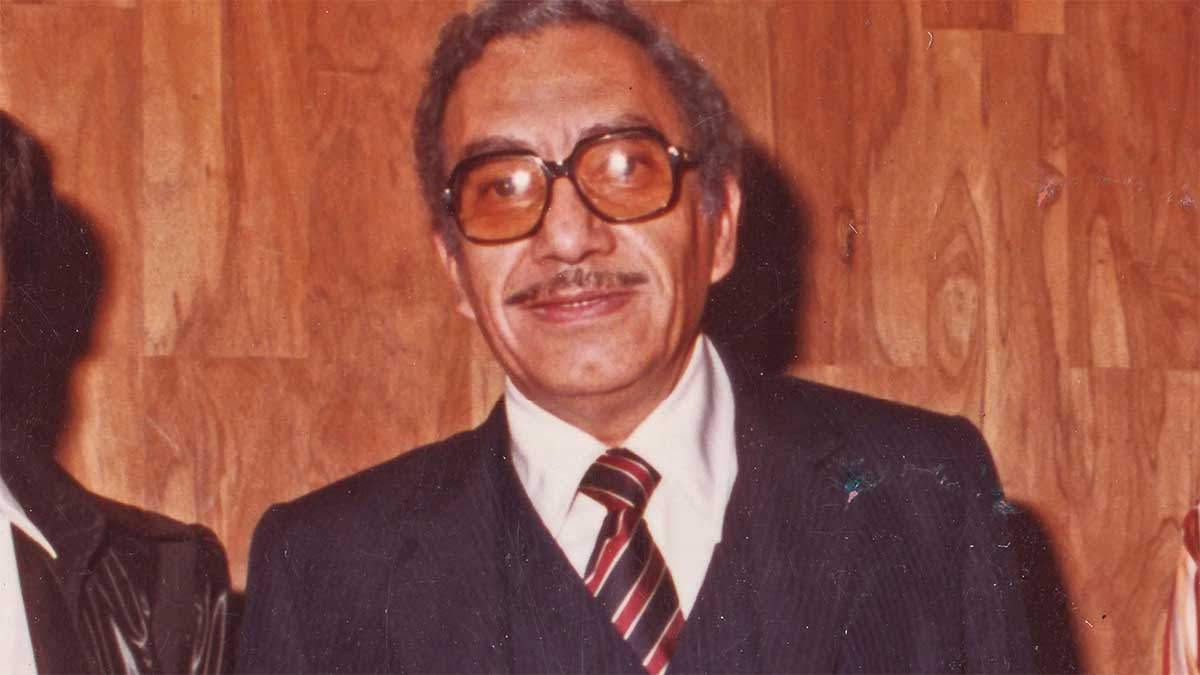
Journalist Manuel Buendía, he exposed CIA operations in Mexico and state collusion and was murdered on May 30, 1984.

The intelligence agency was created at the initiative of US President Harry Truman, in the midst of the Cold War, at the end of World War II, following the signing of the National Security Act on July 26, 1947. The CIA began operating in September of that year. It has also been called the Company, the Farm, and the Invisible Government.

Mexican journalist Manuel Buendía, murdered in May 1984, dedicated himself to investigating and exposing the CIA’s men and actions in Mexico. He considered it one of the most important tasks of his professional life. As a result of this work, he published a groundbreaking book in 1983, an essential reference work, compiling the columns he wrote for El Día, El Sol, El Universal, and Excélsior about the Company’s espionage network in Mexico: The CIA in Mexico.

The book presents the results of his research into the links between Mexican officials and U.S. agents who financed the Nicaraguan Contras, created to fight the Sandinista government. Some believe Buendía’s murder was related to the disclosure of these connections.

Philip Agee was a CIA officer from 1957 and carried out espionage work in Mexico between 1960 and 1963. In 1975, his groundbreaking book on the agency’s dirty work, Inside the Company: A CIA Diary, was published. In it, he revealed the agency’s operations in Latin America and Mexico. According to him, local politicians, such as former presidents Gustavo Díaz Ordaz and Luis Echeverría Álvarez (known as Litempo-14), and the Federal Security Directorate were key allies of the CIA’s secret service, La Granja.

Persecuted by the U.S. government, he found refuge in Havana. Upon his death in 2008, an obituary appeared in Granma describing him as: “a loyal friend of Cuba and a fervent defender of the people’s struggle for a better world.”

Philip Agee (left)

The Company, as depicted in books such as The CIA and the Cult of Espionage by former agent Victor Marchetti and John D. Marks; The CIA as Organized Crime by Douglas Valentine; CIA: History of the Company by Eric Frattini; and The CIA and the Cultural Cold War by Frances Stonors Saunders, is the empire’s primary instrument of espionage and counter-espionage, propaganda apparatus, and disseminator of toxic information. It is allied with the worst dictatorships on the planet and has a long history of destabilizing progressive governments through illegal methods and without any ethical considerations.

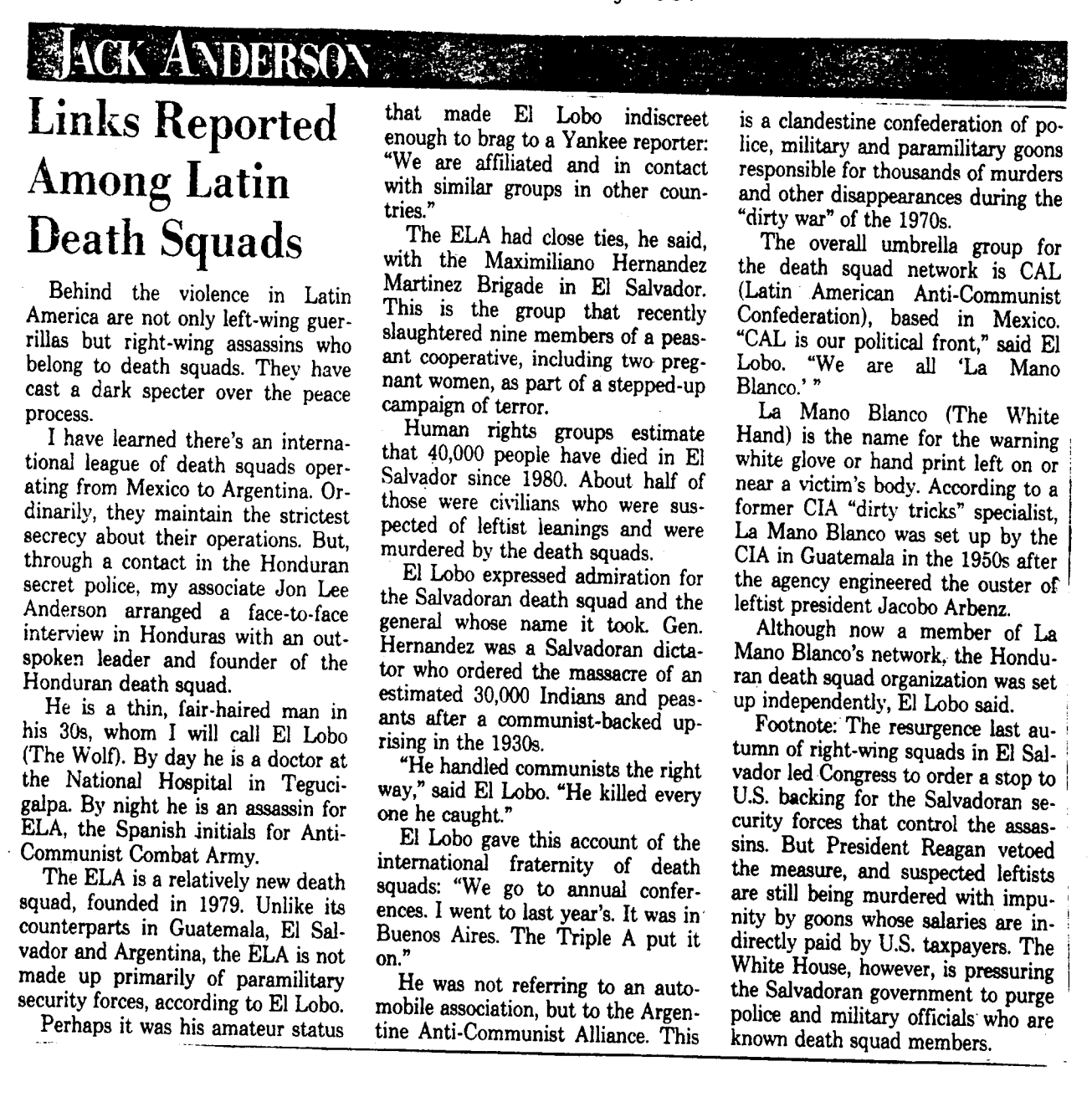
As Valentine shows, the Invisible Government financed and armed death squads in El Salvador, Guatemala, Somoza’s Nicaragua, South Korea, Iran, Chile, and Uruguay. It carried out covert operations to overthrow the democratic government of Salvador Allende and collaborated with the Chilean military to compile a list of 20,000 people to be eliminated on the morning of the coup.

The CIA plays a fundamental role in the war on drugs in Mexico, even surpassing the DEA. The designation of drug cartels as terrorist organizations, and therefore as a matter of national security for Washington, strengthened the agency’s presence within the country.

According to a Reuters special report on the CIA’s secret war against drug cartels, dated September 10, 2025, the agency has been conducting covert operations for years in collaboration with special counter-narcotics units within the Mexican Army. With the authorization of the Mexican government, it provides training and equipment to these units, as well as financial support for activities such as travel.

“Units of the Mexican Army and Navy, investigated by the CIA, have played a key role in planning and executing most of the high-profile drug trafficker captures in recent years. The Army is composed of hundreds of CIA-trained special forces and is considered the most capable military force in Mexico for capturing heavily armed drug traffickers entrenched in fortified mountain hideouts, according to security sources,” the report stated.

On September 12, 2025, President Claudia Sheinbaum emphatically denied the report. “What Reuters says is false. That report claims that there are CIA agents working with the Mexican Army in these operations. That is absolutely false, it is not true,” she stated at her morning press conference.

The tragic accident in Chihuahua is just adding insult to injury. According to the Los Angeles Times, the CIA has participated in three anti-drug operations in the state this year. If true, Governor Maru Campos would be committing a very serious offense. After offering different versions of what happened and meeting with Secretary Omar García Harfuch, the governor thanked the President for her openness and willingness to cooperate.

The events have been used by both the PAN and Morena parties to position themselves for the upcoming state elections. The PAN is portraying its governor as a great stateswoman committed to the fight against drugs. Morena is using it to accuse her of treason. What happened doesn’t appear to be an “exception.” The matter goes beyond an electoral issue. What’s at stake is a question of sovereignty and the difficult relationship with the United States. With the governor remaining silent, many questions remain unanswered.

The post The Company & National Policy appeared first on Mexico Solidarity Media.


From Mexico Solidarity Media via This RSS Feed.

41


Venezuela’s acting head of state, Delcy Rodríguez, and the prime minister of Barbados, Mia Mottley, held a meeting on Monday night in Bridgetown, the capital of Barbados.

They agreed to strengthening bilateral relations, specifically in the areas of energy, agriculture, education, and tourism.

“We have concluded, with profound satisfaction, the agenda we have built in sectors of great importance to our countries,” Acting President Rodríguez told the media. “A first point is food production, with Barbados going to Venezuela to produce food on Venezuelan soil, allowing for supplies for Barbados but also turning Barbados into a hub where we can export food to the Caribbean and Africa.”

In a joint statement, the leaders noted that Acting President Rodríguez had invited Prime Minister Mottley to learn about “the experience of the communal economy in Venezuela, how organized communities can guarantee their own food.”

In that regard, she also announced that they agreed to review production and export trends “that will allow us to be complementary, so that we can acquire goods in Barbados, and Barbados can acquire goods in Venezuela, without having to look beyond our borders, which are close and sisterly.”

She immediately added that she told the prime minister that this Monday, April 27, 2026, “the economic and commercial union between Barbados and Venezuela is being born.”

Joining energy investments
Rodríguez, who at the beginning of her speech congratulated Mia Mottley on being re-elected for a third term as prime minister of Barbados in the elections of February 11, 2026, noted that she invited Barbados to invest in oil and gas fields in Venezuela.

“Let the effort and initiative to increase hydrocarbon production in Venezuela be added so that we can guarantee supplies and energy security for Barbados in the future as well,” she said.

They also discussed the complementarity of renewable energy sources, which would allow both countries to manufacture solar panels and thus create a complete energy base, and area which holds “many opportunities for investment,” according to Acting President Rodríguez.

“We want to review investment and double taxation agreements so that we can combine our strengths and complementarities,” added the acting president.

Language exchange
“There is a project that I will personally dedicate myself to; the prime minister intends for the people of Barbados to have a second language, and that language is Spanish,” revealed Delcy Rodríguez. “We have the Venezuelan Institute of Cultural Cooperation, which already trains many students in Barbados to learn Spanish, and we have agreed to expand the institute’s capabilities and incorporate technological platforms so that Venezuelan teachers can teach Spanish to Barbadians.”

The agreement includes a reciprocal component so that officials and spokespeople from community councils and communes in Venezuela can learn English with teachers from Barbados, she added.

Tourism
The acting head of state said they discussed increasing the number of flights between Venezuela and Barbados, “potentially integrating other destinations near our countries so we can offer tour packages both to the people of Barbados and to tourists visiting this beautiful island, offering tour packages to some destinations in Venezuela, and also offering tour packages from Venezuela to visit Barbados.”

They also discussed the need to establish a maritime connection for the transport of both passengers and cargo.

Something important that “we have requested from the Venezuelan Ministry of Tourism is to have a training course for our tour operators in Barbados… There is much we can do from a tourism perspective between Venezuela and Barbados. I have nothing but praise for the landscapes of Barbados and Venezuela,” she added.

Mottley invited to Venezuela
After indicating that both sides were pleased with the visit, Rodríguez extended an invitation to the Barbadian prime minister to visit Venezuela. Rodríguez described the meeting as productive.

This is Rodríguez’s second international trip since assuming the role of acting president on January 5 following the illegal abduction of Venezuela’s Constitutional President Nicolás Maduro. Analysts have noted the similarity in the use of decapitation strikes, condemned by all forms of international law, by both the US and Israeli forces.

Her first trip was to Grenada on April 9, where she met with Prime Minister Dickon Mitchell. At that meeting, the two agreed to strengthen ties in the areas of energy, agriculture, education, health, and foreign trade.

Nearly 600 Venezuelans Repatriated From US in New Return to the Homeland Flights

In the early hours of Saturday, January 3, 2026, US troops carried out air strikes on populated areas of Caracas, Miranda, La Guaira, and Aragua, killing more than 100 people. The US invaders also kidnapped the Constitutional president, Nicolás Maduro, and his wife, Cilia Flores.

(Diario VEA) by Yuleidys Hernández Toledo

Translation: Orinoco Tribune

OT/JRE/SL


From Orinoco Tribune via This RSS Feed.

42


By Irene Zugasti — April 26, 2026

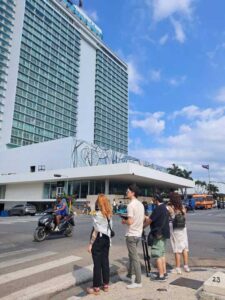
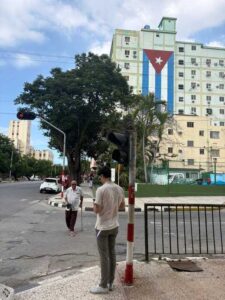
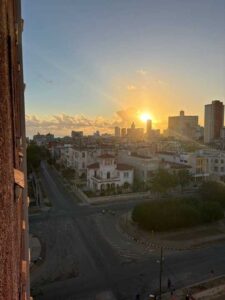
This weekend, I spent exactly 72 hours in Cuba. I landed in a city patched together with darkness, and took off from Havana. I left behind a very different scene, with thousands of twinkling lights that gradually transformed into a sea of light as I gained altitude. I will try to explain.

It is important to start by saying that Cuba is not a failed state. There is no chaos, looting, violent mobs, or anything of the sort in Cuba. I do not say this because I was only there for three nights, but because I have been monitoring the news from both sides of the media spectrum for months. Being in a place does not always guarantee you know it, and vice versa.

A failed state, according to political science, is defined by several characteristics, including the loss of territorial control and authority, the collapse of public services, and disintegration or balkanization. None of that is happening in Cuba: the state is not controlled by drug cartels, armed insurgencies, or paramilitaries (although that boat from Miami, crewed by terrorists armed with weapons, that was shot down a few weeks ago indicates that they are still trying). It is not El Salvador, and it is not Ecuador.

I hardly encountered any police or military personnel on the street, just ordinary people doing ordinary things. In downtown Havana, people walk around with their cell phones in their hands, something that could not be said of the centers of many other capital cities in the region. The movie theater is open and full, admission is regulated, and costs five pesos—you do the math. Music is playing, and there is still ice cream at Coppelia, although it is served a bit stale and a little melted. The airport is empty, painfully empty, but clean and well-staffed with workers idling because there are no flights to receive.

The hospitals are open and, with Soviet-style discipline, are coordinating the arrival of donated medicines from around the world to alleviate shortages. Exams are being held online, as are school classes, and teleworking is becoming the alternative amid fuel shortages affecting transportation. There are cars and bicycle taxis because the little crude oil available is distributed in an orderly fashion; it is not every person for themselves. The internet works almost all the time, and when it goes down, a group of kids explained some tricks to recover it or to use digital tools that are less sensitive to network outages, such as WhatsApp.

To block out the sun
About the blackouts. Another issue. Blackouts have become the symbol for those who want to see Cuba as a lost cause. I remember that in the Mercadona supermarket in my neighborhood in Madrid, the toilet paper ran out, and people hoarded cans of tuna and bags of potato chips during a blackout that lasted barely 12 hours. The roads were gridlocked. It is no wonder they laugh in Cuba when we tell them about it.

How can we not talk about the misery we witnessed during the pandemic, with some neighbors stockpiling liters and liters of bottled water, knowing full well they would leave their neighbors with nothing? Years of individualism and a “what is in it for me” culture had turned us into balcony police and selfish hoarders. In Cuba, there is a shortage of almost everything. What little comes in is scarce, of course, but decades of socialism guarantee that distribution will not be a chaotic mess with people trampling each other to get a ration.

Pepe, our guide, explains this perfectly, subsidized food ration book in hand. For decades, the state provided beans, oil, even wedding banquets and birthday cakes, meat, and milk—which are now scarce—at incredibly low prices, unthinkable in a market economy. The same is true for electricity and water, basic goods that are now at risk. Those eager to acquire them in order to become incredibly wealthy see this crisis as the ultimate opportunity. To do so, they need to expose and exaggerate the misery.

Is there garbage, the kind that worries Europe so much? In some streets, yes, there are piles of garbage, but in many others, especially in residential areas, there are not. Someone told me about a neighborhood initiative that plants flowers in ditches and vacant lots to prevent inconsiderate neighbors from dumping waste there instead of taking it to designated collection points. In Cuba, the same pile of garbage—the same photo and same angle—were enough for many newspapers to write about the collapse. What self-serving shortsightedness. Many countries in Southeast Asia are living landfills, and nobody calls them failed states. I do not even have to go that far: in San Diego, Vallecas, there are rats bigger than my dog when I take him for a walk, while the Salamanca neighborhood shines.

I will go back to the electricity issue: every Cuban uses a whole range of terms related to electricity, generators, meters, and other jargon that I am completely incapable of understanding. It is as if they have all suddenly become electrical engineers. When everything suddenly goes dark, poof, and the refrigerators stop whirring and cell phone flashlights start up, someone always throws in some word I do not know.

As far as I could understand, back in 2006 Cuba implemented a policy to decentralize energy use for diesel and fuel oil generators, creating “islands” of power throughout the country. This means that the supply, even in its scarcity, is managed to prioritize hospitals, public transportation, senior centers, and street lighting. I should mention that during the California wildfires a year ago, private firefighters selectively extinguished the blazes near their clients’ mansions. I do not want to go that far afield: in Madrid, 7,291 elderly people died in agony in nursing home beds because only those with private insurance were taken to the hospital during the COVID-19 pandemic.

La Habana, Cuba. Irene Zugasti.

Havana, Cuba. Photo: Irene Zugasti.

And yes, of course I asked about Russian oil and Chinese solar panels. As for the latter, my friend Josué, an engineer working on Cuba’s energy transition, can surely explain it better. However, they are a key element of sovereignty, and Cuba has had integrating them into the National Electric System on its agenda for some time. The oil embargo has accelerated the process, but it is not a magic bullet. Lithium batteries are needed to store that energy, infrastructure needs to be modernized, and even then, fuel is still needed. The Cuban government told us that the famous Russian tanker that crossed the US embargo in March was a momentary relief, but what a relief it was. After its refinement—which took several days since it is not automatic—energy and crude oil began to flow that same Saturday, and it made a noticeable difference. That is why, when I looked out the window on the plane back, Havana and its surroundings were shining again, even if only for a little over a week… or until the next tanker.

Living at war
In war zones, people go on living. They go out, study, have sex, work, raise children, cry, dance, celebrate, or mourn their dead. I recently read in a book of chronicles from Gaza about a young man who started his degree during the medieval siege of 2024 and continued logging on to his classes online every day until an “Israeli” bomb took him down. In Ukraine, in 2015, we danced cheek to cheek at a concert in a city three kilometers from the front lines. In 1936, Madrid itself was a scene where young women brought snacks to the militiamen defending the University City, then returning home by tram.

Cuba is at war, a sadistic war that has lasted for decades and is now intensifying to make them suffer and to send us a message of cruelty that Cubans transform into a life of resistance. Resistance is exhausting, damn it. They know it, because obviously, they watch YouTube and the news, and they also look at the Instagrammers from Florida who tell them they will live better on the other side of the Atlantic.

Yet, it is not Cuba that is holding anyone back if they want to leave—leaving is perfectly possible, whether they will be willing to take you in is another matter. They also cannot promise you that things will get better, because that does not depend on them. “Do not blame the embargo,” a woman who ran a café told us, applauding a possible Trumpian invasion. It is impossible not to think that the damn embargo must have something to do with it when you see the empty hotels, the stranded taxis; when you cannot even use a credit card, open many apps that are banned by the US, or receive a suitcase with medical supplies because the United States prohibits importing them.

It is impossible not to think how different everything would be if those people—capable of recycling the unrecyclable, of illuminating the unilluminable, and of coloring the grayest things—did not have to live with a clamp on their throats. If they could buy medicine, import supplies, and receive tourists, remittances, and students. If they could send their doctors again and trade with neighbors without Washington locking them up and throwing the key into the sea.

Building with a big Cuban flag mural. Photo: Irene Zugasti.

Building with a big Cuban flag mural. Photo: Irene Zugasti.

Trump’s threats overlap with reports of a military intervention plan that surface in the international press every few days. Cuba’s doctrine of peace, evident in its diplomatic practice, is light-years away from European bellicosity. However, taking note of recent events, Cuba has activated a defense plan in case Trump turns his attention to the island and grants Marco Rubio’s wishful thinking to attack. Cuba has well-developed contingency plans honed by experience with hurricanes and the Special Period in the 1990s. Its defense is based on a consolidated doctrine and a decentralized, territorial-based structure, located only 90 miles from the US, let us not forget. Its leadership is firm on this point: in the event of aggression, which they neither desire nor encourage—as most members of the United Nations acknowledge—Cuba will defend itself. That is their position.

Satisfy hunger
Believe me, it is not that difficult to write a neutral account of Cuba. I could have easily done without two of the three days I spent there. A stroll along the Malecón would suffice, and I would return with a piece, or many, brimming with testimonies about hunger, about satiety, about despair, and about the urgent need for change. The self-appointed guardians of progress, the progressive pundits, and the purveyors of bad news would applaud it.

If you put a microphone in front of many people, as we did, the mood ranges from the teenager clamoring for annexation to Miami to the elderly revolutionary sobbing with rage. Without resorting to stereotypes, there is a whole spectrum: the pragmatic taxi driver, the woman joking about the blackouts, the disagreeing couple, the jaded, the indifferent, the resilient, and the convinced. I could choose what and about whom to tell, and who to omit—whether to sensationalize the misery or the epic of the revolution—or I could expose them all and remain neutral.

At the end of the day, why am I writing this? Because testimonies and life stories are just that: a mosaic of experiences that help us understand a reality that is neither singular nor exclusive. Beyond that, I believe they are only useful if combined with analysis and data, with history and geography, and, above all, if one is honest about the perspective from which one writes and the position one chooses to take. There is always, always a position. Even among those who write “neither one nor the other.”

Sunset in Havana, Cuba. Photo: Irene Zugasti.

Sunset in Havana, Cuba. Photo: Irene Zugasti.

Some will say this text is partisan, biased, and blatantly sympathetic. I do not hide it: what should I say, and what boundaries should I respect? I am not particularly interested in those who, from their pulpits, revel in what they believe to be objective analysis, those who enjoy listing the flaws and the “buts” with a smug little smile. Of course, there is an emergency, and of course something has to be done, damn it. I say that something could start with the most obvious thing: demanding that those in power stop issuing statements and declarations and truly extend a hand to Cuba. That they stand up to the blockade. That Cuba, without the embargo, can live on equal footing with the rest of the world. And then, well, let them decide.

Believe me, revolutionary self-criticism works better in Havana than in Brussels. I am not saying anything new, but I do not read anything similar among those who, just by visiting her, already felt entitled to condemn her and to expose her filth, because that way they would remain untainted. I will not name them, but I know exactly who I will never want near me if wars or revolutions come.

Cuba—and I claim it as such, forgive me—is a country with nine million souls, but it is also a symbol. We have read about it, sung about it, and studied it. Some have set foot there a thousand times, while others will never do so, yet still love it. It must have done something right. Cuba reminds us that a handful of brave men—led by a Cuban and an Argentinian hiding in Mexico, trained by a Republican aviator in exile—changed the end of history into a beginning. If that is epic, then I claim it. They resisted an invasion of 1,500 men trained by the CIA (65 years ago this week) at Playa Girón. They taught literacy, provided education, and healed colonial wounds—for themselves and for millions of people around the world for over half a century.

OFAC Reverses Block on Venezuela’s Payment for Maduro’s Legal Defense in Lawfare Case

They have given art, they have given science, they have given politics, and they have given certainty to those who had none. They can continue to give so much, so very much, because they are practical, pragmatic, and courageous in management and innovation, despite all the system’s shortcomings—which I will not list here because I would not dare—Cuba still breathes an ethic, that of the new man and woman. That is what allows them to remain standing today, despite everything—despite the hunger, the war, the blackouts, and the damn blockade. I do not know what the future holds, but everyone who ever believed in all of this should have the decency not to abandon them, for the good of Cuba and for all of us.

(Diario Red)

Translation: Orinoco Tribune

OT/JRE/SF


From Orinoco Tribune via This RSS Feed.

43


By Vijay Prashad – Apr 23, 2026

The way Iran has been able to stand up to the West has become a source of admiration across the formerly colonised world. Where does that confidence come from?

During some of the worst days of the illegal US-Israeli war on Iran, I was talking to friends who were in the civilian areas being bombed. Some of them are scholars, others poets and artists, some work in the government, others in institutions of different kinds. All of them, regardless of their views of the government, stood defiant. Not one person felt that their world was under threat. They remained steadfast, their courage emanating from an immense belief in the resilience of Iranian civilisation.

Marxist and national liberation thought have had a very complex history with the concept of ‘civilisation’. Classical Marxism rejected it, since it could flatten social division under a blanket of cultural homogeneity and therefore negate the necessity of class struggle. But as Marxism became a crucial framework in the great anticolonial struggles of the post-World Anti-Fascist War era, the idea of civilisation returned with a different meaning. Civilisation came to be understood as a valuable terrain in the cultural struggle against imperialism. It could become an instrument of national continuity and political legitimacy rather than simply an ideological mask for class domination. Yet this reclamation of civilisation had to be carried out from the standpoint of an emancipatory project willing to break with certain reactionary inheritances within that civilisation itself.

In the case of China, for instance, Chinese Marxism – best synthesised by Mao Zedong – insisted on a break from the worst inheritances of pre-revolutionary China, such as Confucian hierarchy and sexism, at the same time as it adopted, through class struggle and ideological transformation, the very idea of ‘Chinese civilisation’ as a bulwark against imperialism and for the development of national patriotism.

Kusbudiyanto (Indonesia), Bird Market, 2026.

The Iranian Revolution (1978–1979) was made by a range of political forces, including Marxists, many of whom were subsequently persecuted and killed by the newly created Islamic Republic. Despite their subjugation, many Marxist ideas entered the ideological framework of the Islamic Republic, whether through the work of a range of thinkers with their own histories with Marxism such as Ehsan Tabari (1917–1989), Jalal Al-e Ahmad (1923–1969), Ali Shariati (1933–1977), Bijan Jazani (1938–1975), or Khosrow Golsorkhi (1944–1974). I wish I could write more about these thinkers, but that would take an entire book. The most compelling was Golsorkhi, who was killed in his prime. He told a rattled judge at his trial:

I begin my words with a saying of Mowla [Imam] Hossein, a great martyr for the peoples of the Middle East. I, who am a Marxist-Leninist, first sought social justice in the school of Islam, and from there arrived at socialism. I will not bargain for my life in this court, nor even for my lifespan. I am an insignificant drop from the struggles and deprivation of the fighting peoples of Iran… Yes, I will not bargain for my life, for I am the child of a fighting and courageous people. I began my words with Islam. True Islam in Iran has always repaid its debt to Iran’s liberation movements. The Seyyed Abdollah Behbahanis, the Sheikh Mohammad Khiyabanis, are true embodiments of these movements. And today too, true Islam repays its debt to Iran’s national liberation movements. When Marx says, ‘In a class society, wealth accumulates on one side and poverty, hunger, and misery on the other, while those who produce wealth are themselves deprived’, and Mowla [Imam] Ali says, ‘No palace is erected unless thousands are impoverished’, there is a profound similarity. Thus, one can name Mowla [Imam] Ali as the first socialist in history, and likewise the Salman Farsis and Abu Dharr Ghaffaris.

By the time of the revolution, the Iranian left – divided among the Fedayeen guerrillas, the communist Tudeh Party, and the Islamist-revolutionary Mujahideen – had come to understand that they could not overthrow the Shah without the religious forces. But they underestimated the power of the clerics over Iranian society, including over the working class. It was this miscalculation that transformed the Iranian Revolution into the Islamic Republic within a year. Yet rather than form an ordinary theocracy, post-revolutionary Iran drew on a much older civilisational inheritance, one that dates back to the rule of Cyrus the Great (559–530 BCE) and the Achaemenid Empire (c. 550–330 BCE) – roughly two thousand years before the arrival of Shi’ism as the state religion in Iran during the Safavid Empire (1501–1736). It is this older civilisational inheritance that plays a foundational role in Iranian society, enabling it to absorb internal differences and to summon a deeper historical legitimacy at times of terrible crisis as the basis for the defence of sovereignty. In 1971, the Shah held a massive event at Persepolis to celebrate 2,500 years of continuous civilisation since Cyrus the Great. Later, during Iraq’s war of aggression on Iran from 1980 to 1988, when Saddam Hussein tried to cast the conflict as a war of Arabs against Persians, the Islamic Republic rejected that framework and insisted that this was rather a ‘defence of the homeland’ (دفاع از وطن, defa’ az vatan), drawing on the idea of an unconquered and uncolonised land that must be defended at all costs by its people.

Ibrahim El-Salahi (Sudan), Vision of the Tomb, 1965.

It is difficult for those who do not come from colonised societies to understand the power of such statements as ‘defence of the homeland’ and of the idea of civilisational inheritance. The damage caused to so many social formations by colonialism is vast. Colonialism steals wealth and reinvests it elsewhere for the development of other peoples; it denigrates the colonised peoples’ cultures and often denies them their own language and their own sense of a historical mission. That is why so many people in the Global South marvel that Iran has been able to stand up to the United States and win the current conflict in strategic terms.

For those who share that history of obliteration, to witness the kind of dignity displayed by societies such as China or Iran, where there is less need to fashion cultural pride out of hallucinations (through the creation of imagined pasts) or by vilifying others (whether minorities or foreigners), is nothing short of inspiring. The lack of total colonial destruction of culture in such places allows for their own history to be reclaimed and reconstructed without being totally caught up in false reversals of the West (often equal parts rejection and mimicry). It is the kind of confidence that faces the destructive power of the United States with dignity and has the courage to send back Lego memes of Trump and his associates that are not about empty mockery but about genuine disdain.

Eng Hwee Chu (Malaysia), Beyond the Border, 2014.

In December 1997, the Organisation of the Islamic Conference (OIC) released the Tehran Declaration, which advanced the idea of a ‘Dialogue of Civilisations’. This was a direct response to Samuel Huntington’s 1993 essay and 1996 book The Clash of Civilisations and the Remaking of World Order. In that initial essay, published in Foreign Affairs, Huntington predicted that ‘Conflict between civilisations will be the latest phase in the evolution of conflict in the modern world’. For Huntington, history had moved from the clash of ideologies (communism versus capitalism) to the clash of civilisations (which he defined in religious-cultural terms as ‘Western, Confucian, Japanese, Islamic, Hindu, Slavic-Orthodox, Latin American, and possibly African civilisation’). Huntington warned that the new fault lines would be along these axes. The OIC cautioned that this way of seeing the world might produce the very conflict it claimed to describe rather than prevent it, and that it would be better to hold a dialogue of civilisations rather than await the conflict between them.

A Primer on the Petrodollar and the War on Iran

The Tehran Declaration found traction within the United Nations (UN) but not in the halls of Western capitals, where the rhetoric of the War on Terror – which predated 2001 – escalated out of control. Fear of Islam became routine, and it was quickly associated with fear of migrants, a dual fear that continues to paralyse Europe and the Americas. In 1998, the UN proclaimed 2001 the Year of Dialogue Among Civilisations, and at the 31st General Conference of the UN Educational, Scientific, and Cultural Organisation, held in Paris from 15 October to 3 November 2001, it selected the Iranian philosopher and diplomat Ahmad Jalali as its president and invited Iran’s president, Seyyed Mohammad Khatami, to address the body. The conference took place little more than a month after the attacks on the US in September and during the US invasion of Afghanistan as part of its Global War on Terror. Khatami’s address remains powerful, asking the world not to yield to ‘false political polarisations and divisions’. Terrorism ‘is the result of the sinister union between blind intolerance and brute force, with the goal of serving an illusion which, despite all its propaganda, is nothing but the projection of the harmful contents of the unconscious’.

Gerard Sekoto (South Africa), Mother and Baby, 1943–1945.

When a terrorist attack happens, the worst thing, Khatami said, is to respond with revenge. ‘Revenge is like salt water which, though it looks like water, increases the thirst rather than satisfying it, thus entangling the world in perpetual outbreaks of violence, hatred, and revenge’. Rather than revenge, Khatami insisted, dialogue ‘is the principal need of the international community’.

A call for dialogue is important and necessary because the alternative is driving us toward annihilation – both through the system of capitalism that deepens inequality and drives planetary destruction and through the system of imperialism that devours societies with war. But neither civilisation nor dialogue will by themselves drive history toward human emancipation. For that, in time, the class struggle will have to intensify, human needs will have to overcome material inequalities and power relations, and the global system will have to be transformed to meet our complex destinies rather than turn us against one another.

José Clemente Orozco (Mexico), Katharsis, 1934–1935.

Carlos Gutiérrez Cruz (1897–1930) developed his poetic sensibility amid the literary currents of post-revolutionary Mexico, including the patriotic group Contemporáneos (Contemporaries), but later broke with them as he became more radical. In 1923, he published Cómo piensa la plebe, folleto de propaganda libertaria en haikais (How the Plebs Think: A Pamphlet of Liberation Propaganda in Haikais), which turned the haikai form associated in Mexico with José Juan Tablada (1871–1945) into a vehicle for communist poetry. Gutiérrez Cruz understood that there was no sense in defending the nation if the masses of workers got nothing from it. The point bears repeating here: a civilisation cannot be defended as an abstraction. If it is to mean anything, it must be defended as the living record of those who make history. As he put it in one of his haikais:

Labriego, la tierra da ciento por uno**y tú ganas uno por ciento.

Peasant, the land yields a hundred from one
and you earn one from a hundred.

(Tricontinental)


From Orinoco Tribune via This RSS Feed.

44


Venezuela has called on the UN to pressure the United States for the immediate release of Nicolas Maduro, weeks after his abduction by Washington.


From Presstv via This RSS Feed.

45


During her official visit to Barbados on Monday, Venezuela’s Acting President Delcy Rodríguez held meetings in Bridgetown with Prime Minister Mia Amor Mottley and earlier with President Jeffrey Bostic.

Rodríguez was received by the Barbadian prime minister at her official residence, Ilaro Court. There, she signed the book of distinguished visitors and then met with Mottley. She was accompanied by Foreign Minister Yván Gil and other members of the official Venezuelan delegation. Barbadian authorities participated in the expanded working meeting, focused on strengthening bilateral relations and deepening collaboration with Barbados.

Together with their technical and ministerial teams, Rodríguez and Mottley reviewed the comprehensive cooperation plan that unites the two Caribbean nations. They focused on strategic sectors such as energy, education, and tourism, which are considered vital to boosting the economic growth and resilience of Venezuela and Barbados amid current global challenges.

Both leaders agreed on the need to strengthen cultural exchange and academic training as foundations for social development. In the energy and economic spheres, the delegations explored joint mechanisms to optimize resource use and open new investment opportunities that directly benefit the citizens of both countries, based on the principle of Caribbean unity.

Acting President Rodríguez arrived in Barbados on Sunday night. Mottley welcomed her and expressed certainty that the visit “will provide an opportunity for high-level discussions on areas of practical cooperation and regional development in general.”

In mid-February, Rodríguez congratulated the Barbadian government on its victory in the general elections held on February 11. The election results secured the Labour Party’s reelection for a third consecutive term, with Prime Minister Mottley at the helm.

Welcomed by President Jeffrey Bostic
Earlier on Monday, Rodríguez was received by Jeffrey Bostic, the Barbadian president. The small nation gained its independence from the United Kingdom in November 1966, but retained the British monarch as head of state until November 30, 2021, when it became a republic.

During the meeting between Bostic and Rodríguez, they and their delegations reviewed the status of various existing cooperation agreements. They also reaffirmed their strong commitment to advancing in strategic areas that promote joint development and social well-being. Key areas of interest in the bilateral relationship include air connectivity, tourism, cultural exchange, and socioproductive projects.

The meeting reaffirmed the vision of unity to strengthen strategic alliances based on complementarity and shared prosperity for the benefit of their nations.

OFAC Reverses Block on Venezuela’s Payment for Maduro’s Legal Defense in Lawfare Case

Venezuela and Barbados have maintained diplomatic relations since 1969. They are characterized by mutual cooperation, integration, and the defense of the principle of self-determination.

This is Delcy Rodríguez’s second visit abroad since she was sworn in as acting president on January 5, following the US military aggression that left over one hundred people dead and resulted in the kidnapping of the constitutional president, Nicolás Maduro, and his wife, Deputy Cilia Flores.

(Telesur)

Translation: Orinoco Tribune

OT/JRE/SF


From Orinoco Tribune via This RSS Feed.

46


Editorial note: Orinoco Tribune does not generally publish pieces older than two weeks. However, an exception is being made in this case as the current article remains as relevant today as when it was first published.

A Conversation with Em Cohen about the state of the movement

We sat down to talk with Em Cohen, whose meta-level critiques of general movement strategy and tactics we’ve deeply appreciated, and felt it would be valuable to delve into further. While Em frequently writes about Judaism and Zionism through the framework of “philosemitism,” in this conversation we chose to focus on a question that has been on many people’s minds: why hasn’t the so-called u.s. left, despite all of the efforts made over the last two years, been able to meaningfully intervene in a live-streamed genocide? And now that u.s.-led imperialism is descending into its death throes, unleashing some of the most naked expressions of violence we have perhaps ever seen, threatening to take out Iran, Venezuela, and Cuba even as it continues its whole-sale destruction of Gaza — where are we going wrong? We urge folks to check out more of Em’s writing and analysis at medium.com/@emcohen.

**W4G:**To start, could you talk a little bit about your critiques of some of the underlying frameworks that you think shape the strategies and tactics of the so-called “u.s. left?” You’ve written before about the way that there is a mismatch between the revolutionary-sounding rhetoric that we use, and the liberal or reformist nature of many of these tactics, which are designed to appeal to the moral conscience of the ruling class — or as you say, to simply register the fact of our dissent and nothing more. Can you give some examples of this?

EC: Whenever a situation provokes righteous anger, and society seems like it’s about to burst into flames, the popular protest organizations that have come to be known as the “u.s. left” jump into action. Like a well-oiled machine, they post the same graphic that they always post, with the same font and the same logos and the same endorsers, calling for another iteration of the same protest. If it’s not dubbed an ‘emergency action’ and announced that night, their faithful members spend the days leading up to the protest imploring everyone to show up and ‘bring all their rage.’

On the day of, they truck in loads of signs to pass out that make extensive use of radical slogans and imagery. They have a few organizers shout fiery speeches about people power, smashing imperialism, and freeing them all into sticker-covered megaphones. The crowd boos and cheers. Whenever the speakers mention some evil person or corporation or state, the crowd chants shame. Then the protest ends and everyone goes home. Over the next day or two, independent protest photographers comb through the footage they collected and make sure to post a bunch of really cool pictures and time-lapse videos showing just how many people came out.

The overwhelming majority of people who participate in this hamster wheel don’t think the protests they are calling for and attending will really bring about revolution. In fact, often, they’re not thinking of the protests in terms of the material at all. Think about how many times you’ve seen people chant “stand up, fight back” while marching peacefully down the street with cops next to them and when someone tries to actually act on the rage they are being told is legitimate and really stand up and fight back, the protest organizations’ safety marshals/peace police step in to stop them. It is not that they don’t understand what the words “stand up, fight back” mean, it is that they do not connect that slogan to the actual material reality of fighting in the physical world. It is simply a gesture, a representation of anger.

Protest in the so-called u.s. is a simulacrum of protest. While some of the components that make up a ‘protest’ are present, those that imbue the protest with its revolutionary character are absent. It is protest theater. This doesn’t just happen with protests, by the way. Rather, it happens with many different (formerly) radical methods of change-making. Over the past couple of years, many of the popular protest orgs have started calling for “strikes” that last one day, carry no strike fund, and basically only operate at the individual level—in the sense that the call is simply put out and individuals participate or don’t. These orgs put out graphics telling people to skip work and school, with ‘demands,’ and claim that this will grind the economy to a halt. The day comes and goes. No one really knows how many people actually heeded the call. No economic impact is ever really assessed. Did it work? Were the demands met? Does the organization even care? It’s a simulacrum of a strike.

Recently, some protest orgs did as they do and called for a protest outside of the jail where President Maduro is being held. Leading up to the protest, they talked about how Maduro must be freed by any means necessary. But at the jail, the protestors basically just stood around and chanted. None of the people who called for the protest or who showed up believed that that protest would have any impact on actually freeing Maduro. Of course, actually freeing Maduro would be quite difficult to pull off. But the difficulty of such an action is not the reason these organizations don’t earnestly try to achieve what they claim they want to. Rather, the call to free Maduro by any means necessary is totally compartmentalized from the material task of doing so. Again, the protest is separated from the material. Despite the chants and the demands and the slogans, the goal of the protest calling to free Maduro is not to actually free Maduro*. The goal of the protest is to have the protest.* To register dissent, to raise awareness, to speak out.

These ineffectual actions aren’t simply a product of bad organizing but rather of liberal, idealistic ways of understanding and formulating political struggle. You ask people how they are measuring if the protests they are calling for are working and they look at you like you are speaking another language. They aren’t thinking in terms of the protest ‘working.’ Rather, they protest because it is ‘good’ to protest and to show that we oppose what’s happening. There’s often this unspoken hope that the state will see how many people show up to the protests and will base its decisions on that. But then the protests happen and the state ignores them and the protest orgs keep doing the same thing over and over again.

Revolution is the process of totally upending society and this will only be accomplished with revolutionary methods. But the liberal idealist way of approaching struggle treats the methods as inconsequential; it is the ideas, the chants, the slogans, the images, not the methods, that matters. So to finish this long-winded way of responding to the question—if you want to assess whether a tactic is revolutionary or just revolutionary-sounding, look at the actual methods being used. The underground railroad wasn’t people marching peacefully in the streets and chanting that slaves should be freed, it was enslaved people freeing themselves. There were no gestures.

**W4G:**I can’t help but feel that so much of what you’re describing is rooted in the class character of much of what we call the “u.s. left” — people from a middle class or petite bourgeois background, or those aspiring to such a status — who are trying to show their solidarity with poor and oppressed people, either here or abroad. In other words, at the end of the day, the issues they’re protesting or organizing around remain largely abstract because they are not materially impacted by them, and so their outlook, which necessarily shapes their tactics and strategies, is rooted in idealism. In other words, they want certain conditions to change, but they don’t need them to.

There’s nothing inherently wrong with middle class people’s desire to show solidarity, and of course, it’s not to say that revolutionaries or revolutionary potential has never come from the petite bourgeois class—in fact, there are many examples to the contrary—but revolutions aren’t made from ideas alone. They have to take hold of poor and oppressed people, the people with actual revolutionary potential, by speaking directly to their material conditions.

Ali Kadri recently said something along the lines of: revolutionary potential belongs to the people who have no choice but to fight against the conditions of capitalism and imperialism. But today, at least in the u.s., this isn’t so simple, because substantial sectors of the poor and oppressed classes have been bought off, pacified, or straight up conscripted into directly upholding some of the most violent arms of u.s. empire—which is evident if you just consider the racial and class makeup of the NYPD, ICE, border patrol, the military, or even prison guards or wardens at this point.

At the same time, we can also say that much of what is driving the endless repetition of ineffective strategies and tactics on the u.s. left is rooted in subjective factors, too, which include defeatism—the fundamental belief that revolution in the core isn’t actually possible (“it’s never the right time for revolution”). And no, revolution is not just “abolishing” this or that thing, or scoring an occasional win by getting some company to divest, it is the total upheaval of the entire system and society. Defeatism may be latent or unconscious, or even obscured by revolutionary-sounding rhetoric, but as you say, in the case of the Maduro protest for example, there was never any intent to actually free him, only to publicly register the fact of dissent: “The goal of the protest is to have the protest.”

What this ends up doing is vastly narrowing the scope of possible strategies or tactics that are even on the table. At a fundamental level, the options seem to be either mass protests or autonomous direct action, which are often framed as opposites (symbolic vs. material) but end up producing similar results. While the mass protest appeals to the ruling class through a show of numbers that is not actually backed up by the material threat of violence that would actually make those numbers consequential, the autonomous direct action appeals to the ruling class through a show of force that is not actually backed up by the numbers that would make that force consequential.

And of course, both of these tactics also suffer from a lack of long-term vision, a roadmap, or the kind of organizational infrastructure that would allow them to happen not just sporadically, but regularly, and in ways that gradually up the ante in attacking the real levers of the capitalist machine. And so, to the ruling class, the autonomous direct action becomes just as much of an empty or symbolic threat as the mass protest, because both are saying, “do this or else,” but the problem is there is no “else.”

People often respond to this kind of critique by arguing that we can’t go immediately from A to Z, and that all of these tactics and strategies are actually “building power” in a gradual way that will eventually lead to some kind of victory. But if these strategies or tactics are in fact working, and will eventually lead to some sort of revolutionary rupture, how would we know that? Is there any concrete evidence we can point to that would show us whether we are on a path that is actually leading somewhere, as opposed to running in place on a hamster wheel?

Occasionally, of course, we have seen impressive numbers of people coming out into the streets and engaging in militant rebellions — in Los Angeles or Minneapolis during the recent ice raids, during the George Floyd Uprisings, and before that, the Ferguson Uprising, the Oscar Grant rebellion, etc. One could go back through the decades and point to many such moments, when people get sick of the old tactics, and hope glimmers for a brief moment. But the issue is that rebellions are sporadic and largely unplanned, and therefore die out, get crushed, co-opted, etc, perhaps for lack of the kind of organization and infrastructure that could seriously defend people from state violence, allow them to strategize against the enemy in longer-term ways, and most importantly, to allow them to grow and develop the rebellion into an actual revolutionary force. But perhaps for other factors as well.

With all that said, what are some ways you think we can get people to reflect on and seriously engage in the question of revolutionary strategy and methods? What do you think are some of the main barriers to this?

EC: People are so resistant to any questioning of either mass-based organizing or autonomous direct action. When you’re in an org that’s focused on mass-based organizing and say “hey, it feels like this isn’t working,” you’re immediately met with almost reflexive responses of “well what’s your idea?,” or “oh yeah? Then why don’t you go do direct action!“ as if direct action is the real answer to what is to be done and mass-based organizing is the thing we do simply because we aren’t brave enough to do direct action. This sets people up to view their options as either shutting up and doing something they don’t think is working, self-sacrifice in the form of individual autonomous direct action, or quitting entirely. This makes lots of people burn out and believe revolution isn’t possible in the first place.

This dynamic where people reflexively respond to criticism or even vague frustrations about things not working with attacking the criticizer, is a vicious cycle that leads to orgs increasingly being filled with dogmatic sycophants. Folks show up because they agree with an org’s rhetoric or a friend invited them. Over time, if they really are there to make change, they start to question whether what they’re doing is actually making a difference. If they bring those frustrations up, they’re immediately shut down. They either stop raising their frustrations or leave. This happens enough times and the thinking in the org becomes so rigid that active ideological struggle is impossible.

To a certain extent, I think the “well what’s your idea?” kind of responses are fair, or at least understandable. It sucks when someone complains and criticizes what you’re doing but doesn’t have any recommendation for what you should do instead. But the requirement that people have the answer before bringing up a criticism basically makes it impossible to ever criticize the larger issues in the first place. Sometimes a vague sensation of “this isn’t working” is really all someone can give. To put it a different way, it’s only the smaller problems or issues that anyone could reasonably have a concrete solution to before bringing up. For the bigger issues, though, the answer is almost always unclear—it can only be figured out over time by actively struggling to find the answer, working through different possibilities, and testing and analyzing the results.

People don’t want to feel totally powerless, and I understand why they would think it’s better to “at least do something” rather than nothing. But I also think we have to simply confront the fact that we don’t have the answers. I certainly don’t know what the answer is. But I think if you don’t know the answer to something, it’s better to spend your time trying to figure it out than to do something you know isn’t working.

There are also larger material barriers, such as the fact that lots of people who are members and leaders of the orgs that make up the so-called u.s. left ultimately benefit from the anti-Black Islamophobic colonial imperialist patriarchal world system. It’s really easy to not care about whether the methods are working or not when your survival doesn’t depend on them. If you don’t need the method to work, moral grandstanding is enough. I do think this plays a really big role here, and speaks to the compartmentalization between methods and rhetoric that I touched on earlier. Because people don’t need the methods to work, it’s a lot easier to not even think about the methods as actual tools for doing something. This is also one reason why so many on the so-called u.s. left are resistant to studying.Instead of viewing revolutionary theory as a resource that we can use to hone our ways of thinking, gifted to us by those who carried out successful revolutions in the past, studying theory is viewed as either a fun social activity or a chore.

Another barrier to seriously engaging with the question of how to develop new revolutionary strategy and tactics is the vulgar invocation of “the urgency of the situation we’re facing.” I have seen so many people downplay analysis and reflection and study as activities that should only take place when we “have the time.” This is the total backwards approach. It is not that the situation is so urgent that we can’t afford to spend time studying and thinking, it is that the situation is so urgent that we can’t afford to NOT spend time studying and thinking. The situation is too urgent for us to waste our time making the same mistakes that revolutionaries before us made and we can avoid making if we learn from them.

I do think most of these barriers can be corrected through serious study of political theory, especially studying as part of a good group. At least, I want to believe that. So, I’d recommend that people try to find others they can study revolutionary theory with. Books are great, but you can use podcasts, youtube videos, whatever. Just try to meet with people regularly and talk about what is and isn’t working, why things are the way they are, etc. Maybe set up regular phone calls with a couple of friends and talk about your political work, ask them hard questions and encourage them to do the same to you and seriously try to think through the answer without being defensive. Be curious and be critical.

I also think, in a very grim way, as climate collapse gets worse, as social conditions get worse in general, more and more people will find themselves in positions where their survival depends on the methods workingand so they will have to struggle to figure out better strategies and methods.

W4G: It’s interesting that you highlight a lack of capacity for criticism and self-criticism on the u.s. left as directly connected to the prevalence of liberal / reformist strategies, even when the lack of tangible results is staring us right in the face. I do think it’s connected to the fact that again, much of the organizations on the “u.s. left” are made up of people from a petite bourgeois background. It’s not just that either. Too often, the people who make the decisions for a lot of these organizations receive their funding from donors that are directly connected to the capitalist class, etc.

Obviously the ruling class is not going to throw money at an organization or project that directly threatens its material interests, quite the opposite, and so many of these organizations will have to promote strategies and tactics that are intentionally designed to be ineffective or non-threatening. It’s not an accident or case of miscalculation. It’s designed that way, as controlled opposition. If someone joins an organization naively thinking it is actually invested in creating the kind of radical change that is advertised on its website at the level of rhetoric, and then challenges the leadership a bit too much, crosses the line a bit too far, asks one too many challenging questions, they will simply be expelled.

At this point I have to be kind of blunt and say that what I think is really needed is for more people on the so-called u.s. left to quite literally commit class suicide. Generally speaking, as people living in the imperial core, many of us are taught to aspire to bourgeois ideals and lifestyles in one way or another, even if we don’t necessarily come from that background. You could call it class aspiration vs. class status. So we have to commit class suicide, and the other thing is that we have to seriously de-identify with being Amerikan. We have to completely reject everything we have been handed by the u.s. empire, because they give us these things precisely to buy us off, to prevent us from doing what really needs to be done, and from uniting with the very people who are best positioned to do it.

I mean, if you are really serious about creating the kind of world you envision, again that is not going to happen just based on vibes. Are you truly ready to give up your subsidized apartment? Your salaried NGO or academic job? Your rock-climbing membership or weekend getaway trips and Air B and B’s? Your Netflix subscription? This isn’t about romanticizing revolution — I think it’s quite literally the necessary first step that has to be taken in order to deprogram ourselves from the horrifying matrix of propaganda, co-optation, and counterinsurgency that so many of us are completely bought off by without even realizing it. I really think we have to completely reject any careerist aspirations or neoliberal self-making projects laundered through entrepreneurism, social media influencerships, or the like in order to even begin to actually interface with reality—because so much of the lifestyle that is peddled to us is so skillfully designed to hide from us the very reality that the majority of the rest of the world actually lives in.

I really love the Mao quote that says, “In class society, everyone lives as a member of a particular class, and every kind of thinking, without exception, is stamped with the brand of a class.” I actually feel like we need to take this much more seriously — that every idea we have is ultimately shaped by material conditions, that no one is immune from this. The idea that we can just think or imagine our way out of our class conditioning, that if we just become critical or intellectual enough, we can be immune from propaganda, is so sinister, and is really rooted in liberal idealism and individualism.

I’m not saying this to be defeatist or deterministic, actually the opposite. This was the whole reason they placed such emphasis on practicing “criticism and self-criticism” during the cultural revolution, because they understood how deeply capitalism and colonialism conditions people’s attitude and outlook and psychology, and that this is something we have to take extremely seriously. Again, not in a vibes-based way of “the personal is political” or “i need to work on myself” or “accountability processes,” but actually taking seriously the need to completely transform people into new human beings, that that is as much a part of the material process of revolution as redistributing land or wealth, and really understanding how long and difficult of a process that is. And maybe most importantly, that we can’t transform our consciousness alone.

We’re not used to relating to ourselves or each other in a way that isn’t thoroughly saturated with liberal and idealistic thinking. Which is why when someone says, hey, I don’t think this tactic is working, rather than examine that criticism for what it is (is it true that it’s not working? what is the evidence that it isn’t working? how are we interpreting that evidence? what other possible tactics could we use?) we instead become immediately defensive, and dogmatically insist that it is working, even if objective reality clearly shows otherwise. The only way we can explain this kind of reaction is that the person is motivated less by the desire to reach a tangible, objective outcome that really betters our collective conditions, and more by the desire to be seen in a certain light. So it’s individualism, idealism, and liberalism. If your goal was really to achieve change, and someone offered a criticism of your strategy to help you find a more effective one, logically speaking, wouldn’t you welcome that?

What you say about the need to see revolutionary theory as a resource, and that we are largely not seeing in that way, is so true. Like, we actually don’t have to start from scratch or just guess. We can build off of what people did before. Of course, conditions here are entirely different than they were in 1950s Cuba, but it is not that we live in a separate reality altogether, or that the laws of dialectical and historical materialism somehow don’t apply here. That’s just Amerikan exceptionalism. We can study what worked and what didn’t in other circumstances. We can consider whether past strategies make sense for our current context, or what about them needs to be adapted or changed. But again, we don’t just have to flail and guess and give up, or pretend like we have to invent something out of thin air, which is what it feels like we are doing a lot of the time.

The problem is that most of the people who are actually reading and studying past revolutionary movements with some level of seriousness and depth—the kind of study that could actually give us the roadmaps we need—are just sitting in their offices and publishing their articles on Jstor. So these ideas never reach the masses, which is where they actually belong. We need to find ways of translating these ideas to ordinary people, and largely that isn’t happening, because if a significant part of the poor and oppressed classes, the ones with actual revolutionary potential, have been conscripted into the military or ICE or the police, and the working classes have been bought off by the labor aristocracy and the spoils extracted from the global south, then the intellectuals, especially the ones who have radical ideas, have been bought off by academia or nonprofits and the like. And so while you actually need people from all of these sections of society to be working together in order to wage an actual revolution, in practice they have all been bought off in different ways by the different facets of u.s. imperialism. Because that is what it is designed to do.

But that brings me to my next question: in addition to strategies and tactics, you’ve also critiqued the kinds of default organizational forms that the u.s. left tends to fall into. Could you speak a little more on how we are limiting ourselves through a failure of imagination in terms of organizational forms?

EC: While there are hundreds of different ostensibly radical political organizations with different names and slogans and logos, the overwhelming majority of them fall into one of two categories: There are organizations that try to recreate what once was, and there are organizations that pretend they are not organizations.

The former groups are filled with people who pick some historical revolutionary group to dogmatically idolize and imagine they’re the vanguard of. The latter groups are made up of people who rhetorically claim to reject hierarchy and be above organization itself. Neither of these organizational forms are able to effectively confront the problems we face today, in part because they both, albeit in different ways, discourage active ideological struggleEach of these types of organizations, again, in different ways, produces a rigid way of thinking that refuses to update to changing conditions.

When people start to become radicalized and search for an organization to join, they are almost always joining one of those two types of organizations, and because of the errors inherent to them, almost always end up burnt out by unfair divisions of labor (that typically fall along harmful race and gender lines), targeted by predatory creeps, or frustrated by chauvinistic behavior. After their experience, they either leave and try to find a different org, or they quit organizing entirely. But because nearly every organization falls into one of these two categories, the people who are persistent, who keep searching for better organizations, are repeatedly harmed until they either become so disillusioned with organizing entirely or they assimilate into the power structures of the harmful organizations.

Within the United States, We Must Embrace Revolutionary Defeatism

In this way, the dominance of these two organizational forms perpetuates its own power and rigidity and endlessly chips away at any semblance of developing revolutionary potential. (So many radical organizations have absurdly high turnover rates that are only masked by the seemingly endless supply of new people who realize that the world needs to change.)

When you look at major cities, it appears that there are hundreds of organizations working on different political goals. But the reality is that *it’s basically just a dozen iterations of the same org,*which utilizes the same methods and tactics and which is made up of a rotating cast of the same small group of people. The different orgs are much more a product of interpersonal animosity than they are of genuine ideological, strategic, or tactical differences.

Over time, this failure has produced a “left” that is almost completely separated from the most oppressed masses, who (rightly) view popular “leftist organizations” as either nothing but a waste of time or as the enemy. The solution to all this is not yet another ideologically rigid organization trying to rehash the 1960’s protest movement or pretending like hierarchies are evaporated by claiming to reject them, but rather a rethinking of form—or, more accurately, a rethinking of everything altogether. Whatever it is that needs to exist for us to confront the moment we’re in doesn’t. We have to accept that.

**W4G:**So much of what capitalism does is give us the illusion of endless choice while really giving us no choices at all. When you were describing the seemingly endless choice of leftist organizations that one could ostensibly join, that quote about freedom under capitalism being the ability to choose between 20 different brands of toothpaste came to mind, which is something you’ve also written aboutin regards to the way social media has so deeply invaded the way we relate to each other, and thus also shaped the way we organize. You write:

In the same way that social media provides an endless selection of people to peruse, it provides an endless selection of political organizations to choose from. While it might seem good that there are endless organizations to choose from, allowing you to search for the organization that most perfectly matches your politics, in reality this leads to organizations held together exclusively by superficial bonds, filled with people who don’t know each other, don’t need each other, and don’t trust each other. And this is having disastrous effects on how people engage with political organizing.

It is somewhat incredible that even with the hundreds or possibly thousands of Palestine solidarity organizations that exist just in the u.s—and there have been so many that have sprung up after 10/7—none of them have been able to offer any real meaningful resistance to the ongoing genocide. I should be clear that I’m not dismissing any of the organizational efforts that have managed to offer very real, material and life-saving support to vulnerable people despite all of the odds stacked against them. What I’m attempting to do instead is zoom out and look at the bigger picture.

Part of me wonders how much of this is rooted in a refusal to take ourselves as seriously as revolutionaries in the 60s and 70s did. These were people who committed their entire lives to struggling against capitalism and imperialism. But in 2026, the idea of a “revolutionary,” especially in the imperial core, sounds laughably naive, deluded, romantic, maybe even arrogant (?) or some combination of the above. Revolutionaries are people who existed in the past, but not today. And to attempt to aspire to anything like that today would likely be met with extreme skepticism or ridicule. How dare we think so highly of ourselves. We should be more humble and realistic—better to be an “activist,” or “organizer,” some sort of regional or local specialist in a particular issue, like environmental issues, or prison abolition, which you can then confidently command expertise in by citing the number of years you have been a member of x or y organization, or been involved in x or y issue or struggle.

But that’s the problem. So much of u.s. left “organizing” has this quality of a side hobby, of “volunteering.” Something you fit into your schedule between work, dating, vacations, and hobbies in order to convince yourself that you’re “doing something” (as you said) or “giving back to the community.” Of course, much of this can be attributed to the realities of life under capitalism, and the fact that so much of our time is eaten up by the obviously very real need to sell our labor to capitalists in order to survive. But I don’t think it can be completely explained by this, either.

How would this kind of commitment to dedicating our entire lives to revolutionary struggle transform what kinds of organizations we could create? By “entire” I don’t so much mean in the literal sense as in the ideological sense—as in, your identity is not tied up in any kind of career, your life is not divided between your work and your hobbies and your “organizing,” but revolutionary activity takes priority and precedence over everything else even while of course you must work to survive.

What might be possible if we we had an organization that was based not on this or that particular issue, but on truly developing people’s revolutionary potential, in the fullest sense of the term, not just in rhetoric or branding or slogans, but in an absolute and sincere commitment to transforming ourselves into completely new people in order to build a completely new society? And that we were also extremely strict and principled about where we took our money from to prevent our politics from being compromised? What if we had infrastructure and mechanisms to ensure that people could dedicate themselves to this work entirely, without distraction? What if we began with very basic questions, such as: Who are the classes with the most revolutionary potential in the imperial core? In a settler colony like the United States (as opposed to a country in the global south) what would constitute the most revolutionary outcome on a global scale?

After all, this isn’t just any country we’re talking about, but a country with the most powerful military, economy, and propaganda machine that has ever existed in the history of the world. Even if it were possible, is overthrowing the state an optimal outcome? Or is the best we can hope for to weaken the u.s. from within to increase the possibility of revolution or at least sovereignty for countries in the periphery? If the latter, what are the most effective ways of weakening the u.s. from within? Given the nature of the surveillance state that we all live under now, what are the most effective organizational forms for achieving those goals? What are the most effective methods and means for communicating and spreading revolutionary ideas to people?

It seems to me that, like you said, rather than creating more and more leftist organizations, groups, podcasts and collectives that inevitably employ the same tactics due to their class makeup, perhaps we should begin to look at the common organizational structures—many of which will not announce themselves as “leftist” or “activist” —that already exist in oppressed communities, and by which they already organize themselves, even if not yet toward an explicitly revolutionary goal. Churches, mosques, networks of prisoners’ families, parents associations, things like this. These are all organizations, networks of people that are meeting a common, tangible need, that play a real social function for oppressed communities, unlike most “leftist” organizations, which are only based on a shared abstract ideal.

This isn’t to say that we should just parachute into these kinds of spaces. But my point is that maybe the organizational structures with real revolutionary potential are not the ones that outwardly announce themselves as such, and maybe more people on the u.s. left need to carefully consider and familiarize ourselves with the organizational structures that already exist among poor and oppressed communities, that aren’t led by or cater to the petite bourgeois activist networks.

For example, it was impressive to me to learn that the infrastructure for a state-wide work stoppage organized by prisoners in Alabama in the last decade was largely built out through pre-existing gang networks within the prisons. There are whole communities of mothers and wives in rural North Carolina who organize themselves on Facebook groups to inform each other about what is going on in a particular prison where their sons or husbands are caged. There are networks of semi-illegal buses that take people across the George Washington Bridge from upper Manhattan into New Jersey that charge a fraction of the price of the official NY bus system.

Let’s be honest: most of the people who exist in the worlds I described above are not going to join a self-described leftist organization. They are going to spend most of their time with other poor and oppressed people in their communities, and the networks and organizations, formal and informal, that they are going to spend the majority of their time in are ones that meet a common material need—again, something they need to survive, not just an idea they believe in. The problem with most self-described leftist organizations in the u.s. is that there is still this inherent class divide between the organizers and the communities they ostensibly serve, that can’t be overcome by just offering occasional mutual aid services. Even if these services do meet a tangible need and help to at least ameliorate some of the intolerable conditions produced by racial capitalism, they are not for the most part using the kinds of methods or tactics that would actually enable or empower whole communities to actually self-organize, to seize power for themselves, on a scale that is significant enough to really shift the balance of social and economic forces in a serious way.

Of course, we have many labor unions which are made up of and organize among poor and oppressed and working class communities—but these unions do not have anti-imperialist politics. They are simply fighting for a bigger share of the imperial spoils. Which is why none of them were mobilized to stop weapons shipments at any point during the last several years of the accelerated genocide in Gaza. So it is not just a matter of methods or tactics, but of politics. We can have effective methods or tactics, we can read Secrets of a Successful Organizer back to back, but if we are not guided by the right principles or politics, we are still going to be ineffective. Like yes, congratulations, we raised the pay of New York City bus drivers by $2/hour. Unfortunately the U.S. is still beheading babies in Gaza and cutting off the fuel supply of entire populations in the global south.

There are many organizations that say that they are doing things like “mutual aid” or “social investigation” — that they are actually engaging with and organizing among and empowering poor and oppressed communities. But usually this amounts to a handful of, again, middle-class activists handing out food on the weekends, or going around with a clipboard and talking to some homeless people and asking them what their concerns are, because Mao told them that was what they were supposed to do in order to be serious revolutionaries. Unfortunately, though, I don’t think this is a winning strategy, because at the end of the social investigation, or mutual aid shift, most of these people are going to go back to their gentrified neighborhood, or maybe their non-gentrified neighborhood, but they are not living among the people whose needs they are ostensibly serving. They will publish their results or photos on Instagram—again, the intention being to prove to other middle-class activists that they are doing real revolutionary TM stuff. Or they do it for a few years in their twenties, only to burn out and eventually apply to that master’s program because the class forces pushing them in that direction eventually get too strong to resist through sheer willpower alone.

At the end of the day, no matter how much “mutual aid” or “social investigation” they do, a lot — perhaps not all, but a lot — of these activists are not committed to actually transforming themselves on a fundamental level. They are more so acting like anthropologists of the poor. It takes a long time and a lot of dedicated effort to really get to know a community, to earn their trust, to develop a real understanding of what they are materially struggling around and then to be able to meaningfully offer the kind of tangible support that might begin to allow them to create material change — again, for themselves. You can’t just walk around a homeless encampment with a clipboard or a bag of groceries a few times, or even a few years, and then call it a day.

If we really and truly want to put an end to the horrors of capitalism and u.s. imperialism, we have to be honest with ourselves about a) what that will really take, and b) who is most likely to make that happen. I don’t mean in any kind of moral or idealistic sense, but from an analysis that is rooted in actual historical materialism. It is not going to be the middle class activists in DSA. It is not going to be the labor unions. It is not going to be a few mutual aid groups or autonomous direct action groups, as inspiring as they are.

As you say, we have have to stop projecting idealism and start taking a really hard and serious look at oppressed people’s concrete, existing material circumstances, with all the contradictions that that will inevitably entail, and then not just offering them services but actually and truly committing ourselves to being with them, living among them, studying with them, speaking with them not just a few times but continuously, again and again over a long period of time, thinking and acting with them, struggling alongside them, committing ourselves to understanding and serving them and developing some sort of honest trust that is not just based in offering a service.

To go back to the idea of being a revolutionary, it isn’t something to be taken lightly, or something that can just be done part-time. It’s a total life commitment. You can be a part-time activist but you cannot be a part-time revolutionary. And yet, the problem is that we lack the infrastructure and the revolutionary commitment to actually make continuous, long-term struggle a viable possibility for enough people.

There is a reason why so many organizations on the u.s. left are filled with people who are either extremely young, in their late teens or 20’s, or elderly, perhaps retired, in their 50’s or 60’s. You notice that there’s this huge gap in the middle, because most of these 20 year olds, when they inch closer to 30, are going to start giving into the social forces that mold their class position. They’re going to go to graduate school, and start their careers. They’re going to get married and have kids and buy houses and cars. It’s a straight escalator from one thing to another, and people think they’re making these choices independently but there are these very real and powerful social forces that exist to take them out of the struggle. Perhaps after their kids are born, they’ll occasionally show up to a weekend protest with their toddler in a stroller and tell themselves that they are doing radical parenthood. I’m not saying people can’t have kids. But all of these ideas are tied up in class and property in a particular way, and it is that way for a reason. Idealism can only last for so long.

On the flip side, when people finally reach retirement age and their labor is no longer productive to capitalism, they will start to feel a bit lost, lacking in purpose, maybe lonely, so they will join an activist group as a way to “get involved” or “meet people.” But again, there’s this hobbyist quality to the whole thing. None of it is really serious. The basis of analysis is always the individual, their life, their preferences, their career, their goals, their aspirations and interests. It is not the collective, or collective need. This is how capitalism teaches us to think, and this is the governing logic of much of the u.s. left.

How do we get rid of this kind of conditioning? I think it is very difficult to reject these social forces. They are extremely real and extremely powerful. But again I think it has to begin with a real commitment to transforming ourselves, to totally rethinking our orientation toward struggle. To engaging in criticism and self-criticism. We need to learn to enjoy serious argumentation, to welcome being wrong or being convinced out of a previously held belief, not because we love debate for its own sake, but because we are sincerely committed to getting to the bottom of something, to really finding out the truth about it and not just copping out at “we can agree to disagree” or “you have this ideology and I have that ideology.”

Gravity is real! That is not up for debate or a matter of opinion! It has been discovered and proven! But somehow, we don’t treat social reality with the same level of seriousness, and just fall back into this easy idealism of, oh, well, you’re an anarchist and I’m a communist so we just think differently about this. This isn’t about dogma, it’s about being committed to figuring out what is actually real and recognizing that some ideas or strategies are going to lead to better or worse outcomes for real people leading real lives, depending on whether or not we got the math right.

This leads me to my final question, which is something we spoke briefly about before. What, to you, does true militancy mean? What does it look like? There is this tendency to reduce the idea of militancy to either rhetoric or actions, but it seems like there is more to it than that. Can you get into this a little?

EC: Militancy isn’t just chanting that you support the resistance or waving certain flags. It’s not something you say. I feel like there has been this really weird dynamic, especially over the past couple of years, where ‘militancy’ takes form in people trying to chant the “most radical” things at protests, and sort of laughing at or making fun of other organizations who they think chant “less radical” chants, as if the content of the chant is what matters. But it’s all still happening in the realm of ideas; It’s all still treating “the war” as something that is happening elsewhere.

So, I think militancy starts with acknowledging that we are at war, right here, right now. The state is waging war. It is waging war on the countries it is targeting with imperialist violence, it is waging war against the people of oppressed nations living in internal colonies within the imperial core, it is waging war against potentially insurgent elements. The most oppressed masses already know this, of course. But even though some popular leftist organizations might occasionally superficially acknowledge this in political rhetoric, it doesn’t seem to impact how they actually function as organizations.

Once you acknowledge that we are actually at war, then I think militancy can take shape. The specific chants don’t really matter all that much. What matters is skills, training, capacity, logistics—you know, the things that actually produce capable fighting forces.

Every so often, some video of Patriot Front or the Proud Boys training goes viral. I see leftist after leftist retweeting the videos of them practicing hand to hand combat or moving as a group. But the leftist response isn’t calling for the left to train, rather it’s usually simply making fun of the fascists for looking silly. The leftists laugh and shake their head about how silly the fascists look and then move on. I feel like this is another manifestation of people not really getting that we’re at war. How do you see the fascist enemy training and your response is to laugh, rather than think about what that means for you, for the most marginalized among us?

I also think of militancy in terms of forming objectives and assessing results. If a military general kept calling for their troops to fight the same battle plan over and over, and every time it was tried, the results were a bunch of casualties with no real gain, that general would be fired (or worse). But it’s normal to see the same leftist orgs call for the same protests over and over, with the same results: zero tangible gains but lots of folks getting sick, arrested, beat up, burnt out. We should be rigorously assessing the costs of these tactics and consciously deciding if they are worth it, not just using certain tactics because those are the tactics we are used to using.

Radical political organizations that want to embrace militancy should be studying, training, and directly trying to analyze and confront their internal contradictions. They should be trying to develop the infrastructure and skills that are necessary for struggling. They should be doing what they can to protect their members (and communities) from COVID and other dangerous health-threats—recognizing that viruses are also part of the war the
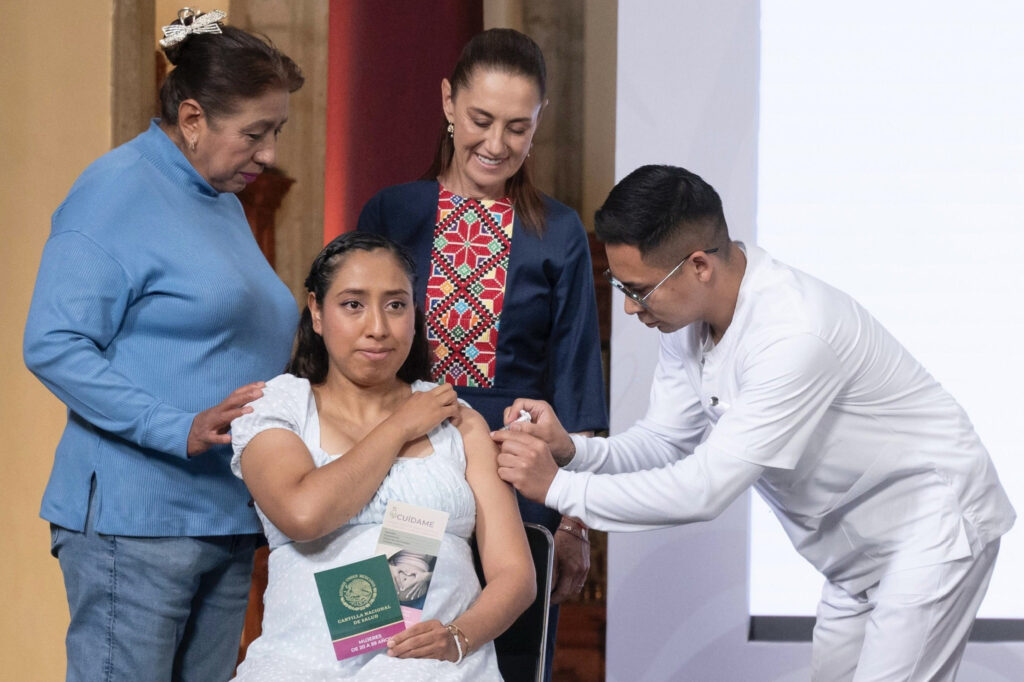
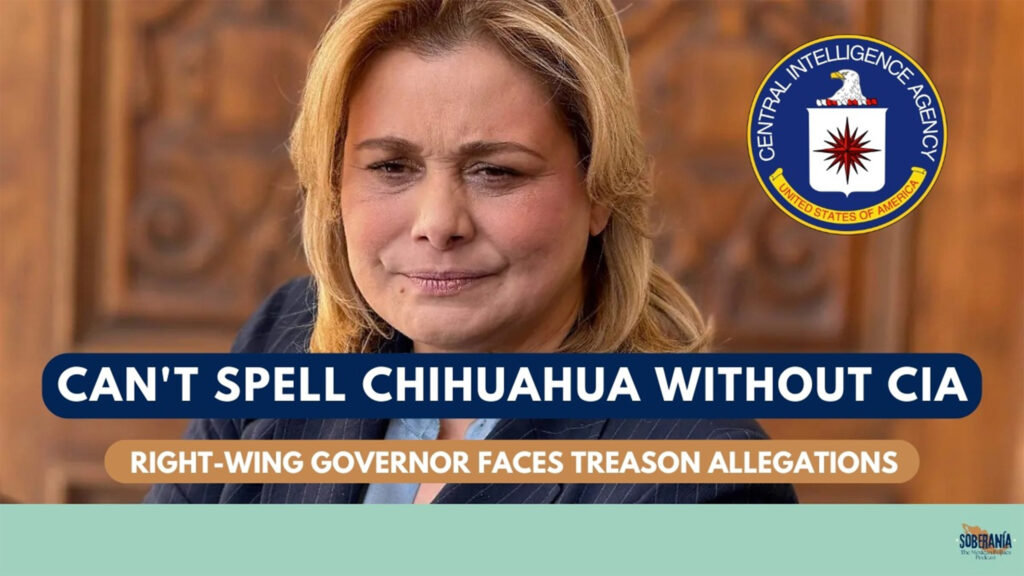
47


Iran’s Foreign Minister Abbas Araghchi left Islamabad on Saturday after holding discussions with senior Pakistani officials on regional security and a ceasefire with the United States, during which he presented Iran’s demands on ending the eight-week war.

While in Islamabad, the first leg of his three-nation tour, Araghchi met with Pakistan’s Army chief Field Marshal Asim Munir, a key figure in the mediation effort, as well as Prime Minister Shehbaz Sharif and Foreign Minister Ishaq Dar.

The top diplomat thanked Pakistan for its efforts to mediate the April 8 ceasefire between Tehran and Washington and the subsequent talks, and laid out Iran’s “principled positions” on the state of the truce and the complete end to the imposed war against Iran.

Pakistan’s top diplomat, Senator Dar, said that the meeting with Araghchi and the Iranian delegation lasted around two hours, during which Pakistan stressed “the importance of dialogue and diplomacy.”

Prime Minister Sharif hailed the meeting with Araghchi as the “most warm, cordial exchange of views on the current regional situation.”

“We also discussed matters of mutual interest, including the further strengthening of Pakistan–Iran bilateral relations,” he posted on X.

The Iranian delegation left Islamabad before US envoys, Steve Witkoff and Jared Kushner, were expected to travel to the Pakistani capital to meet with mediators.

US President Donald Trump, however, later told Fox News that he had canceled the visit.

Iran: No Decision Yet on New Talks in Pakistan due to Contradictory US Messages

Tehran had previously said that there was no plan for the Iranian delegation to meet with the American representatives in Islamabad.

Pakistan’s mediation efforts have stalled over the illegal US naval blockade of Iranian ports and excessive demands put forward by Washington.

Araghchi will now travel to Oman and then Russia to discuss efforts to end the illegal war, which was launched against Iran by Israel and the United States on February 28.

In addition to 100 waves of retaliatory strikes against US and Israeli assets across the region, Iran also put restrictions on transit in the Strait of Hormuz, through which about 20 percent of the world’s oil and liquefied gas supplies in peacetime.

US President Donald Trump unilaterally extended the two-week ceasefire this week and hours before it was set to expire. He said there was no rush to reach a deal with Iran, but that he was awaiting a proposal from Tehran.

(PressTV)


From Orinoco Tribune via This RSS Feed.

48


Iran’s Foreign Ministry spokesman has slammed Canada after it imposed new sanctions against the Islamic Republic amid the US-Israeli aggression, warning that their “bullying” will ultimately affect Ottawa.


From Presstv via This RSS Feed.

49


This article by César Arellano García originally appeared in the April 26, 2026 edition of La Jornada, Mexico’s premier left wing daily newspaper, with photos by STRMnoticias.

Mexico City. Parents of the 43 missing students from the Ayotzinapa Rural Teachers’ College in Guerrero stated that negotiations with the federal government have stalled, as there has been no progress in the investigations into the students’ whereabouts five months after the last meeting.

Isidoro Vicario, who is part of the legal team accompanying the parents, regretted that there was no response to the points raised by the families of the students in the meeting with the president, Claudia Sheinbaum, last November.

“Five months have passed. It was agreed that two months after the meeting we would sit down again to address the demands, including the return of the Interdisciplinary Group of Independent Experts (GIEI) to Mexico to support the investigations into the Ayotzinapa case, the release of the Army’s files, which include clear evidence of the whereabouts of their children, and the resumption of the interception of Army phone calls regarding the transfer of 17 students from the police station to the outskirts of Iguala. But they haven’t even formally given us a tentative date to hold another meeting with the President, because there is probably no new information to give the parents, and that is deplorable.”

This Sunday, the 139th Global Action for Ayotzinapa took place, where more than 250 people, according to figures from the capital’s police, marched from the Angel of Independence to the Hemiciclo a Juárez, to demand the safe return of the students who disappeared in September 2014 in Iguala, Guerrero.

During the march, they chanted various slogans. Upon arriving at the Anti-Monument to the 43 Disappeared Students, they held the traditional roll call of the missing students and remembered Daniel Solís, Julio César Nava, and Julio César Ramírez, who were murdered on the night of September 26, 2014. They also mentioned Aldo Gutiérrez, who remains in a coma after being shot in the head.

At the Hemiciclo a Juárez monument, Isidoro Vicario reiterated the urgent need for federal authorities to convene a new meeting with the parents. “For the federal government, maintaining the country’s positive image during the World Cup is a priority, but it relegates the issue of disappearances, homicides, and other social demands to a secondary position.”

He added that they will not allow the Ayotzinapa case to go unpunished. “We call on organizations to attend a National People’s Assembly on May 9 at the Ayotzinapa Rural Teachers’ College, where the activities to be carried out in the coming months will be planned.”

For her part, María de Jesús, the mother of one of the missing students, stated that they are waiting to be summoned to meet again with the federal government.

The post Parents of Ayotzinapa 43 Accuse Government of Stagnant Investigation appeared first on Mexico Solidarity Media.


From Mexico Solidarity Media via This RSS Feed.

50


By Aseel Saleh  –  Apr 23, 2026

Amal and her media outlet, Al Akhbar, were targeted multiple times by Israeli forces before her assassination.

In yet another crime against journalism in the West Asia region, Israel targeted Lebanese journalists Amal Khalil and Zainab Faraj in a double-tap strike on the town of Al-Tayri in southern Lebanon, on Wednesday, April 22.

While Zainab survived after sustaining a wound to the head, Amal died in the attack carried out against them. The two had taken shelter in a house after an earlier airstrike killed two people in the car traveling in front of them.

According to Lebanon’s Ministry of Public Health, the Israeli Occupation Forces (IOF) blocked rescue teams from reaching the targeted house to recover Amal’s body for several hours by launching intensified airstrikes on the area.

Amal and her media institution were threatened many times before her murderAmal Khalil, who worked with the Lebanese newspaper Al Akhbar since 2006, had previously informed local media outlets about receiving direct threats from Israeli phone numbers between August and September 2024.

She was threatened to leave southern Lebanon and stop reporting about the events there, otherwise she would be beheaded, her house would be demolished, or her media outlet would be targeted. The sender even provided her with details about her movements and whereabouts to further intimidate her.

🚨BREAKING🚨Israeli forces are now issuing direct death threats to Lebanese journalists on WhatsApp as well as besieging them.

Al-Akhbar correspondent @AmalKhalil83, who has been documenting the devastation across southern Lebanon, received these messages from an Israeli number…

— Hala Jaber (@HalaJaber) April 22, 2026

Al Akhbar also reported that Amal survived a previous assassination attempt during the 66-day war on September 23, 2024, as she left her family’s house seconds before it was hit by an Israeli airstrike.

The Lebanese newspaper added that the IOF targeted Amal and her colleagues many times between 2023 and 2024, with shells that fell a few meters from them while they were on duty.

UJL calls on the Lebanese state to take action against IsraelThe Union of Journalists in Lebanon (UJL) issued a statement strongly condemning the “horrific Israeli war crime”, and renewing its call for the Lebanese state to take the needed action on the following levels:

  • Documenting the crimes centrally
  • Opening judicial investigations into crimes
  • Enacting a law punishing war crimes
  • Initiating a request to form a fact-finding committee from the Human Rights Council
  • Authorizing the International Criminal Court (ICC) to investigate war crimes committed by Israel in Lebanon since October 8, 2023

IFJ also labels the onslaught a war crimeMeanwhile, the International Federation of Journalists (IFJ) joined its affiliate UJL in “strongly condemning the targeted assassination of Khalil”.

Moreover, it reiterated that “deliberate attacks on civilians, including journalists, constitute war crimes.”

Israel Kills 3 Journalists in South Lebanon

**CPJ calls the attack on Khalil and Faraj a “grave breach of international humanitarian law”**For its part, the Committee to Protect Journalists (CPJ) expressed its outrage about the offensive, warning that the “repeated strikes on the same location, the targeting of an area where journalists were sheltering, and the obstruction of medical and humanitarian access constitute a grave breach of international humanitarian law.”

Direct talks between Tel Aviv and Beirut resume despite the blatant crimeThe assassination came less than one week after US President Donald Trump announced a 10-day ceasefire between Israel and Lebanon, starting on Thursday, April 16.

It was also launched hours before a new round of direct talks between the Israeli and the Lebanese governments resumed in Washington.

It is worth noting that Lebanese Prime Minister Nawaf Salam accused Israel of committing a “war crime” by targeting the two journalists, while President Joseph Aoun urged the international community for a “prompt intervention” to “put an end to it”.

However, for many, Beirut’s engagement in the new round of negotiations, despite the horrific crime against the two journalists, alongside countless other violations, represents a contradiction with Salam and Aoun’s statements, and reflects an approach of concession and surrender.

On the evening of Thursday, April 23, US President Donald Trump announced a three-week extension to the ceasefire between Israel and Lebanon.

(Peoples Dispatch)


From Orinoco Tribune via This RSS Feed.

view more: ‹ prev next ›