1
Canadian News!
115 readers
1 users here now
A community for canada news
founded 11 months ago
MODERATORS
2
5
Misipawistik Cree Nation calls for a stop on moose hunting in its traditional territory
(thenarwhal.ca)
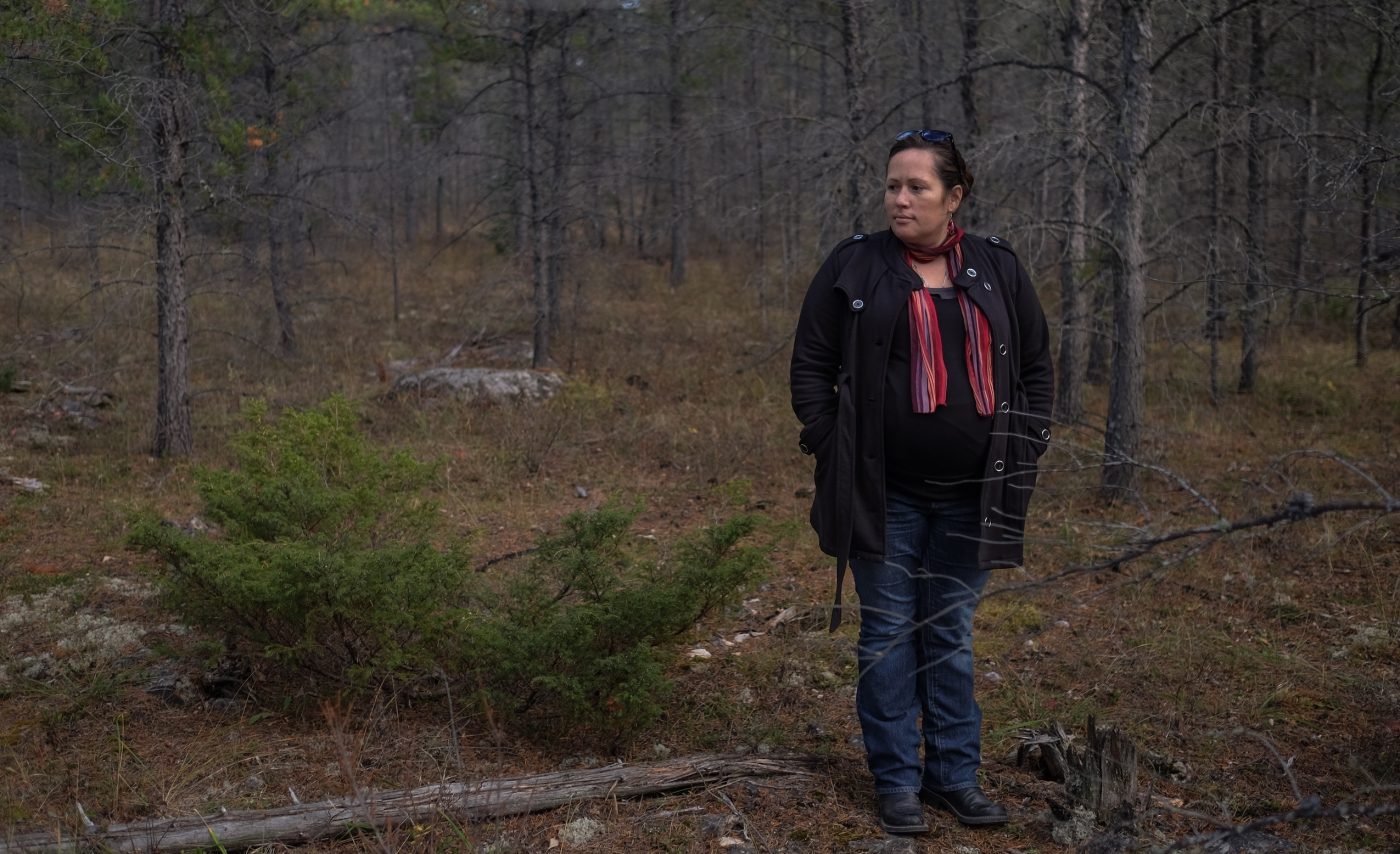
Photo: Mike Deal / Winnipeg Free Press
A northern Manitoba First Nation is calling for a voluntary closure of moose hunting in its traditional territory to protect the declining population and respond to what it sees as a lack of provincial intervention.
On Friday morning, Misipawistik Cree Nation issued a plea urging hunters to abstain from harvesting moose in provincial Game Hunting Area 10 — a 10,000-square-kilometre region of boreal forest north of Grand Rapids, Man. The request applies to this year’s moose-hunting seasons, which open Monday.
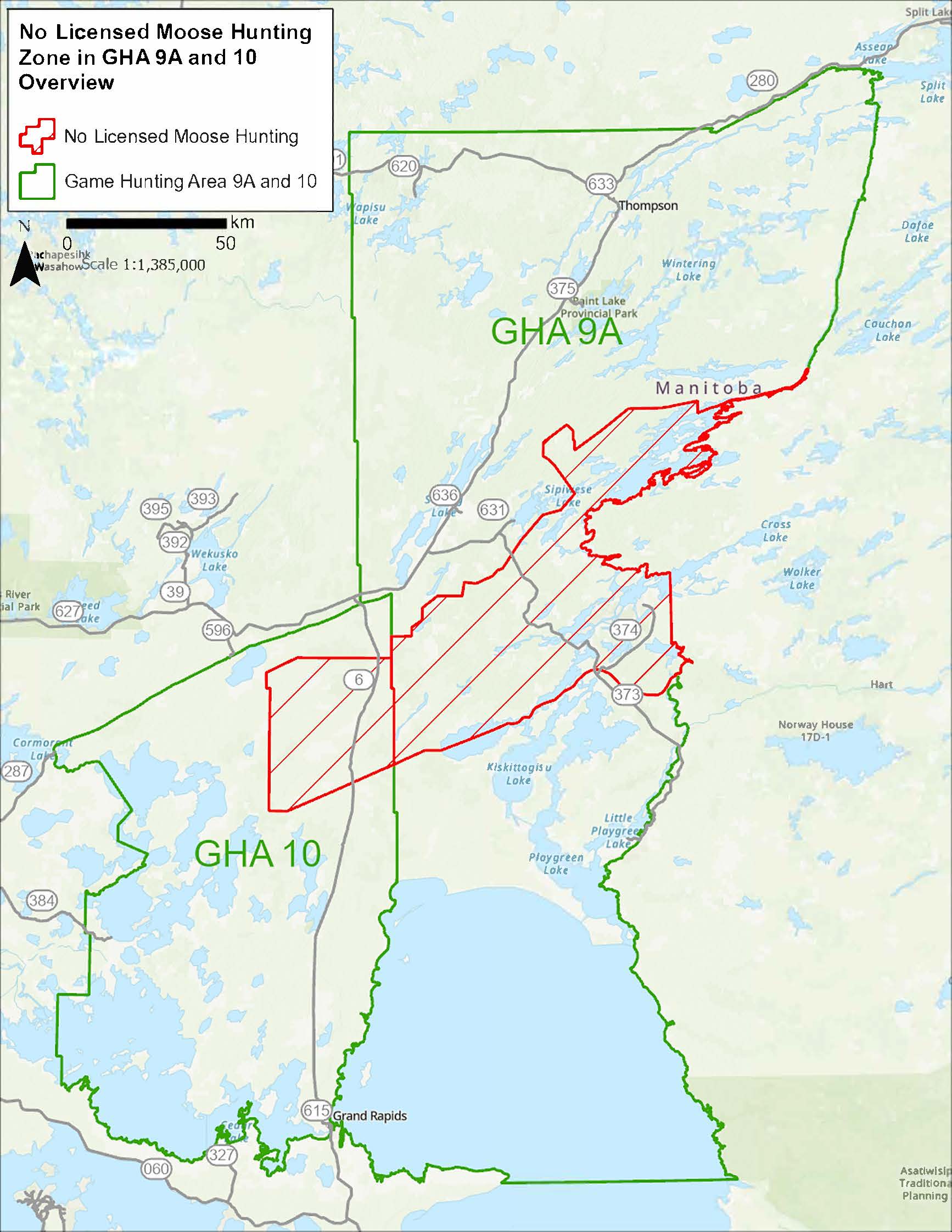
According to the province’s 2025 aerial big game survey, an estimated 281 moose reside in the area, roughly 60 of which are bull moose. That’s down from an estimated 346 moose in 2013, which the survey describes as a “relatively stable population” over the past decade.
This year, 124 licences and 62 bull moose tags were made available in the region during Manitoba’s annual hunting draw.
“That is putting the entire population at risk of a collapse,” Misipawistik Chief Heidi Cook said in an interview with The Narwhal and Winnipeg Free Press ahead of the announcement. “There may be no moose next year. This is an emergency. We have to do something now to make sure that the population can recover.”

Manitoba has issued 124 moose hunting licences and 62 tags for the region despite the First Nation’s concerns of a dwindling population. Photo: Marty Clemens / The Narwhal
The nation’s voluntary hunting closure begins immediately and runs through the fall and winter moose seasons, which close in December. There will be no enforcement of the closure, but members of Misipawistik’s Kanawenihcikewak Land Guardians program will be monitoring the game area and liaising with hunters, Cook said.
The guardian program has been monitoring the local moose population and working to reduce poaching and roadkill incidents since 2018 after community hunters observed a decline in the number of animals in the area. Misipawistik hunters reportedly harvested no moose in the region during the 2025-26 season.
“Moose is an important cultural species for us. It’s not only a source of food, but the relationship surrounding a moose harvest — having that time as family groups to be on the land and maintaining those connections, and then passing on the intergenerational knowledge surrounding the moose harvest — all of that is lost,” Cook said.
In recent years, she said, local hunters have had to travel to Saskatchewan to find moose.
Misipawistik First Nation awaits court’s decision over case against Manitoba government’s moose hunting licences
Misipawistik has raised the concerns about moose hunting and food security with the province multiple times, including during a meeting with Natural Resources and Indigenous Futures Minister Ian Bushie earlier this year, Cook said.
Minister Bushie did not respond to a request for comment by publication time.
The First Nation filed a lawsuit against the provincial government last September, arguing licensed moose hunting infringes on the community’s Treaty Rights to harvest the animals for food on its traditional lands. The judge has yet to deliver a decision on the case.
“We need to take action as responsible hunters, people who care for the land and people who care for the moose, to self-regulate because there’s a failure on the part of the provincial government to do that right now,” Cook said.

Chief Cook is urging Manitoba hunters to “self-regulate” to help protect moose in the area. Photo: Supplied by Misipawistik Cree Nation
Chris Heald, senior policy advisor with the Manitoba Wildlife Federation, a conservation organization representing hunters, commended Misipawistik’s intent, but said the number of tags issued by the province does not equate to the number of moose bagged during the season.
“Hunter success in that area traditionally has only been less than five per cent. So we’re talking about three or four moose, that’s likely all that gets harvested by licensed hunters,” Heald said.
“The province thought this was a fair thing and if hunters are legally purchasing their licence and the season begins next week, then they should go,” he added.
Concerns around licensed moose hunting affecting Treaty Rights are shared with other First Nations in Manitoba
First Nations elsewhere in the province have also raised concerns about the impact of licensed hunting on moose populations and Treaty Rights.
Last fall, Bloodvein First Nation, located on the eastern shore of Lake Winnipeg, used a checkstop previously set up to prevent contraband goods from entering the nation to bar non-Indigenous hunters from entering its territory to harvest moose. The Manitoba Wildlife Federation asked the court for an interim injunction, but it was dismissed.
Manitoba Keewatinowi Okimakanak, a political advocacy organization representing several northern First Nations, has repeatedly called on the province to cancel the draw for moose licences in the north, including in Game Hunting Area 10. The organization issued a statement Friday in support of Misipawistik’s voluntary hunting closure.
In 2024, the provincial government reduced the number of licences available by 75 per cent in four northern hunting areas. The move sparked a legal challenge by Pimicikamak Cree Nation, which argued the decision affected its members and ran counter to Manitoba’s obligation to consult and prioritize Indigenous hunters under Treaty 5 and the 1977 Northern Flood Agreement. The case was dismissed.
The province has recognized that moose in Manitoba face significant threats from hunting, predation, disease, habitat loss and climate change. It has issued hunting bans in the Duck Mountain, Porcupine Provincial Forest and Turtle Mountain areas.
Eva Wasney is a reporter covering environmental issues in Manitoba. Her position is part of a partnership between The Narwhal and the Winnipeg Free Press.
The Narwhal’s reporters are telling environment stories you won’t read about anywhere else. Stay in the loop by signing up for our free weekly dose of independent journalism.
From The Narwhal | News on Climate Change, Environmental Issues in Canada via This RSS Feed.
3

Martin Lukacs and Desmond Cole break down what happened at the summit and on the streets
The post How Mark Carney’s investment summit maple-washed a giant corporate giveaway appeared first on The Breach.
From The Breach via This RSS Feed.
4
5
6

Twilight hangs over the *Inlet Raider’*s empty deck as it charges up the river. Its voyage has a single, cargo-free purpose: its crew was hired to find out whether the journey up the Taku River from Southeast Alaska past the B.C. border is possible.
If they succeed, this could be one of dozens of trips carrying construction supplies and infrastructure to the proposed New Polaris gold mine along the river, currently under review by the B.C. government and among its list of priority projects for expedited review.
The boat picks up speed, blasting up a passage nicknamed “the narrows” in honour of its thin, flute-shaped banks, which can host fierce, swirling currents. Its other concern lies underneath in braided river channels that can move at least annually to a new configuration, a common trait of glacial-fed rivers like this one.
As the motor churns, the crew’s stream of banter is replaced by a tense silence punctuated by calls of encouragement as their barge follows a sonar-equipped motorboat guiding its journey up ahead.
“Three hours of boredom punctuated by 30 seconds of sheer terror,” says a joking voice off-screen, in a video posted to the captain’s Facebook page.
A few minutes later, the Inlet Raider makes it through.
New Polaris’s owner, Canagold Resources Ltd., acknowledges the transport challenges ahead. “We never said it’s easy,” Canagold’s chief executive officer, Catalin Kilofliski, tells The Narwhal in an interview.
“But it’s doable.”
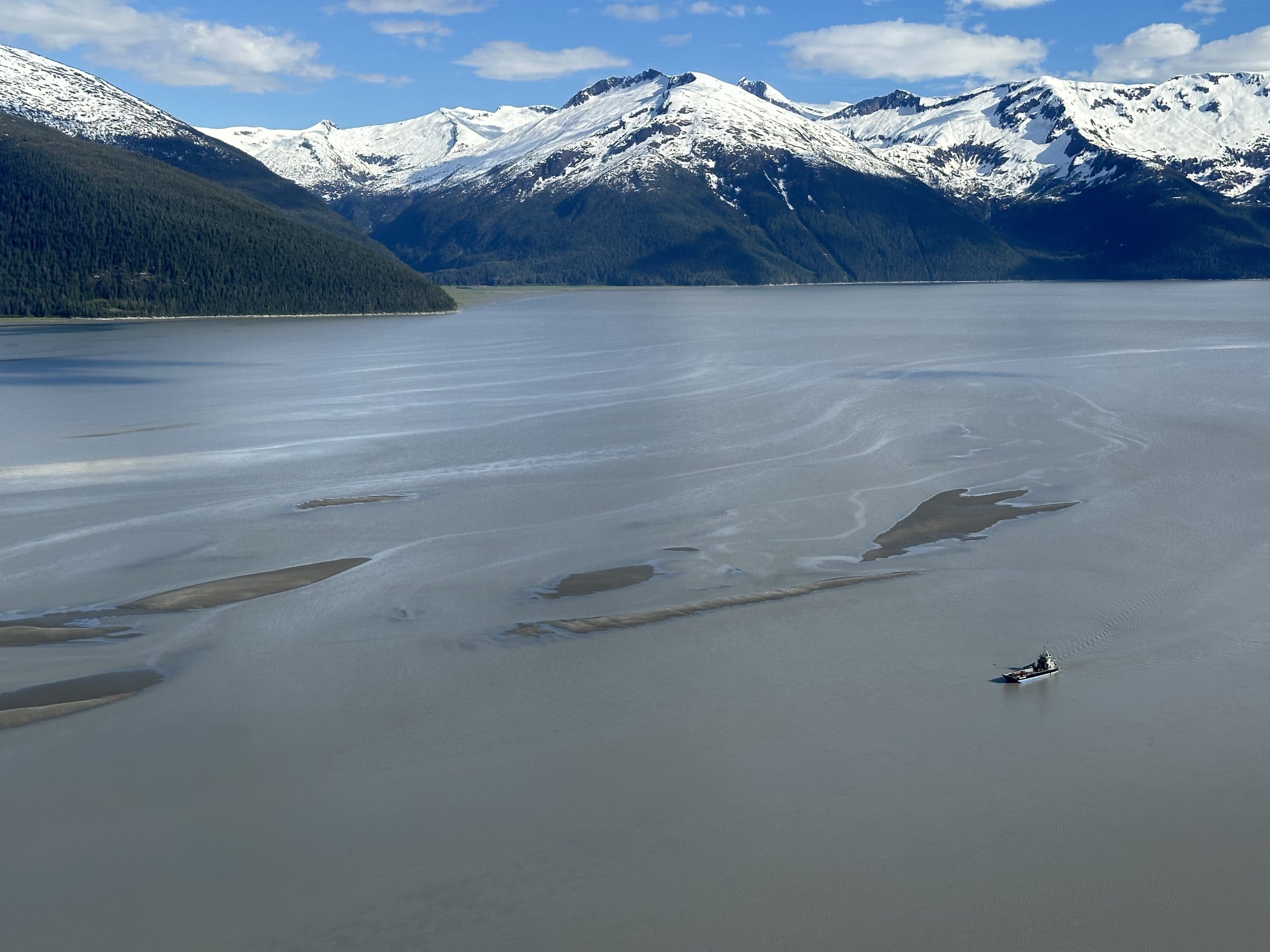
The Taku River, like many glacial rivers, becomes more treacherous to travel on at certain times of year. Canagold plans to use cargo planes to transport gold concentrate and a barge, like the Inlet Raider pictured here, during the construction phase. Photo: Salmon Beyond Borders
To avoid these precarious barge trips during operations, Canagold plans to transport its gold concentrate on cargo planes. It anticipates up to 15 flights a day, carrying a total of around 27,000 tonnes per year.
The goal is to capitalize on record-breaking gold prices by reopening New Polaris, a long-shuttered mine site on the Tulsequah River.
The project is among a select group featured in a federal prospectus document delivered to attendees of Canada’s recent investment summit in Toronto. This year, New Polaris was included in the federal government’s map of critical minerals projects, thanks to its potential to produce antimony — a heavy metal deemed “critical” by Canada for its use in a variety of applications from bullets to batteries. But Canagold’s feasibility study did not establish New Polaris’s antimony reserves and it does not include antimony in its projected revenues.
Meanwhile, B.C. has included New Polaris among its 35 priority major projects slated for expedited review.
In an emailed statement, the Environmental Assessment Office said New Polaris is on the list because of its “potential to make meaningful contributions to B.C.’s long-term economic growth” along with the other projects chosen.
“No project will be expedited at the expense of protecting the environment and communities or meeting our consultation obligations, which remain at the core of the [Environmental Assessment Office]’s mandate,” it added.
The company intends to create hundreds of direct jobs annually and provide around $500 million in federal and provincial tax revenue during its operations.
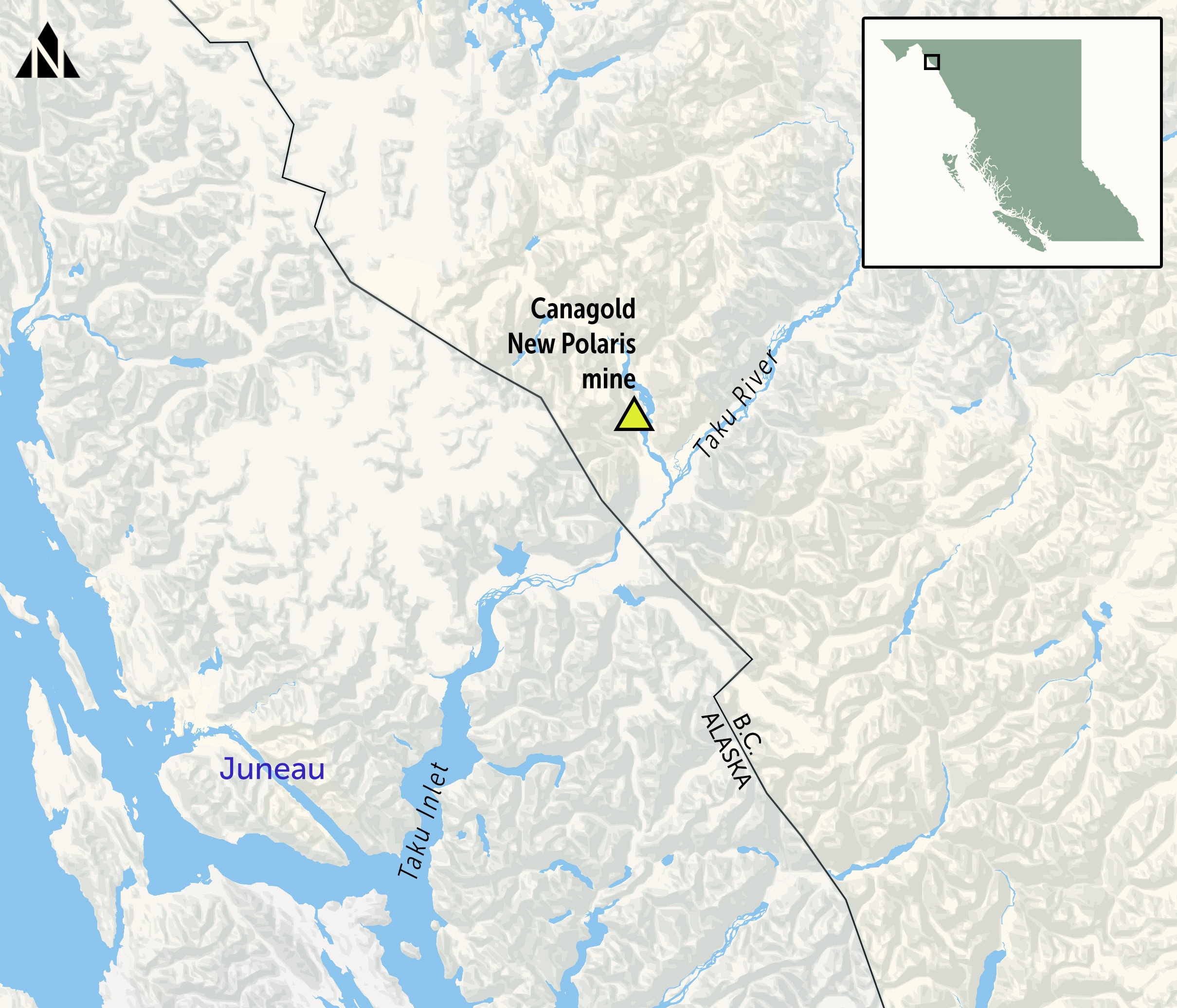
The New Polaris mine is located along the B.C. border with Alaska. Map: Shawn Parkinson / The Narwhal
But some observers remain concerned that the mine’s potential risks, from water contamination to habitat loss, aren’t worth the financial benefits.
Environmental concerns with New Polaris
The Taku River watershed is one of the largest intact river systems on the Pacific Coast of North America, and one of the few remaining places where Pacific salmon populations are booming, meaning New Polaris’s riverside mine and tailings ponds naturally come with high stakes.
The mine sits around the riverbend from the also-dormant Tulsequah Chief mine site, which was owned by another company, where contamination has been seeping into the watershed for over 50 years.
Canagold has worked to distinguish New Polaris from the tarnished legacy of its next-door neighbour. The company has signed a collaborative engagement consent agreement with the Taku River Tlingit First Nation, whose territory extends across the mine site and surrounding regions on the Canadian side of the border. According to the nation, the agreement means it will have the final say on whether the project goes ahead. The nation did not respond to The Narwhal’s request for comment.
The company has altered its plans in response to concerns raised in its engagement with the public and with the Taku River Tlinigit. It no longer plans to process gold on site using cyanide, which, if spilled, can poison fish and watersheds. It’s also planning to dry out its tailings to reduce the risk of impacts and limit barge trips mostly to the construction phase. The barge trips will only happen in the high-water months, spring and summer, to reduce the risks of running aground — a change that means more flights and higher costs.
With gold prices above US$2,500 per ounce — a price reached for the first time in 2024 — the “projected cash flow and economics are outstanding,” according to a quote from Kilofliski on Canagold’s website.
But the company’s application hints at potential challenges ahead: the historic underground mine is leaching some levels of arsenic and antimony into the surrounding watershed, and rocks in the company’s largest targeted gold deposit appear capable of leaching more of the same. According to a report prepared for the company and included in its application, the mine’s proposed tailings facilities appear to be located within the flood zone of the Tulsequah glacier, which sends a massive deluge of water and sediment into the river below at least yearly. However, Kilofliski said in an email to The Narwhal that its facilities are “in a location that is naturally protected from the floods.”
According to a map in Canagold’s application, it appears New Polaris plans to put an airstrip atop part of a wetland and salmon spawning ground known as Flannigan Slough, although Kilofliski says it is located beside it.
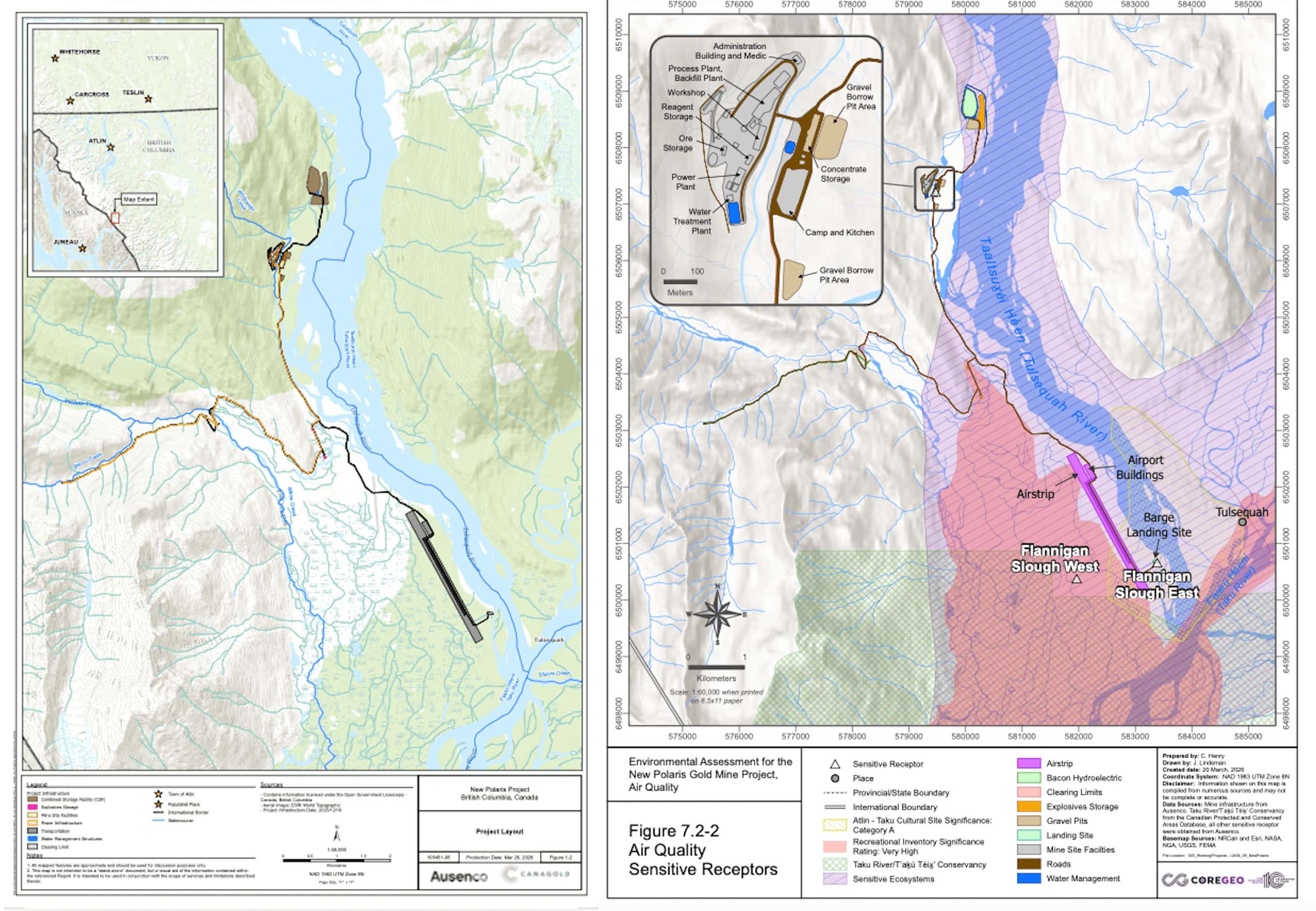
Maps: Canagold Resources Ltd. environmental assessment application
These and many other issues worry Jill Weitz, natural resources manager for the Central Council of the Tlingit & Haida Indian Tribes of Alaska.
“It’s this incredible, critical habitat for spawning and rearing of salmon,” she says, adding that the council questions if the mine is feasible given its transport challenges, and worries that, if it goes ahead, the project could “create irreparable damage to the watershed.”
“We’re just not willing to risk it,” she says.
Located just 13 kilometres upstream from the U.S. border, New Polaris’s barges will spend most of their travel time in U.S. waters. And any water contamination from the mine could also make its way south, including across the traditional territory of the Douglas Indian Association, which extends across the reaches of the Taku River. In a submission to the environmental assessment process, the association said it “strongly opposes” the mine “due to fears that a mining accident and subsequent mining pollution could devastate our salmon stocks.”
This year, B.C. made a legal amendment functionally removing its requirements to consult U.S. tribes on transboundary projects by stripping their previous status in environmental assessment processes.
In an email, the Environmental Assessment Office noted that it will still “fulfill its constitutional obligations to consult with U.S. Tribes when there is a credible assertion of Indigenous Rights in Canada, and the potential for these rights to be impacted by a proposed project undergoing assessment.”
It added that the ministry has “considered and incorporated” feedback submitted by some U.S. Tribes to New Polaris’s application process.
Still, for many southeast Alaskans who have submitted letters of opposition to the company’s environmental assessment process, New Polaris presents an untenable threat.
Kilofliski says New Polaris’s environmental assessment application proves otherwise.
“The conclusion is that there are no material negative effects on the environment,” he says, adding the company has proven it will not require water treatment post-closure.
These comments seem to be contradicted by some parts of New Polaris’s environmental assessment application, including one section that notes: “The primary negative residual effect of groundwater quality will occur during post-closure.”
“This is experts talking about scientific stuff,” he says when asked why the application appeared to have included a different analysis than his own. When asked again about incongruities between his comments and the application in a follow-up email, Kilofliski wrote that the application does identify a risk of metal leaching. “If anything I said informally differs from the application, please treat the application as correct.”
The Taku River watershed
From space, the Taku and its tributary, the Tulsequah, look like winding ribbons coloured steely grey and cotton-candy-blue — a product of the steady stream of silt and minerals delivered by the churn of glaciers over the mountaintops above.
Their combined watershed forms a mecca for Pacific salmon that return to its waters each year. “I don’t know if there’s any place like it in western North America in terms of being a salmon stronghold and being so intact,” Jonathan Moore, an aquatic ecologist and lead at Simon Fraser University’s Salmon Watersheds Lab, says. Though the majority of B.C.’s salmon stocks are declining, the fate of salmon in the Taku watershed is looking up. Moore and his colleagues have mapped out salmon’s likely escape route as watersheds warm down south, and they predict they’ll seek refuge in the Taku’s glacial waters.
But despite its remoteness, the region is no stranger to industry. First staked in the early 1900s, what’s now the New Polaris site was mined for gold between 1937 and 1951. It shut down after a departing barge sank in the midst of a storm. That year, the Tulsequah Chief mine opened up across the river, building a temporary bridge to carry its ore to New Polaris’s mills. After Tulsequah shut down just six years later, the New Polaris site sat dormant for decades.
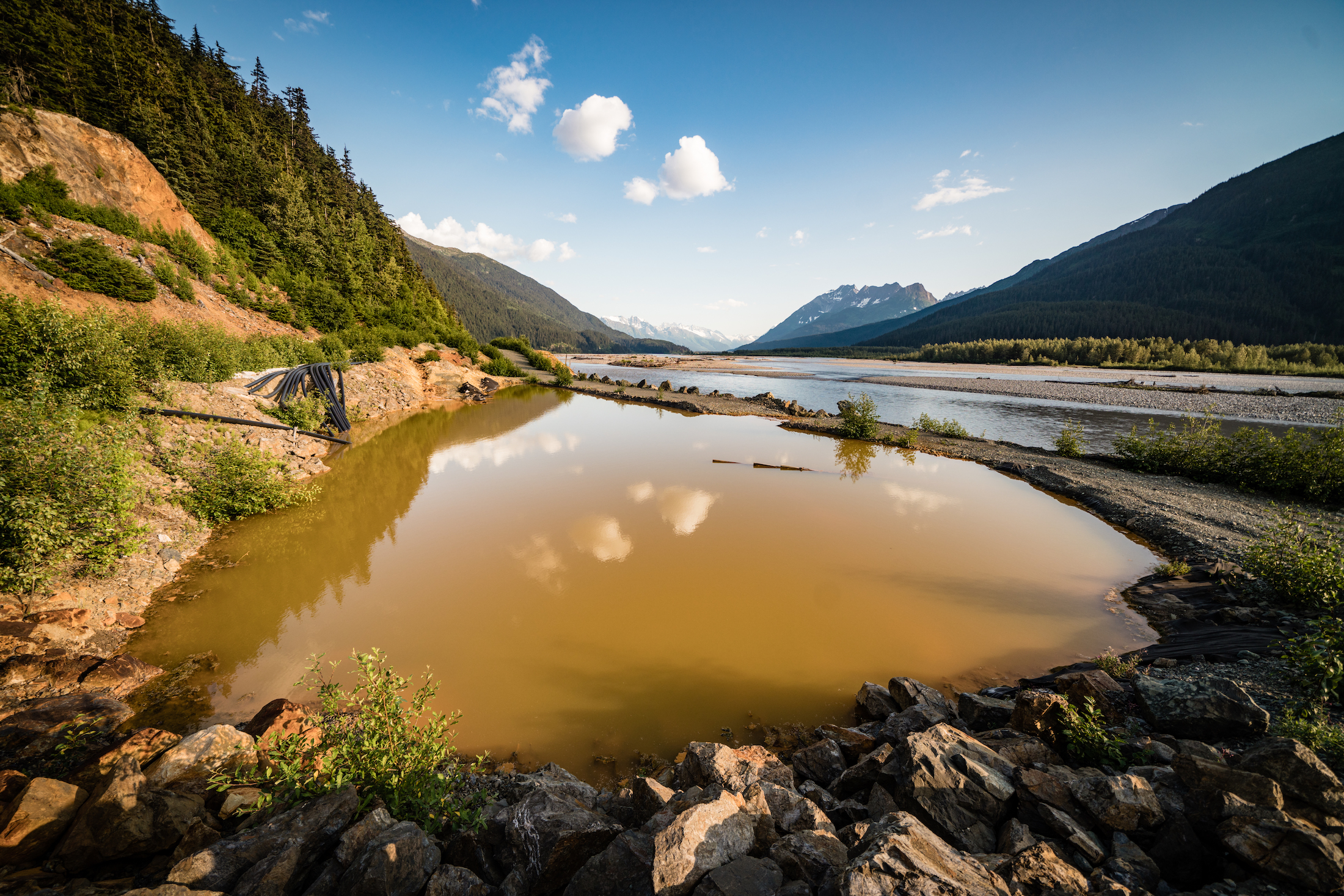
An overflowing containment pond at the Tulsequah Chief mine in northwestern B.C. Photo: Colin Arisman / The Narwhal
Canagold’s predecessor, Canarc Resources Corp., acquired the property in 1988, and the company slowly dabbled in exploration work until 2022. That’s when its former founder and chair was ousted in a a vote led by a Swiss-based investment company, Sun Valley Investments, which is now the company’s largest shareholder. Kilofliski, Canagold’s CEO between 2014 and 2018, was reappointed and soon announced the company’s intentions in a press release.
“The time has come to take New Polaris across the finish line,” he said, adding that with the company’s “refocused ownership,” its board would expedite the project “to reward our company’s shareholders.”
A history of water concerns
Next door to New Polaris, the Tulsequah Chief mine continues to leach orange-crush-tinged effluent into the river downstream. Its decades-long pollution has galvanized a bipartisan uprising of Southeast Alaskans concerned B.C.’s government could allow another Tulsequah Chief to occur.
In a January interview with the Alaska Beacon, Republican Senator Lisa Murkowski said B.C.’s efforts to clean up pollution at Tulsequah Chief had been “a complete failure.”
“They know that for projects going forward, they’re kind of stained by the operation there,” she added.
Kilofliski says such conflations are misguided. “They associate our project with the other project, the Tulsequah Chief,” he says. “In our rocks, we do not have the potential for acid drainage like you see on the other side.”
Despite their close proximity, New Polaris and the Tulsequah Chief come from distinct types of ore deposits — Tulsequah Chief’s ocean-formed sulphide rocks are more readily associated with acid mine drainage, whereas New Polaris’s rocks are generally not.
That may have exceptions: a recent report commissioned by the company has noted some rocks contain potentially acid-generating properties, potentially including some of the historic waste carried over from the Tulsequah Chief mine, though some tests are still ongoing.
And even without the ingredients to leach acid, some rocks contain metals that can escape into waterbodies anyway. Heavy metals arsenic and antimony are frequent culprits of this kind of non-acidic leaching, and New Polaris’s targeted rocks have lots of both.
According to a previous report commissioned by the company and cited in its environmental assessment application, 15 samples from the mineral vein New Polaris plans to target had “high potential” to leach metals, particularly arsenic and antimony, due to the types of rocks present.
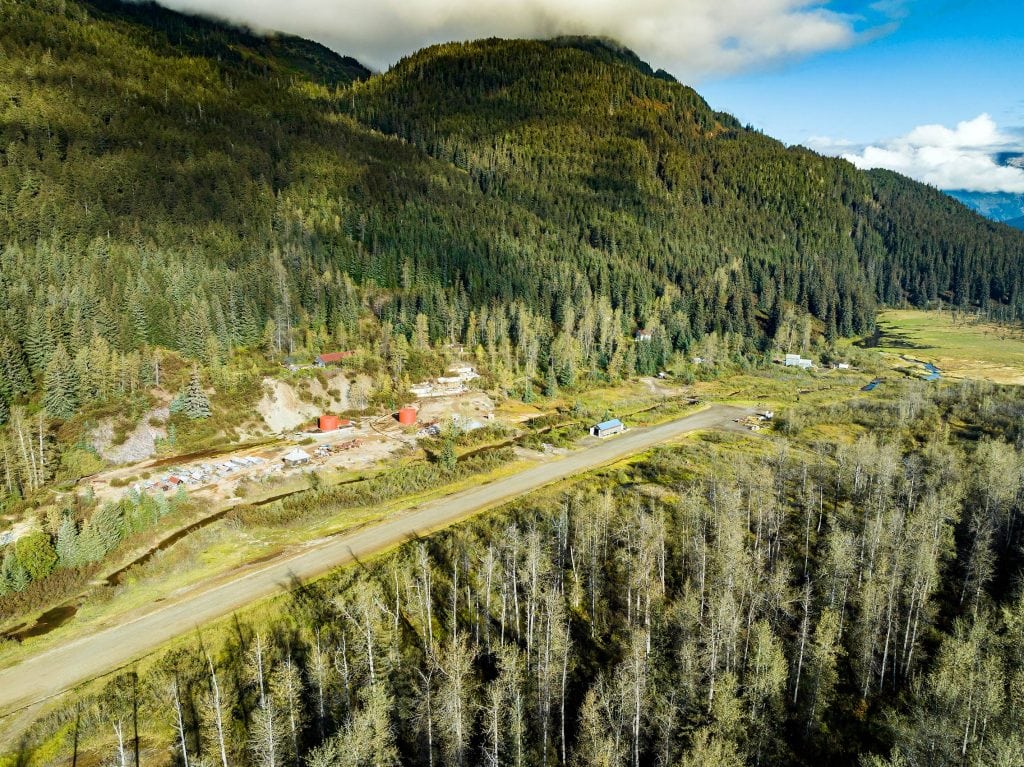
Groundwater contaminated with metals seeping from the New Polaris mine site is a concern raised in the company’s environmental assessment. Photo: Chris Millar
Non-acidic leaching has caused damage in B.C. before: New Polaris’s deposits are similar to those of the Bralorne gold mine near Lillooet, where seepage from the flooded mine includes levels of arsenic that far exceed Canadian effluent regulations.
In an email to The Narwhal, Kilofliski said: “I do not know the particulars of the Bralorne gold mine seepage issues but it is probable, based on the nature of these kinds of geological deposits, that the concerns would be analogous.” He elaborated, adding New Polaris is “a modern mine” which will leverage new science and technology for water management and ecological health.
“At Canagold we are focused on learning from the lessons of the past and building a modern mining project that provides demonstrable benefits to the Taku River Tlingit First Nation, the region and Canada’s economy,” he added.
To help avoid the risk of metal leaching, the company plans to export a partially processed product called gold concentrate, which can include impurities like arsenic and antimony that would get smelted out elsewhere.
“We take the antimony, we take the sulphur, we take the arsenic,” he told The Narwhal. “We recover 90-plus per cent of those metals into the concentrate.”
The remaining ten-or-so per cent of the metals and other materials leftover would be thickened and deposited into a tailings pond with an impermeable covering on top, Kilofliski says, helping to keep it isolated from the environment. During the operational phase, the mine plans to run a water treatment system, but Kilofliski tells The Narwhal he is confident the mine’s concentrate-extraction approach will avoid the need for long-term water treatment.
“We have demonstrated in the environmental assessment that no water treatment is required post-closure,” he says.
In a follow-up email, Kilofliski added the application “assesses a range of scenarios, including conservative cases where water treatment after closure could be needed.” If it is, “Canagold would be responsible for providing it until we are able to demonstrate that passive treatment (that is without active/chemical water treatment technologies) is able to manage the long-term water quality requirements,” he added.
New Polaris’s environmental assessment application suggests metal leaching may not be easily contained: historic contamination has already travelled below the site in a large plume of metals that is projected to grow if New Polaris proceeds. Leaching can also escape from the mine shaft, as it has from the historic mine portal at New Polaris. Groundwater seeping from the existing mine site contains arsenic and antimony above B.C.’s water quality guidelines, and is flowing directly into the salmon-bearing Whitewater Creek, according to the application, which added seepage may grow post-closure. Recent samples from the mine’s targeted deposits and waste rock reflected an extremely high concentration of arsenic and antimony — achieving the highest possible level on a 6-point scale for mineral concentration.
This leaching risk is cited in parts of New Polaris’s environmental assessment application as a reason that water treatment may be required post-closure.
In his email to The Narwhal, Kilofliski said “water was tested as part of mine dewatering programs for effects to fish, and the water was not determined to be acutely toxic, despite high levels of arsenic.”
What’s next for New Polaris?
September marks a major milestone in Canagold’s decades-long pursuit to mine New Polaris. By the end of the month, the company will receive its final guidance from the province’s environmental assessment office on how it could strengthen a revised application, which, once submitted, will be final. In meeting notes discussing the company’s application, B.C.’s environmental assessment office noted “significant gaps” in the company’s application, including “a notable lack of groundwater information,” a lack of analysis about the potential impacts of glacial floods and missing information about the site’s potential to leach metals. The Ministry of Environment noted the company’s hydrological information appeared to reflect “draft documents rather than final product.”
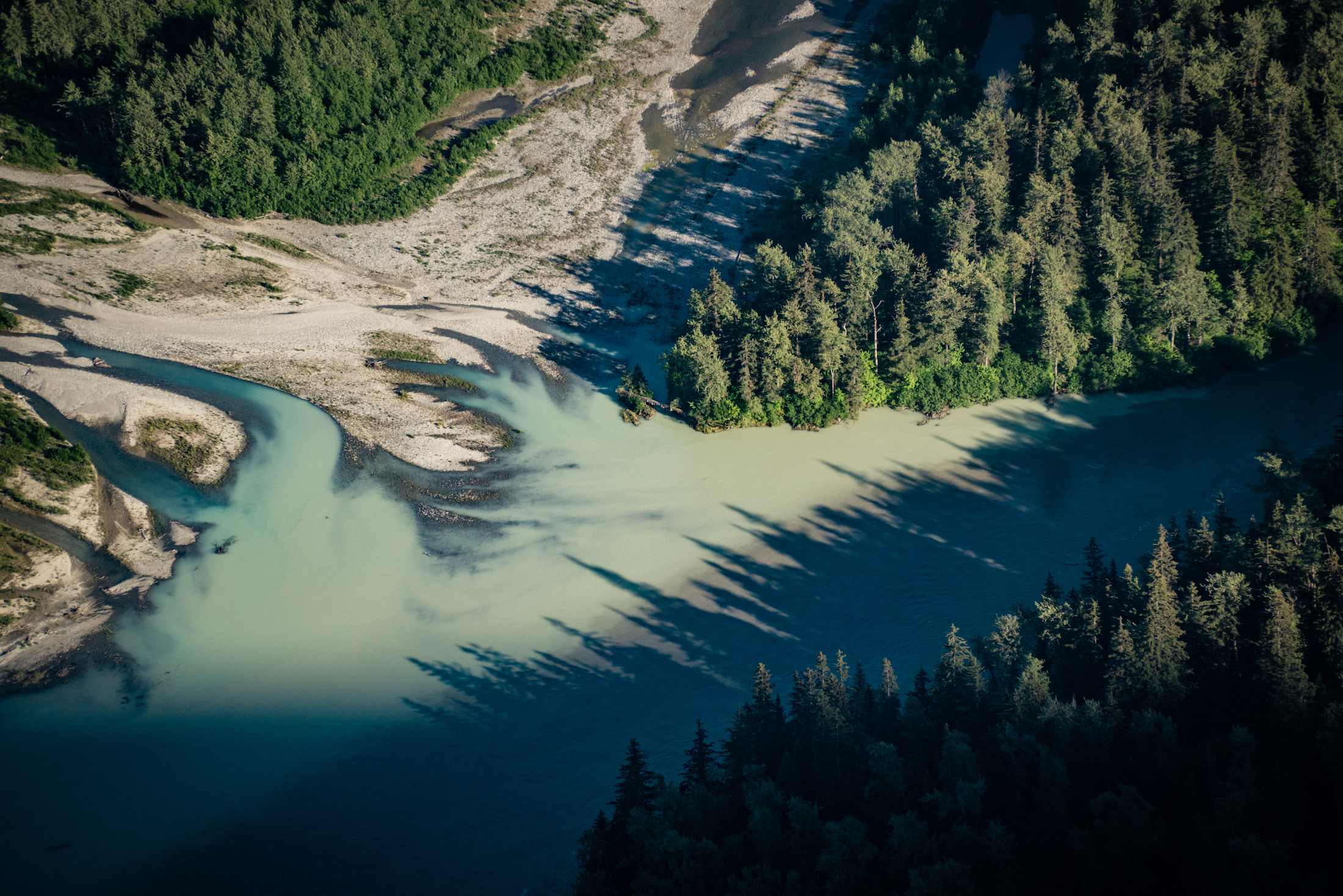
The Taku watershed is one of the last salmon hotspots in western North America. “I don’t know if there’s any place like it,” Jonathan Moore, an aquatic ecologist and lead at Simon Fraser University’s Salmon Watersheds Lab, said. Photo: Colin Arisman / The Narwhal
The office has informed Canagold that submitting another application “where significant issues remain unresolved” would “lead to a high level of uncertainty on the potential effects of the project.”
Kilofliski suggests these kinds of issues are standard for projects like this. “They are very normal,” he says, adding that Canagold plans to fill any remaining gaps before it submits its final application, adding in a later email that the company has “continued to collect samples since the submission of the application, and we are updating our water modelling.”
But some uncertainties could remain during the assessment process by design: under B.C.’s mining laws, key aspects of New Polaris’s plans, including how it plans to manage leaching on site, how it will treat water and how it plans to deal with contaminants post-closure, would be determined in the permitting stage after the company receives its environmental assessment.
Through the assessment and later permitting stages, Kilofliski remains confident that Canagold will establish its case. “We have to demonstrate,” he says, “because our word doesn’t mean anything.”
“We have to prove, we have to show, and we have to test. … This is how it’s done.”
The Narwhal’s reporters are telling environment stories you won’t read about anywhere else. Stay in the loop by signing up for our free weekly dose of independent journalism.
From The Narwhal | News on Climate Change, Environmental Issues in Canada via This RSS Feed.
7

Photo: Jeff McIntosh / The Canadian Press
A leaked document, labelled a cabinet report and outlining possible plans to overhaul Alberta’s natural gas pipeline system to spur AI data centre construction, caused an uproar last week.
It was top of mind for Alberta Premier Danielle Smith on her weekly radio show, it was the subject of an Alberta NDP news conference and it was in media outlets of every stripe. But what exactly is the leaked document at the heart of the controversy and what does it actually mean?
The document, first obtained by The Narwhal, has spread far and wide, at least according to Alberta NDP Leader Naheed Nenshi. Multiple media outlets say they’ve received a copy, but the full details have not been made public. Until now.
The document was leaked to The Narwhal by a government official whose identity is being kept confidential. The Narwhal verified they are in a position that would likely have access to such a document, and the provincial government did not deny its authenticity when it issued a statement in response to the leak.
The Narwhal is publishing a copy of the document it obtained, alongside an explanation of what it all means — and whether it is, as Smith’s government now suggests, merely one of many considerations it reviews on a regular basis.
A copy of the document can be found here. The document will contain some typos, introduced by efforts to ensure the document’s source remains confidential.
Let’s dive in.
What’s the deal with that leaked document?
The document outlines plans for the province to overhaul how natural gas pipelines operate and are regulated within the province.
According to the document, the recommended proposals for consideration include changing the regulations in Alberta to ensure all natural gas pipelines fall under provincial jurisdiction, and then also passing legislation that would allow the government to create two Crown corporations. One corporation could oversee the pipeline system and compel companies to make investments deemed a priority by the government, and the other could build and operate, or bankroll, new pipelines — and directly compete with existing private companies.
If the government doesn’t go for the recommendations, the document says there could be some combination of those interlocking options. For example, creating the Crown corporation that would oversee the system, but not the corporation that could build or bankroll new pipelines. There is also the option to continue with the status quo.
The document includes timelines for cabinet decisions, as well as implementation. It also breaks down the estimated costs of implementing the changes, including the multimillion-dollar costs of possible legal battles with companies including TC Energy.TC Energy owns and operates the largest natural gas pipeline system in the province, called the Nova Gas Transmission pipeline, or NGTL.
TC Energy and ATCO, another energy company mentioned in the document, did not respond to a detailed list of questions about the contents of the document by publication time.
In a statement released after the document was leaked, TC Energy said it is prepared to keep investing in its pipeline system to meet demand.“This will require all of us — industry, customers, regulators, governments, stakeholders and rightsholders — to come to the table and improve the conditions to get infrastructure built,” it reads.
“The key is working together to bring forward credible solutions, capital and capacity quickly enough to support Alberta’s growth and enable Canada to unlock the opportunity to meet the moment.”
Wait, why is Alberta considering this? Do we need pipelines for AI data centres?
The plans for natural gas expansion are not just about data centres, there is also reference to expanding oil and gas production, including access to natural gas for oilsands operations.
But the expansion of AI data centres are front and centre throughout the document, which notes “the Government of Alberta is actively courting hyperscale data centre capital and other investors.”So why do we need gas for that?
The Alberta government is eager to host data centres in the province, with a line-up of potential projects that dwarf any other region in the country. The province, realizing there was no way to power all those projects, capped access to the electricity grid and told producers to build their own power if they want to get up and running.
The draft rules for data centres require that electricity to be generated by natural gas, at least for now, part of a wider plan to increase production and demand for the resources.
In a recent interview with The Hub, the government argued bottlenecks in the natural gas pipeline network are an impediment to attracting and building more data centres, one of the key reasons it wants to incentivize, or force, expansions to natural gas pipelines.
TC Energy said in its statement that it has invested approximately $15 billion into expanding its Alberta network over the past ten years and plans to spend billions more.
The document says it’s not moving fast enough.
Alberta Premier Danielle Smith says this is just spitballing, is that true?
The first thing Smith addressed on her weekly radio show on Sept. 12 was whether or not the province is considering spending billions to build new pipelines for data centres.“Short answer, no,” Smith said, in response to the question from host Wayne Nelson.
She then went on to add nuance to that hard “no.”
TC Energy has a “monopoly” on the gas pipeline system, she said, and the government wants other companies to build more access.
“We would very unlikely have to create a Crown corporation to do it,” she said.
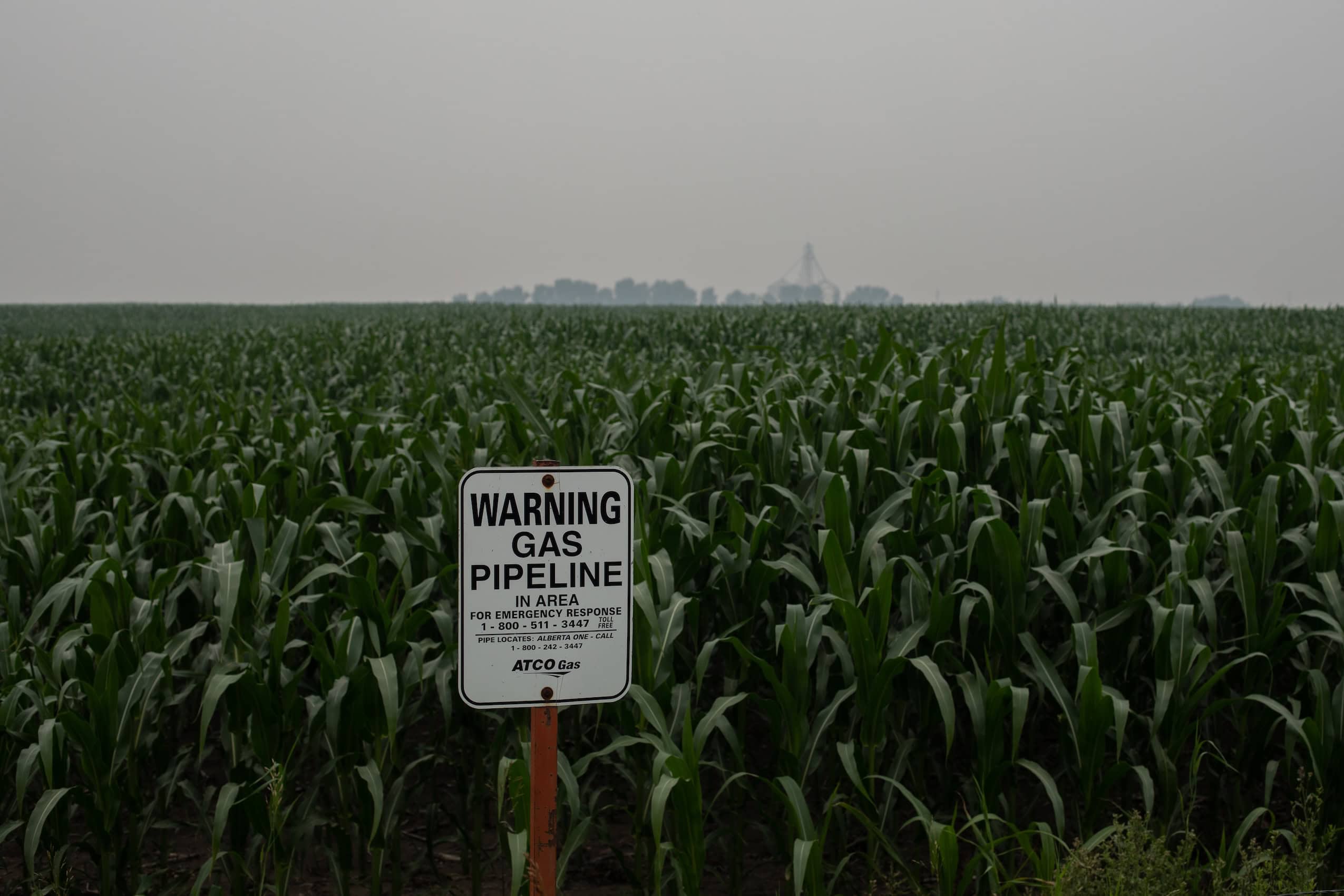
One idea floated in the leaked document is to create a new Crown corporation that could compel private companies to build more natural gas pipelines that could power AI data centres. Speaking on Saturday, Premier Danielle Smith did not disavow that idea. Photo: Amber Bracken / The Narwhal
But the premier did not rule out compelling private companies to build more natural gas pipelines the government deems to be in the province’s best interests.
One day earlier, after The Narwhal broke the news of the leaked document, the office of Alberta Energy Minister Brian Jean issued a statement.“Governments routinely examine a wide range of policy, regulatory and legislative options when considering complex issues, and internal materials do not represent government decisions,” it read.
Is this just a passing idea?
The Narwhal shared excerpts from the document with Shannon Phillips, a former environment minister in the NDP government between 2015 and 2019. Though she is not involved in the current deliberations, speaking from past experience with such documents she said she believes the document outlines a “serious plan.”
“This isn’t just the government blueskying,” she said. “They’re going to move.”
Lori Williams, a political science professor at Mount Royal University, agrees with Phillips. The Narwhal also shared excerpts of the leaked document with Williams.
“This is a fairly well-developed plan with very short timelines, and this isn’t just a discussion about something that might happen someday,” she said based on her review. (Williams is not privy to any internal details about the government’s deliberations.) “This is something that’s got timelines for this month.”
According to the document, the plan went before a high-level cabinet committee on Sept. 10 and is scheduled to be presented to the full cabinet on Sept. 22. The document says it would then move to the government’s legislative review committee to draft new laws on Oct. 15 and then new regulations on Dec. 4.
“The idea that it’s just a speculative exercise is harder to maintain when you’ve got timelines that begin this month,” Williams said.
An internal government source, whose identity is being kept confidential due to professional risk, said the cabinet report is moving forward regardless of the statements made by Smith over the weekend.
A note on trust, integrity and unnamed sources+
This story uses information from sources The Narwhal has agreed not to name. The Narwhal only agrees to keep names confidential when we believe two things. First, that the person we’re speaking with is putting themselves at genuine risk, either personal or professional, by sharing this information with us. Second, that the information they’re sharing is in the public interest. Our decision to do so is never made lightly.
There are two types of unnamed sources. A confidential source is someone whose name we know, but aren’t sharing. We make multiple attempts to verify their identity and information with other sources. If we aren’t able to get a second source, we say so.
An anonymous source is someone whose name we don’t know. It is incredibly rare for The Narwhal to publish a story with a completely anonymous source. In these instances, we don’t publish until we have verified the information shared with us with at least one other source.
And again, these stories must be in the public interest.
As Canadian governments become increasingly secretive, the courage of whistleblowers is to be admired. We value them greatly. At the same time, our promise to readers is The Narwhal will always make sure the facts are airtight.
Have something to share? Send us a story tip.
The Alberta government did not respond to questions about whether it was pursuing the plans outlined in the document by publication time.
What else is the Alberta government saying?
One item in the document raised particular concern for some, and was the focus of a news conference Nenshi hosted the same day The Narwhal published its story: cost for consumers.
The document warns the moves will likely increase costs for Albertans. One estimate in the document suggests the government’s aim is to almost double natural gas prices to support and expand production, which could see the cost to generate electricity rise by 25 per cent. That cost would then be passed down to consumers on their power bills, but the document does not predict those impacts.
On her call-in show, Smith argued the opposite was true.
“If you have constrained gas, and there’s more demand than there is supply, that’s what causes prices to go up,” she said. “And so what you need to do is you need to increase supply so prices stay low.”
That runs counter to estimates laid out in the document, the government’s own ambitions. It also runs counter to outside analysis.

Alberta citizens have expressed opposition to AI data centres in recent months. Here, residents review plans for a massive data centre in the small town of Olds. The data centre, which would have been powered by natural gas and consumed as much electricity as the city of Edmonton, was later rejected by Alberta’s utility regulator. Photo: Gavin John / The Narwhal
How could the plan in this document affect your power bills?
Data centres consume vast quantities of power. One hyperscale data centre can consume as much power as the entire city of Edmonton, or more. That also means they consume vast quantities of natural gas in their power plants.
It’s one reason why the government has explicitly linked increased natural gas demand with the data centre buildout, and argued the increased demand will help natural gas producers and the government’s own bottom line through increased royalties.
Analysis from the Pembina Institute estimates the recently announced Meta data centre near Edmonton alone could add $270 to $460 to electricity bills each year.
Beyond the cost of gas, there is also concern with the potential costs passed down to taxpayers from lawsuits, the construction and operation of pipelines or the creation of a new corporation to oversee the pipeline network.
Sonya Savage, an energy minister under premier Jason Kenney, told the Calgary Herald this week that government interventions in the market can be a big gamble.
“It makes me very nervous, because there is not a great track record,” Savage said in the wake of the document leak.
“But [if] the private sector is not prepared to invest in projects that are in the public interest — and have public merit and benefits — then I’m not opposed to the government looking and researching.”
The Narwhal’s reporters are telling environment stories you won’t read about anywhere else. Stay in the loop by signing up for our free weekly dose of independent journalism.
From The Narwhal | News on Climate Change, Environmental Issues in Canada via This RSS Feed.
8
9
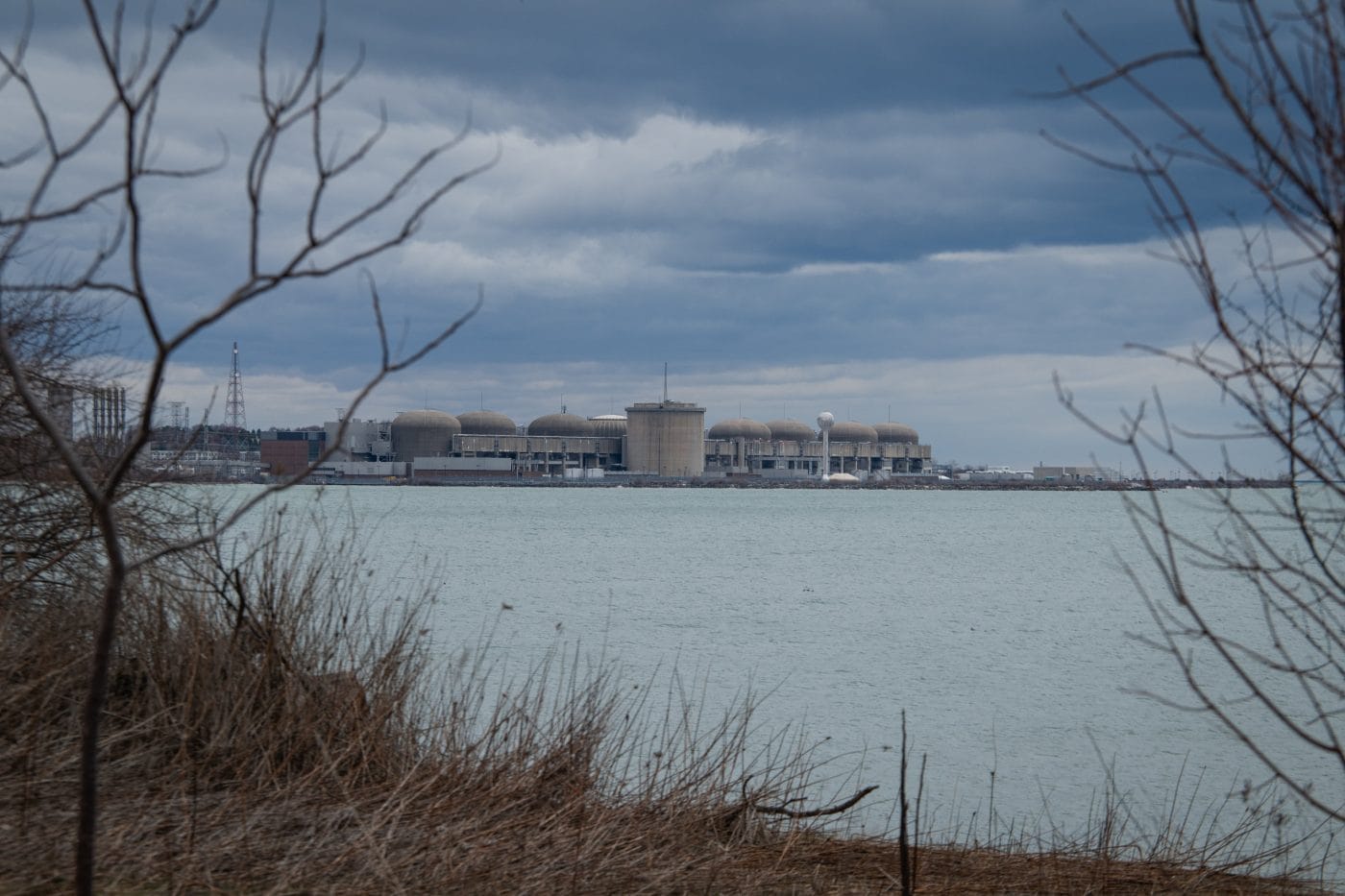
Photo: Laura Proctor / The Narwhal
Pickering Nuclear Generating Station, which produces ten per cent of Ontario’s energy supply, will go fully offline next week.
Nicolle Butcher, president and CEO of Ontario Power Generation, told the gathering of investors, CEOs and politicians at Prime Minister Mark Carney’s Canada Investment Summit on Monday that the plant, which has operated for 50 years, “will come out of service next week and we’ll start its refurbishment.” Butcher said it would be off-grid for five to seven years.
The shutdown was expected this fall, with plans to begin repairs early next year, pending regulatory approval. The refurbishment is expected to last until the mid-2030s, enabling the plant to provide enough energy to power more than two million homes for an additional 30 years. Ontario has had two other nuclear facilities undergoing similar repairs: the update at Darlington just wrapped up, while the one at Bruce Power is ongoing.
In the interim, the province will maintain its electricity supply largely by relying on natural gas — a fossil fuel composed mainly of the greenhouse gas methane. This is not a surprise. In 2021, the Independent Electricity System Operator cited aging nuclear facilities coupled with increasing demand as driving an increase in gas generation in the province.
Not everyone thinks the Pickering project is worth it. “The real question that Ontarians should be asking is: does the refurbishment of this plant make any sense?” Keith Brooks, a program director with a focus on energy at the advocacy group Environmental Defence, told The Narwhal. “It’s going to be more expensive than the Darlington and Bruce refurbishments” — themselves years-long, multibillion-dollar projects already pushing rates higher — “and meanwhile, wind and solar and batteries have come of age and come so far down in cost that a cheap, clean energy future is within our grasp, if only we’d reach for it.”
The Narwhal sent questions to Ontario Power Generation, a Crown corporation of the province, and Energy Minister Stephen Lecce’s office. Neither provided answer by publication time. Lecce’s office has not answered emailed questions from The Narwhal or granted requests for interviews since he took on the role in June 2024.
Here’s what you need to know.
Why is Pickering Nuclear Generating Station shutting down?
Simply, because it’s very old.
Located just east of Toronto, Pickering Nuclear Generating Station has already been operating for an extended lifetime. It was originally slated to close in the early 2020s. Instead, since taking office, the Doug Ford government has extended its life. The plant became increasingly vital in closing a tightening energy supply gap fuelled by a growing population, and more recently data centres and electric vehicles.
In 2022, the Ford government announced it would push Pickering’s youngest four reactors — Units 5 through 8, known as Pickering B — to run through September 2026, while Units 1 through 4, known as Pickering A, were permanently shut down.
In October 2024, following public hearings that drew submissions from Ontario Power Generation, experts from the the federal Canadian Nuclear Safety Commission and 54 intervenors, the plant was granted a further extension until Dec. 31, 2026. Around the same time, the province instructed Ontario Power Generation to begin planning a full refurbishment of Pickering B, rather than let those four reactors retire.
How does the Pickering refurbishment fit into Ontario’s broader energy plans?
Pickering’s refurbishment isn’t happening in isolation — it’s one piece of a much larger provincial rebuild that touches all three of Ontario’s major nuclear sites. Darlington, outside Bowmanville, Ont., just wrapped up its own years-long refurbishment — “on time and under budget,” according to the government and Ontario Power Generation. At the investment conference panel, Butcher said such efficiency “is not usual for a nuclear project.”
Bruce Power, in Kincardine, Ont., is mid-refurbishment right now, with a timeline that overlaps Pickering.
Ontario is also pursuing new nuclear construction. The province is advancing Canada’s first small modular reactor project at Darlington, and is separately looking at building an entirely new nuclear site at Wesleyville. But the timelines on those projects fan out over the next two decades, with the first of four small modular reactors expected to come online in 2030.
Bruce Power has also proposed four large new reactors at its site, which would be Canada’s first large-scale nuclear build in more than 30 years. And the Ontario government has already agreed to share the costs of the impact assessment with the company.
How much will the Pickering refurbishment cost Ontario taxpayers?
The government has approved a $26.8-billion budget for the Pickering refurbishment — more than double the $12.8 billion spent rebuilding Darlington. The government and Ontario Power Generation attribute the higher cost to Pickering’s age, which demands a heavier rebuild, plus inflation.
For Ontarians, the cost will show up most directly on power bills. Last year, Ontario Power Generation filed an application with the provincial energy regulator, the Ontario Energy Board, to roughly double the cost of nuclear-generated electricity. If approved, the increase would add an average of $3.50 to monthly household bills each year for the next five years, according to the Crown corporation.
These rising costs come with a tradeoff: nuclear’s size and dependability versus its cost. Brooks is right about renewables — the International Energy Agency says solar, especially, is growing faster than any other energy source globally, becoming cheaper and more effective.

With costly nuclear plant refurbishments underway in the province, Ontarians can expect an extra roughly $3.50 on their utility bills. Photo: Carlos Osorio / The Narwhal
Yet while Ontario does have some renewable projects in the works, overall, the Independent Electricity System Operator projects renewables will make up roughly the same share of Ontario’s electricity mix 25 years from now as they do today. This reflects the province’s bet on nuclear, rather than renewables, as the backbone of its energy plan.
What will replace the power provided by the Pickering nuclear plant?
A combination of natural gas, battery storage and electricity imports.
There is no nuclear facility that can make up the shortfall from Pickering’s shutdown. Darlington already provides 20 per cent of Ontario’s energy supply and, according to figures from the Independent Electricity System Operator, it doesn’t have any additional capacity to make up for the loss of Pickering. Neither does Bruce during its refurbishment.
So the province’s electricity operator has been putting callouts for more natural gas generation to maintain a reliable power grid.
Battery storage is also playing a growing role. The Oneida Energy Storage Project, a 250-megawatt facility near Six Nations of the Grand River that opened in 2025, doubled Ontario’s battery storage capacity to 475 megawatts on its own, and the province has procured close to 1,800 megawatts more storage across other projects, expected online by 2028. Battery projects are able to store excess power when demand is low and deploy it when demand is high, helping to balance out the grid and its power sources.
The operator has projected the Pickering retirement and refurbishment outages will make Ontario a net importer of power for the first time since 2005 — with imports largely coming from the United States, a complicated prospect amid a tariff war. The system operator expects that balance of trade to return to exports once the nuclear refurbishments wrap up in the 2030s.
What happens next?
Canada’s nuclear regulator told The Narwhal it will be holding the second half of a public hearing starting Oct. 6 to decide whether to renew Pickering’s operating licences — for both the power plant and its waste storage facility — for another 10 years, and whether to approve the planned refurbishment. The hearing will be in Ajax, Ont., and last a week.
Once the hearing wraps up and the regulator has all the input it needs, it’ll issue a decision, typically within four months.
The Narwhal’s reporters are telling environment stories you won’t read about anywhere else. Stay in the loop by signing up for our free weekly dose of independent journalism.
From The Narwhal | News on Climate Change, Environmental Issues in Canada via This RSS Feed.
10
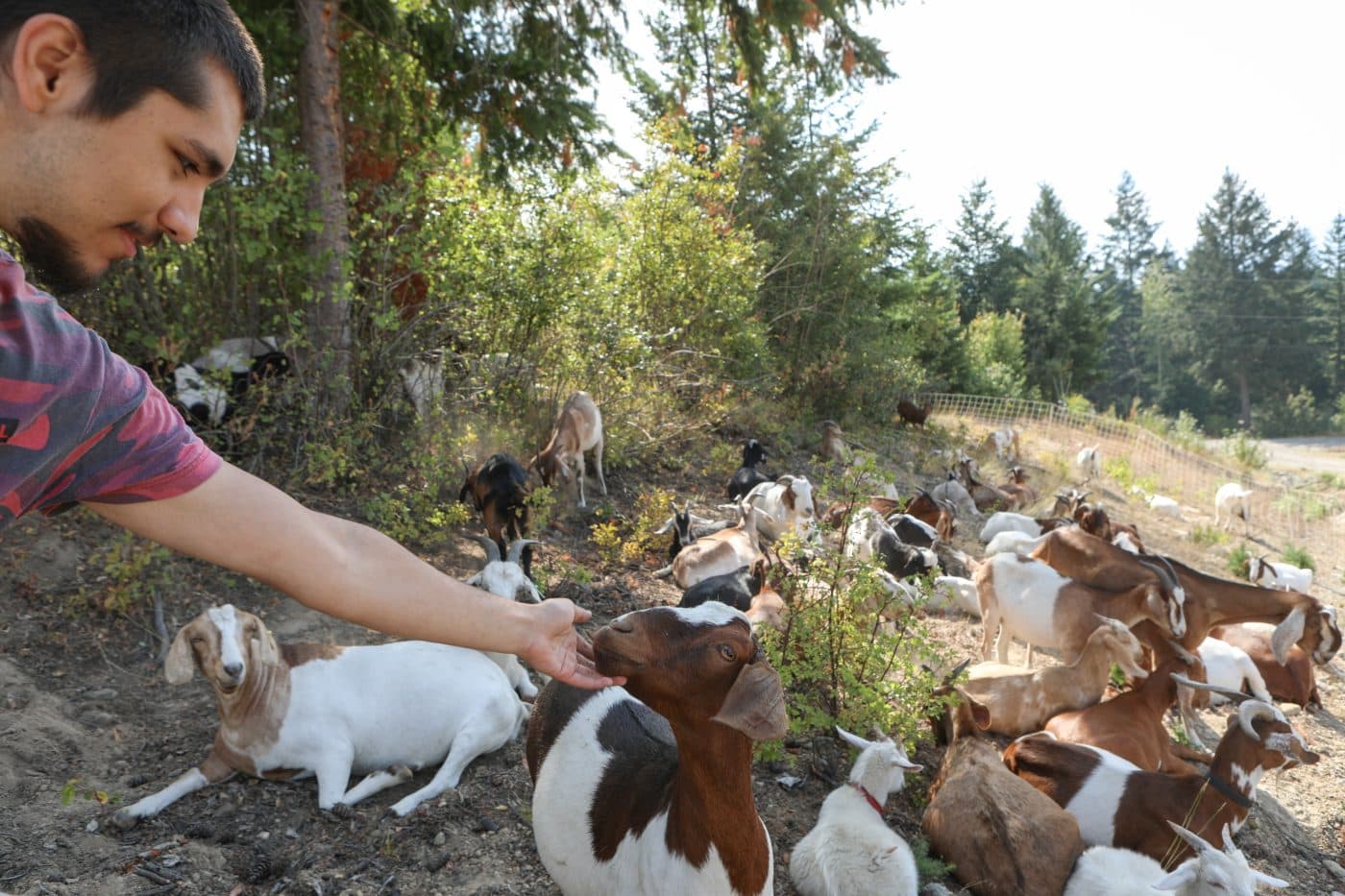
On a grassy slope in Kanaka Bar, a herd of goats frolic and play. But this isn’t a farm or a petting zoo — it’s an innovative wildfire mitigation effort from the First Nation.
Some of the goats loudly bleat as they chow down on invasive species and overgrown brush.
“In the last five years, Kanaka community has been experiencing devastation with fire,” Pauline Michell told The Narwhal.
That includes two evacuations due to wildfires, as well as floods and mudslides that have closed roads and cut off her community from the world. And in Kanaka Bar, there is no fire truck or fire hall. “Kanaka has solely been on its own in regards to fire,” said Michell.
Located in Nlaka’pamux territory, 20 kilometres south of Lytton, Kanaka Bar Indian Band also goes by T’eqt’ aqtn’mux, “the crossing place people.”
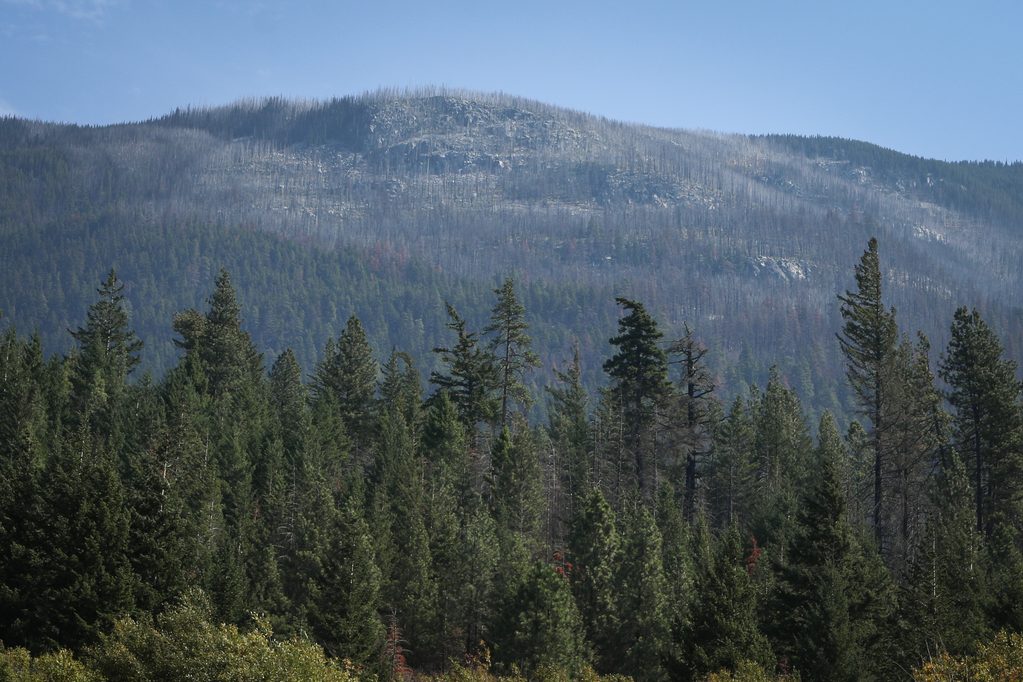
Burnt forest as a result of wildfire in the mountains above Kanaka Bar. Located in the Fraser Canyon, fire is a deep concern.
In 2021, the Lytton Creek wildfire devastated the area, evacuating numerous First Nations for years, while burning structures and homes to the ground.
Later that year, an atmospheric river raged through the Fraser and Thompson Rivers, washing out roads and cutting people off from leaving Kanaka Bar.
According to a new report from the office of the B.C. human rights commissioner, between 2000 and 2024, First Nation reserves accounted for 36 of 37 communities where at least half of the total land area was burned by wildfire, with the only non-reserve community being Lytton.
Further, First Nation reserves in B.C. are four times more likely to be impacted by wildfire than non-reserve communities.
This prompted Michell, an elected councillor in her community, to take a proactive approach to the wildfire season.
From July 27th to Sept. 8th, a herd of goats ate their way through the Kanaka Bar Indian Band, targeting areas with built up fuel and brush that would burn up in a fire.

A goat from the crew eating vegetation. Each goat plays an important role implementing the grazing plan.
About 80 goats have been clocking in this summer, while a few goats like Dandelion and Cuddley are part of a rebel club in their own separate enclosure.
“This is a trial for Kanaka, to look at fuel management in this way,” said Michell.
“Hearing about these goats being able to do this sounded really intriguing and interesting, they’ve been here for about a month now,” she said.
The idea came by accident, after an area grazed by sheep acted as a fire stop during a wildfire three years prior.
“Back in 2023, the Kookipi Creek fire came through … We had been grazing the sheep that we had out in this back area, and when that fire came through, it actually came pretty much all the way down to community, and then it stopped where the sheep had been grazing,” Emma Bryce told The Narwhal.
She recalled thinking, “This is really cool, we just kind of made our own fire break without really intending to.”
Bryce has been the nation’s food self-sufficiency lead since 2022, and after the sheep experience, started researching different animals to graze in the community.
“In conversations with chief and council, I brought it up and was like, ‘What if we used goats to do wildfire risk reduction?’ They were like, ‘okay, let’s do it.’”
“This goat grazing project has been a passion project of mine for the last couple of years,” Bryce said, after she took the green light from Kanaka and ran with it. That’s when she met Bruce Bradley, who does contract work across B.C. with his herd of goats.
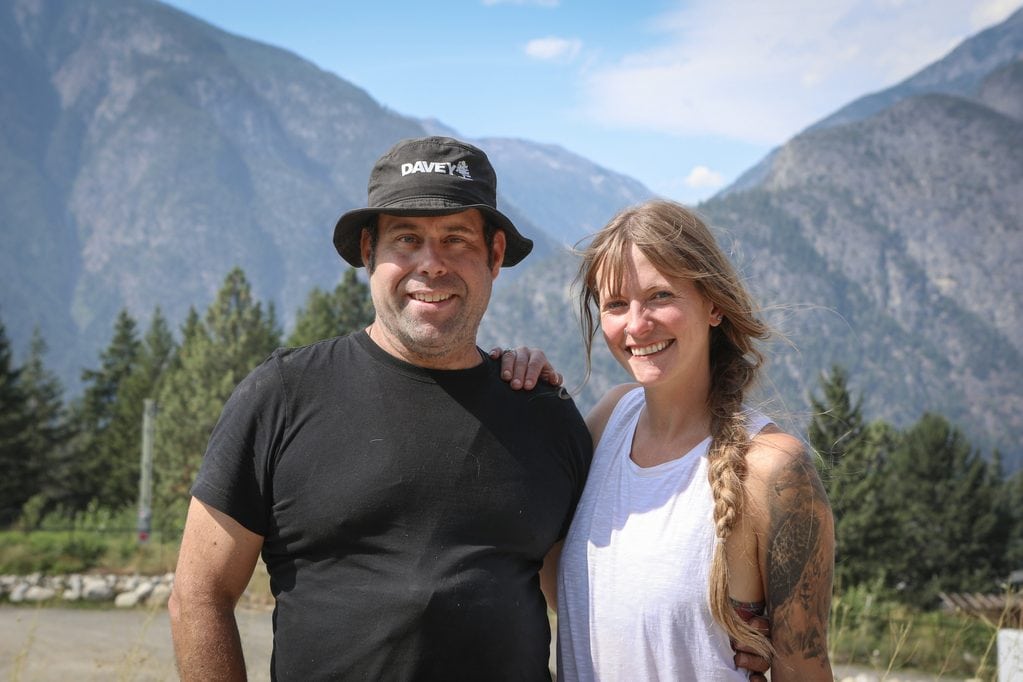
Bruce Bradley and Emma Bryce created and implemented the goat grazing plan in Kanaka Bar, meeting with the community and chief and council beforehand.
Based on Vancouver Island, it took three trips by ferry to bring his herd to the mainland and then to Kanaka Bar this summer. But the Ainslie Creek and Brunswick Creek wildfires impacted initial operations back in July.
As of Sept. 11, those wildfires remained burning 31 kilometres down the road from Kanaka Bar, though they are now contained. Once it was safe, the goats got to work.
Goat grazing benefits for biodiversity and wildfire
The goats have grazed about 12 hectares of ground since arriving in the community earlier this summer.
“We’re trying to get in all the nooks and crannies, especially around the houses and around the roads, the important spaces to make them more defensible and resilient to fire,” Bradley told the Narwhal.
On top of reducing wildfire risk, “the ecological benefits are huge because the goats are trampling, they’re fertilizing … and they’re especially effective for invasive weeds.”
“We’ve tackled this year quite a bit of Canadian thistle, Himalayan blackberry and Scotch broom.”
Bradley’s been deploying his fire-mitigating goats since 2018, through his company BC Timber Goats.

One of the goats poses for a headshot. The friendly animals brought smiles to those in community.
“It’s a very unique tool, and I think a powerful tool to get wildfire risk reduction benefits and silviculture benefits on the same site, at the same time,” he said.
According to the B.C. government, silviculture is “the thoughtful, deliberate and balanced management of forests and surrounding local ecosystems” that encourages tree diversity to increase resilience against threats like pests, climate change and disturbances.
The idea to start a goat grazing business came from Bradley’s experience in farming.
“I grew up on a farm that had lots of weed control issues. I’d always spray and mow, and we’d break the mowers. I’d get sick with the spray and so I thought, there’s got to be a better way,” he said.
Bradley said that in areas of the farm sprayed with pesticides, “everything would just turn brown, and half the time it would burn in wildfire in the summer.”
Goat grazing achieves similar outcomes as pesticide use but is much healthier for the environment.
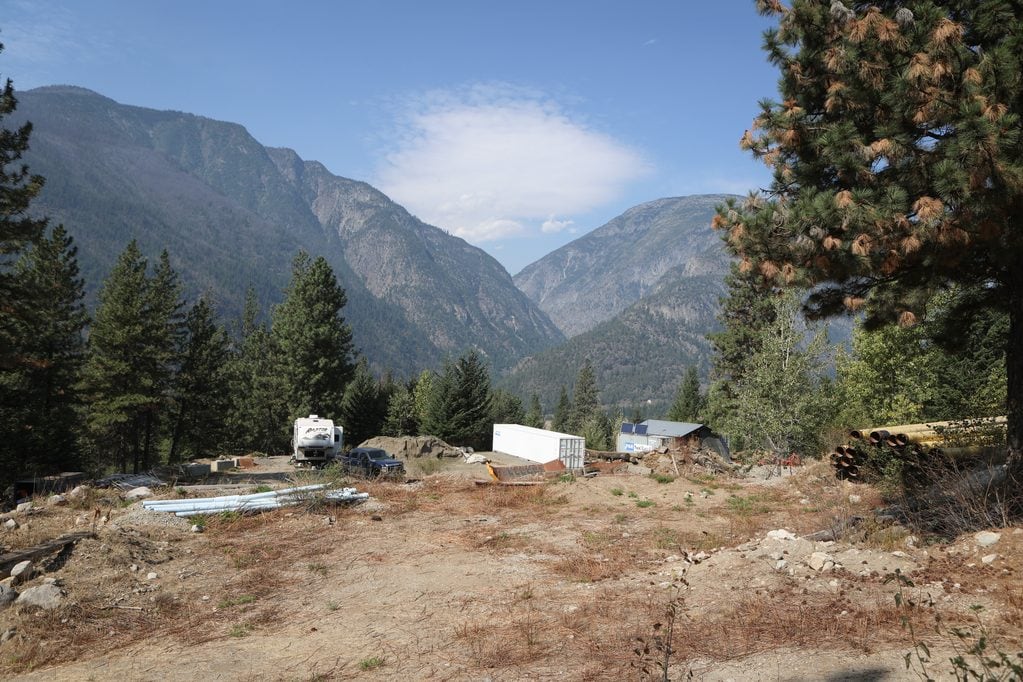
“This area had vegetation up to my chest,” said Bradley. The goats ate through it.
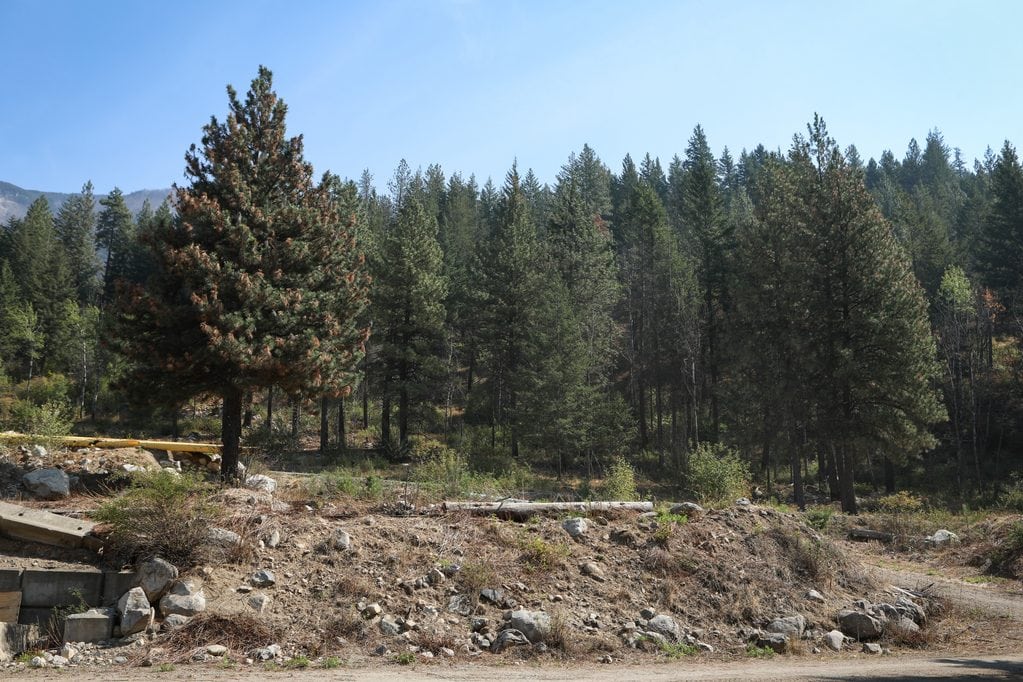
FireSmarting the sides of the road leading into Kanaka Bar was a priority during this project.
According to the University of Calgary, which piloted a goat-grazing project at their main campus last year, “targeted grazing is a proven land-management technique that uses livestock to naturally control vegetation growth. Unlike herbicides, which can have a lasting environmental impact, goats provide a natural way to reduce unwanted plant growth while encouraging native vegetation to thrive.”
Animals grazing through southern Interior communities has become less common with wildlife populations declining.
“Using goats actually mimics what you would have typically seen if you had large herds of elk moving through. … Goats mimic a natural system that this landscape would have evolved with already,” Bryce said.


Two of the hard-working herd of 80 goats that ate through 0.25 hectares of brush each day at Kanaka Bar.
An addition to the FireSmart toolbox
Over the summer, the goats have been working alongside Kanaka Bar’s fuel management crew.
As the FireSmart team gathers fuel and brush into a pile, the goats eat until it’s gone. It’s a win-win situation: feeding the goats and disposing of the community’s built-up fuel.
“I don’t think there’s ever going to be a scenario where we don’t need people out on the ground, going out and doing the bigger fuel management,” Bryce said, adding goat grazing complements other fuel management strategies.
“They can go in and defoliate, which is great to have more visibility when you’re out there working in really dense brush,” she said.
Bryce and Bradley estimate the goats ate 0.25 hectare of ground each day.
“The goats are going in and doing a really efficient job at something that is really challenging to do with just human crews alone,” she said.
When the project was first brought forward to the community, residents were interested in learning more about it, but not exactly excited about goats – that quickly changed.
“Now it’s to the point where members want a couple of goats to tackle the brushes in their yard as well, so that’s really good,” said Michell.
“When wildfire comes to Kanaka, we’ll be more prepared.”
The Narwhal’s reporters are telling environment stories you won’t read about anywhere else. Stay in the loop by signing up for our free weekly dose of independent journalism.
From The Narwhal | News on Climate Change, Environmental Issues in Canada via This RSS Feed.
11
4
Gulf billionaire dictators are looking to cash in on Mark Carney’s investment bonanza
(breachmedia.ca)

As Saudi and UAE monarchs join Carney’s investment summit, it signals a newly-unabashed era of economic collaboration with the authoritarian regimes.
The post Gulf billionaire dictators are looking to cash in on Mark Carney’s investment bonanza appeared first on The Breach.
From The Breach via This RSS Feed.
12
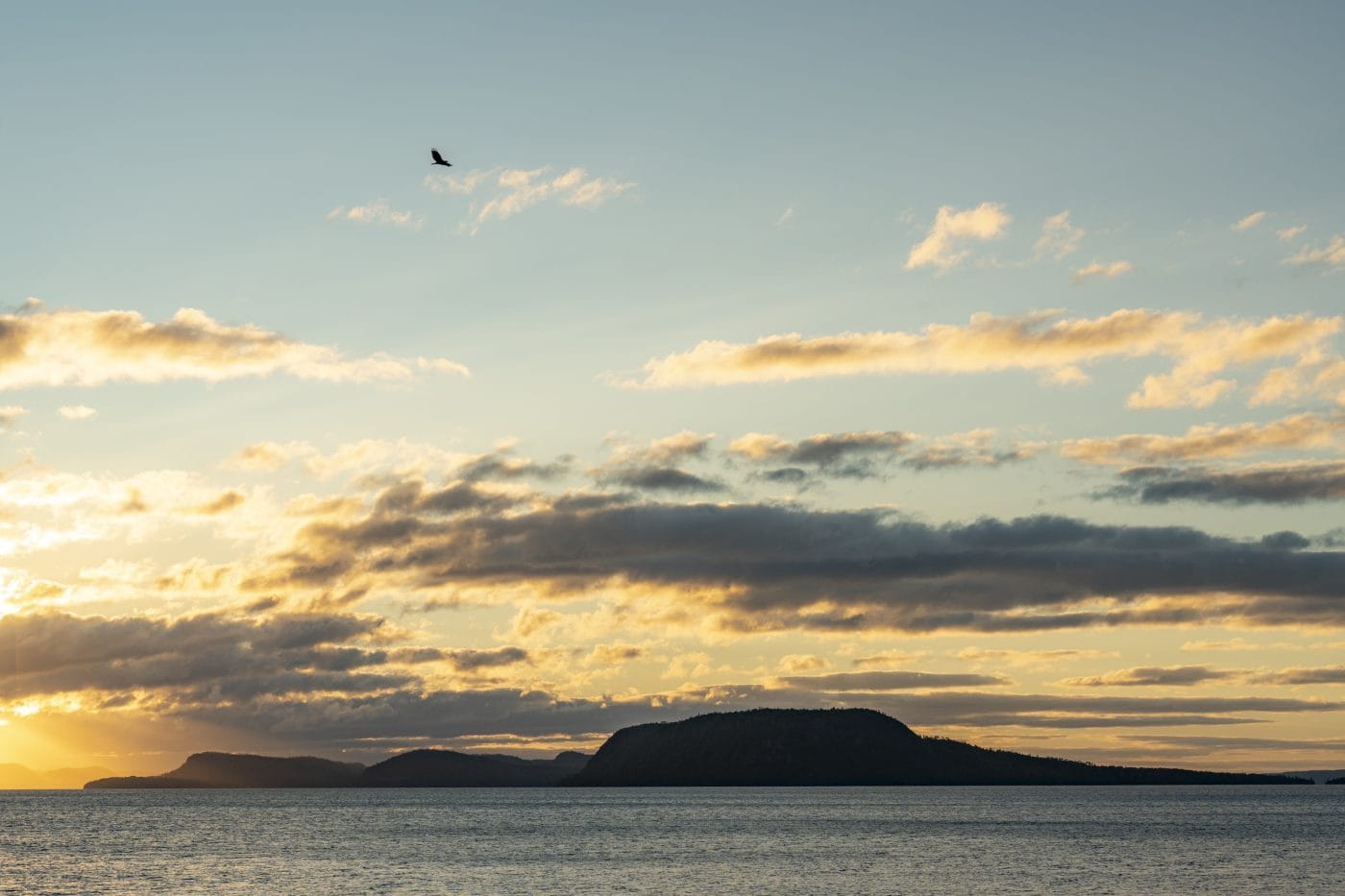
In the 1960s, David Crawford was boating in his backyard on Nipigon Bay when he thought he spotted raw sewage floating in the once-pristine waters of Lake Superior. Years later, he realized the “turds,” as Crawford describes them, were craft paper deposits from the nearby pulp mill in Red Rock, Ont. The mill was also known to billow a harmful smoke into the air and release a hot, foamy plume of effluent into the lake. If the noxious smell wasn’t enough, log drives filled the bay with floating timber and bark, meaning Crawford didn’t often tempt the tumultuous waters of Nipigon Bay.
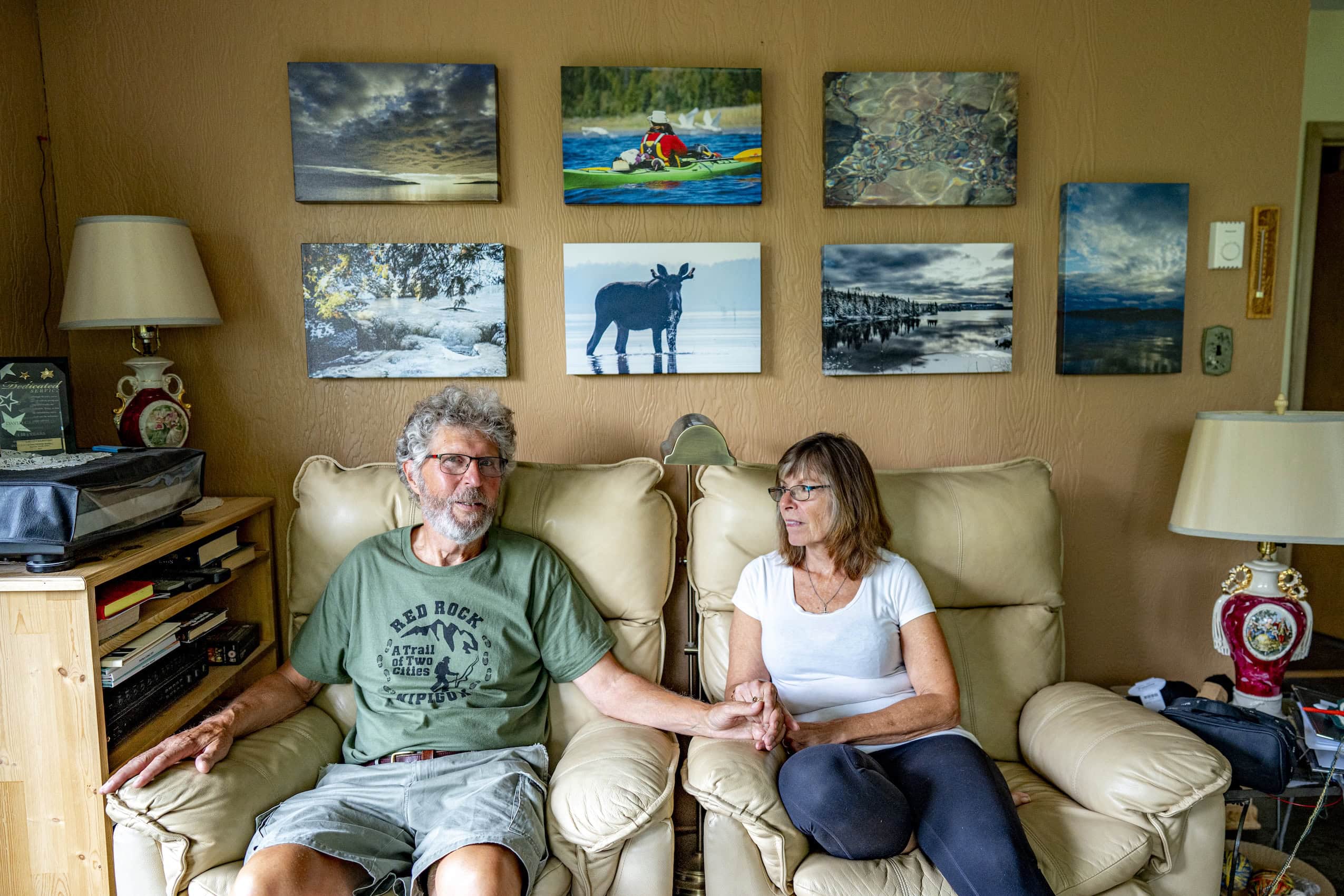
David and Catherine Crawford in their home in Nipigon, Ont. David remembers boating on Lake Superior’s Nipigon Bay and seeing evidence of industrial pollution in the water.
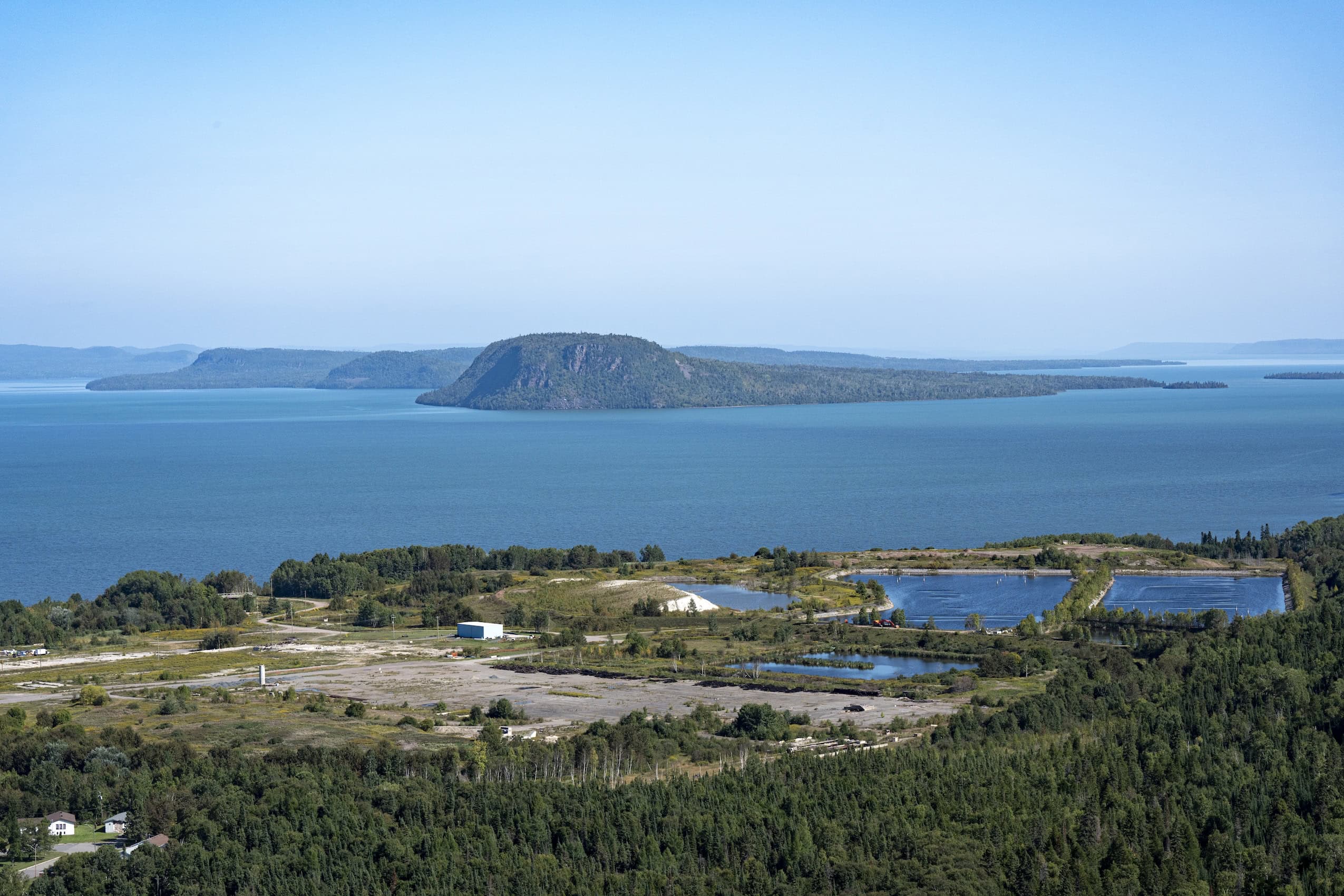
A former pulp mill on the shore of Nipigon Bay was one of many sources of pollution that caused environmental damage to the bay’s waters.
Along with the pulp mill, raw sewage actually was poisoning the clear bay, coming from two inadequate municipal wastewater treatment plants, but trouble didn’t stop there. The unnatural rise and fall of the water level, due to four hydroelectric dams upstream on the Nipigon River, were causing riverbanks to erode, adding silt to the water, while simultaneously washing out fish spawning habitat.
The reality, Crawford said, was haunting: Nipigon Bay was on the verge of dying.
But in late August, as fishing boats glided across calm, turquoise water behind a podium set up at the Red Rock marina, it was easy to forget about the bay’s past.
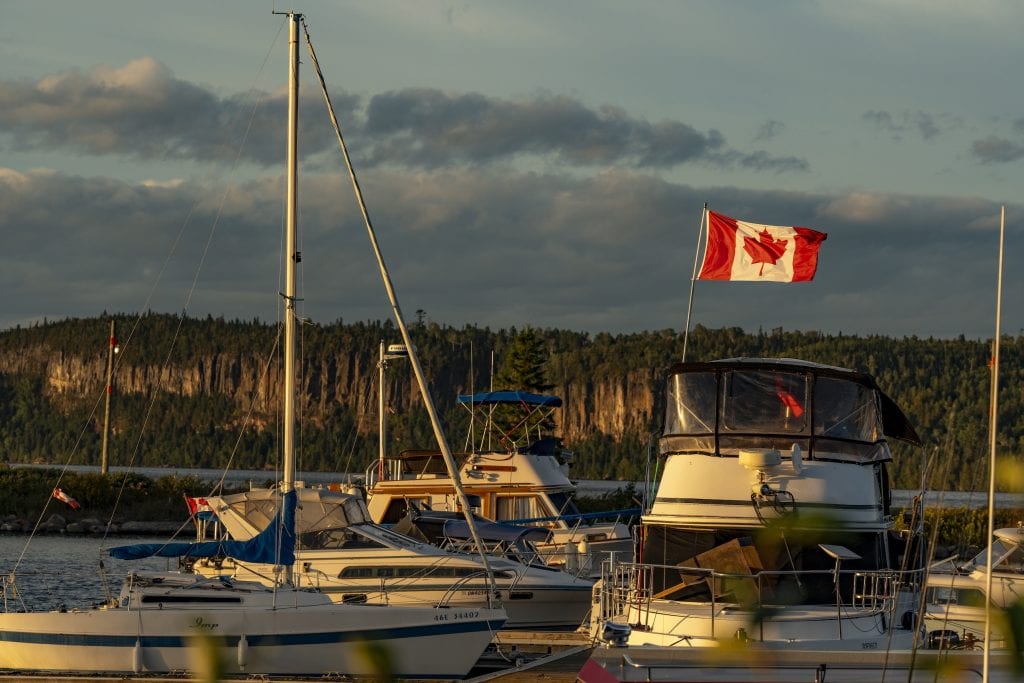
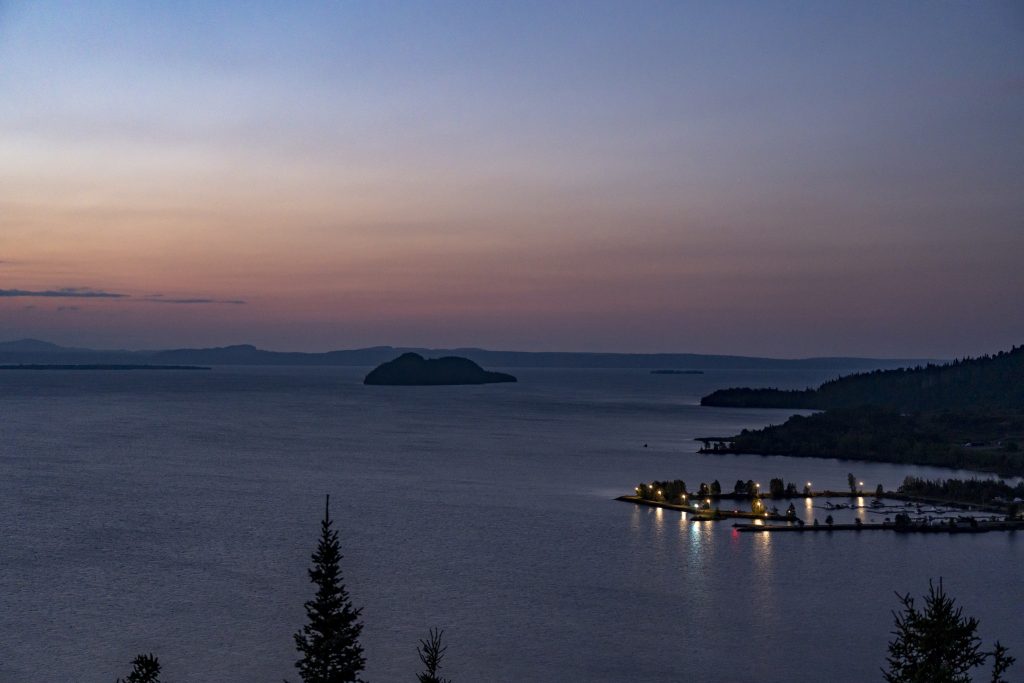
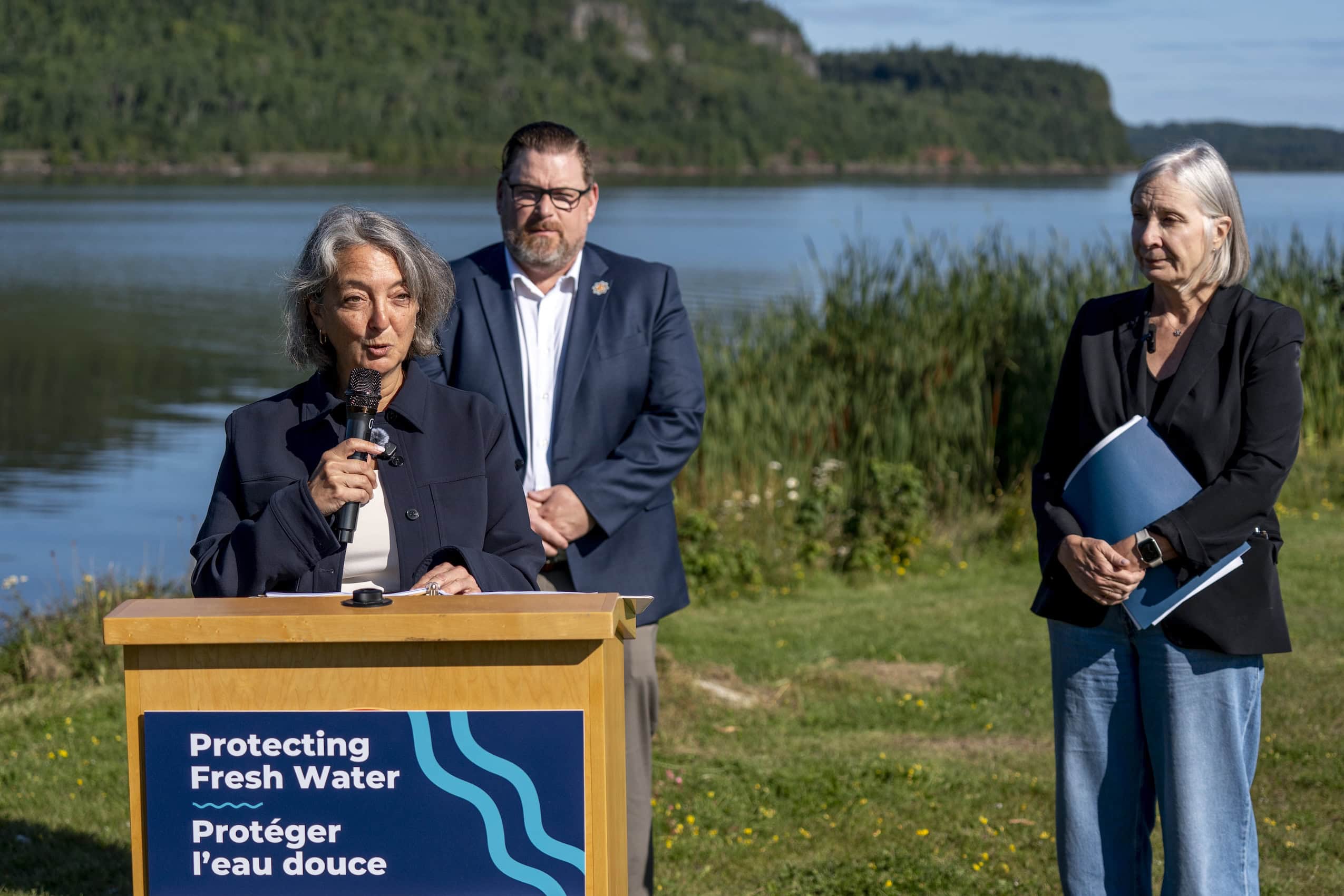
In August 2026, federal Environment Minister Julie Dabrusin announced Nipigon Bay is no longer designated as a Great Lakes area of concern.
A small crowd was gathered as federal Environment Minister Julie Dabrusin visited Red Rock, a town of fewer than 1,000 people, to celebrate those very waters. The air was fresh with the smell of wild mint and Canada geese migrating in undulating waves, stopping to feast in and by the water, honking their approval. Dabrusin spoke into the quiet space left by the calm waters, about “a bay that was heavily polluted and is healthy again. The fish came back, the habitat was rebuilt, and water that people once could not trust, they can trust again.”
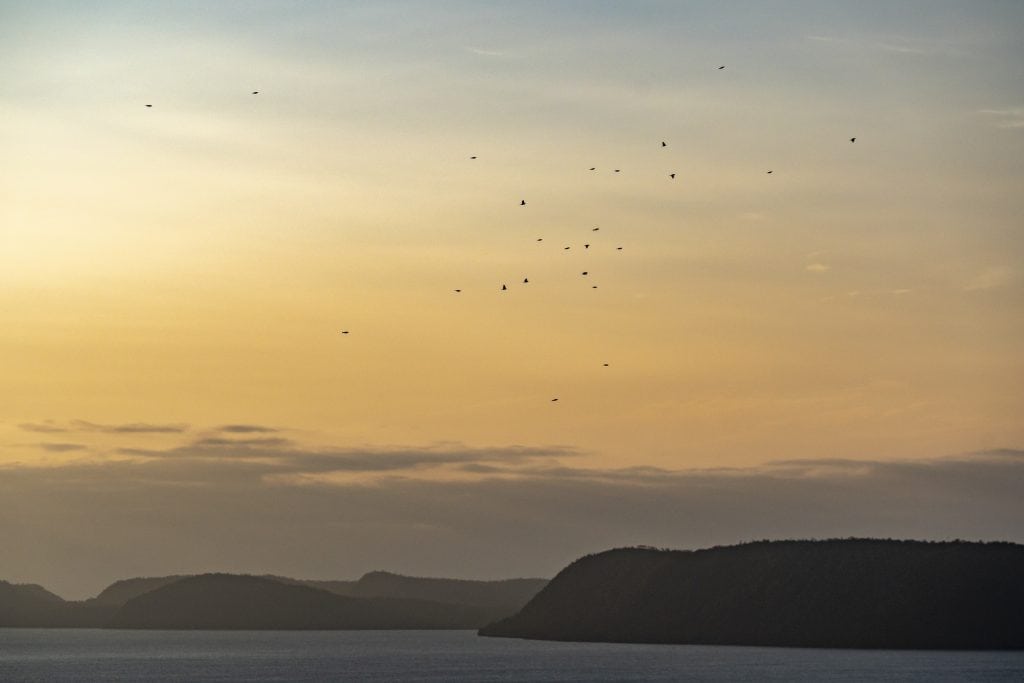
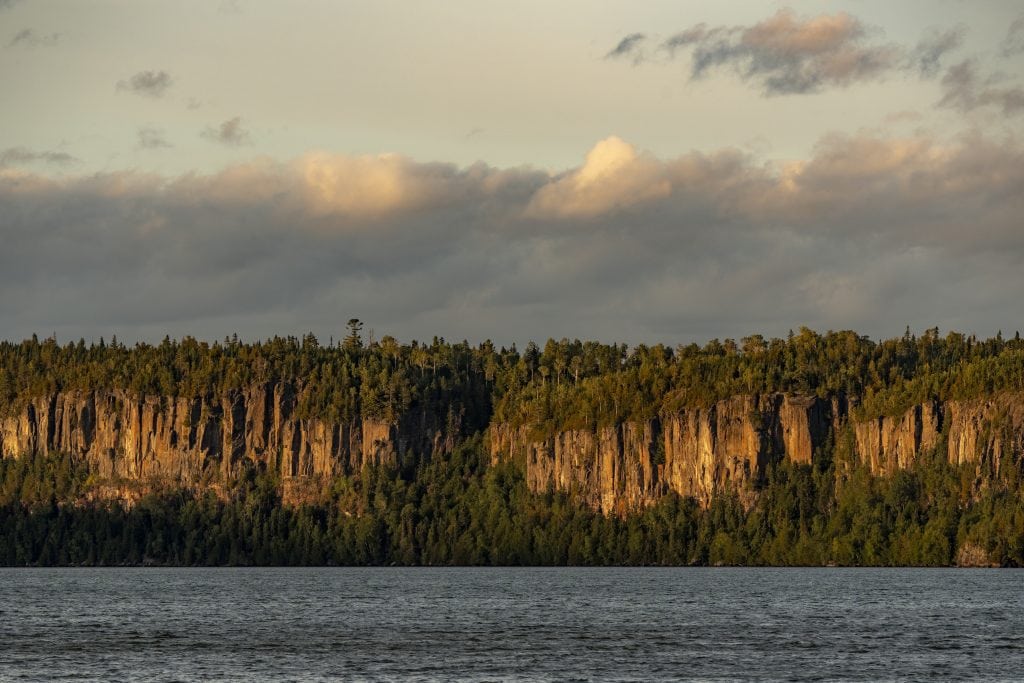
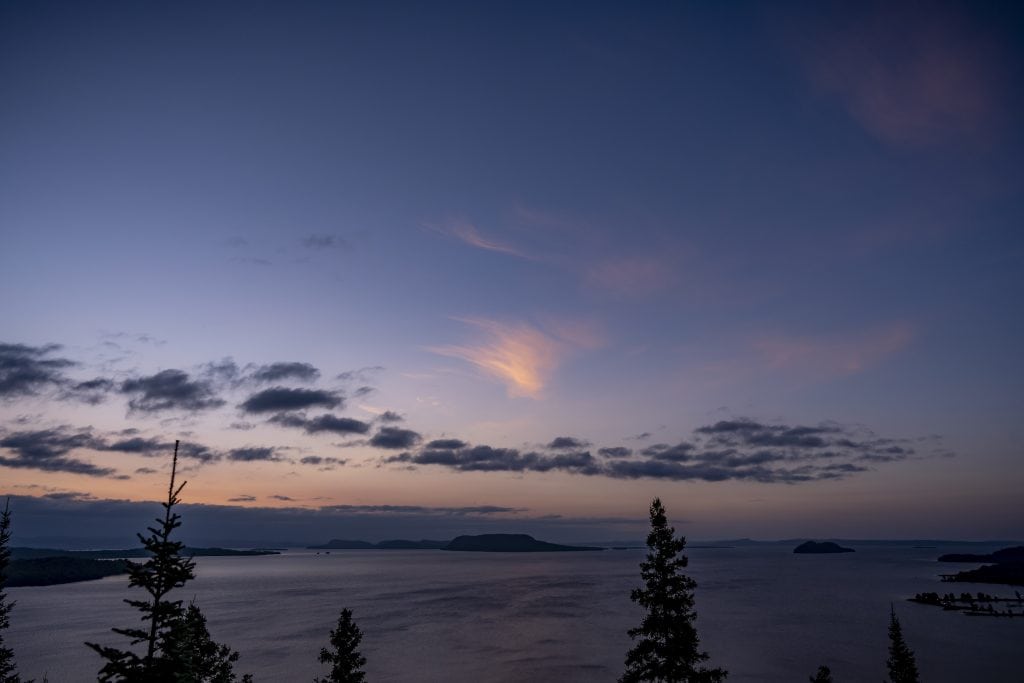
A 1987 agreement between Canada and the U.S. identified 43 areas of concern where significant environmental harm had been done to Great Lakes waters. Twelve of those areas of concern were Canadian, including Nipigon Bay.
Gone are fish with tumours, unnaturally fluctuating water levels, noxious odours, effluent foam barriers, mill plumes and drifting timber. Nipigon Bay is a success story that stretches beyond the Canadian border. It’s one worth noting at a time when the relationship between Canada and the U.S. is strained by President Donald Trump’s trade war and moves to rename another Great Lake — Lake Ontario — to Lake America.
In 1972, Canada and the United States agreed upon their mutual role in polluting a portion of the Great Lakes, which contain 20 per cent of the world’s fresh water. The two countries joined forces to create the Great Lakes Water Quality Agreement. In 1987, the agreement listed 43 official areas of concern where this industrial pollution was the most deleterious. Twelve of those were in Canada, including Nipigon Bay.
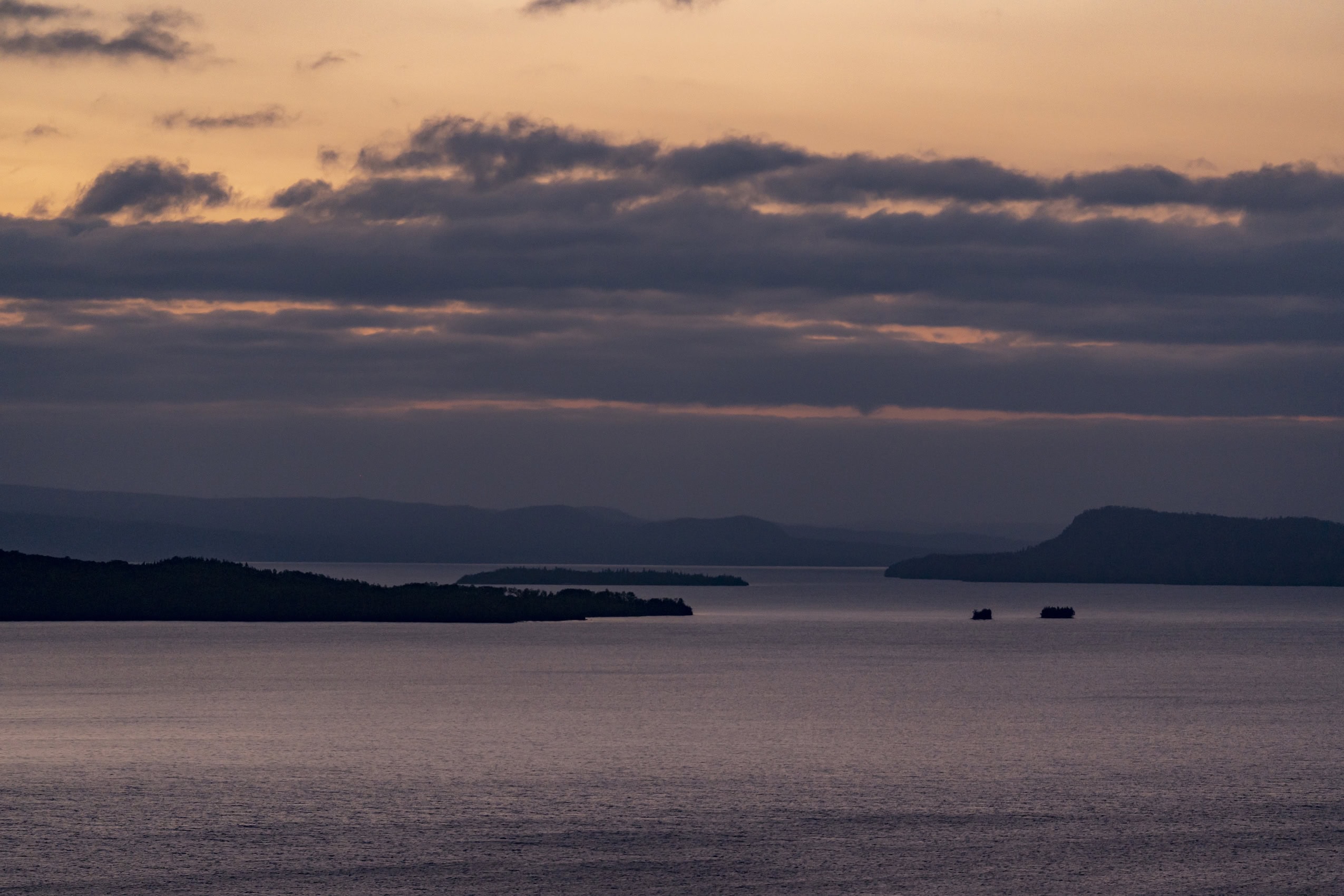
Nipigon Bay is the fourth Canadian Great Lakes area of concern to be delisted, and the first since 2010.
It was a time when the countries were friendly neighbours, the type that could agree to clean up their backyards and prioritize clean drinking water for millions of people. Remedial action plans were created for the affected areas to create a pathway for healthy environments to thrive.
Which brings us to Nipigon Bay, on Aug. 28, 2026. Four decades after being identified as an area of concern, the federal government announced it was officially delisted at the small celebration beside the still waters of Lake Superior. It was attended by ministers, government officials, local First Nations and Crawford, who chairs a public advisory committee made up of local residents who help to monitor the remediation work.
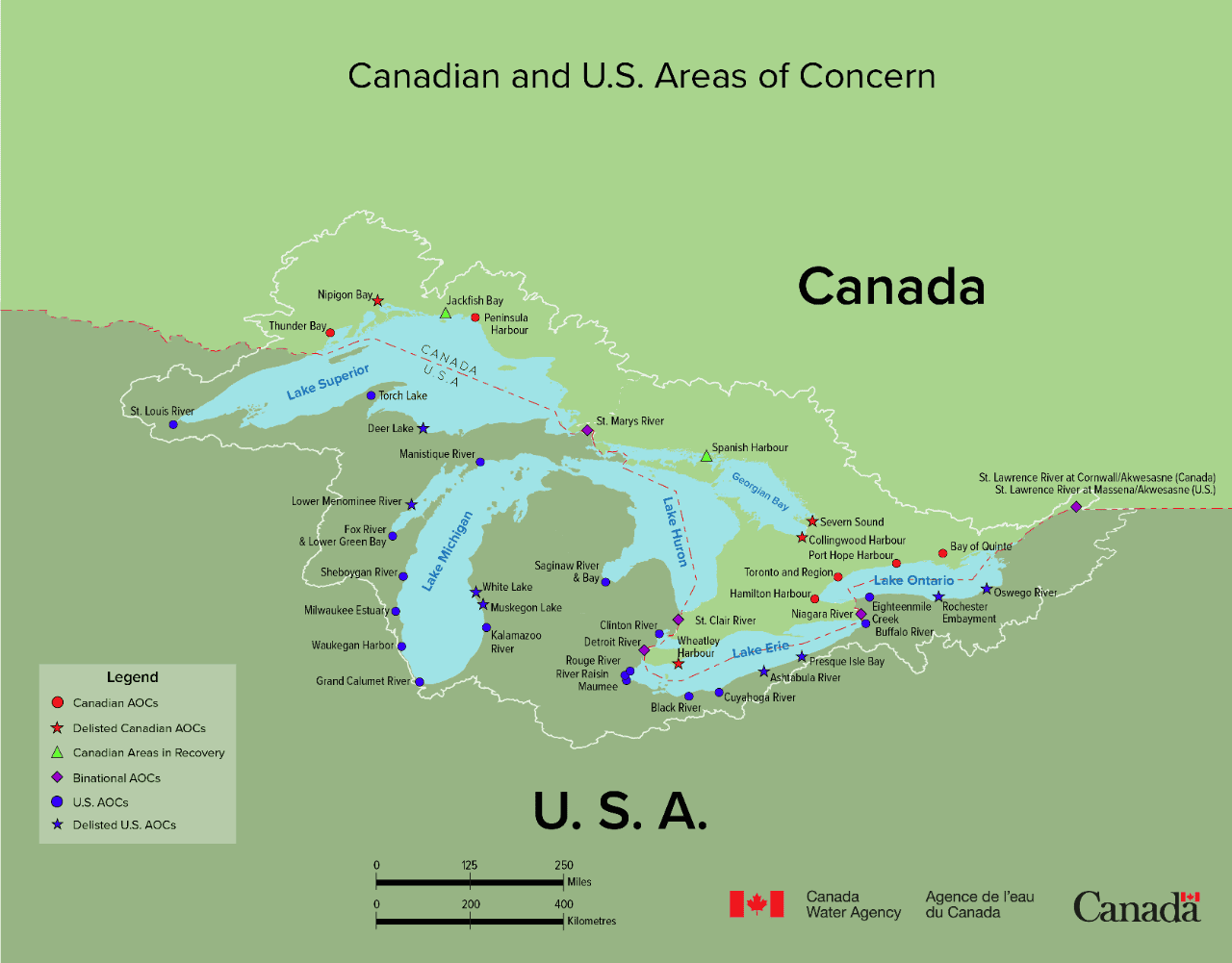
In addition to the four Canadian areas of concern that have been delisted, there are two listed as “in recovery,” which means “required remedial actions are complete and the areas need more time for the environment to fully recover,” according to the federal government. Six Canadian areas of concern require further remediation. Map: Canada Water Agency
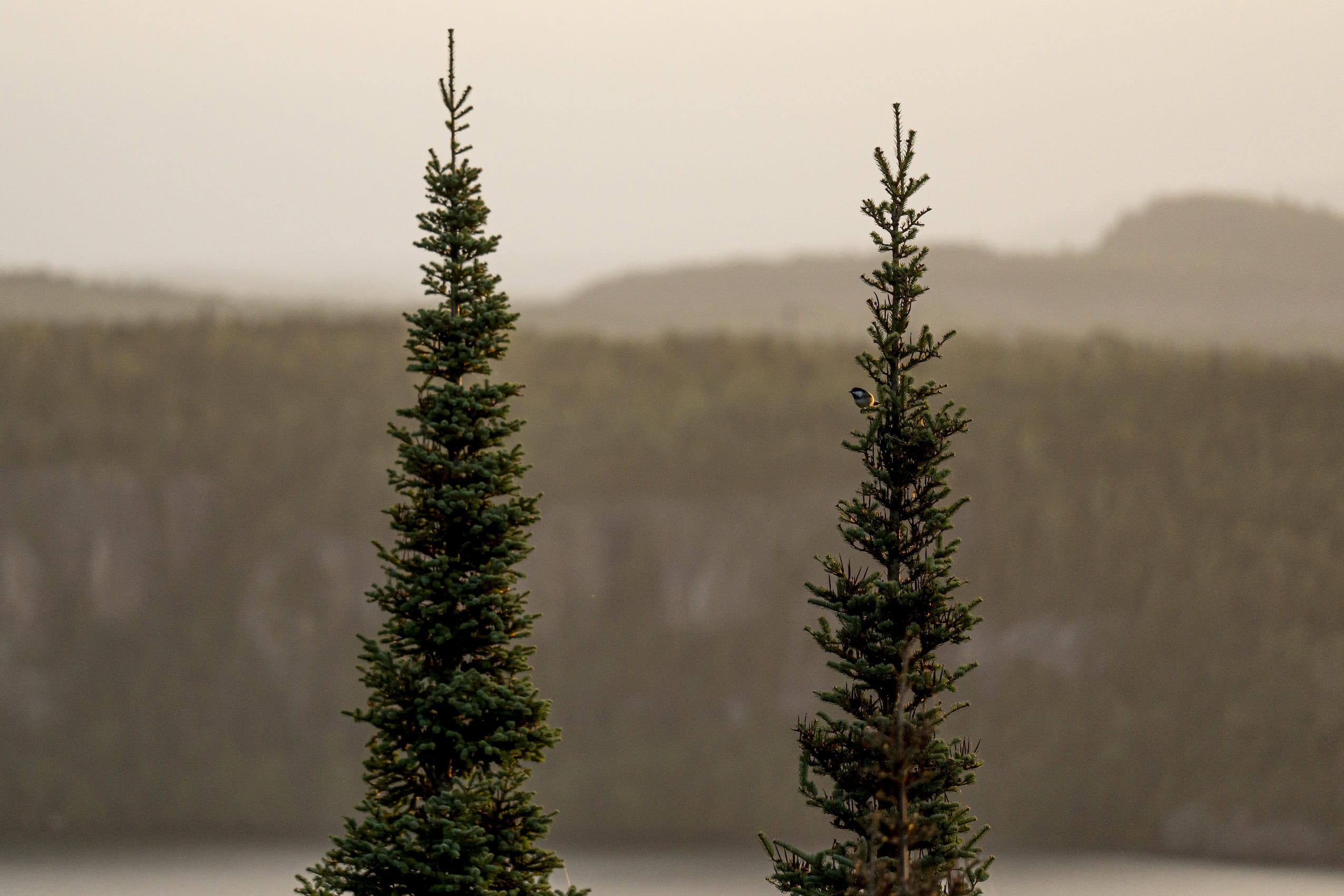
A black-capped chickadee perches on a tree during sunrise on the shore of Lake Superior’s Nipigon Bay.
For Crawford, witnessing the bay heal over his lifetime is a cup of water he’s happy to enjoy. He still worries about the pressures of a rapidly changing world. Currently, there’s a proposal to build a lithium processing plant on the shores of Nipigon Bay in Red Rock, talk of further dams being built upstream on Lake Nipigon and geopolitical tensions straining longstanding bilateral agreements. All the while, climate change has created greater pressure on fresh water and how humans interact with it, from floods to drought and invasive species.
But for now, Nipigon Bay is one of four areas of concern in Canada that have been delisted. To Crawford, that’s worth celebrating.
The Narwhal’s reporters are telling environment stories you won’t read about anywhere else. Stay in the loop by signing up for our free weekly dose of independent journalism.
From The Narwhal | News on Climate Change, Environmental Issues in Canada via This RSS Feed.
13
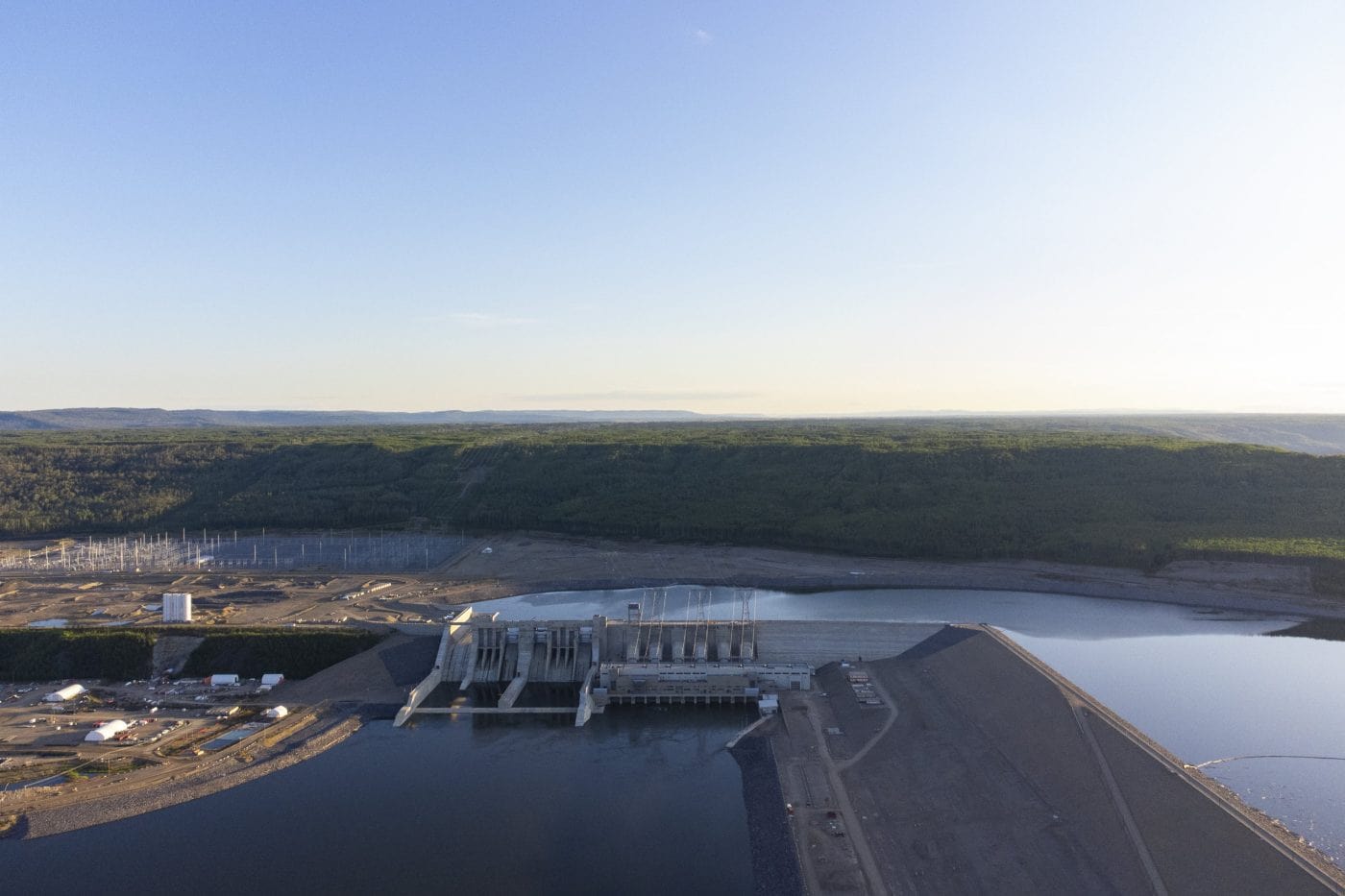
Photo: Amber Bracken / The Narwhal
How can you tell when a Crown corporation is fulfilling its obligations and goals?
For BC Hydro, one place to start is the provincial utility’s annual service plan report. Released every year, usually in late summer, the document outlines the utility’s finances and progress toward specific goals and objectives. Within its pages, phrases like “meet growing customer demand” are examined through performance metrics, such as whether it has achieved the goal of freeing up 350 gigawatt hours through energy efficiency and conservation programs (for 2025-26, the answer was yes, plus an extra 111 gigawatt hours).
Did BC Hydro cut greenhouse gas emissions from its operations by 44 per cent? Page 12 of the most recent report confirms the Crown corporation did even better, reducing its emissions by 56 per cent (mostly because the natural gas-powered Fort Nelson generating station ran less often than expected).
Among all these straightforward answers, one important piece of information is harder to find. Was all of the power generated or bought by BC Hydro in the past year clean electricity?
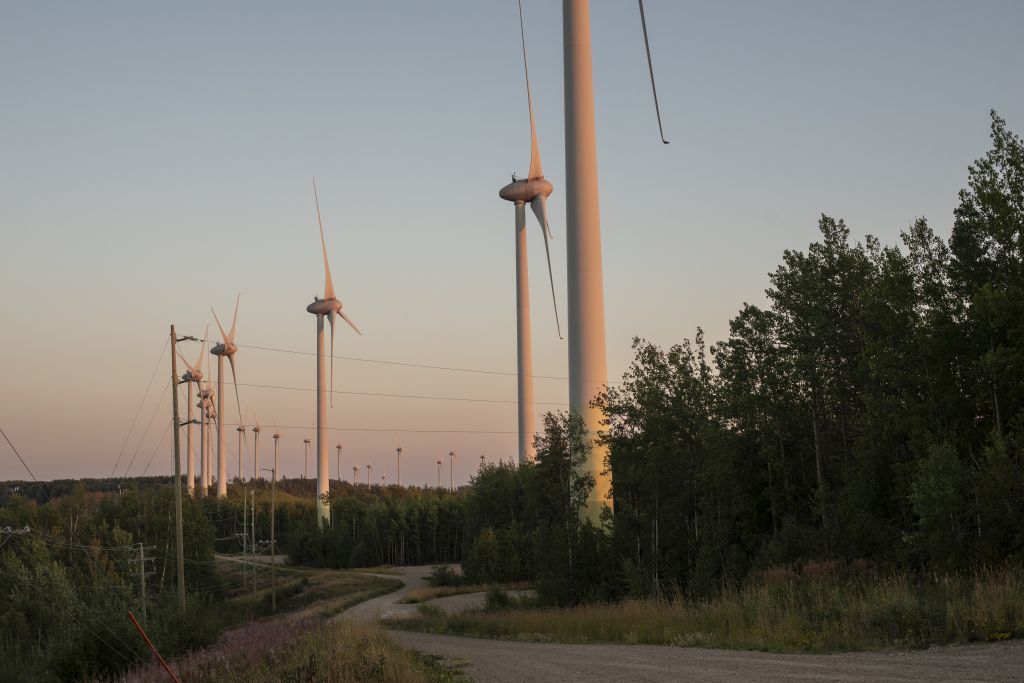
By 2030, BC Hydro is supposed to phase fossil fuels out of its electricity generation and switch to low-emission and renewable sources, including wind power. Photo: Amber Bracken / The Narwhal
BC Hydro has been publicly reporting its achievements related to the province’s climate targets in its annual service plan report for fifteen years. Currently, the clean electricity standard requires all electricity BC Hydro sells in the province or exports to other markets come from low-emissions sources. By 2030, the provincial government has directed the Crown corporation to completely phase out fossil-fuel generated electricity.
But BC Hydro’s 2025-26 annual report does not mention the clean electricity standard at all.
In 2024-25, BC Hydro met that objective, according to that year’s annual report. But its most recent report lacks that declaration, as former BC Utilities Commissioner Richard Mason recently noticed.
“The loss of transparency is a problem; we should be told whether the provincially-owned utility is meeting these objectives,” Mason wrote in a post on his website, Just and Reasonable. BC Hydro has also removed the clean electricity standard from the list of corporate objectives in its most recent service plan, he noted.
In a statement, BC Hydro told The Narwhal it whittled the performance measures in its service plan from 28 to 12, “focusing on key strategic priorities and aligning with benchmarking practices used by comparable North American utilities.”
Going forward, the statement said information about BC Hydro’s achievement of the clean electricity standard will be published in its annual sustainability report published in August. In 2026, BC Hydro fell just short of the standard at 99 per cent, according to the report.
Clean electricity metrics should be ‘front and centre’ in BC Hydro’s plan: experts
Mason argues the clean electricity standard performance metric should be part of BC Hydro’s main annual report.
“I believe it has the most value in an annual report because you can put the climate reporting in context with everything else that BC Hydro is doing,” he told The Narwhal in an interview.
BC Hydro publicly communicates about its activities, achievements and finances across several reports, some of which are updated yearly, including the sustainability and annual reports. Others, like the service plan and integrated resource plan, publish less frequently. In addition, the utility releases unscheduled updates and quarterly financials.
Anyone interested in deeply understanding what BC Hydro is up to and how it is fulfilling its obligations has to wade through a lot of information, noted Mark Zacharias, an adjunct professor in the public administration school at the University of Victoria.
“BC Hydro has a legal requirement to supply 100 per cent clean electricity by 2030,” Zacharias, a former executive director of Clean Energy Canada, told The Narwhal. “With growing industrial loads, an electrifying economy and a changing climate, how BC Hydro will meet this requirement is an important conversation that should be front and centre in the annual service plan.”
There are other reasons to wonder about the ongoing importance of BC Hydro’s clean electricity commitments. Earlier this year, the Crown corporation submitted an argument to the BC Utilities commission that its obligations under the Clean Energy Act, which requires it to generate and purchase enough energy to meet demand, trumps the direction to phase out fossil fuels by 2030.
Weeks after BC Hydro’s submission, Minister of Energy and Climate Solutions Adrian Dix announced BC Hydro’s intent to purchase Island Generation, a natural gas-powered plant in Campbell River. Natural gas is largely made up of methane, a fossil fuel that traps heat in the atmosphere and drives climate change.

Energy and Climate Solutions Minister Adrian Dix has justified the continued use of natural gas-powered electricity in B.C. as a way to allow BC Hydro to reliably deliver power to its customers while developing more renewable electricity. Photo: Province of B.C. / Flickr
To Green MLA Jeremy Valeriote, BC Hydro appears to be “making up for lost time in terms of not having anticipated demand,” which is projected to rise 20 per cent by 2030 and 50 per cent by 2050.
That surge in demand is driven largely by mining and liquefied natural gas (LNG) projects, as well as increasing numbers of electric vehicles and heat pumps in B.C. homes.
“Suddenly, that’s used to justify any number of non-clean electrical sources,” Valeriote said.
He described the removal of the clean electricity standard reporting from BC Hydro’s annual report as disheartening.
“It’s the slow whittling away of some of the principles that were being applied,” he added.
Sourcing more electricity does seem to have become a top priority for BC Hydro, Mason said, partly as a way to secure economic growth.
“Growing electricity production in the province is a good thing,” he said. “I suspect, however, they’ve realized they can’t do it all with clean electricity.”
The Narwhal’s reporters are telling environment stories you won’t read about anywhere else. Stay in the loop by signing up for our free weekly dose of independent journalism.
From The Narwhal | News on Climate Change, Environmental Issues in Canada via This RSS Feed.
14

Photo: Charlotte May / Pexels
When the heat becomes unbearable inside Nicole Darlaston’s Brampton apartment, her son would get into the shower — and stay there.
“He would spend hours in there just trying to be comfortable,” Darlaston says.
Darlaston has lived for about 14 years in a high-rise near Bramalea City Centre. The building has central cooling, she says, but it is often turned on late in the season and does little to make her apartment comfortable. On a good day, her unit might stay around 23 C. More often, she says, it reaches 28 C. She has recorded temperatures as high as 35 C, with high humidity.
Darlaston and her son both have asthma. She says the heat has aggravated their symptoms and reshaped their summers. She saves vacation time so she can leave the apartment during the hottest weeks, sometimes staying with family in northern Ontario.
Cooking adds more heat. Cleaning becomes exhausting. Even opening a window offers little relief when the building has been warming for days, she says.
“It just continues to build and build and build.”
Her son is 20 now, but Darlaston says he has been dealing with the heat since he was about six. And it didn’t always end when he left home.
“He had that problem in his schools as well,” she says.

Nicole Darlaston, a Brampton renter, says inadequate cooling in her apartment has forced her and her son to rearrange daily life around extreme heat and search elsewhere for relief. Photo: Rajpreet Sahota / The Narwhal
For children who live and learn in hot buildings, there can be little opportunity for their bodies to cool down. Researchers have warned the effects can accumulate when children spend a hot day at school only to return to a home without adequate cooling.
As students return to classrooms across Peel Region this month and summer weather remains longer than it has in previous years, that raises a basic question: where does a child go when neither school nor home offers reliable relief from the heat?
Inside Peel’s overheated classrooms
Jill Promoli has seen that problem as both a parent and a Peel District School Board trustee representing wards six and 11 in Mississauga, which includes Mavis-Erindale, Creditview, Erindale, Meadowvale Village and Streetsville.
On hot days, she says, some of the classrooms she visits become unbearable, including her son’s.
One of those visits was to her son’s elementary-school portable classroom in Mississauga, which became too hot to use in May 2025, she says. Students from two portables were moved into the school library, the same room meant to serve as a cooling station for everyone else.
“When you are using the cooling station for two classrooms, then that cooling station becomes unavailable for the rest of the school. But if the rest of the school is also hot, then there’s no more space available to give kids that break either,” Promoli says.
Then came two days of extreme heat in June 2025. Promoli says she brought a thermometer with her as she visited the schools she represents, asking principals to show her their hottest classrooms.
“Some of the classrooms were getting up to 39 C, and that’s not manageable,” she says.
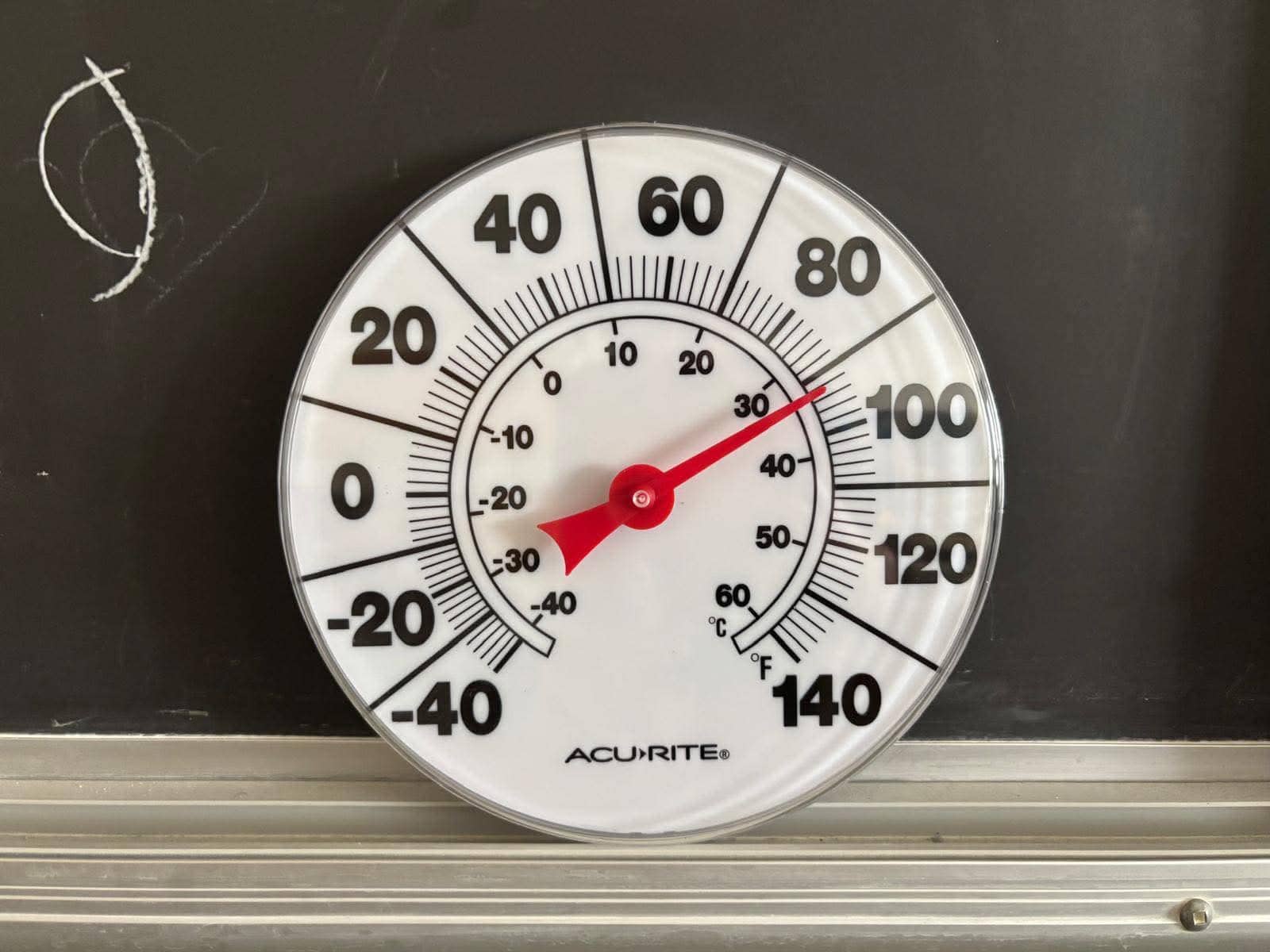
A classroom thermometer showed temperatures reaching about 33 C during an extreme heat day in June. Peel District School Board trustee Jill Promoli documented conditions inside local schools. Photo: Supplied by Jill Promoli
Her son still had to attend school for his Grade 5 graduation practice. When Promoli arrived to pick him up, the blinds were closed and the lights were off.
“It was still so hot in the cooling centre that the kids were literally lying on the floor with the lights off, and they were just doing nothing because it was so hot in there. This is not functional,” she says.
Promoli says she heard from other families whose children left school early, stayed home the following day or sought medical care after feeling sick during the heat.
Peel District School Board did not provide the requested breakdown of how many schools or classrooms are air conditioned, or respond to detailed questions from The Narwhal. On its website, the board says every school has a designated cooling station, while some older buildings do not have air conditioning at all. Hot weather measures can include opening windows and doors, using fans, closing blinds, turning off lights and other heat-producing equipment, rotating students and staff through cooler areas and reducing strenuous or outdoor activities.
Heat isn’t only uncomfortable
Children are among the people Peel Public Health considers particularly vulnerable to extreme heat.
Alexa Caturay, the region’s medical officer of health, says young bodies do not regulate temperature in the same way adult bodies do. Chronic respiratory and heart conditions can make it harder to cope with heat as well.
Students can be especially vulnerable to extreme heat, which can lead to dehydration, dizziness and fatigue. It can also make it harder to concentrate and learn in the classroom. Photo: Rajpreet Sahota / The Narwhal
As exposure increases, what begins as discomfort and thirst can progress to dehydration, faintness, a rapid heartbeat and difficulty breathing. In more serious cases, people can become dehydrated enough to require hospital treatment, Caturay says.
Health Canada similarly warns that children with asthma, heart or kidney problems, disabilities, developmental disorders or who take certain medications can face greater risks in extreme heat. Warning signs can include dizziness, nausea, headache, changes in behaviour, rapid breathing or heartbeat and extreme thirst. Confusion, unconsciousness or a high body temperature accompanied by a loss of sweating can signal heat stroke — a medical emergency.
The effect can show up in the classroom in many ways.
A recent U.S. report from a network of school-climate researchers convened with the American Psychological Association found younger children acclimatize to heat more slowly and may be less able to recognize when they need water or should reduce physical activity. It also points to evidence connecting poorly cooled and ventilated schools with increased absences and poorer learning outcomes.
Studies cited in that report found classroom temperatures around 20 C to 23 C were associated with better cognitive performance, while hotter conditions reduced the speed and accuracy of cognitive tasks. Other research found students performed worse on standardized tests on hotter days, with air conditioning reducing some of that effect.
The Peel school board’s plan for heat is tied up in Ontario’s Education Ministry
What Promoli saw that June in her son’s classroom eventually pushed her to take the issue to the Peel District School Board.

Jill Promoli, a Peel District School Board trustee and parent, stands outside one of the schools she represents in Mississauga, where she says extreme heat is making some classrooms unsafe for students. Photo: Supplied by Jill Promoli
Her original motion asked the board to work with Peel Public Health to establish an upper temperature threshold for extreme heat days. It pointed to the board’s existing response to extreme cold and noted that many classrooms in the Peel region lacked air conditioning or other ways to substantially lower the temperature.
Promoli says the goal was to know when a hot classroom crossed from uncomfortable to unsafe.
“If we are hitting a point where it’s no longer safe to be operating, we have to know what those numbers look like and what we should be doing to properly meet the needs of our staff and students,” she says.
In August 2025, they passed an amended motion directing the Peel District School Board to work with Peel Public Health on a plan for extreme heat days, but without the proposed temperature threshold. In general, the health unit’s role is to issue heat alerts to municipalities, hospitals, schools and school boards, which can then activate their own response plans.
Promoli says she has not been aware of updates on that work since the Ministry of Education took control of the board earlier this year. The Ontario ministries of Education and Health did not respond to requests for comment.
Trying to stay cool at home
Tanya Burkart hears the same dilemma repeatedly from renters.

Tanya Burkart, chair of the Brampton Centre chapter of the Association of Community Organizations for Reform Now (ACORN), says low and moderate-income tenants are often hit hardest by extreme heat because they have fewer options to cool their homes and can face added costs for air conditioning. Photo: Rajpreet Sahota / The Narwhal
Burkart, chair of the Brampton Centre chapter of the Association of Community Organizations for Reform Now (ACORN), says members report hot apartments, older inefficient buildings and landlords charging additional fees for air conditioning.
She pointed, in particular, to older rental buildings and says tenants can face another problem when upgrades finally happen: landlords may seek above-guideline rent increases to recover the cost of major work.
The association’s “beat the heat” campaign is pushing municipalities to require landlords to keep rental buildings at no more than 26 C and to help low-income tenants obtain air conditioners. It has also called for cooling rooms inside buildings, free transit to cooling locations on extreme heat days and more transparent tracking of heat-related illness.
At the provincial level, the group wants greater support for electricity costs and broader access to air conditioning.
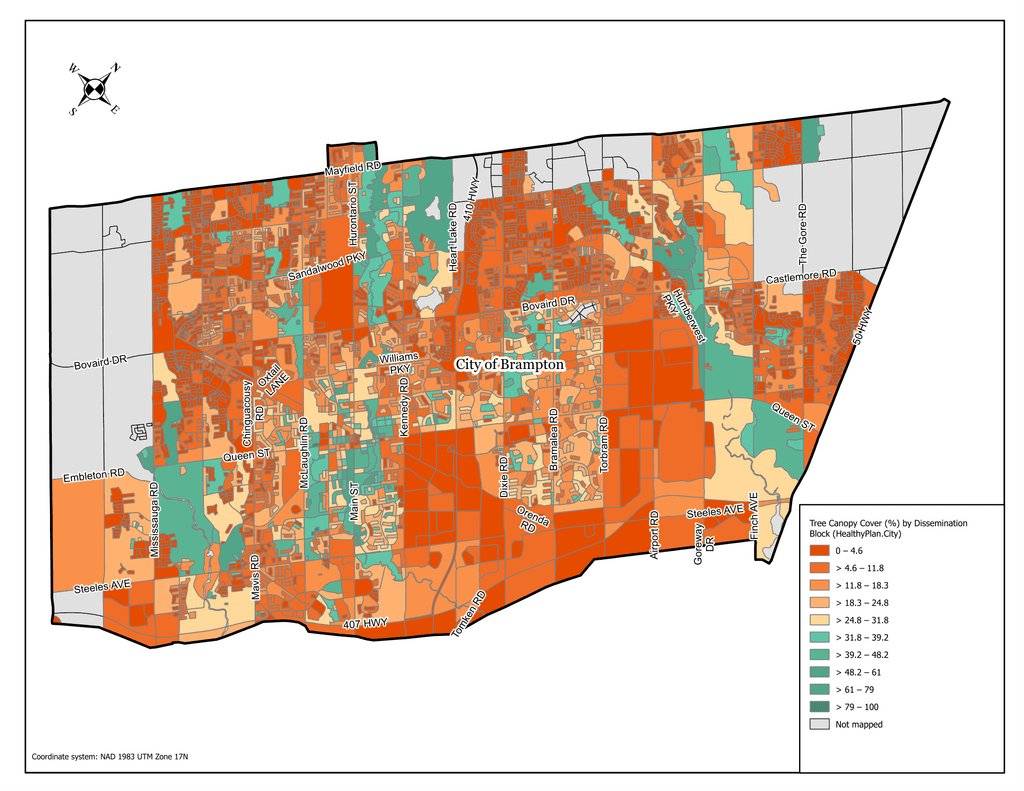
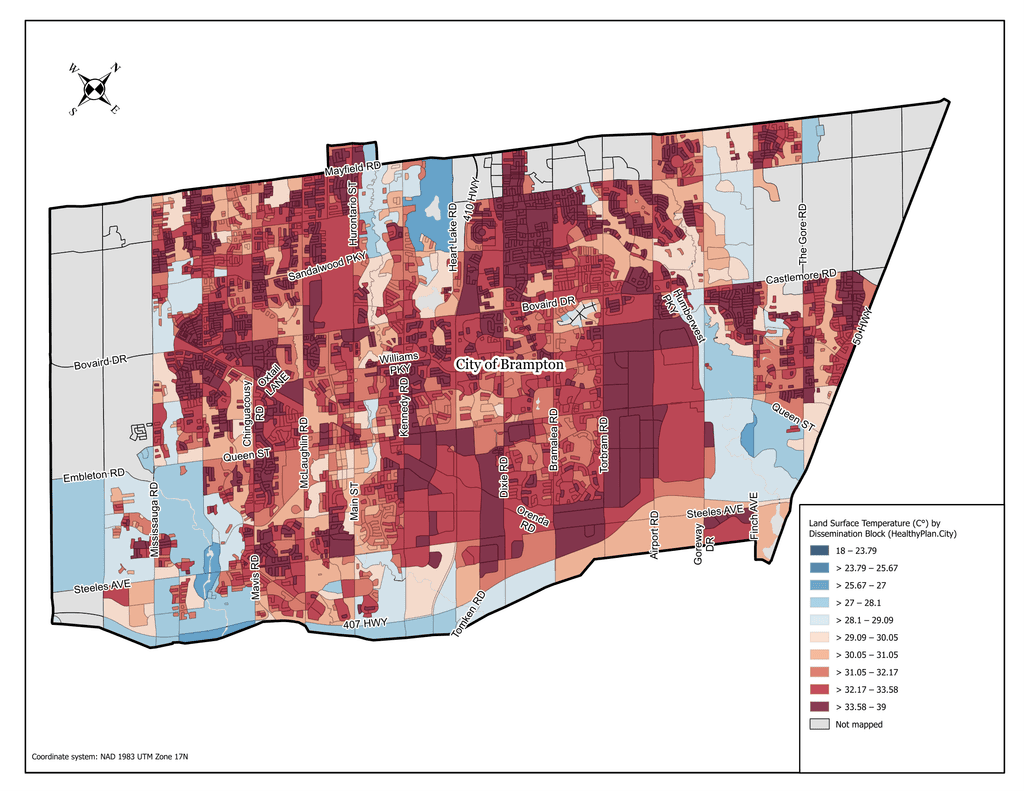
Side-by-side maps of Brampton show two factors that can shape heat vulnerability: tree canopy coverage, which can provide shade and cooling, and land surface temperature, which shows where neighbourhoods are absorbing and holding more heat. Maps: The Canadian Urban Environmental Health Research Consortium (CANUE), using data from the HealthyPlan.City tool.
Without those supports, Burkart says some renters are “being forced to either choose between air conditioning or paying the rent or putting food on the table.”
Yet, heat is already considered one of the top five climate-related health hazards affecting Peel residents, according to the region. The Public Health Agency of Canada says the largely urban region is particularly vulnerable to the urban heat island effect, with that risk shaped by factors such as income, housing, age and outdoor work.
Income can shape how much choice a family has when temperatures climb.
The U.S. schools report specifically notes lower-income families face extra hurdles including lacking air conditioning, nearby cooling spaces or flexible schedules that allow children to avoid the hottest parts of the day.
In Peel, the help available depends partly on where someone lives and what kind of housing they are in.
Unlike Toronto, which provides portable air conditioners to low-income pregnant residents and families with infants, the Peel Region does not provide direct financial assistance to buy air conditioners.
Peel Housing Corporation, which has 75 sites, operates cooling rooms during extreme heat in buildings that do not have central air conditioning and provides tenants with heat-safety information.
The City of Brampton says it has no current plan to provide free air conditioners to low-income residents either. During heat events, it directs residents toward public facilities such as its nine library branches and 27 community centres as well as its pools and splash pads.
In Mississauga, about 57 per cent of low-income children live in areas where additional investment in green space would improve equity, according to Canadian Urban Environmental Health Research Consortium data cited in a 2025 Canadian Environmental Law Association report.
At the July 29 council meeting, Mississauga council approved a motion brought forward by Ward 7 Coun. Dipika Damerla, which asked staff to look at more ways to protect residents of purpose-built rental apartments during hot weather.
Mississauga council has directed staff to review its current adequate temperature by-law and consider stronger cooling protections for renters, including access to cooling devices, building retrofits and other heat-mitigation measures. Staff are also looking at requiring apartment buildings to provide accessible common cooling spaces kept at or below 26 C, with recommendations expected before next summer.
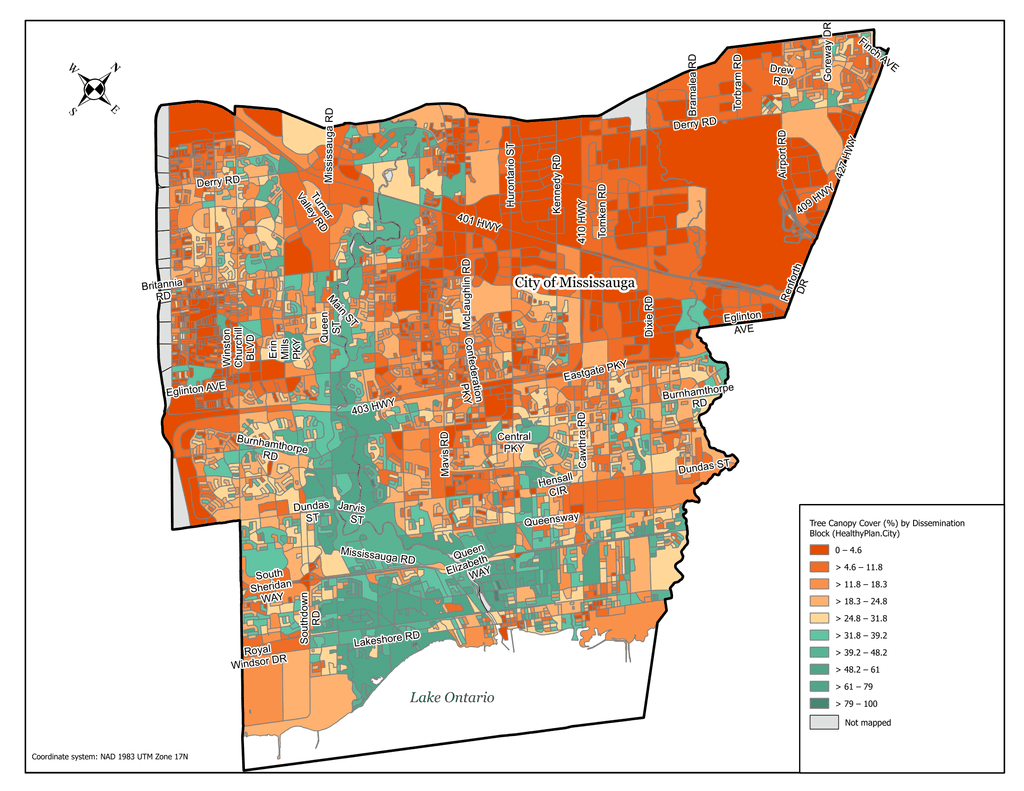
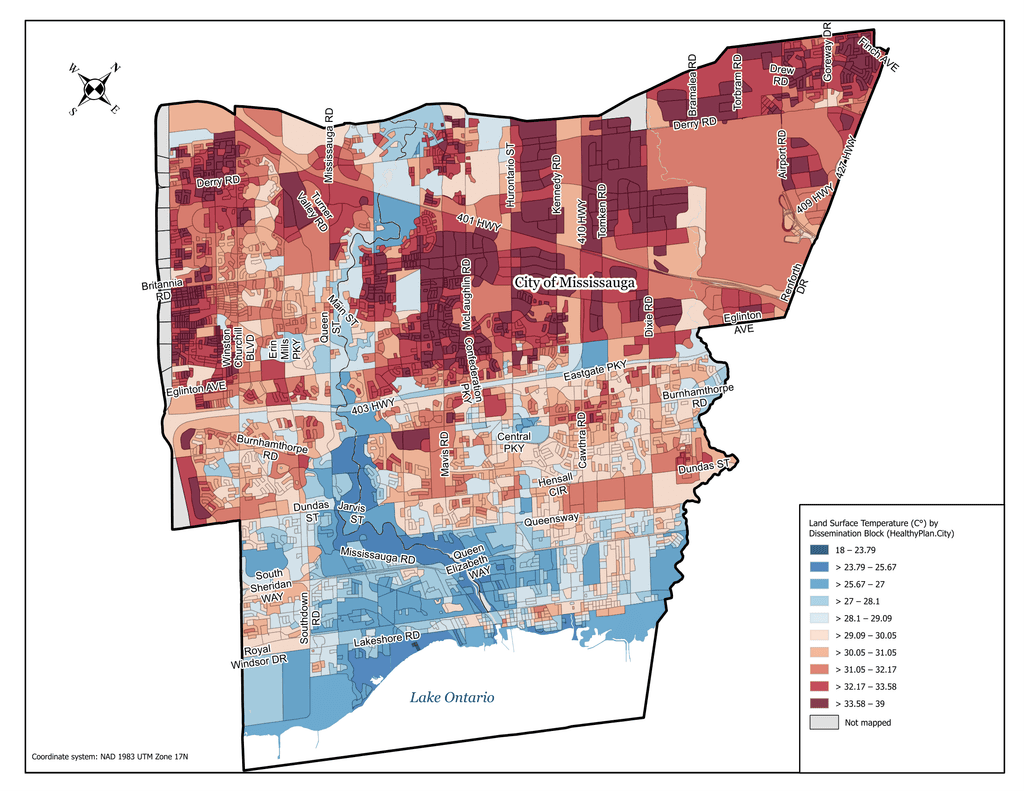
Some areas of Mississauga are more vulnerable to extreme heat than others. The map on the left shows tree cover, which can help cool neighbourhoods by providing shade, while the map on the right shows land surface temperatures, highlighting areas where roads, buildings and other hard surfaces hold more heat. Maps: The Canadian Urban Environmental Health Research Consortium (CANUE), using data from the HealthyPlan.City tool.
Currently, the city’s by-law requires landlords who provide air conditioning to maintain indoor temperatures at or below 26 C but buildings without air conditioning are not subject to a maximum indoor temperature requirement.
“We have to recognize that climate patterns have changed in southern GTA at least, and our summers are hotter than ever before. Traditionally, we’ve built our homes and our condos and our apartment buildings around cold weather, because hot weather was rare and that was reasonable,” Damerla says.
“But I think it’s changed now, and so it’s time for us to look at what are the other cooling options that we can provide for in purpose-built rentals.”
When does hot become too hot in schools?
Ontario does not currently set a maximum indoor temperature for schools.
The Education Act does require principals to pay attention to the “health and comfort” of students, including school temperature and ventilation. But without a maximum standard or equipment capable of cooling a building, advocates argue there is little clarity about when a classroom has become too hot to safely use.
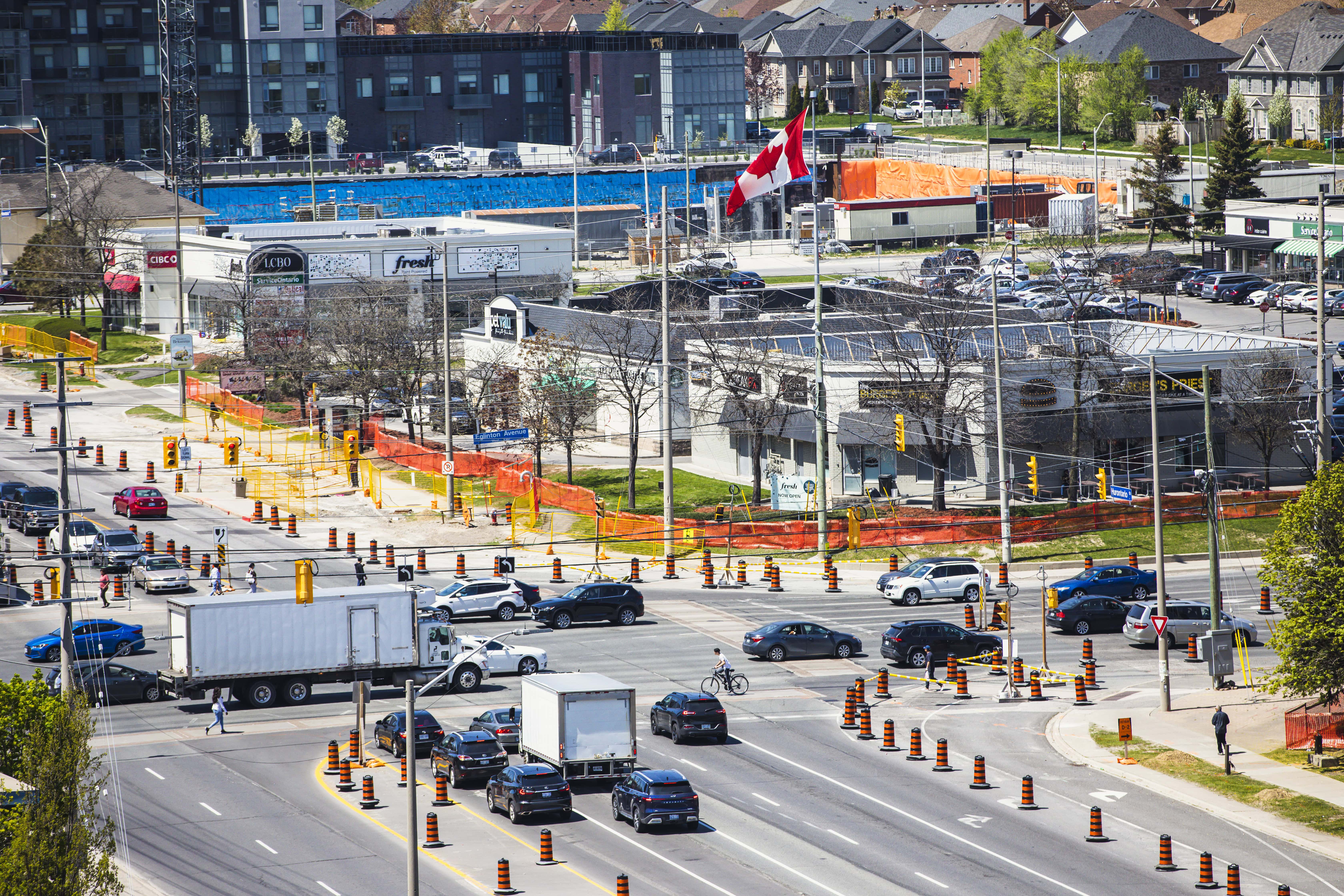
An aerial view of construction near Hurontario Street and Eglinton Avenue in Mississauga shows a heavily built-up area with limited tree cover, conditions that can contribute to the urban heat island effect. Photo: Carlos Osorio / The Narwhal
The shortage of broader cooling infrastructure is not small. Ontario’s school repair backlog was estimated at $16.8 billion in 2022, even as the province committed billions toward school construction, repair and renewal.
The Canadian Environmental Law Association has recommended a 26 C maximum temperature for schools, more mechanical cooling and changes to the building code so new schools and major retrofits are designed with hotter conditions in mind. The group says 26 C should be treated as a starting point and revisited as more research emerges, specifically about children’s heat exposure.
There may be relief on the horizon. Ontario’s NDP put forward Bill 123, the Fighting Extreme Heat in Schools Act, which received first reading on May 26, 2026, and was ordered for second reading. If passed, it would require school buildings and school buses to remain at or below 26 C while students and workers are present.
School boards would also have to create annual heat-mitigation strategies and extreme-temperature emergency plans. The education minister would review those plans for gaps and inequities at least once every three years. Ontario’s legislature will return in late October and will likely continue debating this bill.
Rajpreet Sahota is a community and policy reporting fellow. Her position is funded in part by the Canadian Race Relations Foundation. As per The Narwhal’s editorial independence policy, the foundation has no editorial input.
The Narwhal’s reporters are telling environment stories you won’t read about anywhere else. Stay in the loop by signing up for our free weekly dose of independent journalism.
From The Narwhal | News on Climate Change, Environmental Issues in Canada via This RSS Feed.
15

Photo: Darryl Dyck / The Canadian Press
Naheed Nenshi, the NDP leader of Alberta’s Opposition, is accusing Premier Danielle Smith of a scheme that could increase power bills for Albertans “so she can build AI data centres for her foreign billionaire friends.”
The comments come from a news conference organized by the NDP in response to reporting by The Narwhal on a leaked document — labelled a “cabinet report” and bearing the Alberta government logo — that appears to show the provincial government is planning to take control of Alberta’s natural gas pipeline system to increase both supply and demand.
The document outlines plans to wrest regulatory control over the province’s main natural gas transmission line, called the Nova Gas Transmission pipeline, owned and operated by TC Energy, away from the federal Canada Energy Regulator, and to create two new government-owned corporations. One of those Crown corporations could force companies to build natural gas pipeline expansions based on government priorities, while the other could build and operate the pipelines itself.
Those moves, according to the document, would raise prices on ordinary Albertans and businesses, but would bring in more royalties for the government.
“Let me reiterate this: Danielle Smith is rolling out the red carpet for data centres, and that will cause higher electricity prices, and she doesn’t care if it spikes your electricity and your heating bills,” Nenshi said.

The leaked document notes that increased demand for natural gas from AI data centres could lead to cost increases for other natural gas consumers, including households and businesses. Source: Leaked document labelled “cabinet report.” Illustration: Shawn Parkinson / The Narwhal
Detailed questions were sent to several Alberta ministries prior to publication of the original story, but the government did not respond by publication time.
Late Friday afternoon, the office of Minister of Energy and Minerals Brian Jean sent a statement to The Narwhal in response to a follow-up email asking for comment on the original story.
“Governments routinely examine a wide range of policy, regulatory and legislative options when considering complex issues, and internal materials do not represent government decisions,” it said.
“An increasing number of project proponents across a variety of industries have raised concerns about accessing industrial quantities of natural gas in several regions of Alberta. We are working with industry, including the natural gas infrastructure owners, to better understand these issues and identify practical solutions that support future growth and investment.”
The document on which the reporting was based was leaked to The Narwhal by a source within the Alberta government, whose identity is being kept confidential due to personal and professional risks stemming from the leak.
A note on trust, integrity and unnamed sources+
This story uses information from sources The Narwhal has agreed not to name. The Narwhal only agrees to keep names confidential when we believe two things. First, that the person we’re speaking with is putting themselves at genuine risk, either personal or professional, by sharing this information with us. Second, that the information they’re sharing is in the public interest. Our decision to do so is never made lightly.
There are two types of unnamed sources. A confidential source is someone whose name we know, but aren’t sharing. We make multiple attempts to verify their identity and information with other sources. If we aren’t able to get a second source, we say so.
An anonymous source is someone whose name we don’t know. It is incredibly rare for The Narwhal to publish a story with a completely anonymous source. In these instances, we don’t publish until we have verified the information shared with us with at least one other source.
And again, these stories must be in the public interest.
As Canadian governments become increasingly secretive, the courage of whistleblowers is to be admired. We value them greatly. At the same time, our promise to readers is The Narwhal will always make sure the facts are airtight.
Have something to share? Send us a story tip.
The moves could cost billions of public dollars if the government builds its own pipelines, according to the document. The document estimates it will cost more than $160 million just to institute the changes and fight anticipated legal battles with companies such as TC Energy, or potentially First Nations. “There may also be litigation risk from Indigenous communities and organizations where they believe that they have not been meaningfully engaged from early on in any proposed projects,” the document reads.

“Let me reiterate this: Danielle Smith is rolling out the red carpet for data centres, and that will cause higher electricity prices, and she doesn’t care if it spikes your electricity and your heating bills,” Naheed Nenshi, the NDP leader of Alberta’s Opposition, said in a press conference Friday to discuss the leaked document provided to The Narwhal. Photo: Adrian Wyld / The Canadian Press
Sturgeon Lake Cree Nation Chief Sheldon Sunshine said his community, which is fighting a massive data centre proposal in northern Alberta led by celebrity investor Kevin O’Leary, is “outraged” by the details outlined in the document, which he says he has independently reviewed.
“For years, our Nation has been fighting for meaningful consultation and effective regulation of hyper-scale data centres — including the massive O’Leary Project,” he said in a statement sent to The Narwhal. Sturgeon Lake Cree Nation is not specifically named in the leaked document.
“Now we find out that the United Conservative Party government is trying to artificially drive up the demand for natural gas to lure even more of these data centres to Alberta — all while knowing that this would trample our Treaty Rights and send electricity prices soaring for all Albertans.”
The document estimates building a pipeline to meet government expectations could cost as much as $6 billion. The capacity from that new pipeline could provide enough gas for six gigawatts of power generation for data centres, according to the document. A recently rejected AI data centre near Olds, Alta., would have required a 1.4-gigawatt power plant and used as much power each day as the City of Edmonton.
According to information on TC Energy’s website, the company has invested approximately $15 billion into the Nova Gas Transmission system since 2015, with double the capacity increases outlined in the document.
The document points to the need to feed natural gas to AI data centres as a primary motivation for the moves, but also highlights desired growth in the oil and gas sector, saying “the Government of Alberta is actively courting hyper-scale data centre capital and other investors.”
Nenshi, who said he has now seen the leaked document himself, was blunt.
“This report makes it clear that their strategy all along was to do whatever they could to increase natural gas prices, to promote the government’s own bottom line due to their own fiscal mismanagement,” he said. The document suggests the moves could increase royalties to the government while consumers could end up paying higher prices for their natural gas and electricity bills under the proposed plan.

A document that says it was prepared for an Alberta cabinet committee claims limited natural gas supplies threaten the province’s ambitions to attract AI data centres. The document, which was leaked to The Narwhal, lays out potential strategies to boost natural gas supply. Source: Leaked document labelled “cabinet report.” Illustration: Shawn Parkinson / The Narwhal
Document leaked by whistleblower for whom Canada affords little protection: expert
According to David Hutton, a senior fellow with the Centre for Free Expression at Toronto Metropolitan University, whistleblowers who leak sensitive information to the media run a considerable risk, from losing their jobs, friendships or families through divorce.
He said Canada is “back of the bus” when it comes to protections.
“International experts have done surveys of various countries and rated them, and we come out at the bottom,” he said in an interview. The federal government has a whistleblower program, but Hutton said there’s never been compensation awarded through it.
Provincial laws are similar to the federal protections, including Alberta’s, and “are really not of any value,” he said.
He stresses how crucial it is for public-interest information to see the light of day. As The Narwhal has reported, this is becoming increasingly difficult in Canada as multiple levels of government tighten freedom of information legislation.
“Research done over decades now has consistently shown that tips from whistleblowers account for usually more than 40 per cent of all of the frauds that are uncovered [globally],” he said, highlighting one aspect of information that is shared.
There is no indication of fraud in the leaked document in Alberta.

Late Friday afternoon, the office of Minister of Energy and Minerals Brian Jean sent a statement to The Narwhal saying “internal materials do not represent government decisions” but that the government is looking for “practical solutions that support future growth and investment.” Photo: Brian Jean / Facebook
The plans outlined in the document single out TC Energy, which owns and operates the largest gas pipeline system in the province, as a likely source for legal action pushing back against the plans, due to the impacts on its business.
The company did not respond to questions for the original article or for this follow up.
Nenshi said he has not yet spoken with representatives from the company after the revelations were made public, but intends to.
“To actually say government wants to step in in order to hurt people, and that government is strong-arming a company to make billions of dollars in investments that they don’t want to make, with the threat of competing with them if they don’t?” he said. “That’s textbook bullying behaviour. It’s also bad economics and it’s bad business.”

Setting up new Crown corporations to compel the construction of natural gas pipelines could cost in excess of $162 million, according to the leaked document. That figure includes potential costs from litigation that might be brought by TC Energy, the document says, which currently owns the majority of Alberta’s natural gas infrastructure, and various First Nations communities. Source: Leaked document labelled “cabinet report.” Illustration: Shawn Parkinson / The Narwhal

A summary chart from a leaked document lays out the pros and cons of Alberta’s potential natural gas strategy for AI data centres. The proposed changes could give the province more control over its natural gas system and align with Alberta’s AI data centre strategy, the document states. But they could also result in signficant costs for the government and increasing rates for other natural gas consumers, according to the document. Source: Leaked document labelled “cabinet report.” Illustration: Shawn Parkinson / The Narwhal
Document points to constraints imposed by feds, says Alberta seeks to ‘achieve greater control’
The document points the finger not just at TC Energy, but also at constraints imposed by the federal regulation of the natural gas transmission network.
“Federal regulatory oversight … is now compounding Alberta’s gas access challenges,” the document reads, adding this oversight “has caused growing concern about the pace of infrastructure development for the [natural gas transmission network].”
The document suggests moving TC Energy’s Alberta pipelines back under provincial regulatory control and under the authority of one of the new government corporations.
Some pipeline networks within the province are already under provincial jurisdiction, including the ATCO distribution network that interconnects with TC Energy’s system. ATCO operates approximately 8,500 kilometres of pipelines in Alberta, whereas the Nova Gas Transmission pipeline, the province’s main natural gas transmission line operated by TC Energy, is about 25,000 kilometres.
“Without provincial regulatory oversight, the Government of Alberta is limited in its ability to compel federally regulated pipelines to invest in capacity expansions,” reads the document.
“Due to the federally regulated [natural gas transmission line] system being fully subscribed, the province cannot guarantee the timely expansion of gas transmission capacity required to support new demand.”

The document lays out a plan it says could result in “significant legal and cost impacts” and increase utility bills for Albertans. Source: Leaked document labelled “cabinet report.” Illustration: Shawn Parkinson / The Narwhal
Have something to share about Alberta’s push for more data centres and oil production? Send us a story tip.
The Narwhal’s reporters are telling environment stories you won’t read about anywhere else. Stay in the loop by signing up for our free weekly dose of independent journalism.
From The Narwhal | News on Climate Change, Environmental Issues in Canada via This RSS Feed.
16
17

Photo: Amber Bracken / The Narwhal
This week, we published two massive investigations. They take place in different provinces, but share an important trait: they were both made possible because people trusted us to handle sensitive information with care — people who share our commitment to bringing the public information it has a right to know.
It’s what we always do. We’ve been breaking stories that have real-world, tangible impact for over eight years.
As a source, you can trust us because we’ll always handle your information with privacy and protection in mind. We hope our body of work speaks to how we treat leaked and confidential information: over the years, we’ve reported on a recording from inside a TC Energy meeting and a leaked Ontario cabinet document about expropriating land for major infrastructure projects. Got a story tip? Drop us a line, securely, over here.
And as a reader, you can trust us because after we earn the trust of whistleblowers, we work to earn yours by thoroughly verifying the facts they’ve led us to.
Both of this week’s stories rely on information from sources we don’t name. We decided it was time to explain our approach to using confidential sources, which readers can now find embedded in this week’s investigations — because we want you to know where this information is coming from.
The Narwhal only agrees to keep names confidential when we believe two things. First, that the person we’re speaking with is putting themselves at genuine risk, either personal or professional, by sharing this information with us. Second, that the information they’re sharing is in the public interest. Our decision to do so is never made lightly.
There are two types of unnamed sources. A confidential source is someone whose name we know, but aren’t sharing. We make multiple attempts to verify their identity and information with other sources. If we aren’t able to get a second source, we say so.
An anonymous source is someone whose name we don’t know. It is incredibly rare for The Narwhal to publish a story with a completely anonymous source. In these instances, we don’t publish until we have verified the information shared with us with at least one other source.
And again, these stories must be in the public interest. If you want a definition of what that is, we like this one from the U.K.’s National Union of Journalists.
Another thing we’ve reported on is how federal and provincial Canadian governments — in Ontario, Alberta and B.C. — are becoming increasingly secretive. Many rarely acknowledge, let alone answer, when we ask for interviews to learn more about these crucial topics. Even when they do, they often do not answer our specific questions, and will only respond with written statements. This undermines their responsibility to you, the public, to be transparent about the actions they are taking and why.
At times like these, the courage of whistleblowers is to be admired. We value them greatly. At the same time, our promise to readers is The Narwhal will always make sure the facts are airtight.
If you’ve got questions or comments, don’t hesitate to reach out to us. Our coverage is always shaped by, and for, the public interest.
The Narwhal’s reporters are telling environment stories you won’t read about anywhere else. Stay in the loop by signing up for our free weekly dose of independent journalism.
From The Narwhal | News on Climate Change, Environmental Issues in Canada via This RSS Feed.
18

Nik Barry-Shaw joins Desmond Cole to explain how Mark Carney’s glitzy investment summit could pave the way for a corporate carve-up of Canada.
The post Carney’s investment summit is putting Canada on the auction block appeared first on The Breach.
From The Breach via This RSS Feed.
19

Marcus Werner debunks the spin justifying public handouts to tech oligarchs.
The post As public backlash grows against AI, politicians have launched a new PR push appeared first on The Breach.
From The Breach via This RSS Feed.
20

Photo: Amber Bracken / The Narwhal
Alberta is so determined to usher in a wave of AI data centres and increase oil and gas production that it is considering rewriting legislation and creating government-owned corporations that would force private companies to invest in natural gas pipeline expansions — or allow the government to build and operate those pipelines itself — according to a document leaked to The Narwhal. It’s also willing to pay for any legal challenges that follow.
The document — labelled a “cabinet report” and bearing the Alberta government logo — contains a broad swath of recommendations it indicates were prepared for the Energy and Minerals Ministry led by Minister Brian Jean, and says it was scheduled to be presented to a high-level cabinet policy committee on Sept. 10.
The document says private ownership of natural gas transmission pipelines is throttling growth and that “escalatory and direct measures are now required,” especially as “the Government of Alberta is actively courting hyper-scale data centre capital and other investors.”
The document notes Alberta risks losing investment from AI data centre companies if it can’t come up with “speed-to-market” solutions.
According to the document, the government has been in talks with TC Energy, which owns and operates Alberta’s main natural gas pipeline system, since 2024 in an attempt to force the company to invest in new pipeline capacity, but the company refuses to build based on “speculative demand.” TC Energy did not respond to detailed questions.
Talks with the company stalled, according to the document, after the company pitched a plan that would involve the province assuming more financial liability for the pipeline system and forcing higher rates on those who use it.
“Discussions continued until 2026 and escalated with the premier’s involvement,” reads the document. “Extensive discussions with TC Energy [have] produced no viable solutions to date.”

A leaked document suggests Alberta is accusing TC Energy of underinvesting in its natural gas pipeline network, as the government tries to woo energy-intensive AI data centres. The document says Premier Danielle Smith’s government is considering “escalatory and direct measures” to force private companies such as TC Energy to build natural gas pipelines to help power data centres. Photo: Todd Korol / The Canadian Press
The document is critical of TC Energy’s track record, saying the company’s “underinvestment in [natural gas] pipeline capacity has caused a market failure in the natural gas sector leaving key growth regions unable to access gas,” calling the result a “dysfunctional natural gas pipeline network.”
The document was leaked to The Narwhal by a government official whose identity is being kept confidential. The Narwhal has verified they are in a position that would likely have access to such a document. The Narwhal has not been able to independently verify the authenticity of the document, but Alberta’s lobbyist registry confirms TC Energy has been in talks with government officials regarding “increased support for gas market access,” as well as discussions on “strategic natural gas initiatives.”
A note on trust, integrity and unnamed sources+
This story uses information from sources The Narwhal has agreed not to name. The Narwhal only agrees to keep names confidential when we believe two things. First, that the person we’re speaking with is putting themselves at genuine risk, either personal or professional, by sharing this information with us. Second, that the information they’re sharing is in the public interest. Our decision to do so is never made lightly.
There are two types of unnamed sources. A confidential source is someone whose name we know, but aren’t sharing. We make multiple attempts to verify their identity and information with other sources. If we aren’t able to get a second source, we say so.
An anonymous source is someone whose name we don’t know. It is incredibly rare for The Narwhal to publish a story with a completely anonymous source. In these instances, we don’t publish until we have verified the information shared with us with at least one other source.
And again, these stories must be in the public interest.
As Canadian governments become increasingly secretive, the courage of whistleblowers is to be admired. We value them greatly. At the same time, our promise to readers is The Narwhal will always make sure the facts are airtight.
Have something to share? Send us a story tip.
Detailed questions sent to the premier’s office, including for confirmation of details in the document, were sent to the press secretaries for the premier and the ministers of affordability and utilities, energy and minerals, jobs, economy, trade and immigration, and treasury board and finance. There was no response by publication time.
There was also no response to an email and phone call to Vitor Marciano, the chief of staff to the energy minister.
According to the document, the full slate of proposals for cabinet consideration include taking regulatory control for the pipeline transmission network operated by TC Energy away from the federal Canada Energy Regulator, creating a Crown corporation that would guide pipeline construction based on government forecasting, and another Crown corporation that would oversee, or build and operate, its own pipelines.
That would give the government the power to control some private investment decisions, including directing companies to build pipelines, and it could also make the government a direct competitor of companies such as TC Energy.
The document argues the moves are necessary to rapidly build natural gas pipeline capacity to help increase oil and gas production and spur data centre growth. The government’s data centre strategy explicitly encourages the use of natural gas for power generation.
Since the release of that strategy, the government has restricted AI data centre access to the provincial grid until 2028 because there is not enough power to fuel demand and keep the lights on. Developers are required to build their own power supply, which is currently restricted to natural gas power plants.
Albertans could be on the hook for hundreds of millions — or billions — to help support power for AI data centres: document
The moves could cost Albertans.
The document is clear one of the main drivers of the plan, in addition to increasing the province’s oil and gas production, is attracting AI data centres to the province. “Alberta’s ability to attract and retain data centre investment depends on reliable access to natural gas service,” the document says.
The recommended changes would result in “significant legal and cost impacts for the Government of Alberta,” according to the document, as well as likely result in “increases for utility ratepayers.”
The document notes Albertans may be “sensitive” to what it calls “any change in perceived affordability.”
The preliminary estimated cost of the proposed changes, including the planning and creation of Crown corporations and potential ensuing legal battles, could exceed $162 million, according to estimates in the document, but that does not include possible infrastructure costs.

Alberta’s utility regulator recently rejected a data centre proposed on this farm field near Olds, Alta., citing a lack of information and public consultation. Photo: Gavin John / The Narwhal
The document estimates building a pipeline to meet government expectations could cost as much as $6 billion. The capacity from that new pipeline could provide enough gas for six gigawatts of power generation for data centres, according to the document. A recently rejected AI data centre near Olds, Alta., would have required a 1.4-gigawatt power plant and used as much power each day as the City of Edmonton.
The total cost includes anticipated litigation from TC Energy and other companies, including concerns over “significant claims for compensation” for “alleged expropriation of valuable contractual rights.”
The document warns First Nations could also initiate lawsuits.
The moves could also make things more expensive for residents and businesses by driving up the price of natural gas, according to the document.

According to the leaked document, “the Government of Alberta is actively courting hyper-scale data centre capital and other investors.” The province’s pursuit of data centres has been met with opposition from residents. Here, demonstrators protest against a proposed data centre in Morinville in August 2026. Photo: Amanda Erickson / The Canadian Press
“While low prices benefit customers (Albertans and industrial users), they limit provincial royalty revenues and can discourage natural gas investment by reducing producer revenues,” the document reads.
“Increased natural gas demand could contribute to higher costs for households, businesses and gas-intensive industries, which could deflect stakeholder support.”
The document also notes “potential disproportionate impacts on seniors and rural residents can be mitigated by monitoring affordability and exploring mitigation measures specific to households and small businesses.”
The government’s aim is to almost double natural gas prices to support and expand production, which would increase the cost of electricity generation by up to 25 per cent, based on calculations in the document.
It’s unclear exactly what that could mean for Albertans’ power bills, but those costs could be passed down to Albertans, who the document warns could be upset about government spending and increased costs.
A recent analysis from the Pembina Institute, estimates the recently announced Meta data center near Edmonton could add $270 to $460 to electricity bills each year.
The document suggests government messaging could sell the plan to Albertans to “help strengthen social licence.”
Have something to share about Alberta’s push for more data centres and oil production? Send us a story tip.
The Narwhal’s reporters are telling environment stories you won’t read about anywhere else. Stay in the loop by signing up for our free weekly dose of independent journalism.
From The Narwhal | News on Climate Change, Environmental Issues in Canada via This RSS Feed.
21

Tim Smith / The Brandon Sun
It’s been a whirlwind year for tornado researchers in Manitoba.
“It’s the busiest we’ve ever been, by far,” John Hanesiak, a professor in the department of environment and geography at the University of Manitoba, says.
Hanesiak is a collaborator with the Northern Tornadoes Project, a national research program based at Western University that aims to better understand tornadoes in Canada.
Since late May, Hanesiak and his team have spent 43 days in the field surveying damage caused by tornadoes and severe weather events across Manitoba and Saskatchewan. Previous seasons have required a maximum of 19 days on the road.
Fifteen tornadoes have touched down in Manitoba so far in 2026, including two within the city of Winnipeg — and that number could still rise as other storms are evaluated. It’s a substantial jump from the six to eight that typically occur in the province each summer, but doesn’t surpass the record of 18 tornadoes set in 1991.

With more tornadoes touching down in the province — 15 so far in 2026 — more Manitobans, like Brian Brown, are left to pick up the pieces. His family’s home and historic barn suffered severe damage. Photo: Tim Smith / The Brandon Sun
It’s been a similarly busy season nationally, with 121 tornadoes recorded from northern Alberta to Nova Scotia. According to the federal government, Canada records an average of 97 tornadoes annually.
“This may end up being a year where we have the biggest tornado count overall,” David Sills, director of the Northern Tornadoes Project, says.
And the season isn’t over yet.
Why have there been so many tornadoes in Manitoba this year?
High levels of humidity and a series of particularly strong weather systems have resulted in the above-average tornado season, Hanesiak explains.
A tornado is a rapidly rotating vortex of air that stretches from the base of a thunderstorm cloud to the ground. Four ingredients are needed to generate thunderstorms capable of producing tornadoes.
The first is high humidity, which acts as atmospheric fuel and can lead to more intense storms. Second is a high degree of instability in the upper atmosphere due to temperature changes. Third is a trigger that moves air upwards, such as a low-pressure trough or weather front that causes warm surface-level air to rise vertically like a hot air balloon. And fourth is wind shear, or sudden changes in wind speed and direction at higher altitudes.

Fifteen tornadoes have touched down in Manitoba so far in 2026, including two within the city of Winnipeg — and that number could still rise as other storms are evaluated.Map: Shawn Parkinson / The Narwhal
After several years of drought conditions in Manitoba, these ingredients have been converging more frequently this summer thanks to a deluge of rain in June that led to widespread flash flooding.
“That just helps humidity, so you have a lot of potential storm energy available,” Hanesiak says. “And we’ve had some pretty intense weather systems.”
The tornado-producing storms in Manitoba and Saskatchewan in early June caused more than $840 million in insured damage, according to the Insurance Bureau of Canada.
Why does it take so long to confirm if a tornado has touched down?
Tornadoes are small, fast-moving events that can’t be tracked in real time with existing weather radar technology. Suspected tornadoes can only be verified through damage surveys; as well as reports, photos and videos from witnesses — the analysis of which takes time.
Researchers use the Enhanced Fujita scale to determine a tornado’s intensity based on the extent and degree of damage to foliage, vehicles and infrastructure. The weakest tornadoes are rated EF-0 and have a minimum estimated wind speed of 90 kilometres per hour, while the strongest are rated EF-5 and can reach wind speeds of 315 kilometres per hour or higher — about as fast as the top speed of a Formula 1 race car.

Not only are tornadoes harbingers of destruction, but they’re also incredibly hard to track due to their speed and size. Experts say that the powerful storms can only be verified through surveys and reports after the damage has already been done. Photo: Mikaela Mackenzie / Winnipeg Free Press
Most tornadoes fall on the weaker end of the spectrum. The strongest to hit Manitoba this year was an EF-3 near Rossburn, Man., which reached a maximum estimated wind speed of 230 kilometres per hour, destroyed two homes and levelled trees. Canada’s only recorded EF-5 tornado landed in Elie, Man., in 2007.
Tornadoes that occur in remote, unpopulated areas are often confirmed well after they make landfall. At the end of the season, Northern Tornadoes Project staff spend hundreds of hours combing through satellite imagery of Canadian forests to find evidence of unreported tornadoes, which look like long narrow scars from above.
“We usually find somewhere between 15 and 30 new tornadoes that we didn’t know about,” Sills says.
The project also tracks downbursts, which can produce damaging winds when air drops rapidly toward the ground during a thunderstorm. There have been five confirmed downbursts in Manitoba, including in Selkirk and Caddy Lake, and 47 across the country this year.
When and where do tornadoes occur in Manitoba?
The severe storm season typically begins in May and ends in September. While most occur in southern Manitoba, tornadoes have been reported as far north as Churchill, according to historic data from Environment and Climate Change Canada.
The majority of tornadoes take place in rural areas because most of the province is rural — but they can happen anywhere. Case in point: two EF-1 tornadoes landed within the city of Winnipeg this year.
The first destroyed a home in the Whyte Ridge neighbourhood and travelled more than six kilometres through southwest Winnipeg in June. The second tore through the River Heights neighbourhood on Sunday with estimated wind speeds of 155 kilometres per hour. No one was injured, but the storm left thousands of residents without power.
map tk
It’s a common misconception cities are less likely to experience tornadoes due to their taller buildings or higher temperatures (a.k.a. the urban heat island effect). This is false, according to Hanesiak. Urban tornadoes are rarer simply because cities make up a smaller proportion of the map.
“It certainly happens,” Hanesiak says, adding urban sprawl may affect this dynamic in the future. “As cities get larger there’s a higher probability of actually getting hit.”
Changing storm trends may also increase the likelihood of tornado activity more broadly, Sills adds.
How is climate change affecting tornadoes?
More research is needed to understand the complex relationship between tornadoes and climate change, but Canada’s warm-weather storm season appears to be starting earlier and ending later, according to Sills.
“We believe that the severe storm season is actually extending,” he says. “If you have a longer season, there’s more chances for tornadoes, more chances for the really big stuff.”
A warming planet is likely to alter weather patterns in ways that both encourage and hinder the development of tornadoes.
Wildfires, for example, are becoming more frequent and can produce their own extreme weather events, such as lightning and tornadoes. At the same time, drifting smoke can cut down on the amount of sunlight that reaches the ground, Sills explains, creating cooler temperatures and reducing the amount of solar energy available for thunderstorms.
“It’s really not just a case of climate change equals more tornadoes. It’s changing by region, changing by season,” he says.
North America’s “tornado alley” is also moving eastward. Over the past 40 years in Canada, the number of tornadoes in the Prairies has gone down, while the number of tornadoes in Ontario and Quebec has gone up. This trend carries into the United States, representing a subtle but significant continental shift, Sills says.
Is tornado forecasting improving in Canada?
Yes, gradually.
Environment and Climate Change Canada is responsible for issuing tornado warnings and severe weather alerts across the country. In August, the department rolled out a new system called Convective Alert Modernization, which was designed to reduce “alert fatigue” by enabling forecasters to deliver more precise warnings to targeted areas.

While the relationship between climate change and the increase in tornadoes is complicated, experts say that Canada’s warm-weather season, best suited to produce severe storms, seems to be extending. Photo: Mikaela Mackenzie / Winnipeg Free Press
The timeliness and accuracy of the department’s tornado warnings have improved from an F to a C since 2019, according to independent annual report cards issued by the Northern Tornadoes Project.
The project’s scope has grown since its founding in 2017. The project is now under the umbrella of the new Canadian Severe Storms Laboratory, which also collects data on hail storms. Flash flooding — a worsening phenomenon owing to climate change — is the lab’s next priority.
“Anything we can do as a community to help improve community resilience, improve the way the prediction is done, it all helps us adapt to this new reality,” Sills says.
Days after Sills spoke with The Narwhal and the Winnipeg Free Press, staff at the Northern Tornadoes Project were busy analyzing the aftermath of another Manitoba storm using ground and drone surveys.
The project confirmed two more tornadoes touched down in the province on Sunday — the one in River Heights, the second west of Elie — leaving swaths of splintered trees, toppled Hydro poles and damaged cars and homes in their wake.
Eva Wasney is a reporter covering environmental issues in Manitoba. Her position is part of a partnership between The Narwhal and the Winnipeg Free Press.
The Narwhal’s reporters are telling environment stories you won’t read about anywhere else. Stay in the loop by signing up for our free weekly dose of independent journalism.
From The Narwhal | News on Climate Change, Environmental Issues in Canada via This RSS Feed.
22
23
5
Mark Carney’s investment summit could pave the way to a corporate carve-up of Canada
(breachmedia.ca)

Bay Street has been on a full court press for the government to privatize Canada’s public infrastructure. The Prime Minister might be ready to do it
The post Mark Carney’s investment summit could pave the way to a corporate carve-up of Canada appeared first on The Breach.
From The Breach via This RSS Feed.
24

Five days before Ontario’s new, weaker species-at-risk law took effect in March, members of the Environment Ministry team tasked with enforcing it were thinking about bats. In particular, a delayed permit that was keeping a developer from clearing trees before at-risk bats returned to them for the season.
The permit had been delayed because staff were waiting to learn what the government’s new rules for endangered species protections were going to look like. By the time they did, officials feared it was too late.
“I know those bats are in those trees,” one government biologist said during a March 25 meeting of the species at risk branch. “I just know those bats won’t survive.”
“We’ve lost our impact on the process,” a senior official replied.
The meeting was one of the last chances for staff in Ontario’s Ministry of the Environment, Conservation and Parks, to express concerns about the Species Conservation Act, which replaced the province’s Endangered Species Act — once considered a gold standard for at-risk species laws.
The change, introduced under Bill 5 in June 2025, stripped provincial protection from several species and narrowed habitat protection for others — 106 species lost protections, a July 2026 report by Ontario Nature found. It also introduced a new model for environmental assessments that is “proponent-led,” leaving developers largely responsible for assessing their own environmental impact and cutting government biologists out of the process almost entirely.
A recording of the meeting, which involved about 25 staff members in the species at risk branch of the Ministry of Environment, was shared with The Narwhal by one participant and independently verified by two others. The Narwhal is not naming the officials who led the meeting or participated in it, to protect their privacy as public sector workers with limited authority.
At the meeting, staff voiced concerns about fielding calls from “angry clients” — developers who had spent weeks working through permits and mitigation measures, only to have that process nullified overnight, with no new guidelines in place. Senior officials leading the meeting told staff Environment Minister Todd McCarthy’s office had provided “questions and answers” they could use to address developers’ concerns.
“Our jobs were changing quickly from being biologists and scientific experts to being administrative staff,” one former staffer told The Narwhal, speaking under the condition of anonymity for fear of repercussions. “We were no longer allowed to give our recommendations.”

Little brown bats, also known as little brown myotis, are one of several bat species classified as at risk. Photo: Steven Kell / The Narwhal
The Narwhal spoke with and verified five current or former ministry employees, who agreed to speak confidentially as they feared repercussions. Three spoke on background, while two agreed to be quoted without their names being used, as did one outside expert who has worked closely with government biologists on permit applications. The Narwhal also tracked staffing changes through LinkedIn and the government’s public directory, INFO-GO, as well as WayBack Machine, a digital archive that allowed us to access past versions of government websites.
Together, these sources reveal the new act has had a significant impact on the people tasked with protecting Ontario’s most vulnerable species — reducing them from experts to rubber stamps, if anything at all, for the industries they once held to account.
They also show that, more than a year after the Species Conservation Act was proposed, a wave of departures has hit the ministry’s species at risk branch, as biologists leave for the private sector or other government roles. The Narwhal counted more than a dozen people who have moved on since February 2025, though some may have retired or wrapped up short-term contracts. The Narwhal could not confirm the exact number of positions that have been vacated since the Species Conservation Act passed, but sources suggest it has been a notable amount, and that the loss of people and expertise is palpable within the ministry.
“There were lots of opportunities to improve the Endangered Species Act,” a former official said, “but this rollback is way too far, and it just diminishes protection that is promised to Ontarians.”
Sources say the policy changes and departures weakened the scientific expertise Ontario’s Ministry of Environment once valued, weakening the ministry’s ability to protect the environment in an evidence-backed way.
“Yes, it hurts the species,” the first former ministry staffer said. “But it hurt all of us too.”
“We were essentially silenced,” they said. “And it’s not fair.”
The Narwhal sent an extensive list of questions to Environment Minister McCarthy’s office, the ministry’s communications department and the species at risk branch, which redirected our questions to the communications department. None responded by publication time.
‘Our jobs stopped feeling meaningful’: government biologists were kept out of the creation of the Species Conservation Act
Under the previous Endangered Species Act, ministry experts helped project proponents, such as developers, homeowners and industry, figure out a plan to avoid impacts to at-risk species and their habitat. If harm couldn’t be avoided, biologists and ministry staff helped to minimize that impact or offset it — for example, by requiring proponents to establish new habitat elsewhere. This process required a lot of government review and back and forth.
Experts worry that, in the wake of Bill 5, or the Protect Ontario by Unleashing our Economy Act, the loss of oversight has removed guardrails that helped protect at-risk species from development. Photo: Christopher Katsarov Luna / The Narwhal
The Species Conservation Act changed all of this. The new act only asks the proponent to submit a conservation plan that “should” include how it will minimize or offset harm to at-risk species. That plan is to be written by an expert — hired by the proponent, and very loosely defined — but the regulations don’t specify what exactly it needs to include. Once submitted, these plans are automatically accepted and greenlit.
In the recording of the meeting before the act was finalized, staff are told clearly that they “can’t review” proponent-led plans. They can’t ask questions or ask for more information.
“Once they’re in the system, we don’t check them unless there’s a complaint,” the former official told The Narwhal in an interview. “We had to accept what clients were proposing.”
Former and current ministry officials told The Narwhal they were shut out of the process to create the Species Conservation Act. They say it was announced in a hybrid meeting, with staff both in the ministry’s various offices and online. “It was so quiet,” a second former official said. “Morale dropped right away.”
According to the ministry sources, all of the new regulations were decided in the environment minister’s office with a few senior officials. Three people told The Narwhal that staff were not given a timeline for when the new act would come into force, what to tell proponents or how to update online guidelines.
One internal communication, reviewed by The Narwhal, outlines how branch staff were not shown the final draft regulations before they were finalized. When staff tried to push back and make recommendations, they were told “there’s no appetite for that,” the first source said.
“It was a very heavy-hearted time,” the second former official said. “On one hand, there could have been so many improvements but, as we learned in hindsight, there were very few ways to do any good.”“Our jobs stopped feeling meaningful.”
Laura Bowman, an environmental and Indigenous Rights lawyer with Macpherson Law, told The Narwhal that, for ministry experts, “there’s nothing to be done under an automatic registration scheme.”
“Once the proponent has filed the paperwork, however flawed, the registration is approved,” Bowman said. “I can definitely understand why people with deep technical expertise would want to use it somewhere else.”
“If technical staff are leaving the ministry, that’s extremely concerning,” Bowman said. “What you’re left with is a hollow shell when that happens.”
With “nobody watching,” she said, the quality of the work being done to protect and mitigate harm to at-risk species is likely to decline.
‘They didn’t want to do anything wrong’: project proponents valued ministry expertise
As questions started trickling in about how to get a permit under the new law, ministry sources who spoke to The Narwhal said they were given language to copy and paste.
“A lot of the language was very ambiguous, non-committal and unhelpful to our clients,” the first official said. “To be fair, clients wanted our recommendations. They didn’t want to do anything wrong and many were frustrated that we couldn’t tell them anything.”
The Narwhal spoke with one biologist who has long worked with private industry to make sure projects are compliant with species at risk law, creating plans for species management and harm mitigation. She also raised concerns about the lack of input from ministry staff. “I’ve had no correspondence with [the ministry] on any of my files,” she said about the months since the new act passed. “I’m just kind of doing it on my own now, and hoping that I’m doing it right.”

A recovery plan for the endangered eastern wolf was in the works in 2025, when Ontario axed the legislation that requires the development of those plans. Photo: Paul Gains
She said when replies do come, they are weeks later and often “stock text” that does not answer site-specific, nuanced questions.
As the ministry continues to shed technical expertise, there appear to be fewer people left to answer those questions — if they were even allowed.
“I think that staff are very bound in what they can and cannot share,” the source told The Narwhal.
And, given the lack of feedback from the ministry and guardrails of enforcement, she said some of her own clients have been increasingly aggressive about removing species at risk protections.
“We always will have clients that want to push that envelope as far as they can, and we used to have [the Ministry of Environment] come in and say, ‘Nope, this is the way it’s got to be,’ and then that was the end of the story.”
“But now that that doesn’t happen, we get a lot more pushback. Like, ‘What is stopping us from doing it this way?’ ”
This source expressed concern that the current lack of oversight creates an incentive to do the bare minimum to remain competitive.
The effects of these changes will reverberate for generations, former government staffers told The Narwhal.
“Across the government around the environment, the first approach is to avoid harm, and then mitigate and find ways to work around. The very last resort is to fix harms,” the second former official said. “Now, due diligence has changed. They’re going to have a lot of long-term consequences to deal with.”
One of those will be the loss of decades of expertise. “You will just not have the quality of staff you need at the ministry to deliver oversight and protection,” the first official said. “The sense we get is they don’t want us anyways.”
The Narwhal’s reporters are telling environment stories you won’t read about anywhere else. Stay in the loop by signing up for our free weekly dose of independent journalism.
From The Narwhal | News on Climate Change, Environmental Issues in Canada via This RSS Feed.
25
view more: next ›