Trying2KnowMyself

joined 5 months ago
[–] Trying2KnowMyself@lemmygrad.ml 9 points 23 hours ago

Oh hey, I’ve got some “fun” quotes for you!

Just gonna shamelessly steal this from myself:

none of those whose misfortune it is to have slaves as attendants will visit the City if they can possibly avoid it; because by so doing they hazard their property

when slaves who are happy & content to remain with their present masters, are tampered with & seduced to leave them; when masters are taken at unawar[e]s by these practices; when a conduct of this sort begets discontent on one side and resentment on the other, & when it happens to fall on a man whose purse will not measure with that of the Society, & he looses his property for want of means to defend it—it is oppression in the latter case, & not humanity in any; because it introduces more evils than it can cure.

it being among my first wishes to see some plan adopted by which slavery in this Country may be abolished by slow, sure, & imperceptable degrees

Whoever apprehends the said Negroes, so that the Subscriber may readily get them, shall have, if taken up in this County, Forty Shillings Reward, beside what the Law allows; and if at any greater Distance, or out of the Colony, a proportionable Recompence paid them, by George Washington

Yeah, the article raises a very real problem, but the solutions being proposed don’t do anything to address it.


Study clarifies conditions for amphibian species richness on marine islands

Ecology

Study clarifies conditions for amphibian species richness on marine islands

Analysis of data from over 5,000 territories and 1,924 species of toads and frogs shows that two of the main theories about the biodiversity of plants, birds, and mammals in these habitats do not explain the richness of anuran amphibians on their own.

Ecology

Study clarifies conditions for amphibian species richness on marine islands

Analysis of data from over 5,000 territories and 1,924 species of toads and frogs shows that two of the main theories about the biodiversity of plants, birds, and mammals in these habitats do not explain the richness of anuran amphibians on their own.

The Brazilian white-edged tree frog (Boana albomarginata) lives on the mainland and on islands, but the island populations are much larger than the mainland populations (photo: Raoni Rebouças/IB-UNICAMP)

By André Julião | Agência FAPESP – A Brazilian study published in the journal Ecography indicates that the biodiversity of anuran amphibians (toads and frogs) on islands is determined by factors encompassed in two previously opposing theories.

“Biodiversity models that consider island size, distance from the mainland, and productivity [of organic matter per area] have been confirmed with relative success for plants, birds, and mammals, but they hadn’t yet been tested with anuran amphibians, which can’t tolerate salinity and therefore face an insurmountable barrier in the sea,” says Raoni Rebouças, first author of the study, which he conducted as part of his postdoctoral research at the Institute of Biology of the State University of Campinas (IB-UNICAMP) with a fellowship from FAPESP.

To verify whether the models applied to anuran amphibians, the researchers compiled data from over 5,000 marine islands worldwide. Size, distance from the mainland, and climate were among the factors taken into account. The database also included information on the ecological characteristics of 1,924 anuran amphibian species found on marine islands.

The researchers analyzed the number of species on each island, as well as other measures of diversity. These include functional or ecological niche diversity, which considers whether a species is terrestrial, aquatic, arboreal, or fossorial (meaning it lives underground), and phylogenetic diversity, which measures how many evolutionary lineages exist in the area.

“If there are 200 species on an island, but they all belong to the same family and are all aquatic, then there’s high species richness, but low phylogenetic and functional diversity,” explains Matheus Moroti, co-author of the article and a postdoctoral researcher at IB-UNICAMP funded by FAPESP.

In addition to the global analysis, which included all islands and species, the researchers analyzed the biodiversity of anuran amphibians according to climate, distinguishing between tropical and temperate regions.

“Our results show that distance from the mainland, size, and productivity are important for explaining the diversity of anuran amphibians on islands, but their relevance differs depending on the climate [tropical or temperate] and the diversity being considered – whether it’s species richness, functional diversity, or phylogenetic diversity,” says Moroti.


Mantella baroni is one of more than 300 species of anuran amphibians in Madagascar, a large island off the southeast coast of Africa (photo: Leslie Poulson/Creative Commons license via Raoni Rebouças)

Complementary theories

According to the theory of island biogeographic equilibrium, developed based on two papers by Robert MacArthur and Edward O. Wilson, one from 1963 and the other from 1967, the larger the island and the shorter the distance to the mainland, the greater the species richness. This is because species can easily migrate between islands, and larger islands have more space to support many individuals.

On small islands far from the mainland, migration rates would be lower and extinction rates higher, resulting in lower diversity. Subsequently, the theory was tested and confirmed for various groups.

“But for those that can’t tolerate salt, any marine island is distant. That’s why we had to test this theory with anuran amphibians,” recalls Rebouças.

Another important theory regarding island biodiversity considers a factor overlooked by MacArthur and Wilson: the amount of energy available for species to live and evolve on an island, regardless of its size.

Proposed by David Wright in 1983, the species-energy theory suggests that the availability of energy in the form of organic matter productivity per area alone determines diversity on islands.


: Islands seen from Ubatuba, on the coast of the state of São Paulo. Island environments influence amphibian biodiversity differently than they do other animals and plants (photo: Raoni Rebouças/IB-UNICAMP)

Thus, islands of the same size can have different species richness depending on their productivity. The greater the energy produced, the greater the capacity to support a large number of individuals.

“A good example is the world’s largest island, Greenland. Covered in ice for much of the year, it has no frog species. Meanwhile, the second-largest, Borneo, has over 400,” Rebouças explains.

After cross-referencing the available data, the researchers concluded that neither theory alone explains the diversity of anuran amphibians on islands. Rather, both theories are complementary, each providing a better explanation depending on the type of biodiversity measured (species, functional, or phylogenetic) and the climate regime (tropical or temperate).

For example, when considering species and lineage richness, global and tropical data point to a strong correlation with island size. However, in temperate regions, this relationship is weak, as seen in Greenland.

Functional diversity, or the diversity of ecological niches such as terrestrial, aquatic, arboreal, and fossorial, is closely linked to climate when considering the entire world and temperate regions. However, the relationship is weak in tropical regions, which do not depend as much on climate for different niches.

Future studies should examine historical factors influencing diversity on islands. Additionally, a finer-grained analysis could be conducted that includes river islands and considers the extent of water bodies present on the islands.

This study received support from FAPESP through three projects (16/25358-3, 19/18335-5, and 20/12658-4). Two of these projects were part of the Research Program on Biodiversity Characterization, Conservation, and Sustainable Use (BIOTA-FAPESP).

The article “Environmental and geomorphological drivers of frog diversity on islands worldwide” can be read at nsojournals.onlinelibrary.wiley.com/doi/10.1002/ecog.07818.

[–] Trying2KnowMyself@lemmygrad.ml 15 points 1 day ago (2 children)

It would be nice if this weren’t news contextualized by a strong push for online identity verification, which I don’t believe actually works to address the very real issues the article raises.


A girl looks at a mobile phone Online misogyny Barnardo's

Online abuse and harassment are “constant, corrosive and deeply embedded” for young people across the country. That’s according to a Barnardo’s-commissioned poll of 4,000 young people in the UK about their experiences of online misogyny.

The results from thousands of 13 to 20-year-olds show how they experience misogyny online. Over a quarter (28%) of girls in Scotland said they’d been called degrading names online. And five in seven (72%) boys said they believed they are expected to “act tough and not show emotion”.

Online misogyny is having real world effects

The findings also highlight how online misogyny is having an impact on the offline lives of young people. More than a quarter (27%) of all young people in Scotland had seen a nude photo that had originally been sent privately and had been shared.

Just over one in seven (15%) 13 to 15-year-olds across the UK as a whole had been asked to share a nude photo of themselves. Meanwhile, 17% of respondents in Scotland reported having received repeated messages after asking the sender to stop or ignoring them.

At the same time, boys in the Scotland felt unable to challenge their peers. 18% said that their friends wouldn’t back them if they called out sexist comments. And about five in eight (62%) boys in Scotland said that people would think they are “boring” if they don’t join in with group “banter”.

18-year-old Olly (not his real name) said:

As a young man, I see online misogyny every day. It sets the tone for how boys treat girls and how boys treat each other. There is pressure to laugh it off or stay silent, even when it crosses a line.

Young men set the standard. Challenge it, shut it down, and back those who speak up. That is how we change what is accepted.

Sarah, a children’s services manager for a Barnardo’s Domestic Abuse & Sexual Violence service, says:

A girl we supported was referred to the service after digitally manipulated – deepfake – images of her were created and circulated online.

The images were shared through social media platforms, sometimes via fake accounts created to spread the abuse further. Incidents like this cause significant emotional impact including fear and distress.

A culture of victim blaming can also lead to girls being concerned about how others perceive them, rather than seeing themselves as a victim of serious sexual abuse.

This can sometimes leave them vulnerable to further abuse and exploitation – but with the right support, we do see girls begin to rebuild trust, confidence and find their voice.

Barnardo’s says the children and young people they support are increasingly feeling the impact of online misogyny. 29% of Barnardo’s frontline practitioners said they were seeing more children affected by misogynistic content online, compared to the year before. 29% also said they were seeing an increase in child-on-child sexual abuse and / or children displaying problematic or harmful sexual behaviour, compared to the year before.

Michele Janes, director of Barnardo’s Scotland, said:

Misogyny isn’t always loud or visible to many of us, but these findings show how constant, corrosive and deeply embedded it is in the lives of young people today both online and off. It shapes how boys and girls think about themselves, their worth and their relationships with others.

Young people are telling us that the result can be harmful on all sides, from humiliation and sexualised abuse to feelings of shame and isolation. This is not inevitable – it is learned, and it can be challenged.

That’s why we’re raising the alarm and we want young people’s experiences to be at the heart of conversations about how to tackle misogynistic content online.

As a step in the right direction, we are calling on the government to turn Ofcom’s guidance for online services to improve the safety of women and girls online into a mandatory code of practice for tech companies to create safer digital platforms for all children and young people.

Featured image via Barnardo’s

By The Canary


From Canary via This RSS Feed.

[–] Trying2KnowMyself@lemmygrad.ml 6 points 6 days ago* (last edited 6 days ago)

crab-party

Fix your pictrs server, grad oooaaaaaaauhhh

Nyalungu, a former police officer, faced more than 40 counts of rhino horn trafficking

do-not-do-this

arrested at least five times between 2010 and 2024, though he was never convicted

acab-3

Police said they haven’t identified the gunmen and are still investigating the motive

acab-2

Other ex-police officers were also apprehended in a roundup known as Operation Broadbill, which targeted suspected rhino traffickers

acab

At the time of his death, he was facing 40 charges related to rhino poaching

cop


Banner image: Rhino populations across their ranges in Africa and Asia are threatened by poaching for their horns, which are in demand in China and Vietnam for medicinal uses and as a luxury item. Image by Harry Skeggs.

Rhino-poaching suspect, repeatedly freed on bail, shot dead in South Africa

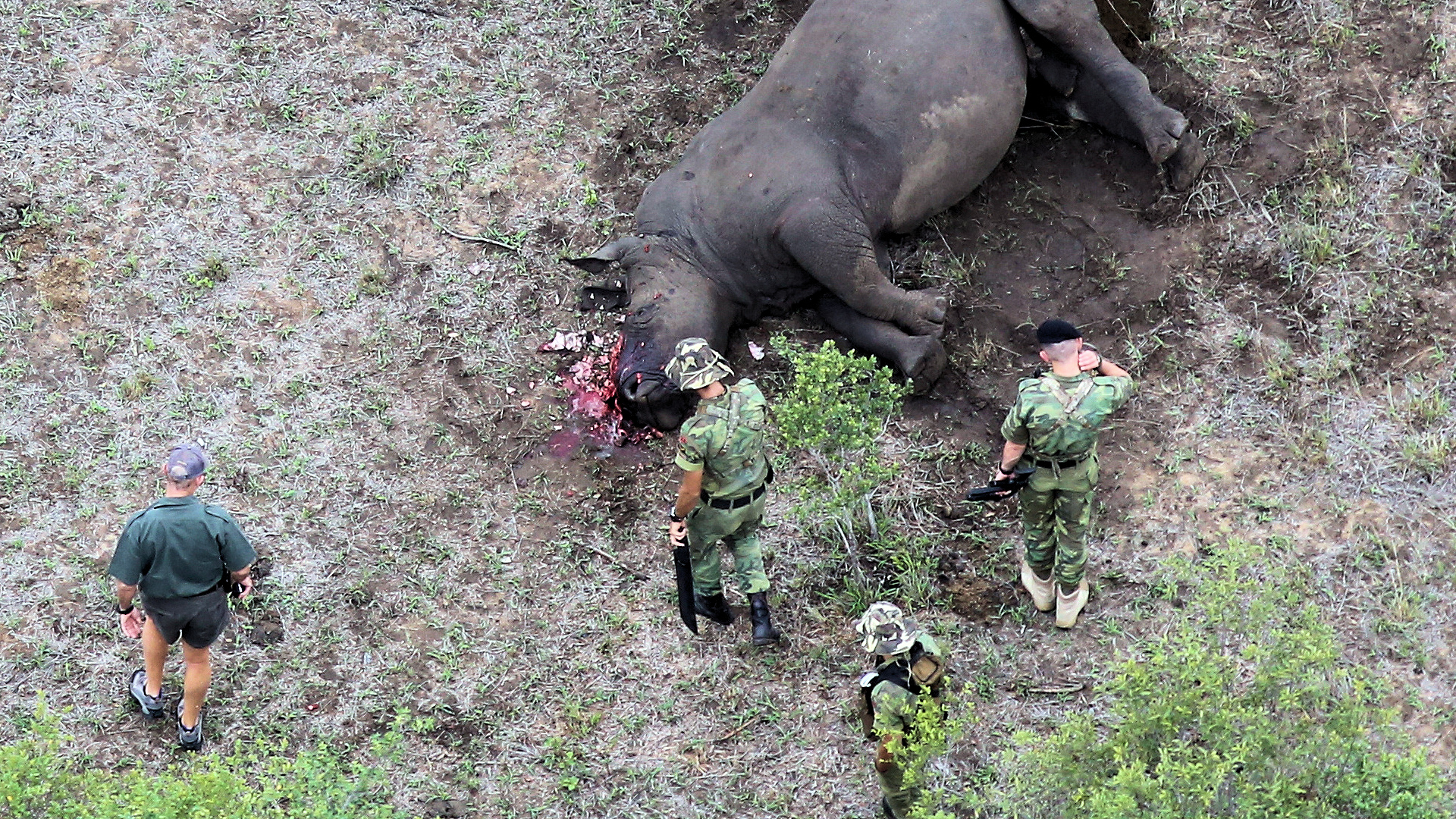
  • Alleged rhino-poaching kingpin Joseph “Big Joe” Nyalungu was shot dead by unknown assailants on May 16 near South Africa’s Kruger National Park, following a failed attempt on his life eight days earlier.
  • Nyalungu, a former police officer, faced more than 40 counts of rhino horn trafficking from 2016-2019 alone, and was allegedly responsible for killing thousands of rhinos in South Africa’s Greater Kruger Area.
  • He had been arrested multiple times, dating back to at least 2011, and faced charges related to murder, kidnapping, money laundering and unlawful possession of firearms and explosives used in poaching — though he was never convicted and was released on bail each time.
  • Conservationists say the country’s justice system failed to effectively prosecute him and call for reforms in the country’s laws to save the remaining rhinos from poaching.

A former South African police officer who became a notorious alleged rhino-poaching kingpin has been killed by unknown gunmen, police announced. Joseph “Big Joe” Nyalungu was shot dead at his office in the town of Mkhuhlu, near Kruger National Park, at around 2:30 p.m. on May 16, according to authorities.

It was the second attempt on his life in eight days. He survived the first attack despite being reportedly shot in the shoulder, stomach and thigh.

Nyalungu, 62, faced multiple charges related to rhino poaching and trafficking, kidnapping and murder, as well as money laundering and unlawful possession of firearms and explosives. He was arrested at least five times between 2010 and 2024, though he was never convicted of any crimes during that time.

His latest arrest came in October 2024, when police found explosives in his offices. At the time of his death, he was reportedly out on bail of 20,000 rand (about $1,140 at the exchange rate at the time), with investigations into his alleged illegal activities ongoing.

Police said they haven’t identified the gunmen and are still investigating the motive behind the killing. Nyalungu was declared dead at the scene.

Conservationists say the only way to save rhinos from the poaching crisis is by creating stronger deterrents through tougher sentences for the crime.

Conservationists say the only way to save rhinos from is is by creating stronger deterrents through tougher sentences for poaching and trafficking. Image by Thomas D. Mangelsen.

‘Too kind of a death’

Nyalungu was accused of poaching rhinos in the Greater Kruger Area, said Jamie Joseph, director of the South African NGO Saving the Wild. Joseph has tracked Nyalungu’s activities since 2017 as part of her work to dismantle poaching syndicates operating in the country.

“This was way too kind of a death for him,” she said. “Joe deserved to go to prison for the rest of his life.”

Nina Fascione, executive director of the International Rhino Foundation, a conservation nonprofit, said Nyalungu was “likely behind hundreds, potentially thousands, of poached rhinos, not to mention other serious organized crime.”

“Poaching doesn’t just kill rhinos. Every year, rangers are killed in the line of duty,” she added. “It’s fair to say that rhinos and the rangers who protect them are safer today.”

Rhino horns are a prized wildlife commodity, worth about $20,000 per kilogram (about $9,090 per pound) on the black market. They’re in high demand in China and Vietnam for their purported medicinal properties (for which there’s no scientific evidence). The horns are also crafted into jewelry or carved into luxury items for display.

The international trade in rhino horns is prohibited under CITES, the global wildlife treaty that regulates cross-border commerce in endangered plants and animals. But horns are sawed off poached rhinos in Africa and Asia and smuggled across borders by organized crime syndicates. Chinese court cases reveal that many of the horns seized there can be traced back to South Africa and Mozambique.

South Africa has the world’s highest populations of both white rhinos (Ceratotherium simum) and black rhinos (Diceros bicornis). It’s also a poaching hotspot: 352 rhinos were poached there in 2025, according to government data. That was down 16% from 2024, when 420 rhinos were killed. Mpumalanga, the province where Nyalungu operated, recorded a steep loss: 178 rhinos were poached in 2025, up from 92 in 2024.

Joseph 'Big Joe' Nyalunga arrested by police after a high-speed chase in Hoedspruit in 2023.

Joseph ‘Big Joe’ Nyalungu as he was being arrested by police after a high-speed chase in Hoedspruit in 2023.

From police officer to alleged poaching kingpin

Before Nyalungu’s troubles with the law began, he served as a police officer in Mpumalanga, a province that contains part of the Kruger National Park, where he later established his office.

His first brush with the other side of the justice system came in 2010, when police questioned him for his involvement in a murder and kidnapping case.

In 2011, police pulled him over and found 3.2 million rand in cash (about $441,000 at the time) and DNA evidence of two white rhinos that had been poached in Kruger National Park in his vehicle. He was arrested.

A year later, in 2012, Nyalungu was apprehended again following an undercover operation where he purchased rhino horns from a police informant. Authorities raided his home and found four horns, a substantial amount of marijuana, hunting gear, knives and gun silencers, along with 5 million rand in cash (about $609,000 at the time) in his home.

South Africa’s National Prosecuting Authority identified him as the ringleader of a rhino poaching syndicate in 2013. In response, the Pretoria High Court granted an order to freeze his assets.

Southern white rhinos in Kruger National Park. Data show that the park, a stronghold of rhinos in the country, has lost nearly 75% of its white rhinos since 2011 to poaching.

S Data show that Kruger National Park park, a stronghold of Southern white rhinos rhinos, has lost nearly 75% of its population since 2011 to poaching. Image by splatzone via iNaturalist (CC BY-NC 4.0).

In ⁠September 2018, Nyalungu was arrested alongside two other alleged rhino poaching kingpins: Petros Sydney Mabuza, a.k.a. Mr. Big or Mshengu; and Clyde Mnisi, a traditional leader and chief of the Mnisi clan. Other ex-police officers were also apprehended in a roundup known as Operation Broadbill, which targeted suspected rhino traffickers. They faced criminal charges including theft, conspiracy, rhino horn trafficking and money laundering.

Past crimes caught up with Nyalungu in 2020, when he was rearrested for the 2010 kidnapping and murder.

Some of Nyalungu’s alleged co-conspirators are dead. Mabuza was gunned down in 2021 and Mnisi was shot in 2023, both in Mpumalanga.

Nyalungu was arrested again in 2023 after a high-speed chase, this time in Hoedspruit, a town about 70 kilometers (43 miles) from Kruger National Park. When police searched his vehicle, they found a stash of cash, knives, a rifle and ammunition.

In July 2024, Nyalungu appeared in court with his wife on tax evasion charges. Three months later, police raided his businesses and found explosives and a cache of ammunition linked to poaching operations. He was again arrested.

At the time of his death, he was facing 40 charges related to rhino poaching for crimes committed between 2016 and 2019, according to local media reports. These cases were ongoing in the courts.

Despite his long list of criminal charges, Nyalungu was never convicted. His court cases dragged on for years, and he kept getting out on bail.

“Unfortunately, there has been a tolerance in South Africa of extremely delayed and lengthy court processes, creating a massive backlog of cases,” Fascione said. “Big Joe should have been brought to trial years ago.”

Nearly one rhino is poached every day in South Africa for its horns. Despite state-of-the-art anti-poaching efforts, the country is grappling with the crisis.

Nearly one rhino is poached every day in South Africa for its horns. Despite state-of-the-art anti-poaching efforts, the country is grappling with the crisis. Image by Wynand Uys via iNaturalist (CC BY 4.0).

Megan Carr, a senior researcher at the South African NGO EMS Foundation, said alleged rhino poaching kingpins, such as Nyalungu, “have historically utilized a variety of legal maneuvers and systemic weaknesses to delay trials and evade conviction for over a decade.” She referred to them as “Stalingrad tactics,” which wear down the plaintiff and delay justice. “These methods exploit the South African justice system’s procedural intricacies to stall high-profile cases indefinitely.”

Meanwhile, poachers continue to operate. “All the while, the poachers are out on bail killing more rhinos, so the rhino crisis will never end until there’s a deterrent,” Joseph said. “We have the best anti-poaching in the world, we have the best technology, weapons — you name it, we’ve got it all — we’re catching the same poachers.”

Critically endangered black rhinos in Kruger National Park. The park is estimated to have just 225 of them.

Critically endangered black rhinos in Kruger National Park. The park is estimated to have just 225 of them. Image by Thomas Fuhrmann via iNaturalist (CC BY-NC 4.0).

Reforms needed to save rhinos from poaching, conservationists say

Kruger National Park, South Africa’s largest protected area, is home to an estimated 2,515 white rhinos and 225 black rhinos. It’s also a poaching hotspot: Data show that between 2011 and 2020, 75% of the park’s white rhinos and more than half of the critically endangered black rhinos were killed for their horns.

Systemic corruption plays a part in perpetuating the poaching crisis. A 2023 research paper by the EU-funded ENACT program called “internal corruption” — and not poaching — the “gravest threat” to the park’s wildlife. The program, which tracks organized crime in Africa, found that as many as 40% of the park’s law enforcement staff are believed to be working hand in glove with poaching networks or are involved in other criminal activities. It also found the park’s corruption is tied to organized crime in Mpumalanga.

Carr also highlighted problems within the system. “The efforts to combat organized crime are significantly compromised by widespread criminality in the criminal justice system in South Africa,” she said. “These challenges are negatively affecting rhino poaching investigations and the protection of rhino horn stockpiles amongst others.”

In response, South African President Cyril Ramaphosa appointed the Madlanga Commission of Inquiry to probe the infiltration of criminal syndicates into law enforcement and the judiciary in 2025. The commission submitted an interim report in January 2026. The country’s anti-corruption unit arrested 12 police officers connected to a criminal syndicate in March 2026.

“Addressing the systemic governance and corruption challenges within law enforcement in South Africa must be considered a critical component.…to protect the remaining rhino population,” Carr said.

Rhino horns are a prized commodity on the black market, and organized criminal networks are involved in smuggling them from Africa to Asia. Image by Rollison, Nan (Public Domain).

Rhino horns are a prized commodity on the black market, and organized criminal networks are involved in smuggling them from Africa to Asia. Image by Rollison, Nan (Public Domain).

In 2017, South Africa opened the Skukuza Regional Court, its first-ever “rhino court,” inside Kruger National Park to fast-track poaching cases and bring criminals to justice. But its effectiveness has been interrupted by repeated efforts to transfer cases out by court president Naomi Engelbrecht — a move opposed by rhino conservationists.

Joseph said Skukuza is “the only court that was working in the country” to effectively prosecute rhino poachers, because prosecutors and magistrates there are specially trained to handle these cases. “If we can replicate specialized courts in a few places in South Africa where there are rhinos, then that’s a game changer.”

Most of those arrested in wildlife trafficking cases tend to be poachers or middlemen, who are the most easily replaceable links in the chain. Conservationists say the only way to cripple these networks is to arrest and prosecute the kingpins running these cartels.

“The criminal organizations behind rhino poaching are the same organized crime syndicates that run drugs, weapons and other dangerous and illegal activities,” Fascione from the International Rhino Foundation said. “More effort is needed to disrupt and dismantle these organizations, with swift and lengthy jail sentences that will deter other potential offenders.”

Joseph said: “The only thing that is going to save the rhinos is the rule of law — legislation and specialized courts. People have to start going to prison.”

Spoorthy Raman is a staff writer at Mongabay, covering all things wild with a special focus on lesser-known wildlife, the wildlife trade, and environmental crime.


Zoo reaches historic milestone for Puerto Rican crested toad conservation efforts with more than 12,000 tadpoles

Brookfield Zoo Chicago reaches historic milestone for Puerto Rican crested toad conservation efforts with more than 12,000 tadpoles

^The\ Puerto\ Rican\ crested\ toad\ is\ the\ only\ toad\ native\ to\ Puerto\ Rico\ and\ was\ once\ thought\ to\ be\ extinct\ in\ the\ wild.\ Today,\ the\ species\ persists\ through\ one\ of\ the\ world's\ longest-running\ amphibian\ reintroduction\ efforts\ but\ remains\ listed\ as\ endangered\ by\ the\ International\ Union\ for\ Conservation\ of\ Nature\ (IUCN).\ Credit:\ Brookfield\ Zoo\ Chicago^

Behind the scenes at Brookfield Zoo Chicago, a record-breaking conservation milestone is helping secure the future of one of the world's most imperiled amphibians. Months of meticulous care and coordination enabled Brookfield Zoo Chicago to successfully breed and raise 12,244 Puerto Rican crested toad tadpoles to be released in the wild, supporting species recovery efforts.

This marks Brookfield Zoo Chicago's largest tadpole count from a single breeding cycle. Over the last decade, the Zoo has contributed nearly 40,000 Puerto Rican crested toad tadpoles to island-wide recovery efforts led by the Puerto Rican Crested Toad Conservancy (PRCTC) in partnership with the Puerto Rico Department of Natural and Environmental Resources (DRNA), the U.S. Fish and Wildlife Service (USFWS), and 16 accredited zoos and aquariums.

"Conservation work like this can be incredibly detailed and time-consuming, but that's what makes these milestones so meaningful," said Mike Masellis, Brookfield Zoo Chicago lead animal care specialist.

"From carefully coordinating breeding pairs to hand-counting thousands of tadpoles and tracking toads in the field, every step plays an important role in helping restore this species. Our hope is that years from now, some of these tadpoles will return to the breeding ponds as adults and continue establishing future generations in the wild."

(Click to watch video)

^Behind\ the\ scenes\ at\ Brookfield\ Zoo\ Chicago,\ a\ record-breaking\ conservation\ milestone\ is\ helping\ secure\ the\ future\ of\ one\ of\ the\ world's\ most\ imperiled\ amphibians.\ Months\ of\ meticulous\ care\ and\ coordination\ enabled\ Brookfield\ Zoo\ Chicago\ to\ successfully\ breed\ and\ raise\ 12,244\ Puerto\ Rican\ crested\ toad\ tadpoles\ to\ support\ species\ recovery\ efforts\ in\ the\ wild\ led\ by\ the\ Puerto\ Rican\ Crested\ Toad\ Conservancy\ (PRCTC).\ Credit:\ Brookfield\ Zoo\ Chicago^

The Puerto Rican crested toad is the only toad native to Puerto Rico and was once thought to be extinct in the wild. Today, the species persists through one of the world's longest-running amphibian reintroduction efforts but remains listed as endangered by the International Union for Conservation of Nature (IUCN), threatened by the USFWS, and endangered by DRNA.

Primary threats include habitat loss, invasive species, rising sea levels, and saltwater intrusion into breeding wetlands. The last naturally occurring population remains in the Guánica Commonwealth Forest in southwestern Puerto Rico.

Each year, breeding is carefully timed to align with Puerto Rico's rainy season, when survival conditions are highest for tadpoles released into the wild.

The months-long process involves close coordination with conservation partners to manage recommended breeding pairs for population biodiversity and mimic seasonal environmental changes to encourage breeding behaviors.

Once counted and transported to Puerto Rico, tadpoles are placed into managed aquatic habitats where they are monitored through metamorphosis before dispersing into the surrounding landscape.

Last fall, two Brookfield Zoo Chicago animal care specialists traveled to Puerto Rico to support the PRCTC's field conservation efforts at a release site. Working alongside conservation partners, the team spent a week monitoring toads to better understand habitat use, predator pressures, and environmental conditions affecting survival after reintroduction.

Brookfield Zoo Chicago currently cares for about 20 Puerto Rican crested toads, most of which are cared for behind the scenes as part of conservation efforts.

Earlier this year, guests were able to see two of these toads on habitat in "The Swamp" for the first time, offering a new opportunity to connect with a species that has gained global recognition in recent years. Millions of fans were introduced to Puerto Rico's only native toad as a visual part of Puerto Rican artist Bad Bunny's Grammy Award-winning album "DeBí Tirar Más Fotos."

Guests can learn more about Puerto Rican crested toads and Brookfield Zoo Chicago's conservation efforts by visiting The Swamp, watching the latest episode of Wild Rounds with Dr. Mike, and exploring more at brookfieldzoo.org/animals/puerto-rican-crested-toad.

[–] Trying2KnowMyself@lemmygrad.ml 4 points 1 week ago (1 children)

The “deleted by creator” tag and missing profile page are because the account was deleted.

I would guess that lemmy.zip doesn’t like mutual aid.


Banner: Secretarybird. Photo: Ronelle Visagie, Author provided (no reuse)

Birds of prey in South Africa are in trouble – a study analyses data from 16 years of road counts

Birds of prey and vultures (raptors) play a vital role in ecosystems, both as top predators and key scavengers. However, compared to many other bird species, raptor populations are declining faster. This is because they need large areas to live in, have low population densities, and reproduce slowly. For these reasons they are vulnerable to human impacts like farming with pesticides, electrocution, collision with wind turbines, or poaching.

In many cases, by the time scientists and conservationists fully understand how bad the declines are, it may be too late to act. Thus, having good population monitoring is vital to act as an early warning system of declines. Many countries in the global south host important populations of raptors but lack effective monitoring programmes.

Africa is an important continent for raptor diversity. Several studies across Africa have used road counts (counting birds from repeated transects across routes) to monitor how raptor populations have changed over time. A recent study went one step further, combining trends from these different surveys from across Africa to better understand these changes at a pan-African scale. Unfortunately, no data from South Africa were available to be incorporated into this analysis.

Monitoring on the road.

In our recent study we took advantage of data that was collected by one dedicated fieldworker, Ronelle Visagie, who drove nearly 400,000 km (the distance from Earth to the moon) across the central area of South Africa (see map) between 2009 and 2025, while she worked for the Birds of Prey Programme of the Endangered Wildlife Trust.

Map of the study area showing the distribution of all road counts conducted between 2009 and 2025. The black polygon indicates the core survey area.

During these 16 years, Ronelle counted all the raptors and large birds that she saw on these work trips. Comparing how the rate of these observations (numbers of individuals per 100km driven) changed over time allowed us to explore species population trends. We had enough data to examine trends for 18 raptors and eight other large bird species over this period. Unfortunately, we did not find a good news story.

These road counts revealed that 50% of the species (13 out of 26) declined significantly, while only three species (12%) showed significant increases. The remaining ten species (38%) showed no significant trends (see Figure 2).

The declining trends raise serious concerns about the conservation status of several species in a region known to host important raptor populations. Thus, urgent conservation actions are needed, especially for species declining by more than 50%. Given that several of these species are not currently listed as threatened either globally or regionally, their conservation status may need to be reassessed.

Fig.2: Estimated population change for 26 species from road counts between 2009 and 2025 in South Africa. (a) Negative and (b) positive trends. The dashed vertical black line indicates a −50% population change. Author provided (no reuse)

Trends in raptor populations

According to our results, 42% of the assessed species declined by more than 50% in the last 16 years.

Notable declines included all of the three migratory species assessed (lesser kestrel, amur falcon and steppe buzzard). These trends match other studies from their breeding grounds in the northern hemisphere, which also suggested declines. Protecting migratory species is especially challenging because action may be needed in breeding areas, non-breeding areas, and along migration routes, where the threats they face may differ.

We also found declines of several resident raptors, including jackal buzzard, Verreaux’s eagle and secretarybird. Populations of these species declined by over 50% in our study region.

In contrast, populations of white-necked raven, greater kestrels, and white-backed vulture increased. The latter is a critically endangered species, but seems to be increasing within our study area.


Read more: Nigeria’s Hadejia wetlands are a vital stopover for migrating birds: new survey records species found in the park


Amur Falcon. Ronelle Visagie, Author provided (no reuse)

Some of the trends we detected were similar to a recent study that explored raptor population trends from across Africa using similar approaches to our study. For example, our findings of large declines for secretarybird and lesser kestrel were very similar to those reported in Kenya and Botswana. Additionally, similar population changes for secretarybird were detected during winter (but not summer) using road counts in the Nama Karoo (a major part of our study area) during the period just before our study (a 61% decline between the late 1980s and early 2010s). This suggests that the decline detected earlier may have continued into the mid-2020s.

Secretarybird. Megan Murgatroyd, Author provided (no reuse)

We compared the direction of trends (whether species numbers were going up or down) from our road counts and the Southern African Bird Atlas Project (SABAP2). But only about half of the trends agreed between the two methods (road counts and the bird atlas). Species with consistent trends between the methods included amur falcon and lesser kestrel – both showing declines – and greater kestrel and white-backed vulture – both showing increases. Species with inconsistent trends all showed decreases according to our road counts but increases according to the bird atlas project. These included Ludwig’s bustard, blue crane, secretarybird, black-winged kite, and southern pale chanting goshawk.

If we assume that our road counts trends are reliable, these findings suggest that although the bird atlas project data can provide valuable information on the changes in distribution of birds, atlas data may be less well suited to capture changes in abundance at large spatial scales and across multiple species.

Across Africa, declines in birds of prey are often linked to human population growth, agricultural expansion and climate change. In our study area, there have been no major recent changes in land use or population density, but more subtle or long-term human impacts may be driving these changes.

Conflicts between people and raptors, including illegal killings, could play a role. Climate change and infrastructure like power lines and wind farms are adding further pressure by fragmenting aerial habitat and affecting survival and reproduction.


Read more: Finding space for both wind farms and eagles in South Africa


Trends in human populations

Ronelle Visagie. Author provided (no reuse)

Human populations in Africa are expected to grow significantly over the next three decades, which will increase pressure on biodiversity.

Given the projected human population growth in Africa (79%), and a corresponding rise in demand for resources and energy, threats to vulnerable bird species are likely to get worse.

Gareth Tate. Author provided (no reuse)

It is therefore essential that we have reliable tools to monitor species trends and better understand the impacts of these pressures.

This is crucial for understanding the current biodiversity crisis and preventing severe wildlife loss.

Ronelle Visagie and Gareth Tate of the Endangered Wildlife Trust contributed to this research.


Banner image: The golden mantella, an endangered frog species found only in Madagascar. Image by Frank Vassen via Wikimedia Commons (CC BY 2.0).

Africa’s amphibians are overlooked in conservation planning, experts warn

Herpetologists are calling for greater inclusion of amphibians in African conservation planning, in a recent letter published in the journal Science.

Africa is home to roughly 1,170 known species of amphibians, 99% of which are endemic. Some 37% of the amphibians are recognized as threatened with extinction.

The researchers note that amphibians — frogs, salamanders and caecilians — are especially important as early-warning detectors of ecological disruption, given their sensitivity to pathogens, thermal stress, pollution and hydrological changes in their wetland habitats. Yet amphibians as a group remain poorly represented in protected-area planning and management tools in Africa, the authors write. They note there are only 12 documented amphibian-specific action plans across the continent. These include a conservation plan for frogs in Cape Town, South Africa, and for the golden mantella frog (Mantella aurantiaca) in Madagascar.

The Democratic Republic of Congo (DRC), for example, doesn’t yet have conservation action plans specifically dedicated to amphibians, according to the letter’s lead author, Bienvenu Mwale, an expert on amphibians in the DRC and Cameroon. “To date, the DR Congo existing legal frameworks remain broad and give limited attention to this taxonomic group, with a stronger focus on large mammals,” Mwale told Mongabay by email.

Cameroon, on the other hand, has given full protection to six amphibian species, including the Goliath frog (Conraua goliath), the world’s largest, through a ministerial decree. This could be a good model for African conservation planning, Mwale said.

He added that several African amphibian species are currently classified as data deficient on the IUCN Red List, meaning there’s not enough information to assess their conservation status.

“One of the needs for amphibian conservation plans in Africa (that citizens can help with) is specific information on distribution,” Amaël Borzée, a co-author of the letter and member of the Amphiban Specialist Group at the IUCN, the global wildlife conservation authority, told Mongabay by email. “This is something anyone can help with, and for instance, doing it through the iNaturalist platform is a great way for people to get engaged. This is easy: take a picture of any amphibian and upload it on iNaturalist, and the job is done, and it helps.”

Karen Lips, an amphibian expert not affiliated with the letter, told Mongabay in an email: “I agree that much more research and much more conservation is needed in Africa. It is a continent with incredible richness of biodiversity, but still needs research to understand patterns of distribution and threats to that biodiversity.

“Africa is one of the regions with the least amount of information on amphibian population biology, meaning that we are not able to assess how land use change, climate change, disease, or other factors affect those species, because we have no baseline population data for comparisons,” Lips added.


A program is returning burrowing owls back to their natural habitat

The Upper Nicola Band released 11 captive-born owls in spax̌mn — part of a decade-long effort to reinstate the tiny birds of prey whose populations have plummeted

Pluto, an 11-year-old educational burrowing owl with the Burrowing Owl Conservation Society of BC, is pictured at N’kwala School’s gym in spax̌mn (Douglas Lake), B.C., on April 22, 2026. Photo by Aaron Hemens

Pluto, an 11-year-old educational burrowing owl with the Burrowing Owl Conservation Society of BC, is pictured at N’kwala School’s gym in spax̌mn (Douglas Lake), B.C., on April 22, 2026. Photo by Aaron Hemens

This story is a collaboration between IndigiNews and The Narwhal.


Nine-year-old John Smithers cradles a tiny burrowing owl in his hands, preparing to release it into the grasslands of Upper Nicola Band (UNB) territory.

Like other young syilx people, he’s grown up hearing stories about the small birds of prey whose populations have plummeted in the region in the last century or so.

The owls – known in syilx culture as guardians, guides or messengers – were “once a common element” in landscapes stretching from the southern Interior of “B.C.” all the way to Manitoba, according to “Canada’s” Committee on the Status of Endangered Wildlife.

Now, burrowing owl sightings are rare. In 2003, the Government of Canada listed the burrowing owl as endangered under the federal Species at Risk Act. Experts link the bird’s decline to the gradual loss of its grassland habitats over the last century.

According to the Burrowing Owl Alliance, the bird’s population in the country has declined by over 96 per cent since 1987.

“Lots of animals can come and get them,” Smithers said about the lack of protective habitat for the burrowing owl.

John Smithers, a nine-year-old student from Upper Nicola Band’s N’kwala School, prepares to release a captive-born burrowing owl down an artificial nesting burrow and into the wild, during a release event for 11 captive-born owls into the community’s owl restoration site in spax̌mn (Douglas Lake) on April 22, 2026. Photo by Aaron Hemens

Earlier this year, Smithers became N’kwala School’s annual student ambassador to a regional burrowing owl recovery program that’s being led by the First Nation.

As ambassador, he was invited to be the first person of the year to release a captive-born burrowing owl into the wild on April 22, in his home community of spax̌mn (Douglas Lake) in “B.C.’s” Nicola Valley.

The release, which coincided with Earth Day, marked 10 years since UNB began releasing captive-born burrowing owls onto their homelands.

In return, those captive-raised owls have produced 125 “wild-born” baby owls — or fledglings — since being released from the community’s restoration site.

Despite high winds and the risk of ticks, dozens of excited people from all age groups turned out in high spirits for the release.

Students, nature enthusiasts and Elders alike shared laughs and smiles at the sight of the precious birds, with their round heads, short stature and long legs.

Upper Nicola Band Elder Howard (Howie) Holmes prepares to release a captive-born burrowing owl down an artificial nesting burrow and into the wild, during a release event for 11 captive-born owls into the community’s owl restoration site in spax̌mn (Douglas Lake) on April 22, 2026. Photo by Aaron Hemens

Framed by grassy hills, Smithers released the first owl under the warm sunshine with the help of Dawn Brodie, one of the main field technicians who has been involved in the program since its inception.

The nervous bird nearly escaped from his grasp and into the open air. But thanks to the quick reflexes of Brodie, her helping hands connected the captive-born owl back to the land and down an artificial nesting burrow that had been prepared by the UNB stewardship department.

“Soft” is the word Smithers used to describe the feeling of holding the owl.

Soon after, several guests in attendance – from program partners to Youth and Elders – were invited by the field technicians to release an owl down different burrows that were created by the recovery program and its partners.

Some of the owls wore amusingly bewildered expressions as they waited in the gentle grasp of human hands before being placed into a burrow.

A captive-born burrowing owl prior to being released into an artificial nesting burrow, during the release event for 11 captive-born owls into the Upper Nicola Band’s burrowing owl restoration site in spax̌mn (Douglas Lake) on April 22, 2026. Photo by Aaron Hemens

In total, 11 captive-born owls — six males and five females — were released into five of the site’s 35 artificial burrows that day. They are all just under one year old.

“The program has exceeded all our expectations,” said Loretta Holmes, a UNB member and senior resource technician with the band’s stewardship department.

“The owls, which we call sq̓əq̓axʷ, have responded better than we dared to hope ten years ago. And community interest and involvement has been strong since the start.”

Underground burrows protect, allow for monitoring of owls

The tiny burrows are connected through a network of underground tunnels hidden under the grassland hills above spax̌mn.

Each artificial burrow consists of a small, corrugated tube in the ground that serves as its entrance, which feeds into the larger network of tunnels. The entry points are camouflaged in the field by grass and large rocks.

Artificial nesting burrows are scattered throughout the grassland hills above Upper Nicola Band, at the community’s burrowing owl restoration program site in spax̌mn (Douglas Lake) on April 22, 2026. Photo by Aaron Hemens

Before any captive-raised owls are released, handfuls of frozen mice are inserted into the burrows and tunnels.

“That helps them not have to go as far to hunt as often. It encourages them to lay more eggs, and helps them rear their young ones when they’re hatched,” said Holmes.

Once released, the burrow entrances are closed off for a few days, explained Chris Gill, a project biologist with the band’s Species-at-Risk program.

“It’s to let them acclimatize and calm down, basically. And potentially bond with the mate that’s in there,” said Gill.

Breeding gets underway as soon as two owls choose each other as mates, and Gill said that eggs are laid in June.

The burrow tunnels, which protect the owls from predators, are connected to a nest box. The nest box has an opening at ground level, allowing technicians to observe how many eggs have been laid and monitor activity.

Technicians also attach leg bands to the newly-hatched birds here, to track future migration.

Mice are also delivered to the burrows two to three times a week. Holmes said that this type of care results in nests that carry nine to 10 eggs — more than the average of six to eight laid by burrowing owls in the wild.

The mice are “giving them a big head start and maximizing the chances of producing healthy fledglings, and healthy parents as well,” Gill said.

The owls stay in the site’s burrow network from anywhere from four days to up to a week, depending on weather conditions, and are then free to fly around in the open air.

“They mostly stick at the site, even after you release them out of the burrow, because they’re now used to the site,” said Gill.

“They may have paired up, or they may choose another mate from the site.”

Chris Gill, a project biologist with the Upper Nicola Band’s Species-at-Risk program, speaks at the playground of N’kwala School, prior to the release event for 11 captive-born owls into the community’s burrowing owl restoration site in spax̌mn (Douglas Lake) on April 22, 2026. Photo by Aaron Hemens

By July, fledglings will start to emerge from the burrows, and the owls usually start to migrate south in September and October. They’ll return to the breeding sites next April.

Tracked migration data from burrowing owls who left the site in previous years revealed that the birds travel as far as “San Jose, California.”

“It’s just so amazing that they went all the way somewhere, wintered in those conditions and came back,” said Holmes.

“It’s wonderful.”

UNB program part of larger effort to bring back owls

In the last decade, more than 100 burrowing owls have been raised in captivity at the Kamloops Wildlife Park by the Burrowing Owl Conservation Society, before being released at spax̌mn. There’s a site in “Oliver” that supports the program as well.

The captive-raised owls all come with identification tags on their legs, which are documented by field technicians before they are released into the burrows.

Two captive-born burrowing owls from the Kamloops Wildlife Park — one female and one male — are transported to their artificial burrow nesting sites for release at the burrowing owl restoration site in spax̌mn (Douglas Lake), B.C., on April 22, 2026. Photo by Aaron Hemens

Many of the 125 wild-born owls have left the UNB site and returned, including four who came back this spring; two males and two females, three of which were born at the site last year.

While the conservation efforts are helping to re-populate the burrowing owl species in this part of the country, UNB views this work as only one piece of the larger puzzle of how to protect the community’s rare and sensitive grassland ecosystem habitats.

By stewarding these ecosystems — and restoring and supporting the biodiversity that has been depleted — it’s also an act by the band to protect their cultural identity and fulfill generational responsibilities around caring for the land and for all living things.

“Conserving a species at risk, like a burrowing owl, it’s about far more than a single bird or species. It’s about upholding relationships, responsibilities and balance with the living world,” said Holmes.

Animals like the burrowing owl are part of an interconnected system that has sustained Indigenous Peoples for generations, she said.

Loretta Holmes, an Upper Nicola Band member and senior resource technician with the band’s stewardship department, wears owl-themed earrings made by a Kamloops-based Indigenous artist, during the release event for 11 captive-born owls into the site in spax̌mn (Douglas Lake) on April 22, 2026. Photo by Aaron Hemens

“If one species declines, it signals that the relationship between people and the land is out of balance. Conservation becomes an act of restoring harmony and respect in that system,” she said.

“Protecting species at risk aligns with Indigenous laws that emphasize caretaking. Conservation efforts honour the principle that decisions made today must ensure the healthy lands and wildlife for our relatives yet to come.”

It’s just one of many projects under the community’s stewardship department’s larger Species-At-Risk program, which is designed to protect and restore endangered species populations on their lands.

The program also looks at restoration efforts for species including American badger, Lewis’s woodpecker and Great basin spadefoot — all of which have been federally recognized as threatened or endangered.

Penticton Indian Band — a fellow syilx community that’s under the Okanagan Nation Alliance (ONA) along with UNB — also released burrowing owls through their own similar program that same week.

“In British Columbia, burrowing owls are extirpated. That means that they’re not actually existing on the landscape without reintroduction programs, like the Upper Nicola Band’s,” said Gill.

A captive-born burrowing owl is released into an artificial nesting burrow, during the release event for 11 captive-born owls into the Upper Nicola Band’s burrowing owl restoration site in spax̌mn (Douglas Lake) on April 22, 2026. Photo by Aaron Hemens

But Traditional Ecological Knowledge gathered from Elders and advisors confirmed that burrowing owls historically existed on the spax̌mn landscape.

In 2015, a year before the burrowing owl recovery program launched, the Species-At-Risk team conducted surveys on reserve lands to determine a suitable habitat for the birds.

They settled on the grasslands above the UNB community as the reintroduction program’s site.

The grassland ecosystem landscape above the Upper Nicola Band community is the site of their burrowing owl restoration program, pictured in spax̌mn (Douglas Lake) on April 22, 2026. Photo by Aaron Hemens

“We found suitable habitat for burrowing owls — but no burrowing owls present,” said Gill.

The birds traditionally nested in the underground burrows that were dug and abandoned by different animals, from badgers to marmots and coyotes, he said

Because of a lack of badgers, Gill said there weren’t any natural burrows out on the land.

“That’s why the Upper Nicola Band put in these artificial burrows,” he said.

“There are actually badgers on that reserve, but there are very few — and far in-between — so we can’t rely on a burrowing owl finding a badger burrow.”

According to the province, “several small” burrowing owl nesting sites were identified in the Okanagan and Thompson valleys from 1900 to 1928.

Historical nesting areas include Osoyoos, Oliver, Penticton, White Lake, lower Similkameen Valley, Vernon, Kamloops and Douglas Lake.

Artificial nesting burrows are scattered throughout the grassland hills above Upper Nicola Band, at the community’s burrowing owl restoration program site in spax̌mn (Douglas Lake) on April 22, 2026. Photo by Aaron Hemens

But between 1928 and 1980, only four nesting sites were recorded.

The federal government attributed the “conversion of grassland to cropland” as the “ultimate factor responsible for the decline in burrowing owls.” It estimates that the species experienced a 90 per cent population decline from 1990 to 2000.

Also contributing to the owl’s population decline is the “gauntlet” of issues they face on their migration route, Holmes said.

This includes fatalities occurring from collisions with wind turbine farms and motor vehicles. Pesticides targeting insects and rodents that the birds feed upon indirectly poisons them as well.

In 2004, the estimated population of burrowing owls in “Canada” was recorded at 795 mature individuals. In 2015, it had plunged to approximately 270.

Burrowing owl populations are “in a nose dive,” said Gill.

He called the burrowing owl “a canary in a coal mine” in measuring the state of ecosystem health.

“A badger, a burrowing owl — those species are the indicator species. If they’re not doing well, then that’s a sign of something bigger that’s not doing well,” he said.

Grasslands are also endangered

Along with Holmes and Brodie, Gill helped initiate the burrowing owl reintroduction program 10 years ago. He called the two women “the work horses” of the program.

“We monitor the owls, and write really good data collection on it,” said Brodie, a veterinary technician who supports the program as a burrowing owl consultant.

The program has been a success, Gill said, not just because of the region’s “great grasslands.”

“But it’s also the stewardship that’s going on with these owls,” he said.

“It’s one of the most productive sites in B.C. for releasing our fledging owls.”

In the wild, burrowing owls can live anywhere from four to six years, according to Lauren Meads, the executive director of the Burrowing Owl Conservation Society of BC.

Meads, who was joined at the release event by the society’s 11-year-old educational burrowing owl, Pluto, added that in captivity they can live up to 15 years.

A student from N’kwala School in spax̌mn (Douglas Lake), B.C., pets Pluto, an 11-year-old educational burrowing owl with the Burrowing Owl Conservation Society of BC, at the school gym on April 22, 2026. Photo by Aaron Hemens

According to the Government of B.C., grasslands made up less than one percent of the province’s land area in 2004, adding that “only a small percentage of our grasslands are protected.”

But grasslands surrounding the Upper Nicola landscape are “some of the most intact and incredibly resilient grasslands” Gill has observed, he said.

“Grasslands are one of the most endangered ecosystems in Canada … They’re very, very rare. It looks like we have a lot, but this is one little spot,” he said.

Holmes added that protecting burrowing owls also protects the grasslands.

“That’s their home. It works hand-in-hand,” she said.

Community members walk towards an artificial nesting burrow at the Upper Nicola Band’s burrowing owl restoration site in spax̌mn (Douglas Lake) on April 22, 2026, during the release event for 11 captive-born owls into the wild. Photo by Aaron Hemens

Burrowing owls also hold stories, teachings

Holmes said that the burrowing owl’s population decline and status as an endangered species is not just an ecological matter, but a cultural issue as well.

Burrowing owls are a “symbol of our cultural identity,” she said.

“Owls can be messengers, teachers or indicators in an Indigenous knowledge system. They’re often associated with observation, protections and indicators of change.”

The loss of burrowing owls “erodes the stories, the teachings and our ways of understanding the land that has been passed down through generations,” she added.

Upper Nicola Band Elders Howard (Howie) Holmes and Linda Intalin Holmes are pictured at the community’s burrowing owl restoration site, during the release event for 11 captive-born owls into the site in spax̌mn (Douglas Lake) on April 22, 2026. Photo by Aaron Hemens

Upper Nicola Chief Dan Manuel said in a statement that burrowing owls are deeply woven into syilx culture.

“For our people, the cultural, spiritual and environmental importance of sq̓əq̓axʷ are one,” said Manuel.

“Our culture is rooted in co-existence with the world around us. We have a responsibility to care for the land and the beings on it. We must help rebuild what has been lost, and it will continue to support us.”

Dawn Brodie, one of the main field technicians who has been involved in Upper Nicola Band’s burrowing owl restoration program since its inception, leads the release event of 11 captive-born owls into the community’s owl restoration site in spax̌mn (Douglas Lake) on April 22, 2026. Photo by Aaron Hemens

Holmes said that having a dedicated conservation program fulfills those duties that are owed to the land and to all living beings.

“It treats our relatives with respect,” she said.

“The land, the animals, the plants — everything that’s there — provides us with sustenance. So it’s our responsibility to take care of them as well. We see all those things as our relatives.”

She emphasized that Indigenous Peoples have an inherent responsibilities as stewards of their territories — responsibilities that originate in syilx laws, teachings and oral traditions, also known as captikʷł.

“That predates colonial conservation frameworks,” she said.

UNB Elder Casey Holmes thanked all the staff and volunteers involved in the community’s stewardship program, especially for their work in supporting the restoration of the burrowing owl population.

“People are making a difference. Even if it doesn’t look like a difference, they made a difference today, to make this a success – to make this a part of history that we’re not losing,” said Casey.

Upper Nicola Band Elder Casey Holmes speaks at the playground of N’kwala School, prior to the release event for 11 captive-born owls into the community’s burrowing owl restoration site in spax̌mn (Douglas Lake) on April 22, 2026. Photo by Aaron Hemens

When the community loses a tmixʷ (All living things) relative, Casey said that “we lose a part of history.”

“Bringing back this, is regaining back that history,” he said.


Deadly droughts and floods wipe out young California salmon en route to Pacific

Salmon are becoming river "ghosts" as brutal droughts and violent floods cause unprecedented losses on their treacherous journey to the Pacific Ocean, scientists say. A study led by the University of Essex; NOAA Fisheries; University of California, Davis; and Cramer Fish Sciences has found that young Californian Chinook salmon face a deadly double threat from extreme weather and the destruction of historical wetland habitats they rely on.

The study emphasized how deadly droughts are for young fish and how they thrive in wetter conditions. However, the results also indicated that in modern, simplified rivers, extreme flows during winter storms can be devastating too. The paper is published in the journal Global Change Biology.

Decades of engineering in California's 1,100 square mile Sacramento–San Joaquin River Delta have created an "ecological trap" by carving the Delta into a series of fast-flowing canals.

The research paper contrasted juvenile salmon habitat use during the multi-year drought of 2012–2016 with the massive floods of 2016–2017 that were associated with millions of dollars of damage to roads and infrastructure.

It showed that the altered river system simply could not support the smallest fish at extreme high flows, with high numbers being shot out to sea in early 2017 instead of being guided through the freshwater floodplains and wetlands they need to grow and survive.

The team described these lost fish as river "ghosts" because they die unseen, their fate hidden beneath the water.

Lead author Dr. Anna Sturrock, from Essex's School of Life Sciences, said, "The heroes of the tale, the 'early migrants,' were a bit of a mystery before. They're simply too small to track with traditional tags when they leave their rivers. By turning to natural chemical tags that are more often used to identify the origin of bones found in archaeological digs, we could track the lifetime movements of these tiny fish and identify the key mortality hotspots."

By analyzing the chemical composition of otoliths, tiny ear stones that preserve a chemical record of each fish's life, alongside their eye lens isotopes, the team reconstructed where each salmon had traveled and grown. By sampling the same cohort across their entire life cycle, they could also infer where and when they were being lost.

The study showed that early migrants became rarer at every stage of the journey. On average, the early migrants made up about 80% of the juvenile salmon entering the Delta, but only 26% leaving it and just 15% of the adults that returned to spawn.

In the extreme climate years, young fish either face low flows and rising temperatures or are swept downstream by powerful floods into hostile environments with a slim chance of survival.

"In extreme climate years, juvenile salmon run out of options, and climate models predict these harsh conditions will only become more frequent," said Rachel Johnson, senior author of the study and scientist with NOAA Fisheries.

Despite heavy losses, some fish from every migratory group still made it back to reproduce, showing why having different types of salmon is so important.

These different groups take slightly different routes and leave at different times, which helps the species survive when conditions change, but researchers warn that as weather becomes more extreme, losing this diversity makes the whole population more likely to collapse.

The researchers say that restoration actions need to mimic that diversity and to be made climate-ready, with habitats restored across the full migratory route so salmon have safe places to grow, shelter and survive, whatever the weather throws at them.

Dr. Sturrock added, "The impacts of 'whiplash weather' are being felt all around the world, impacting both human and natural systems. Salmon didn't evolve to bet everything on a single strategy. Historically, the Delta offered multiple pathways and places to grow, which allowed different migratory groups to succeed in different years. Restoring that diversity of habitats is essential if we want salmon populations to remain resilient in the face of increasingly extreme and unpredictable climate conditions."


Banner image of a Venezuela snouted treefrog by Taucce et al., 2022, via Wikimedia Commons (CC BY 4.0).

Study finds microplastics in tadpoles in the Amazon for the first time

Researchers have recorded microplastics in frog tadpoles and their pond habitats in the wild in the Amazon for the first time, according to a new study. This confirms widespread microplastic contamination in the Amazon Rainforest, the researchers say.

Previous studies from the region have found microplastic contamination in fish, invertebrates, soil and water samples.

In the recent study, ecologist Fabrielle Barbosa de Araújo from the Federal University of Pará and her colleagues collected 20 water samples from five natural water bodies formed by the accumulation of rainwater in soil depressions at Gunma Ecological Park in Pará state in April 2025. These temporary ponds are important breeding sites and larval development areas for various frog species in the Amazon.

From each of the five ponds, the researchers also collected 100 tadpoles of the Venezuela snouted treefrog (Scinax x-signatus), commonly found in both forests and urban areas across South America.

The researchers found microplastics in each sampled pond and tadpole. Most of the microplastics were transparent, blue and black fibers made of plastic like polyester. Other studies have also found similar blue and transparent fibers across the Amazon, possibly originating from sanitary sewage and fishing activities, the researchers write.

Araújo told Mongabay by email that finding microplastics in the tadpoles and their habitats was not surprising as several previous studies have shown microplastic contamination in other organisms in the Amazon. “What really caught our attention was the large quantity found, especially because this is an area with low [human] population density and considered relatively well preserved,” she said.

Araújo said she’s particularly concerned about microplastics in the tadpoles because the “contamination can negatively affect the health of amphibians, causing genetic and morphological damage, such as alterations in blood cells and in the DNA itself.” She added that microplastic particles can also accumulate in tissues and cause physiological changes in frogs.

The authors write that tadpoles of the Venezuela snouted treefrog eat algae, fungi and eggs in water and may have ingested the microplastics that way.

“Research on the presence of microplastics in the Amazon has intensified in recent years, and our goal is to continue monitoring this contamination, especially in anuran tadpoles, in order to better understand how this pollutant is affecting the biodiversity of our region,” Araújo said.

“This study provides the first evidence that microplastics are reaching tadpoles in the Amazon, a region where we have very limited data,” Jess Hua, an ecologist who studies freshwater ecology and amphibians and wasn’t affiliated with the study, told Mongabay by email. “This is important because amphibians represent the most threatened vertebrate taxa and understanding potential threats, including from microplastics, is important to their conservation.”

Hua added that microplastic contamination in freshwater systems is still much less studied compared to marine systems.


Massive marine heat wave caused Caribbean coral reefs to collapse much faster than predicted

For decades, coral reefs throughout the Caribbean have been suffering from disease, pollution, overfishing and rising sea temperatures, yet most have continued to grow—until now.

In 2023 and 2024, surface temperatures climbed to record highs in the world's oceans, and a marine heat wave of unprecedented length and intensity spread across the tropics. Satellites from the US National Oceanic and Atmospheric Administration detected heat stress that could cause corals to bleach across more than 80% of the planet's reef areas.

During these periods of extreme stress, corals expel the symbiotic algae that give them their color and most of their food—turning them stark white and leaving them vulnerable to starvation, diseases and eventually death.

Across the North Atlantic, including the Caribbean, the heat stayed for months, with heat stress two-to-three times higher than reefs had ever experienced. Heat stress, the phenomena of high temperatures putting fragile ecosystems under pressure, can permanently alter their ability to function.

This triggered what is now recognized as the fourth global coral bleaching event, the most severe one that has been documented.

Coral reefs are among the most productive ecosystems on Earth, and their importance to people is fundamental. They feed hundreds of millions through small-scale fisheries, underpin tourism across the Caribbean, and serve as natural breakwaters that protect the coast from storms and reduce flooding events.

Caribbean reefs are eroding fast

In a new study, we found that across the Caribbean, the 2023 marine heat wave—combined with a deadly disease known as stony coral tissue loss disease—has pushed reefs over a threshold scientists thought was a decade or more away. They are now eroding faster than corals can rebuild them.

We studied reefs in the Mexican Caribbean and the Gulf of Mexico, comparing data collected before the heat wave (2018–2022) with surveys after it (2023–24). At each reef, we counted live corals and organisms that break down the reef, like parrotfish and sea urchins. From those counts, we estimated how much reef-building (carbonate production) and reef-breaking (bioerosion) was happening, then calculated the net result—whether the reef was gaining or losing material.

The results were stark: between 70% and 75% of our Caribbean sites had tipped from net growth into net erosion. They are now losing calcium carbonate faster than corals can add it. The threshold that earlier models had suggested might be crossed over during the next decade or so has already arrived.

This shift was driven by the loss of fast‑growing, branching and plate‑forming corals, especially the Acropora species, which have very high growth rates and disproportionately contribute to reef building.

One of our most unsettling findings is that the Caribbean reef sites that still had high coral cover and high carbonate production before the disease and heat wave were the ones that lost the most. Some lost up to 8 kilograms of calcium carbonate per square meter per year.

A tale of two seas

Our survey also revealed a striking contrast. While Caribbean reefs collapsed, reefs in the Gulf of Mexico largely held their ground. The great majority of Gulf sites remained net positive after the heat wave.

The difference comes down to which corals are pre-eminent in each region. In the Gulf of Mexico, reefs are dominated by slow-growing, mound-shaped corals. They grow more slowly, but they are tougher when the heat kicks in. They bleached during the heat wave but mostly survived, keeping the reef's carbonate budget positive.

This is the balance between the constructing and eroding processes. When more is added than removed, the coral reef can grow. When that balance flips, the reef stops growing and may even erode.

Moreover, sites in the Gulf of Mexico have not yet been affected by stony coral tissue loss disease, which preferentially kills the same massive, long-lived species that are keeping Gulf reefs alive. By the time the heat arrived, large parts of the Caribbean had already lost their most resilient corals because of the disease outbreak. When started, the heat wave finished.

Why reef erosion matters

All the benefits reefs provide rely on a delicate balance between reef construction and erosion.

Tropical reefs are essentially vast limestone structures, built slowly over centuries as corals deposit calcium carbonate skeletons. At the same time, waves and various reef organisms like parrotfish, sea urchins and boring sponges chip away at them.

An eroding, flattening reef begins to lose its capacity to provide benefits to other species and people.

We did not expect to be documenting the moment at which a major region of the ocean crossed from growing to eroding. The fact that it happened this quickly, and at some of the most iconic and well-studied reefs in the Caribbean, suggests the timelines scientists have been using may be too optimistic.

Our findings may also force a rethink of how to approach coral restoration. Programs across the Caribbean have invested heavily in replanting fast-growing branching species of coral, such as Acropora, because they rebuild structural complexity quickly. The 2023–24 heat wave wiped out many of these restored populations, along with wild ones.

Restoration will have to diversify. Exploring approaches such as moving heat-tolerant genes between populations (assisted gene flow) and breeding corals that survive heat better (selective breeding) might be a promising path.

But restoration alone will not be enough. Reversing the decline requires rapid cuts in greenhouse gas emissions to slow the frequency and intensity of marine heat waves, alongside serious local action on pollution, nutrient runoff, sedimentation and disease—the stressors that weaken corals before the heat arrives.


Timor green pigeon 'likely to go extinct' without urgent action, according to scientists

The Timor green pigeon, which is under pressure from hunting and habitat loss, is at serious risk of extinction and should be uplisted to Critically Endangered, according to a new study from researchers at Charles Darwin University and BirdLife International.

The study, published in Oryx, provides the clearest evidence of the rapid decline of the species, which is now estimated to number fewer than 500 individuals in Timor-Leste and is thought to be functionally extinct in neighboring Indonesia.

The authors of the study say that the Timor green pigeon should be reclassified as Critically Endangered on the IUCN Red List and that urgent action is needed in both countries to save the species and others like it.

Dr. Colin Trainor, lead author of the study from Charles Darwin University, Australia, said, "I first visited Timor-Leste in 2002. On my second day working for BirdLife, I got the bus to the village of Tutuala in the far eastern district of Lautem, then walked eight kilometers down the coast where I spotted the Timor green pigeon for the first time. It wasn't that difficult to see back then in a good forest. But it was still exciting because it's only found on Timor and some of the neighboring islands.

"I finished my fieldwork in 2006, but have kept going back to Timor Leste ever since. Though Nino Konis Santana National Park was founded in 2008, this hasn't prevented the rapid decline of this and many other species in the area.

"Since 2004—when I had two records on Rote Island off West Timor—remarkably I have had no records outside Lautem district in Timor-Leste, with the conclusion that they have become increasingly restricted to this well-forested district.

"It's very sad to see so few green pigeons left. What we need now is the government, conservation organizations and local communities to come together to stop it being lost forever."

The study is based on over 1,400 days of field surveys by the authors between 2002 and 2025 throughout the Timor green pigeon's range, covering Timor-Leste, Jaco Island, West Timor, Rote Island, and Semau Island. Other historical and contemporary records by ornithologists and birdwatchers going back to 1969 were also included.

In total, there were 96 records of Timor green pigeon, with 74 in Timor-Leste and the majority of these in Lautem district. The majority (82%) of the sightings were located in protected areas, particularly Nino Konis Santana National Park.

Based on an assessment of all known field records, the authors estimate that there are 100–500 individuals left, with the authors suspecting that the true number is likely to be at the lower end of this estimate.

Jafet Potenzo Lopes, an author of the study from Conservation International, said, "I was born in Lautem District and have been working here as a conservationist for many years. But so much has changed in that time. Ten years ago you could hike to see the Timor green pigeon, but now it only lives in the most remote areas.

"It is very difficult to convince hunters to change their behavior, because it's part of the culture. But I think we need to ask people how they'd feel if this bird disappears. Hunters may like the meat, but if nothing changes soon there will be none."

The island of Timor is divided into Indonesian West Timor and Timor-Leste, which gained independence from Indonesia in 2002 and was formerly known as East Timor. The island is located in a unique area, known as Wallacea, that separates Asian and Australian fauna, and hosts a high number of species found nowhere else on Earth (endemic species).

The Timor green pigeon, a fruit-eating bird the color of a green mango, is one of these endemic species. It is part of the Columbidae family (pigeons and doves), which is one of the most threatened bird families globally. Despite being listed as Endangered since 2000, little has been done to protect the species since then.

Alex Berryman, Senior Red List Officer at BirdLife International and a co-author of the study, said, "The Timor green pigeon may now be one of the bird species most likely to go extinct anywhere in Wallacea—a biodiversity hotspot renowned for its concentration of threatened species. Unfortunately, our conclusion is that the species is already functionally extinct in Indonesia, leaving conservation efforts in Timor-Leste crucial for its survival. Timor-Leste remains frustratingly overlooked in conservation—and that urgently needs to change."

Dr. Trainor concluded, "Though the situation is dire, there is still hope for the Timor green pigeon. The biggest threat to the remaining population comes probably from quite a small number of hunters, so there is an opportunity to change their minds, either through reason, financial support or a combination of both. Hunting is part of the local culture, but unless something changes there will be no Timor green pigeons left to hunt within a few years. We need urgent action and we need it now."


Banner image: Deforestation, climate change and trade pose threats to the species, which has dwindled to a few hundred from some 750,000 in the 1960s. Image by kaysud via iNaturalist (CC BY-NC 4.0).

US proposes endangered species protections for an imperiled Jamaican butterfly

  • The U.S. has proposed listing a rare butterfly from Jamaica, the Jamaican kite swallowtail under the Endangered Species Act.
  • The striking blue-green and black butterfly, endemic to this island country, hovers on the brink of extinction. Scientists have observed no more than 250 adults in the wild in recent years.
  • Deforestation, devastating hurricanes and droughts on the island have destroyed much of this butterfly’s breeding sites; only four remain. Demand for framed butterflies used in home decor is another factor in their disappearance.
  • ESA listing would bring attention to the species and stop its trade in the U.S. Conservationists hope it will also fund efforts to protect the butterfly’s habitat.

The U.S. Fish and Wildlife Service (USFWS) recently proposed listing Jamaica’s most imperiled butterfly, the Jamaican kite swallowtail, as endangered under the Endangered Species Act (ESA).

The species (Protographium marcellinus), a small, fast-flying butterfly, flutters through its limestone forest home. Its wings, painted in streaks of bright turquoise and black with a dash of red, sport long, narrow tails.

These charismatic butterflies live on this island and nowhere else. In recent years, they’ve nearly disappeared. Back in the 1960s, scientists recorded about 750,000 individuals; that number has plummeted to between 50 and 250 today. In some years, they’ve seen none.

It’s such an alarming decline that scientists say this swallowtail should jump two categories on the IUCN Red List, from vulnerable to critically endangered.

“This listing would be a real turning point for this species,” said Dianne DuBois, senior scientist at the U.S.-based NGO Center for Biological Diversity, which has been fighting for ESA protections for the butterfly since 1994. After a few failed attempts, it sued USFWS in 2021, which resulted in the agency drawing up the current proposal.

ESA listings prevent extinction in 99% of the species under the act, but the wait is often quite long, about 12 years on average. Time may not be on its side for the Jamaican kite swallowtail, which hangs on the brink of extinction.

“We wish this proposal had come three decades ago,” DuBois said. “We really want to urge the Fish and Wildlife Service to work quickly to finalize these protections and let the ESA work its magic.”

Vaughan Turland at Jamaica’s Windsor Research Centre, who has studied the species for decades, welcomed the U.S. proposal. “Any formal recognition of the potential demise of such an iconic species is important,” he said, because it raises awareness and urges urgent conservation actions.

Jamaican kite swallowtail is a small, endemic species to Jamaica's limestone forests.

The Jamaican kite swallowtail is a small, endemic species that lives in Jamaica’s limestone forests. Image by Vaughan Turland.

Hammered by vanishing habitat, climate change and trade

Jamaica is rapidly losing its forests, and along with it, the Jamaican kite swallowtail is losing its homelands. Trees are felled to make way for mines, quarries, expanding farmlands, human settlements and livestock grazing.

Baby caterpillars feed only on the leaves of the black lancewood trees (Oxandra lanceolata) found in limestone forests. Cocooned pupae stay buried in the leaf litter for months before turning into showy butterflies. Meanwhile, black lancewood is targeted by loggers: Thousands of these trees are cut down to make furniture, fish pots, stakes for growing yams and charcoal for cooking, among other things.

As a result, the butterfly’s breeding habitat has shrunk by about 70% since the 1960s, according to a study by Turland and his colleague Thomas Turner from the Florida Museum of Natural History, who’s also considered an authority on the species. Today, the swallowtails breed in just four sites on the island where a few dense stands of black lancewood remain.

Extreme weather events, including hurricanes and drought, pose an increasing threat. Hurricane Melissa, one of the strongest hurricanes on record in the Atlantic basin, made landfall in Jamaica in October 2025, damaging one of the butterfly’s few remaining breeding sites, Turland said.

Caterpillars only eat the leaves of the black lancewood trees, which are logged in the thousands for making furniture, fish pots, charcoal, and as yam sticks.

Caterpillars only eat the leaves of the black lancewood trees, which are logged by the thousands to make furniture, fish pots and charcoal, and more. Image by Vaughan Turland.

Because of its striking appearance, the rare butterfly is also in demand for home décor, framed and hung on the wall. It’s part of a massive trade that includes more than 3,700 butterfly species the world over, mostly coming from the Global South. They’re bought primarily by consumers in the U.S. and Europe.

Fewer than 70 butterfly species have trade protections under CITES, the global wildlife trade agreement. All others, including the Jamaican kite swallowtail, can be traded internationally without restrictions.

“The Jamaican kite swallowtails are one of many butterfly and invertebrate species that have kind of caught the eye of collectors that pin and frame them for display,” DuBois said.

How many are captured and sold remains unclear, as it’s illegal to catch them in Jamaica, but it’s likely a lucrative activity in a country where workers average $34 a day. Dubois said this butterfly sells online for as much as $178 apiece.

For an animal this rare, every sale matters. “Even low levels of collection can be devastating for a species with such a small population,” DuBois said.

This is where the ESA listing could make the most impact. If finalized, the listing would “ensure that this species no longer gets caught up in this popular online decor trade,” DuBois said. It could also bring more attention to the butterfly’s perilous state, and with it, funding to protect its habitat, she added.

(Left) Deforestation has resulted in nearly 70% loss of the butterfly's breeding sites. (Right) A Jamaican kite swallowtail.

(Left) Deforestation has resulted in a nearly 70% loss of the butterfly’s breeding sites. (Right) A Jamaican kite swallowtail. Images by Vaughan Turland and kaysud via iNaturalist (CC BY-NC 4.0).

The ESA listing proposal is currently open for comments until June 16, and it’s an open forum: Anyone with information about the species or who is interested in butterfly conservation can post statements. USFWS will then have a year to make its decision. If the listing is finalized, it would be the first addition to the ESA since U.S. President Donald Trump took office for his second term.

“If we can get it listed, there’s a very good chance that it will avoid extinction,” DuBois said.

Spoorthy Raman is a staff writer at Mongabay, covering all things wild with a special focus on lesser-known wildlife, the wildlife trade, and environmental crime.

[–] Trying2KnowMyself@lemmygrad.ml 3 points 1 month ago (1 children)

I’m guessing y’all don’t federate NSFW comms.

[–] Trying2KnowMyself@lemmygrad.ml 14 points 2 months ago

Iran’s “nuclear program” has been about energy production so far, and the constant imperialist fearmongering about “breakout time” has always sought to instead conflate it with a nuclear weapons program.

Hopefully Iran can soon be on equal footing with occupied Palestine.

[–] Trying2KnowMyself@lemmygrad.ml 5 points 2 months ago

Needs more pixels

[–] Trying2KnowMyself@lemmygrad.ml 4 points 2 months ago* (last edited 2 months ago)

“The aircraft landed safely, and the pilot is in stable condition,”

Boooo. boohoo

Come back emojis 😭

view more: next ›