this post was submitted on 05 Apr 2026
31 points (97.0% liked)

Electric Vehicles

2539 readers
286 users here now

Overview:

Electric Vehicles are a key part of our tomorrow and how we get there. If we can get all the fossil fuel vehicles off our roads, out of our seas and out of our skies, we'll have a much better environment. This community is where we discuss the various different vehicles and news stories regarding electric transportation.


Related communities:


founded 2 years ago
MODERATORS
 

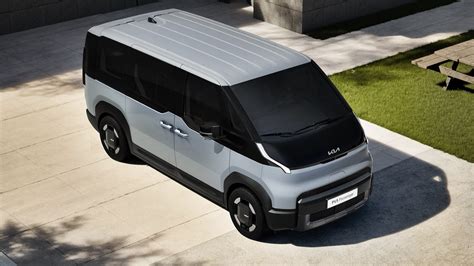
Hi, while looking for a good ev for my family, i came across this new KIA van. Its kinda like the VW ID buzz but seems to have more space. When I saw the wide roof I thought, why not but some solar on top? And with some rough calculation I came up with the following. 3 600w/800w panels which generate roughly 15km of range on an average eu day, would fit on top. This would be perfect for my regular driving needs. Has anyone ever tried to add solar to an ev and has anyone experience with this car?

Just looking for general advice on feasibility of solar mods and the car itself.

top 16 comments
sorted by: hot top controversial new old
[–] artyom@piefed.social 3 points 11 hours ago (1 children)

I came up with the following. 3 600w/800w panels which generate roughly 15km of range on an average eu day

How did you come up with that? Are you accounting for lost generation due to pointing straight up at the sky, and reduced efficiency due to increased aerodynamic drag?

There's a good reason we don't put solar on vehicles, its expensive and there's not really enough space to make much of any difference.

[–] sparkyshocks@lemmy.zip 0 points 5 hours ago (1 children)

Looking at that roof, it looks like it's about 3m x 1.5m, for 4.5 m^2. Typical solar panel gets about 200W/m^2 at max sunlight.

So that's a peak generation of 900W. With a 24 hour day and a capacity factor of 10%, that's about 2.16 kWh of energy per day. For a van like that, with the weight and aerodynamics of a bulky solar system on the roof and the systems for storing that energy in another battery and cleanly providing that power in a way that the car charging system can accept? I'd be skeptical that's good for more than 8km per day, on a sunny day.

[–] artyom@piefed.social 1 points 5 hours ago (1 children)

That peak though. Which you'll realistically never reach, much less for 24 hours...

[–] sparkyshocks@lemmy.zip 1 points 5 hours ago

Yeah, that's why I used a capacity factor of 10%, which is pretty normal for fixed solar panels. That should be enough to account for clouds/weather, nighttime, etc.

[–] hank@programming.dev 3 points 11 hours ago (2 children)

There are some portable solar panels, even ones specifically designed around EVs. But like other folks have said, it is cumbersome. They charge their own battery and then you dump that into your EV while parked. But the energy generated Is pretty minimal.

E.g: https://gosun.co/pages/ev-solar-charger

[–] OccasionallyFeralya@lemmy.ml 2 points 11 hours ago

Also if you end up tacking it on top you might end up losing whatever efficiency gained from the panels to mileage sacrificed by aero loss

[–] doomsdayrs@lemmy.ml 1 points 11 hours ago* (last edited 11 hours ago)

Unlike gas, which involves destroying your fuel source (investment).

A solar roof on a car is an investment that constantly provides consistent albeit fluctuating dividends.

Every cent counts when spanned over years. Especially when its portable.

[–] bjoern_tantau@swg-empire.de 15 points 20 hours ago

Probably easier to hook those panels up to your balcony. You'd charge at home anyways, right?

Are those 15 km under ideal conditions? With static panels you can control those easier. On the car the panels will usually have the wrong angle. Plus the added weight and wind resistance further decreases the effective range they provide.

[–] smuuthbrane@sh.itjust.works 11 points 20 hours ago (1 children)

The big question is how will you integrate that into the van's power system? I doubt four panels will make enough voltage to work with the stock charging system, and even if it did, there will be interlocks preventing you from driving while charging (as it presuumes you're at a stationary charging point).

[–] burble@lemmy.dbzer0.com 4 points 18 hours ago (1 children)

They could connect it to a "solar generator" and L1 charge from that. That's nowhere close to seamless and would be pretty annoying for daily use, but not terrible while camping.

[–] smuuthbrane@sh.itjust.works 3 points 13 hours ago

Yeah, that could work. But definitely going to need some intermediary tech, and integrate it.

[–] blarghly@lemmy.world 6 points 17 hours ago

This is a very common idea when it comes to EVs, and the conclusion we've come to time and again is that the juice isn't worth the squeeze. Even overcoming technical hurdles like how to actually get the power from your panels to the batteries, and installing the panels into the van so it is still aerodynamic, you still have the problem that you simply need more panels in order to get a non-negligible amount of charge in a reasonable period of time. Your calculations are assuming the panels produce 800W of power all the time - but that is the maximum amount they can produce. As soon as anything changes to make power generation less than ideal - change in sun angle, dust accumulation, clouds, etc - you lose power from your calculation. And for the amount of time and money you would spend on this project, your break-even point on electricity cost savings would likely be infinite.

For reference, this is what a solar car designed for the purpose of running off its own electricity looks like:

https://en.wikipedia.org/wiki/Tokai_Challenger

The solution is to simply charge the car from your home solar array. Hopefully your utility/government pays you or gives you credits for excess power you generate, so you can generate during the day when you drive and charge at night. Or you could get a home battery bank. If you don't want to do a full home solar install, you could build a car port out of 2x4s and mount a few panels on top of that as a DIY project.

[–] kboos1@lemmy.world 7 points 20 hours ago

The problem with putting high output panels on a vehicle is weight and durability. The panels plus equipment could add more than a hundred kilograms, ruin the aerodynamics, wear the vehicle out faster, and installation would require heavy modifications inside and out. So your efficiency return would be much less than you think.

Could you do it? Sure, but you would need to be willing to sacrifice a vehicle because no one will want it after it's done, except maybe for someone who wants something to tinker with.

Just a guess but manufactures don't build solar panels into cars for a few reasons.

-Vehicles tethered to a fuel source like gas or electricity keeps people spending money and companies and governments love it when people spend money.

-The vehicle would need to be designed around the solar panels which makes design more difficult and costly.

-The solar panels could act as a back up for running the computer and accessories but wouldn't ever generate enough power for driving, so why bother when they can just make the main battery a little bigger.

[–] hanrahan@slrpnk.net 5 points 19 hours ago

I came up with the following. 3 600w/800w panels which generate roughly 15km of range on an average eu day, would fit on top.

this is southpark underpants gnome level planning, i like it :)

  1. buy an ev and solar panels
  2. ?
  3. profit!

for 2... you're going to need to need to figure out how to trickle charge a massive EV battery, you'll need to disassemble the charging infrastructure onboard the car, redesign it from scratch and build it. You'll probably need to reprogram the onboard computer as well as it will be all integrated.

OR

carry around several extra heavy 200AHr batteries in the back of the van charging off the solar, install an inverter and connect an 8A 220V charger to that :)

I'd suggest an alternative lazy approach, rather them several years learning to be an electrical engineer. Install panels on your roof/balcony at home and feed that into the house/grid and then just charge the car on an off peak tariff.

let us know how you go!

[–] TropicalDingdong@lemmy.world 1 points 15 hours ago

First, solar roofs just don't make sense. Others have covered that here, but it's better to put the solar in a way good for being solar, and leave the vehicle in a way good for being a vehicle.

[–] CompactFlax@discuss.tchncs.de 2 points 19 hours ago

There’s peel and stick panels I’ve seen people put on their overlanding rigs but I’m not sure they make a lot of power. That would be a better option vs a stiff panel because of aerodynamics. But converting that power to be useful to the car is another problem. It needs 220AC or some kind of medium voltage DC and it may also not move if it detects power on those inputs, for safety reasons. Car roofs aren’t oriented in the correct azimuth and inclination most of the time to maximize charging. I’m not sure the ROI is more than “fun”.