this post was submitted on 11 May 2024
217 points (98.2% liked)
[Dormant] moved to !space@mander.xyz
11397 readers
1 users here now
This community is dormant, please find us at !space@mander.xyz
You can find the original sidebar contents below:
Rules
- Be respectful and inclusive.
- No harassment, hate speech, or trolling.
- Engage in constructive discussions.
- Share relevant content.
- Follow guidelines and moderators' instructions.
- Use appropriate language and tone.
- Report violations.
- Foster a continuous learning environment.
Picture of the Day
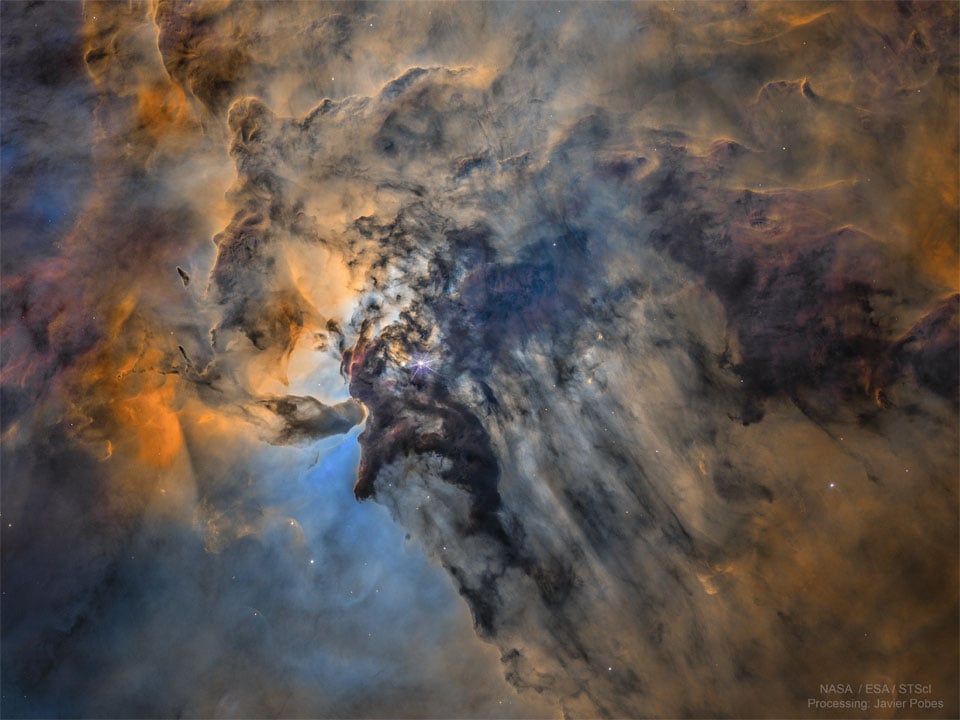 The Busy Center of the Lagoon Nebula
Related Communities
🔭 Science
- !astronomy@mander.xyz
- !curiosityrover@lemmy.world
- !earthscience@mander.xyz
- !esa@feddit.nl
- !nasa@lemmy.world
- !perseverancerover@lemmy.world
- !physics@mander.xyz
- !space@beehaw.org
- !space@lemmy.world
🚀 Engineering
🌌 Art and Photography
Other Cool Links
founded 2 years ago
MODERATORS
you are viewing a single comment's thread
view the rest of the comments
view the rest of the comments
Why would there necessarily be strong infrared emissions? Since a Dyson Sphere is meant to harvest all energy produced by a star, any leakage would be unnecessary inefficiency, wouldn't it?
Because all that energy contains heat as well, and you'll need to balance the heat from your star along with the energy absorbed.
You're never going to get to 100% efficient conversion, so you'll have to radiate away the heat so your sphere doesn't melt or something.
Sure, you won't reach 100%. But say you reach 99.9% - the Dyson sphere should radiate infrared at 0.1% of a normal star, right? It wouldn't necessarily be bright.
Not all heat can be converted to work by the second law of thermodynamics. Now the question is, how hot can the star be for it to sustain life? Can most of its light be UV with very little visible? https://courses.lumenlearning.com/suny-physics/chapter/15-4-carnots-perfect-heat-engine-the-second-law-of-thermodynamics-restated/