This is evident when I show what handwritten Japanese (Kanji only without any Kana) looks like, they still mistake it for Mandarin (due them being logographic), the same applies towards google searches too, as when I type a Japanese word in Kanji (despite having the UI and browser set in Japanese or English) I still get results in Mandarin since all the websites contain the TLD .cn or .tw when I am looking for Japanese websites ending with (.jp).
If a person is clueless about distinguishing the differences between languages (especially ones that look similar when written even though they're different, kind of like when writing in French & English but they're still different languages), then they fall into the trap of "Is that French?" or vice versa for example, when in fact it's written in English. Does this word all look the "same" to you or not when telling the difference between 日本語 or 中文?.
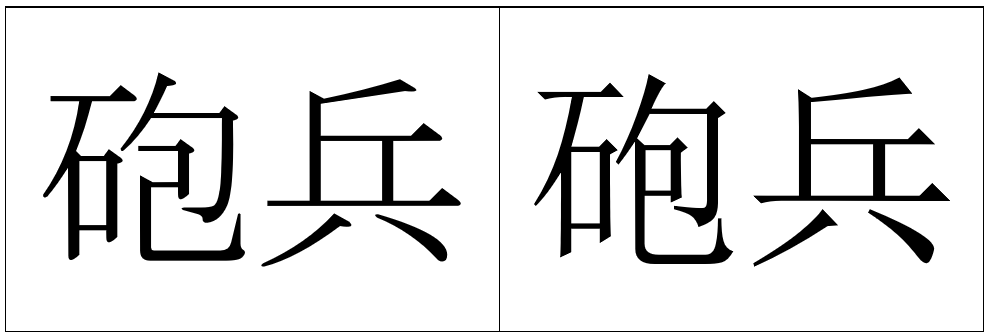
You get the point, I still get comments equivalent to "is that Chinese?" when there's kana present within the sentence (which Mandarin does not have, as they write entirely in Hanzi). Some words are written the same but pronunciation is very different as they're unrelated languages. Does the same thing happen to let's say Norwegian & Danish (or any other European language) since both pairs use similar alphabets and have an identical writing system?
From Japanese or Mandarin, there are characters that look the same but have different pronunciations altogether like:
| - | 日本語 | 中文 |
|---|---|---|
| 擲弾兵 | てきだんへい | Zhì dàn bīng |
| 艦隊 | かんたい | Jiànduì |
| 陸軍 | りくぐん | Lùjūn |
| 神社 | じんじゃ | Shénshè |
| 地獄 | じごく | Dìyù |
Yes, languages get mistaken for each other all the time when one is not familiar with the writing system, and sometimes even when one is. I have struggled to understand posts in Spanish before realising they're actually in Portuguese, which I don't speak. (Also I'm pretty sure Norwegian and Danish are actually the same language).
Can you tell the difference between Telugu and Kannada just by looking at them? How about Arabic and Persian? How about Arabic and Ottoman Turkish? Persian and Kurdish? Yoruba and Xhosa? Ukrainian and Kazakh? Sumerian and Akkadian? Actually, could you tell the difference between Akkadian and Old Persian? They are both written with cuneiform characters, but the characters themselves are apparently as different as hiragana and hangul.
If your sentence is written entirely in Chinese characters, there is no way for somebody unfamiliar with them to determine whether it's Japanese, Mandarin, or Hokkien. And if somebody hasn't seen enough Japanese text to figure out the difference between kana and Chinese characters, they still won't be able to tell the difference.
As to why Google can't tell, Google doesn't actually understand anything. It's based on a massive database of which characters and combinations of characters come next to each other (and there's also some Markov stuff to account for common spelling mistakes). If your search string is made entirely of Chinese characters, it's going to get hits on websites written with Chinese characters, many of which will be in Mandarin. Google.com probably isn't able to detect your UI or browser language settings. To ensure you get results from Japan, try using google.jp instead, as it will prioritise Japanese results.