this post was submitted on 01 Dec 2025
534 points (98.0% liked)
memes
18263 readers
2010 users here now
Community rules
1. Be civil
No trolling, bigotry or other insulting / annoying behaviour
2. No politics
This is non-politics community. For political memes please go to !politicalmemes@lemmy.world
3. No recent reposts
Check for reposts when posting a meme, you can only repost after 1 month
4. No bots
No bots without the express approval of the mods or the admins
5. No Spam/Ads/AI Slop
No advertisements or spam. This is an instance rule and the only way to live. We also consider AI slop to be spam in this community and is subject to removal.
A collection of some classic Lemmy memes for your enjoyment
Sister communities
- !tenforward@lemmy.world : Star Trek memes, chat and shitposts
- !lemmyshitpost@lemmy.world : Lemmy Shitposts, anything and everything goes.
- !linuxmemes@lemmy.world : Linux themed memes
- !comicstrips@lemmy.world : for those who love comic stories.
founded 2 years ago
MODERATORS
you are viewing a single comment's thread
view the rest of the comments
view the rest of the comments
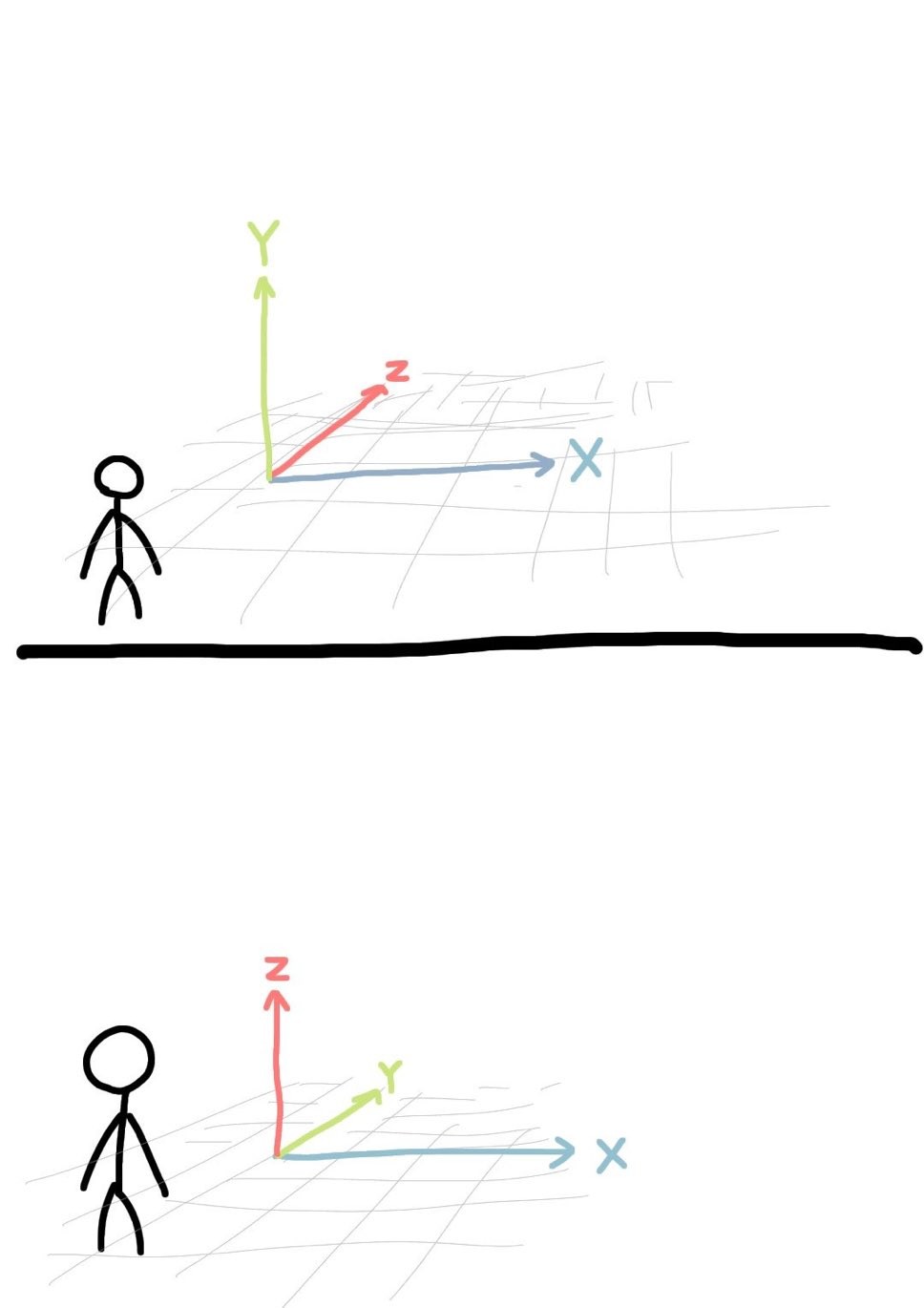
Z is elevation. Any real world application, z goes up down. 3D applications SHOULD use it for elevation. I despise that many do not. It's so fucking confusing. 2D, sure y go brrr. But once that 3rd dimension is added, y needs to take several seats and quit trying to take on dimensions it doesn't have any right to.
Y-up sorta makes sense in games. Imagine a 2D platformer, Y is up and X is horizontal. Now add depth. Instead of flipping axis just use Z for depth.
But in top down 2D games you also use X and Y but now neither is up
True but I think it’s also because of screen coordinates, Y is always the vertical axis in screen coordinates. So programmers translated that to 3D coordinates because in real world space the screen doesn’t lie flat but is up right. It’s probably why Y is up in OpenGL and calls the depth buffer the Z-Buffer.