this post was submitted on 14 Apr 2026
127 points (94.4% liked)
Memes of Production
1590 readers
679 users here now
Seize the Memes of Production
An international (English speaking) socialist Lemmy community free of the “ML” influence of instances like lemmy.ml and lemmygrad. This is a place for undogmatic shitposting and memes from a progressive, anti-capitalist and truly anti-imperialist perspective, regardless of specific ideology.
Rules:
Be a decent person.
No racism, sexism, ableism, homophobia, transphobia, zionism/nazism, and so on.
Other Great Communities:
founded 4 months ago
MODERATORS
you are viewing a single comment's thread
view the rest of the comments
view the rest of the comments
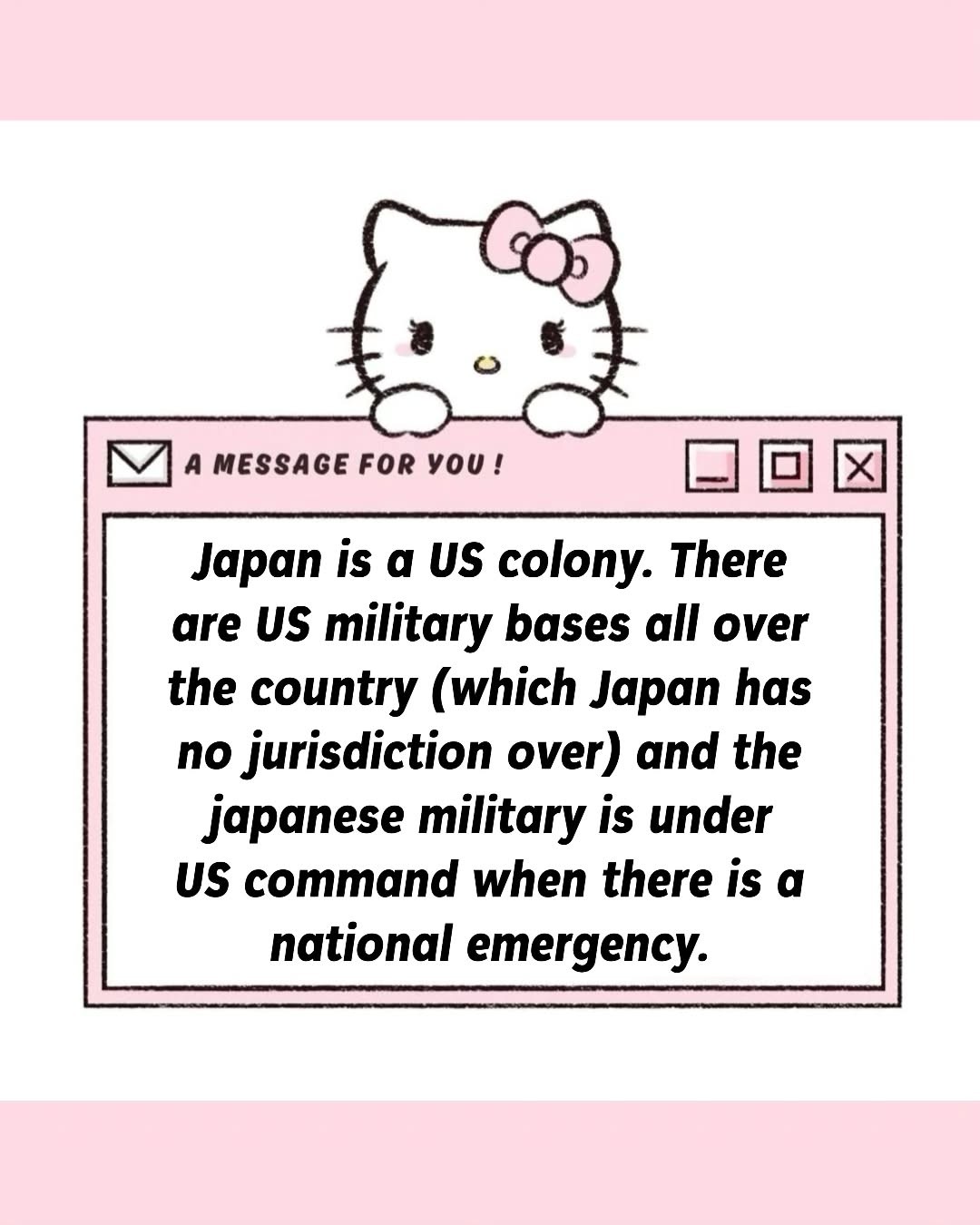
Literally not true 🧐
Just Google: "Is the Japanese military under US command when there is a national emergency?".
"No, the Japanese military—officially known as the Japan Self-Defense Forces (JSDF)—is not automatically under United States command during a national emergency.
Under the current security framework and Japanese law, the JSDF is controlled by the Japanese Ministry of Defense, with the Prime Minister as the commander-in-chief.
Here is the breakdown of the command structure during emergencies:
Independent Command Chains: In an emergency, Japanese and U.S. forces operate under their respective chains of command, cooperating closely as allies rather than as a single integrated force.
Operational Coordination: While not technically under U.S. command, the JSDF is designed for extreme interoperability with the U.S. military. They use a "Joint Operations Command" (established in March 2025) and an "Alliance Coordination Mechanism" to synchronize efforts.
"Rear Support" Role: Japanese law allows the JSDF to provide "rear support" to U.S. forces in regional contingencies, but this is a coordinated activity rather than a command transfer.
Historical Context/Debate: The idea that Japan's forces would fall under a U.S. commander in a crisis is a subject of political debate within Japan, stemming from an unofficial "secret pact" in the 1950s. However, modern Japanese officials have explicitly stated they are not considering transferring command authority to the U.S.
Key 2025/2026 Shift:Japan has established a permanent Joint Operations Command (JJOC) to unify its own branches, allowing it to act more independently, while the U.S. is elevating its own forces in Japan (USFJ) to a "Joint Force Headquarters" to facilitate smoother peer-to-peer cooperation rather than unilateral command.
Did you just copy and paste LLM slop from Google and claim it as fact?
Served in the Navy and was stationed in Japan for three years.
It is not inaccurate.
TLDR: The U.S. is not taking over Japanese assets and under any circumstances barring alien invasion and kaiju. (In the case of kaiju, we should probably operate under Japanese control.)
While we practice/train with the JMSDF, and have ok interoperability, there is zero infrastructure for us to control them.
It would actually hurt us and would be easier to tell them to stay home while we did everything than to try and control both assets at the same time.
However, we can work together, by assigning each service their own responsibilities and let each perform those responsibilities within their own chain of command. That would work peachy.
In that sense, we may have overall strategic command, but the Japanese would absolutely have a seat at the strategic table, and the Japanese would and should take their toys and go home, the minute we asked them to do something against their best interest.
Thanks for that comment. This was such an odd post. Also the other statement in it that Japan has no jurisdiction over US bases is also inaccurate. They are Japanese territory leased to the United States under the U.S.-Japan Security Treaty. While these bases are under exclusive U.S. control and operate under U.S. jurisdiction, they remain part of Japan. It seems posts like these are just intended to increase friction.