Waltstreetbets

82 readers
1 users here now

Anything about stocks, and the economy, and how to gamble with option on it. "Hodl", and "to the moon" meme are welcome, as long it is not another conspiracy about the short squeeze of all time, or whatever bullshit born from "that" stock

Warning: Gambling is an addiction, consult about it if you are concerned.

founded 5 months ago
MODERATORS
1
2
3


I've been thinking of buying shares in an ETF like CTEC (https://www.globalxetfs.com/funds/ctec) with everything that's going on. I'm willing to bet that within the next decade, there will be an acceleration of transitions towards green energy technologies.

What's your opinion on this?

4
5
6


If you asked Ariel Itzhak what the best decision he has ever made is, he would say copying Nancy Pelosi's stock trades.

The former Speaker of the House has garnered a meme-like reputation among retail investors over the years as the most successful stock trader on Capitol Hill. The success of her trades, which aren't placed directly by Pelosi but by her husband, Paul Pelosi, inspired Itzhak to start copying the options bets.

Originally a crypto trader, Itzhak found himself drawn to copy Pelosi after she disclosed an Nvidia options play a few years ago. Over a two-year period, copying Pelosi and members of the Trump administration helped boost his portfolio by nearly 150% to over $1.1 million, a figure Business Insider verified by reviewing screenshots of his brokerage account.

"She never misses," he told Business Insider. "She always does really well on her trades. I thought, 'it's gonna be an interesting experiment to copy her.' I figured, worst case, I'll lose a few $1,000s."

His initial investment that mirrored Pelosi's trades was $38,000, which Itzhak admits seemed like a lot at the time, but three months later, he said it had tripled in value.

In a detailed post in the Reddit forum r/Daytrading, Itzhak provided more insight into what he learned about Pelosi's strategy in the months after his first copy trade paid off.

"I later learned that the reason she uses options is to leverage her picks (she chooses deep in the money which is not insane risk but also not insane reward)," he said. "She then bought more stocks and I copied every single one of her trades and added more cash (around $400k total).

Itzhak didn't strictly copy Pelosi's trades, though. More recently, he started monitoring another trend at the intersections of Wall Street and Capitol Hill, one that gave rise to one of the hottest trades of 2025.

President Donald Trump's focus on strengthening the US domestic supply chains sent several little-known mining and metals stocks soaring last year, as the White House purchased large stakes in publicly traded firms, including MP Materials, Lithium Americas, and Critical Metals.

For Itzhak, monitoring the Trump administration's investments has also been a winning strategy, and he said his White House portfolio is currently outperforming the portfolio based on Pelosi's picks.

Itzhak said that his success with copying White House trades has prompted him to shift some funds out of the Pelosi portfolio. However, he remains focused on her trading activity and continues to let it inform his own.

"She disclosed new trades last month. Most of them are trimming her positions in tech, but one trade that really stood out in my opinion is $1mil purchase in $AB," he wrote on Reddit, referring to the ticker for AllianceBernstein. "It was the only position she added more money to."

The experience has inspired Itzhak to create his own app, Insiderwave, that allows users to track and copy trades from prominent investors.

Other platforms to help traders follow public investors have sprung up, too, and d Itzhak isn't the only one who thinks that copytrading can be useful for retail investors.

"Long term, we really believe that 'picking smart investors' to invest for you should be the way everyone invests," Steven Wang, founder and CEO of the copytrading platform dub, told Business Insider. "There's a reason 70%-90% of all retail investors lose money. Your chances of doing better, while enjoying the ride, are significantly higher when investing alongside someone with a real track record, experience, and an edge."

7


Ayatollah Ali Khamenei was not, it’s safe to assume, a devoted Polymarket user. If he had been, the Iranian leader might still be alive. Hours before Khamenei’s compound in Tehran was reduced to rubble last week, an account under the username “magamyman” bet about $20,000 that the supreme leader would no longer be in power by the end of March. Polymarket placed the odds at just 14 percent, netting “magamyman” a profit of more than $120,000.

Everyone knew that an attack might be in the works—some American aircraft carriers had already been deployed to the Middle East weeks ago—but the Iranian government was caught off guard by the timing. Although the ayatollah surely was aware of the risks to his life, he presumably did not know that he would be targeted on this particular Saturday morning. Yet on Polymarket, plenty of warning signs pointed to an impending attack. The day before, 150 users bet at least $1,000 that the United States would strike Iran within the next 24 hours, according to a New York Times analysis. Until then, few people on the platform were betting that kind of money on an immediate attack.

Maybe all of this sounds eerily familiar. In January, someone on Polymarket made a series of suspiciously well-timed bets right before the U.S. attacked a foreign country and deposed its leader. By the time Nicolás Maduro was extracted from Venezuela and flown to New York, the user had pocketed more than $400,000. Perhaps this trader and the Iran bettors who are now flush with cash simply had the luck of a lifetime—the gambling equivalent of making a half-court shot. Or maybe they knew what was happening ahead of time and flipped it for easy money. We simply do not know.

Polymarket traders swap crypto, not cash, and conceal their identities through the blockchain. Even so, investigations into insider trading are already underway: Last month, Israel charged a military reservist for allegedly using classified information to make unspecified bets on Polymarket.

The platform forbids illegal activity, which includes insider trading in the U.S. But with a few taps on a smartphone, anyone with privileged knowledge can now make a quick buck (or a hundred thousand). Polymarket and other prediction markets—the sanitized, industry-favored term for sites that let you wager on just about anything—have been dogged by accusations of insider trading in markets of all flavors. How did a Polymarket user know that Lady Gaga, Cardi B, and Ricky Martin would make surprise appearances during the Super Bowl halftime show, but that Drake and Travis Scott wouldn’t? Shady bets on war are even stranger and more disturbing. They risk unleashing an entirely new kind of national-security threat. The U.S. caught a break: The Venezuela and Iran strikes were not thwarted by insider traders whose bets could have prompted swift retaliation. The next time, we may not be so lucky.

Read: America is slow-walking into a Polymarket disaster

The attacks in Venezuela and Iran—like so many military campaigns—were conducted under the guise of secrecy. You don’t swoop in on an adversary when they know you are coming. The Venezuela raid was reportedly so confidential that Pentagon officials did not know about its exact timing until a few hours before President Trump gave the orders.

Any insiders who put money down on impending war may not have thought that they were giving anything away. An anonymous bet that reeks of insider trading is not always easy to spot in the moment. After the suspicious Polymarket bets on the Venezuela raid, the site’s forecast placed the odds that Maduro would be ousted at roughly 10 percent. Even if Maduro and his team had been glued to Polymarket, it’s hard to imagine that such long odds would have compelled him to flee in the middle of the night. And even with so many people betting last Friday on an imminent strike in Iran, Polymarket forecasted only a 26 percent chance, at most, of an attack the next day. What’s the signal, and what’s the noise?

In both cases, someone adept at parsing prediction markets could have known that something was up. “It’s possible to spot these bets ahead of time,” Rajiv Sethi, a Barnard College economist who studies prediction markets, told me. There are some telltale behaviors that could help distinguish a military contractor betting off a state secret from a college student mindlessly scrolling on his phone after one too many cans of Celsius. Someone who’s using a newly created account to wager a lot of money against the conventional wisdom is probably the former, not the latter. And spotting these kinds of suspicious bettors is only getting easier. The prediction-market boom has created a cottage industry of tools that instantaneously flag potential insider trading—not for legal purposes but so that you, too, can profit off of what the select few already know.

Unlike Kalshi, the other big prediction-market platform, Polymarket can be used in the U.S only through a virtual private network, or VPN. In effect, the site is able to skirt regulations that require tracking the identities of its customers and reporting shady bets to the government. In some ways, insider trading seems to be the whole point: “What’s cool about Polymarket is that it creates this financial incentive for people to go and divulge the information to the market,” Shayne Coplan, the company’s 27-year-old CEO, said in an interview last year. (Polymarket did not respond to a request for comment.)

Consider if the Islamic Revolutionary Guard Corps had paid the monthly fee for a service that flagged relevant activity on Polymarket two hours before the strike. The supreme leader might not have hosted in-person meetings with his top advisers where they were easy targets for missiles. Perhaps Iran would have launched its own preemptive strikes, targeting military bases across the Middle East. Six American service members have already died from Iran’s drone attacks in the region; the death toll could have been higher if Iran had struck first. In other words, someone’s idea of a get-rich-quick scheme may have ended with a military raid gone horribly awry. (The Department of Defense did not respond to a request for comment.)

Maybe this all sounds far-fetched, but it shouldn’t. “Any advance notice to an adversary is problematic,” Alex Goldenberg, a fellow at the Rutgers Miller Center who has written about war markets, told me. “And these predictive markets, as they stand, are designed to leak out this information.” In all likelihood, he added, intelligence agencies across the world are already paying attention to Polymarket. Last year, the military’s bulletin for intelligence professionals published an article advocating for the armed forces to integrate data from Polymarket to “more fully anticipate national security threats.” After all, the Pentagon already has some experience with prediction markets. During the War on Terror, DARPA toyed with creating what it billed the “Policy Analysis Market,” a site that would let anonymous traders bet on world events to forecast terrorist attacks and coups. (Democrats in Congress revolted, and the site was quickly canned.)

Now every adversary and terrorist group in the world can easily access war markets that are far more advanced than what the DOD ginned up two decades ago. What makes Polymarket’s entrance into warfare so troubling is not just potential insider trading from users like “magamyman.” If governments are eyeing Polymarket for signs of an impending attack, they can also be led astray. A government or another sophisticated actor wouldn’t need to spend much money to massively swing the Polymarket odds on whether a Gulf state will imminently strike Iran—breeding panic and paranoia. More fundamentally, prediction markets risk warping the basic incentives of war, Goldenberg said. He gave the example of a Ukrainian military commander making less than $1,000 a month, who could place bets that go against his own military’s objective. “Maybe you choose to retreat a day early because you can double, triple, or quadruple your money and then send that back to your family,” he said.

Again, we don’t know for sure whether any of this is happening. That may be the scariest part. As long as Polymarket lets anyone bet on war anonymously, we may never know. Last Saturday, the day of the initial Iran attack, Polymarket processed a record $478 million in bets, according to one analysis. All the while, Polymarket continues to wedge itself into the mainstream. Substack recently struck a partnership with Polymarket to incorporate the platform’s forecasts into its newsletters. (“Journalism is better when it’s backed by live markets,” Polymarket posted on X in announcing the deal.) All of this makes the site even more valuable as an intelligence asset, and even more destructive for the rest of us. Polymarket keeps launching more war markets: Will the U.S. strike Iraq? Will Israel strike Beirut? Will Iran strike Cyprus? Somewhere out there, someone likely already knows the answers.

8


Prediction market users have made — and profited from — big bets around the bombing of Iran by the U.S. and Israeli military.

On Polymarket, $529 million was traded on contracts tied to the timing of the attack, according to Bloomberg. An analysis by analytics firm Bubblemaps SA found that six newly-created accounts made a profit of $1 million by correctly betting that the U.S. would strike Iran by February 28 — behavior that could indicate insider trading.

The bets might merely reflect broader speculation about U.S. intentions in Iran, but Bubblemaps CEO Nicolas Vaiman said the circulation of information “involving war or conflict,” coupled with Polymarket’s anonymity, “can create incentives for informed participants to act early.”

Back in January, analytics firm Polysights also noted an apparent spike in bets around the likelihood that Iran’s now-deceased Supreme Leader Ali Khamenei would no longer hold that role by the end of March.

Responding to concerns that such bets might essentially place a financial incentive on assassination, Kalshi CEO Tarek Mansour said, “We don’t list markets directly tied to death. When there are markets where potential outcomes involve death, we design the rules to prevent people from profiting from death.” He added that Kalshi would reimburse all fees from these bets.

9


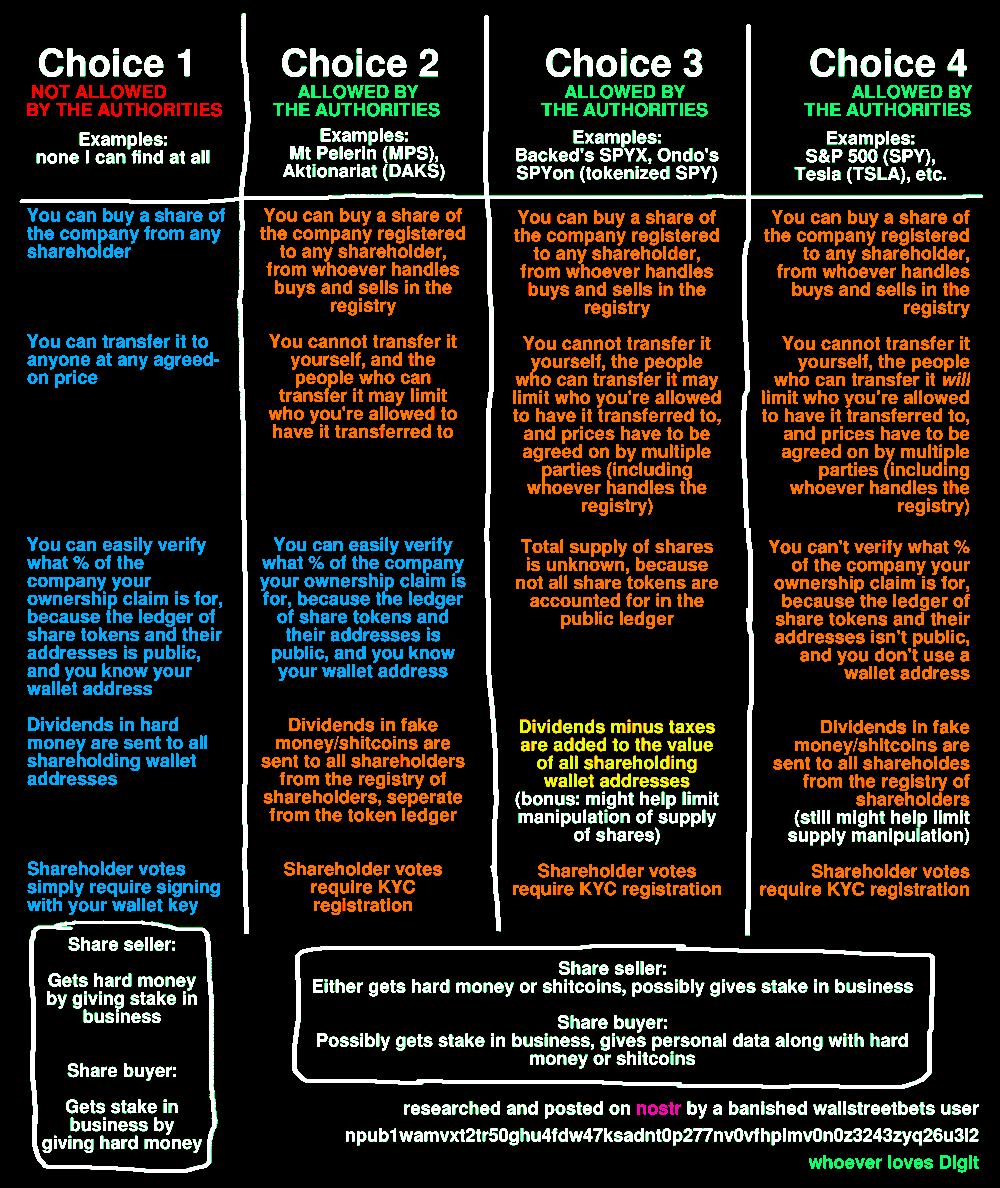
I originally posted this on nostr but this community seems like a good place to post it too

10
11
12


Just wondering, figured it would be a place for degen gamblers to unite in spreading possibly lucrative plays but it would appear to just be reposting random articles

just curious

13


a Getty Images Feb 8, 2026, 11:52 AM GMT+1

Spot prices for silver and gold are stabilizing after a rocky stretch of record gains and losses.
The market volatility has caused headaches for local coin shops that typically buy precious metals.
"If you do this wrong, you run out of capital really fast," one shop told Business Insider.

If January was a party in the precious metals market, February is the hangover.

The per-ounce price of gold topped $5,300 and silver reached nearly $120 at the end of January before tumbling sharply. The stretch of record gains and losses has since stabilized in the early days of February.

"These price moves have done a lot of damage all across the line," HSBC precious metals analyst James Steel told Business Insider.

One type of business bearing the brunt of volatility is local coin shops, where people often trade in gold and silver. High prices have led to a huge influx of people selling, but some shops tell Business Insider they're running out of their usual places to offload excess metals.

As the market was in its tailspin, Tim Heuer said the shop he manages, University Coin & Jewelry in Madison, Wisconsin, was still doing deals.

Heuer said a customer came in to sell some silver when the spot price was $98 an ounce and falling: "By the time I wrote his check, silver was already down $3.50 from the time he walked in the door."

The recent volatility is putting those businesses in an uncomfortable position, beyond quickly changing spot prices that erode profit margins.

Local coin shops play an essential role in the circulation of physical gold and silver by providing a reliable way for individuals to sell their bars, coins, or scrap metal.

If someone bought a gold bar last year from Costco and wants to turn it back into cash, a local coin shop is one of the first places they might go.

And while these shops do turn around and sell some of what they buy, most of the metal is sold to refineries to be melted and minted into new bars or coins. Precious metals refineries are experiencing major backlogs

That flow has been interrupted in recent months as the run in gold and silver prices has encouraged more people to trade in their metals, leading to a backlog of raw materials at refineries.

Jarret Niesse, president of Precious Metal Refining Services in Chicago, said his company stopped buying scrap silver back in October, when the price crossed $50 per ounce, sparking a frenzy of people trading in old silverware, platters, and other tchotchkes that had been gathering dust.

And the market has only gotten wilder since then.

"This entire crazy silver move that has happened, we have been sitting on the sidelines," he said.

Refineries like Niesse's are one step in the process. Much of the product they melt down gets further refined by other mints and exported to Asian markets, where demand for bars and coins is higher. With so much gold and silver to process, those refineries have also stopped buying, thereby cutting into the cash flow of local coin shops.

"When the guys at the top say they're going to open the doors and start accepting more material, the guys in the middle, like me and my competitors, will send in," Neisse said. A balance sheet balancing act

Due to their role in their local markets, reputable coin shops can't simply stop buying altogether. They're finding ways to adjust, but it's a tricky balance.

"If you do this wrong, you run out of capital really fast," said Tom Spoerl, manager at Rick's Olde Gold, also in Madison.

It's not the kind of business where tapping debt or credit from a bank makes real sense, either.

"You don't want to hold metal and finance it for any length of time," HSBC's Steel said.

Both Spoerl and Heuer's shops have recently started instituting limits on how much they'll buy from a single person in a day, a move that they say allows them to serve more customers and get people the cash they might need for expenses like annual tax payments or medical bills.

It's anyone's guess what prices will do in the coming days and weeks, but Spoerl and Heuer said they'll keep trying to thread the needle between serving customers and not overstretching their balance sheets.

"For us to stop buying now would be a little odd," Spoerl said. "This is something that we haven't seen before, so it's just kind of going with the flow and figuring out what to do in the moment."

Heuer, meanwhile, is thinking long-term: Gold is still up 76% and silver is up 147% from a year ago.

"If you look at a one-year, short-term investment, you still almost tripled your money," he said of silver. " The cost average ratio is still splendid."

14
15
16
17
18


Looks like stagflation is now the market wisdom?

19


$unh showed their earning a few day later.. they were very bas and stock is down

20


Last week, when I was tracking Coinbase’s opposition to the Clarity Act, I kept hearing the same fear from worried DC insiders: The crypto industry was running out of time to pass a bipartisan market structure bill that would actually give them a favorable outcome. The midterm elections are imminent, and Congress will switch to campaign mode in the upcoming weeks, meaning policymaking and bipartisanship will take a backseat to reelection priorities. To put it in private sector parlance, there will be guaranteed personnel turnover, and their replacements may not be quite as friendly to the crypto industry.

But to put it in political terms, the Democrats are likely to gain a lot more power, and the Republicans are about to lose it. Historical statistics almost guarantee it: In 90 percent of the midterm elections over the past 80 years, the incumbent president’s party lost seats in the House. Every president since Bill Clinton has lost both the House and Senate in the first two years of their term. Midterms are, more or less, a referendum on the president, and the less popular a president is, the more seats his party ends up losing.

Given this trend, Coinbase has taken a huge gamble: that crypto’s allies would remain in Congress, with the Republicans nudged along by President Donald Trump, and that the Democrats who are hostile to crypto, like Rep. Maxine Waters (D-CA) or Sen. Elizabeth Warren (D-MA) wouldn’t seize the policy wheel. They had two allies speaking on their behalf, too: White House AI and crypto czar David Sacks, and the president’s son, Eric Trump, who told a crowd at the World Economic Forum in Davos, Switzerland, that the banking industry was responsible for Clarity stalling.

Then ICE agents killed an ICU nurse in broad daylight during an anti-ICE protest in Minneapolis on Saturday. And as the country erupted in fury, politics took over the US Capitol, and policy was kicked to the backburner.

In response to Alex Pretti’s death and ICE’s continued presence in Minneapolis, Senate Minority Leader Chuck Schumer (D-NY) announced that the Democrats would not vote for any budget that continued to fund ICE at the Department of Homeland Security, setting up the possibility of a partial government shutdown. Crucially, several moderate Senate Dems revoked their support as well, including Sen. Patty Murray (D-WA), the top Democrat negotiator for the current funding package. Although she’d initially been urging her colleagues to vote for the bill, Murray announced on Sunday that she was reversing course. “Federal agents cannot murder people in broad daylight and face zero consequences,” she wrote on X.

Partisanship had already started leaking into the Clarity debate, said Cody Carbone, the CEO of The Digital Chamber, a major digital asset and blockchain industry trade association in Washington. Most of the opposition to the last Clarity draft came from Democrats, as well as two Republicans who represented states with large banking industries. (One of them, Sen. Thom Tillis of North Carolina, is retiring this year due to his opposition to Trump.) But Carbone raised concerns that Pretti’s death would prompt each party to become more hardline, both in the Senate and the House (which would have to review the bill again if the Senate made substantial changes). More floor time would be dedicated to deeply partisan, existential battles, from government shutdowns to hearings. And crypto was in danger of being lost in the fold, to the detriment of both parties.

“Crypto holders are super intense about crypto. They’re single-issue voters, and they vote with their wallets,” he told me, noting that while they tended to hold Democrat-leaning views, they overwhelmingly voted Republican because they perceived the party to be friendlier to the industry. “If you look at some of the political dollars that the crypto industry gave last election, and some of the enthusiasm from crypto voters, it can swing elections.”

The crypto sausage-making resumes this week when the Senate Agriculture Committee, which regulates commodities, convenes on Thursday for its own markup of the Clarity Act. (The Banking Committee, which regulates securities, seems to be in a stalemate.) Below, Carbone and I chat about what crypto lobbyists are hearing in the smoke-filled backrooms, which Senators are being wooed by the banks, and a doomsday scenario (for the industry) in which the Democrats win either the House or the Senate before Clarity is passed. “I imagine there’ll be a lot of subpoenas and they’ll want to look into the Trump family’s dealings around crypto,” he predicted. “There’s not going to be any interest in passing crypto legislation that will help in terms of adoption.”

“I think we’ll be kicking ourselves if we get a Democratic Congress, and then we can’t get anything through”

This interview has been edited for clarity and length.

So let’s summarize what’s causing the bill to be stuck.

I think the biggest issue right now holding up the bill is whether stablecoin issuers are going to be able to continue to issue rewards to consumers. So right now, if you are on Coinbase and you’re holding USDC, you get 3.5 percent from your holdings in terms of rewards.

Is it like a cashback program, or an interest payout?

Essentially, it’s like an interest. That is what the bank lobby is very upset about, and that is who is pushing back against Clarity. They are concerned that if stablecoin issuers, or third parties that are holding stablecoins like exchanges, are passing along the interest to consumers, that will lead to a bank deposit flight — that your mom and dad, whomever, will stop going to their community or regional bank to hold their money, because at that bank, they’re only getting .001 percent interest yield. They may start holding their savings in stablecoins because they’re getting 3.5 percent or 4.5 percent, or just higher interest rates overall, through these rewards.

That’s way higher than a traditional bank interest rate.

Way higher. Right now, under the GENIUS Act, it is not prohibited to offer these rewards. It is prohibited to offer yields. So the banks are calling it a loophole. Now, there’s nothing in the bill that prohibits the banks from offering rewards or higher interest rates, but that is what’s holding up market structures. The banking industry is saying, The only way we can prohibit stablecoin issuers, or anyone holding stablecoin offering these rewards, is to have it addressed now in market structure legislation. So they have lobbied really, really hard to get a full prohibition on rewards in this bill. 


That’s Coinbase’s number one issue with this, and it’s the number one reason that this bill, or at least the markup at Senate banking, didn’t go forward two weeks ago. There wasn’t direct alignment, even between Republicans — but especially between Republicans, Democrats, and the members of the committee and the crypto industry — on what to do and how to solve this issue.

How much exactly does Coinbase stand to lose if this provision goes through?

It would be a huge detriment to their business. It’s not their whole business, but there’s a massive appetite — and I’m sure there’s a massive user base on Coinbase right now — for people to go in and to hold and buy stablecoins because of the rewards. I mean, I am someone who has moved their savings from a traditional bank to USDC because I get 3.5 percent back versus getting .001 percent. I think it’s a big use case for stablecoins overall, especially as we’re still in this nascent period where we just passed the first regulatory framework [with the GENIUS Act]. There’s still not mainstream adoption of stablecoins, but there could be very, very soon, not only from business to business, but business to consumer. 


One of the big concerns I was hearing about this bill, even before the shooting happened, was that there was only a limited amount of political runway to get this bill done before the election season started. Do you think that a lack of partisanship would impact the passage of this bill?

It has to be bipartisan. The only way this bill can pass the Senate floor is if they get 60 votes, so they will need at least six Democrats. There’s a group of 12 Democrats who have earnestly been working day by day with a majority of Senate Republicans to get this done. There were over a hundred Democrats in the House who supported it, so this should be a bipartisan issue.

The Democrat negotiators have gotten a lot of what they’ve asked for, at least in the Senate banking bill, so I’m hoping that they can come to the table and say, You know what?
We want to support this, and we’re gonna vote yes. Even though it is a completely partisan climate, this is one of the few issues that could be bipartisan, and it has been demonstrated to be bipartisan. Even this year in the Senate, with the GENIUS Act’s passage, and then the House with the Clarity and GENIUS acts’ passage.

But politics trumps policy, and the closer and closer that we get to November and election day, the harder it is to put policy first and to try to get this bill done. So I’m really targeting the end of this quarter, early in the second quarter, to get this bill done and to the president’s desk. But then it gets much, much harder.

What does crypto look like as an issue going into the midterm elections? Like, is it too closely tied with MAGA and Trump, or will it be less of a factor that drives voters’ decisions?

Well, it’s really interesting. When you talk to the average voter, it’s not the number one issue that comes out, especially in today’s climate. But we conducted a survey at the end of last year where we looked at the political leaning of crypto holders. They actually lean left, and they tend to be more Democratic-leaning or have historically supported Democrats. However, crypto holders are super intense about crypto. They’re single-issue voters, and they vote with their wallets. So even though they tend to lead politically left, they’ve been voting Republican because they perceive Republicans to be more supportive of crypto.

I’m hoping that will illustrate to both Republicans and Democrats that there is a voter base out here that they can get. It’s a small voter base, but if you look at some of the political dollars that the crypto industry gave last election, and some of the enthusiasm from crypto voters, it can swing elections. The crypto vote will really be dictated on: Are we going to get market structure legislation? Is that going to be an issue that’s still looming in November? If market structure passes in the next few months, there’s not as many hot-button crypto issues that need to be addressed. So it’s not a huge ballot issue, but we’re getting to the point where crypto issues are becoming more woven into the fabric of economic issues with the country.

Going back to Congress: What should one be on the lookout for during the Agriculture markup?

Number one is what [New Jersey Democratic Sen.] Cory Booker does. So [Minnesota Democratic Sen. Amy] Klobuchar, the ranking member, delegated the task of negotiating this bill with the Chairman [Arkansas Republican Sen. John Boozman] to Booker.

Klobuchar is probably busy right now.

She’s quite busy. So Booker has been working earnestly with the chairman. It has been the Senate Ag Committee’s stated intention from the start of this Congress: We want to have a bipartisan product. That’s really important to us. That manifested itself in a bipartisan discussion draft that came out a few months ago. However, the most recent text that came out last week was the first product that came out that was not bipartisan. Democrats said, Hey, we’re not signing onto this. However, we’re continuously working with Republicans to get to yes.

So, as of right now, as we sit here 72 hours before the markup, has that changed since the text was released last week? Has Cory Booker come on board? Can they broker an agreement? What we have heard from other Democrats on the committee is that they’re not going to do anything without Cory Booker’s blessing. If Cory Booker says he’s a yes on this, then I imagine a big portion of the Senate Democrats vote yes.
If Cory Booker says he’s a no, then I imagine it’s going to be a partisan vote, and the bill will pass out of committee with just Republican supporters.

Let’s game out a situation where either the House and/or Senate is taken by the Dems. Exactly how much will the partisan makeup of a chamber impact whether this bill comes through again?

Just based on the people in power on the Democratic side for the committees of jurisdiction, it’ll mean a lot. If you look at the House Financial Services Committee, [California Rep.] Maxine Waters, who would take back over as chairwoman, is not a fan of this technology. So that makes it difficult right out of the gate to move this through. Same thing in Senate Banking. It’s almost even worse for the crypto industry, because [Massachusetts Sen.] Elizabeth Warren is a ranking member and would become the chairwoman.

If either of those chambers flip, I don’t see how the Clarity Act would be possible, because those two committee chairs will not try to move these issues through. Their focus will be on enforcement. I imagine there’ll be a lot of subpoenas and they’ll want to look into the Trump family’s dealings around crypto. There’s not going to be any interest in passing crypto legislation that will help in terms of adoption. 


On the flip side of that, who does the banking industry have on their side? 


I would say most of the Democrats right now. And then there are a few Republicans who are very concerned about what the banking industry is saying because they represent a large population of community, regional or large banks. [Republican Sen.] Thom Tillis represents a huge banking capital in Charlotte, North Carolina. He’s been very concerned about what rewards will do for deposit flights. We’ve heard from [Alabama] Sen. Katie Britt and she’s been very concerned about what her community banks are saying about how stablecoins could outcompete them.

Again, my counter to all of them is that there is nothing in this bill that prohibits the banks from issuing their own stablecoins and offering rewards and competing with crypto exchanges. To me, this is all about competition and trying to keep a competitive moat. But there are Republicans who are very concerned and at the negotiating table. They are always very clear that they’re not anti-crypto and they’re not anti-stablecoins, but they want to make sure that the banks are protected. So hopefully we find a compromise soon. I just still think we’re in that limbo where no one knows what that compromise is yet. 


Has Coinbase indicated anything that would bring them back to the table yet? 


Nothing I’ve heard directly from Coinbase. They would know better than I. But I’m hoping, as this bill continues to improve, they are one of, if not the largest, names in crypto, and that they will find that a good bill is better than no bill. I understand everyone saying out there no bill is better than a bad bill. I don’t disagree, but we need to be at the negotiating table to improve this bill, because we want a bill, and I think we’ll be kicking ourselves if we get a Democratic Congress, and then we can’t get anything through, and then maybe it’s a Democratic administration. Who knows? We’d be reliving the Gary Gensler era of the Biden administration all over again, and we would be sitting here being like, Man, I really wish we’d gotten that bill done in 2026. 

21
22
23
24
25
view more: next ›