otherworldly
66 readers
1 users here now
Your hub for paranormal, conspiracy, urban explore and extraterrestrial. We also post about unsolved murders, hidden technologies, and any related subjects. Have fun, be nice and enjoy the memes as well.
founded 2 months ago
MODERATORS
1
2
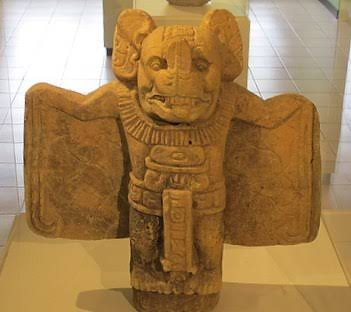
The Camazotz is recorded in the Kʼicheʼ Maya language, its name derived from kame (death) and sotz (bat), and appears in the Popol Vuh, a text widely known in Aztec territories, as a servant of the Lords of Xibalba, the underworld. Within that account, the Hero Twins, Hunahpu and Xbalanque, are compelled to spend a night in the Zotzilaha, identified as the House of Bats, where they conceal themselves inside their blowguns for safety. During the night, Hunahpu raises his head to determine whether dawn has come and is immediately struck and decapitated by a Camazotz, which carries the head to the underworld ballcourt for use as a ball.
In visual representation preserved in codices and pottery, the figure is depicted with a humanoid body and the head and wings of a bat. The wings are described as resembling flint or obsidian blades, producing a metallic or clashing sound in flight, while the nose is rendered in a leaf-shaped form consistent with features observed in bat species of the family Phyllostomidae. These features establish a hybrid form combining human structure with bat morphology.
The figure has been associated in later interpretation with the extinct giant vampire bat, Desmodus draculae, identified through paleontological remains. This species is estimated to have been approximately twenty-five to thirty percent larger than the modern common vampire bat, with a wingspan approaching two feet, and is understood to have existed alongside early human populations in Mexico and Central America before becoming extinct within the last several thousand years. The temporal overlap has led to the suggestion that accounts of Camazotz may preserve an exaggerated cultural memory of such animals.
Reports of large bat-like or humanoid flying figures have persisted in modern accounts. In 1975, in what has been referred to as the Rio Piedras incident, sightings in Puerto Rico and Mexico described a “bird-man” or large bat-like figure associated with attacks on livestock, in which blood was reportedly drained through two puncture wounds, preceding later reports commonly associated with the Chupacabra. In January 2004, a Mexican police officer, Leonardo Samaniego, reported that a flying humanoid figure dressed in black with large claws fell from a tree and struck his patrol vehicle in Guadalupe, Nuevo León, after which he lost consciousness; the incident was reported in local media. In 2020, a widely circulated photograph depicting a large bat hanging from a ceiling was identified as a Giant Golden-Crowned Flying Fox, though its circulation in Mexico contributed to renewed association with the Camazotz figure.
The figure persists in cultural representation and record. Bat-associated deities were identified in the Aztec capital of Tenochtitlan under the name Tlacatzincantli and were associated with fertility and sacrifice, linked to cave environments regarded as generative spaces and described as the “womb” of the earth. In modern reinterpretation, including a 2014 commission by Warner Bros. and DC Comics for the seventy-fifth anniversary of Batman, Mexican artist Christian Pacheco produced a redesign incorporating Mesoamerican glyphs and stone-like textures. The figure has also been described in cultural interpretation as representing the “night-sun” or the transition between life and death. Explanatory frameworks have varied, including mythological, biological, and speculative interpretations, the latter proposed within “Ancient Astronaut” circles and drawing on reported characteristics such as metallic wing sounds and precision in attack, though such interpretations remain unverified.
3
4
5
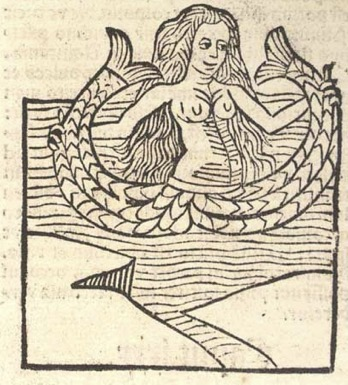
The logo of Starbucks is widely recognized, yet its origins are often misunderstood or misrepresented. At the center of the design is a two-tailed siren, a figure drawn from European maritime folklore rather than any ancient Near Eastern religion. Sirens, in myth, were creatures of the sea known for their ability to lure sailors with irresistible songs. Over time, especially in Northern European art, they came to resemble mermaids and were sometimes depicted with two tails, which allowed artists to create symmetrical and visually striking compositions.
When Starbucks was founded in Seattle in 1971, the company’s creators deliberately chose imagery connected to the ocean. Seattle’s identity as a port city and coffee’s long history as a traded commodity influenced this decision. The founders found inspiration in a 16th-century Norse woodcut of a twin-tailed siren, which carried the sense of mystery, distance, and allure they wanted the brand to embody. The company’s name itself also reflects this maritime theme, being taken from Moby-Dick, a novel centered on seafaring life.
The original logo was far more detailed than the modern version, rendered in brown and showing the full figure of the siren. Over the decades, it was gradually simplified, shifting to green and focusing more closely on the face to create a cleaner and more adaptable design. Despite these changes, the core symbol has remained consistent.
Claims that the logo represents ancient figures such as Inanna are not supported by historical evidence. The design is firmly rooted in European artistic tradition. Ultimately, the Starbucks logo is not a hidden symbol but a deliberate, stylistic choice tied to maritime history and global trade.
6
7
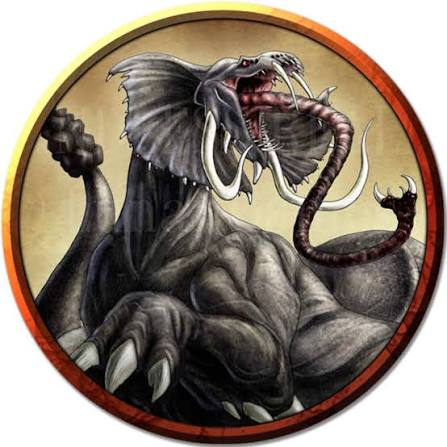
Deep within the remote caves of Richtersveld, legend speaks of a creature older than memory itself—the Grootslang, a cryptid said to predate even the earliest animals. Its name comes from Afrikaans, meaning “great snake,” but descriptions of the creature are far more disturbing than a simple serpent.
The Grootslang is often depicted as a hybrid of an elephant and a snake, combining massive size, thick limbs, and a long, coiling body. Some accounts describe it with an elephant’s head and trunk attached to a serpentine form, while others portray it as a colossal snake with tusks and immense strength. Regardless of the variation, every version agrees on one thing: it is enormous, ancient, and incredibly dangerous.
According to local folklore, the Grootslang was one of the first creatures created, so powerful that even the gods feared it. Unable to control its strength, they split it into two species—the elephant and the snake—yet one original Grootslang is said to have survived. That survivor retreated into deep caverns, where it hoards vast quantities of diamonds, making its lair both a place of terror and temptation.
Stories warn that the Grootslang is intelligent and capable of bargaining. Some tales claim it will spare a human life in exchange for gems or other offerings, while others insist it simply kills anything that enters its domain. Explorers and treasure seekers who venture too far into certain caves are said to vanish without a trace, fueling the legend further.
Unlike many cryptids, the Grootslang represents something primal—unchecked power combined with intelligence. It is not just a beast hiding in the dark, but a relic of a time when the world was less stable, and far less forgiving to those who wandered too deep.
8
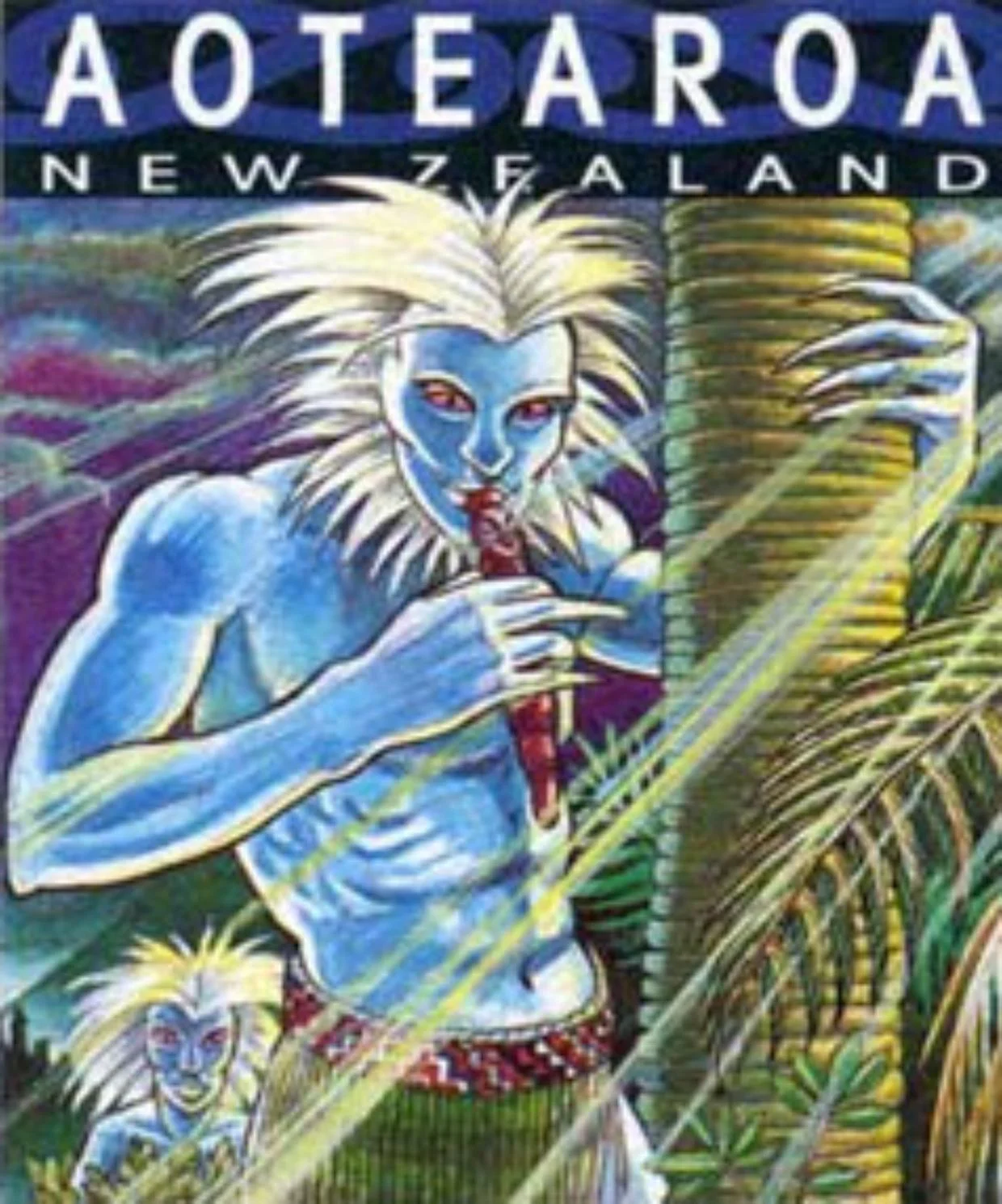
Another lesser-known but deeply unsettling cryptid from New Zealand is the Patupaiarehe, a mysterious race of pale, forest-dwelling beings from Māori tradition. Unlike the more grounded, territorial taniwha, these entities are elusive, almost otherworldly—closer to spirits than creatures, yet still described with physical traits.
Patupaiarehe are said to live in dense forests and mountainous regions, especially in areas frequently covered by mist or low cloud. They are often described as having very light skin, sometimes with reddish or blond hair—features that sharply contrast with the native population, which may explain their mythic “otherness.” They avoid sunlight, emerging primarily at dawn, dusk, or during heavy fog, when visibility is low and the boundary between worlds feels thin.
Encounters with Patupaiarehe are rare but consistent in tone: disorientation, silence, and an eerie pull deeper into the wilderness. Some stories claim they use music—soft flute-like sounds—to lure humans off paths. Those who follow may become lost for hours, days, or never return at all. Others report being briefly taken, only to reappear later with no memory of what occurred.
Despite their danger, Patupaiarehe are not always portrayed as malicious. In some accounts, they guard sacred knowledge or hidden places, punishing only those who trespass or fail to respect the land. In others, they are simply indifferent—operating on rules that humans do not understand.
What makes the Patupaiarehe especially disturbing is their subtlety. There is no dramatic attack, no visible threat. Just mist, silence, and the quiet sense that something is watching—and waiting for you to step off the path.
9
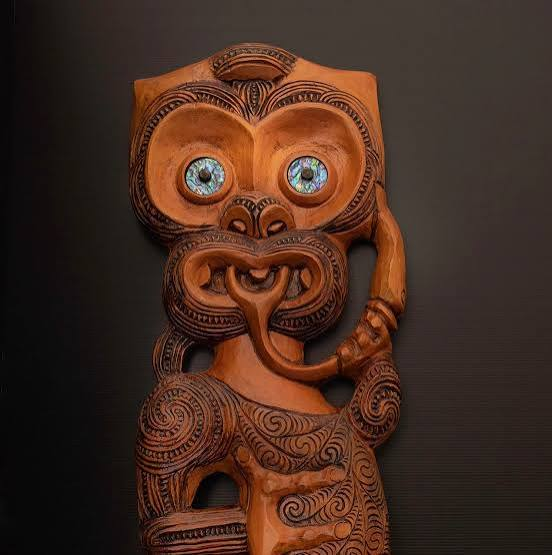
In the mythology of the Māori, few cryptids are as complex or culturally significant as the taniwha. Unlike simple monsters, taniwha occupy a shifting role—at times protectors, at times destroyers—deeply tied to the land, water, and identity of the people who tell their stories.
Taniwha are said to dwell in rivers, lakes, caves, or along coastal waters. Their forms vary widely depending on the region and account. Some are described as massive reptilian creatures, resembling serpents or dragons with ridged backs and glowing eyes. Others take on more abstract or spiritual shapes, existing as unseen forces that influence the environment. This variability reflects their nature: they are not just animals, but manifestations of power tied to specific places.
Traditionally, taniwha serve as guardians of particular tribes (iwi) or territories. In these roles, they protect sacred sites and warn of danger. A taniwha might signal an approaching enemy, a natural disaster, or a violation of cultural boundaries. However, when disrespected or angered, these beings can become deadly—capsizing canoes, dragging people underwater, or bringing misfortune to entire communities.
What makes the taniwha especially compelling is how it blurs the line between myth and lived reality. Even in modern New Zealand, reports and cultural acknowledgments persist. There have been instances where construction projects were altered or delayed out of respect for taniwha believed to inhabit certain areas, reflecting an enduring respect for indigenous belief systems.
Ultimately, the taniwha is not just a cryptid in the Western sense. It is a cultural force—one that embodies both the protective and destructive potential of nature, and the deep spiritual connection between people and the land they inhabit.
10
11
12
13
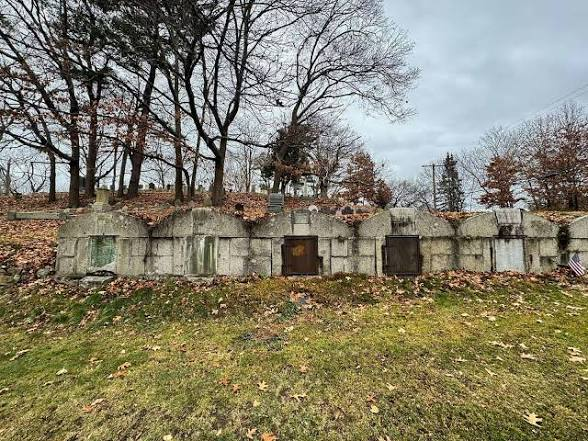
In Weymouth, the oldest stories are not tied to a single building, but to the ground itself—specifically the area around the Old North Cemetery and the nearby shoreline where the early Wessagusset Colony once stood.
The origin of the legend traces back to 1623, during a period of tension between English settlers and the local Massachusett people. Historical accounts describe a confrontation led by Myles Standish, resulting in the deaths of two indigenous leaders, commonly named as Pecksuot and Wituwamat. Their deaths were not treated quietly. According to records and later retellings, their heads were taken as a warning, an act meant to assert control rather than resolve conflict.
That part belongs to history.
What follows belongs to the town.
Over time, reports began to surface of figures moving through the cemetery grounds and the surrounding woods—most often described as two shadowed forms, walking without heads. The sightings are not dramatic. There are no chases, no direct confrontations. The figures are seen at a distance, moving slowly, sometimes near the tree line, sometimes closer to the older graves. They do not interact. They do not acknowledge. They move, then they are gone.
The story gained renewed attention in the early 1800s when a man named Edward Blanchard, digging a foundation near the cemetery, reportedly uncovered two headless skeletons. There is no confirmed record tying the remains directly to the events of 1623, but the timing and condition were enough to fuse the discovery with the existing legend. For many in the area, it wasn’t proof—it was confirmation.
The land itself carries the story forward. The cemetery sits near the water, and the surrounding woods break the wind just enough that sound behaves strangely. Footsteps can seem closer than they are. Movement at the edge of vision holds longer than it should. People walking alone in the area, especially near dusk, often describe the same thing: not fear at first, but awareness—like something else is present, moving on its own path.
Other locations in Weymouth carry their own smaller stories. The Emery Estate has been the subject of repeated reports involving shadow figures and physical sensations that visitors struggle to explain. At the Fogg Library, local tours reference long-standing rumors of unexplained activity tied to the building’s upper floors. Nearby, the Abigail Adams Birthplace draws quieter attention—less about sightings, more about a consistent sense of presence noted by visitors.
None of these accounts are verified in any formal sense. There are no confirmed identities, no physical evidence that ties what is seen or felt directly to the events described. But the consistency of the stories—spread across generations, locations, and different people—has kept them active.
In Weymouth, the oldest legend doesn’t rely on a house or a single moment. It rests in a place where history left something unresolved, and where, according to those who pass through it, that absence still moves.
14
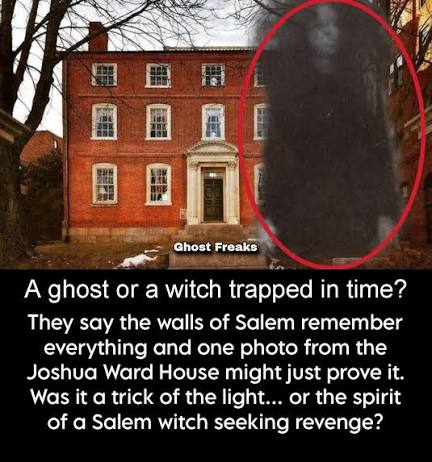
The Joshua Ward House is located in Salem, a city closely associated with the Salem Witch Trials. The building itself dates to the late 18th century and was constructed for Joshua Ward, a prominent local merchant. Its reputation as a haunted location is tied less to the structure alone and more to the history of the land it occupies.
Before the current building was constructed, the site was associated with George Corwin, who played a central role during the witch trials. Historical records indicate that Corwin was responsible for interrogations and enforcement during that period, and his name became closely linked with the events that took place in Salem in 1692. Over time, stories developed suggesting that his presence, or something connected to him, remained tied to the location.
Reports connected to the house are generally consistent in tone, though not in specific detail. Individuals who have worked in or visited the building have described hearing footsteps when no one else was present, doors moving without clear cause, and objects occasionally found out of place. Some accounts describe brief sightings of a figure in period-style clothing, most often near stairways or hallways, though these sightings are not consistent enough to form a single, confirmed description.
One area frequently mentioned is the lower level, where some people report a noticeable shift in atmosphere, including a sense of unease or the feeling of being observed. Others have described cold spots or unexplained sounds that do not match the building’s layout.
Despite these reports, there is no verified evidence confirming paranormal activity at the site. The building is old, and factors such as structural settling, acoustics, and lighting conditions can account for many of the experiences described. In addition, Salem’s historical association with the witch trials contributes to expectations that may influence how events are perceived.
Images circulated online, including those claiming to show figures or apparitions within the house, have not been verified. These images typically lack source information and can often be explained by motion blur, lighting artifacts, or other visual distortions.
Today, the Joshua Ward House remains a historic property and a known location within Salem’s broader collection of ghost stories. Its reputation is based on a combination of documented history and repeated anecdotal experiences, rather than confirmed supernatural evidence.
15
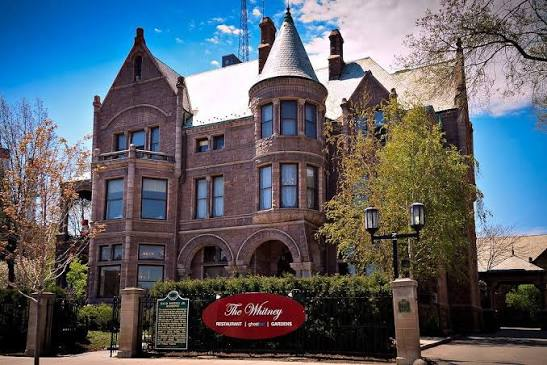
One of Detroit’s most well-known ghost stories is tied to The Whitney, a massive Romanesque mansion built in 1894 for lumber baron David Whitney Jr.. Located on Woodward Avenue, the house is known today as an upscale restaurant, but its reputation extends beyond its architecture and history.
Over the years, staff and visitors have reported a consistent pattern of unexplained occurrences inside the building. These reports are not tied to a single dramatic incident, but rather to repeated, smaller experiences that follow similar themes. The most frequently mentioned involves the sensation of being watched or accompanied when moving through certain parts of the mansion, particularly the upper floors and the grand staircase.
Employees working late shifts have described hearing footsteps on the stairs when no one else was present. In some cases, doors have been reported to open or close on their own, and lights have been seen turning on or off without explanation. Objects—particularly small items like utensils or bar tools—have occasionally been found moved from where they were left.
A commonly repeated detail is the presence of a figure believed to be connected to the Whitney family. Some claim to have seen a man in period clothing near the staircase or standing briefly in hallways before disappearing. Others describe a female presence, often associated with the upper rooms, though sightings vary and are not consistent enough to form a single, clear description.
One of the most specific patterns involves the elevator, which has reportedly been known to stop on floors where no button was pressed. Staff have also noted that activity tends to increase when the building is less occupied, particularly late at night after closing.
Despite these reports, there has been no definitive evidence to confirm any paranormal explanation. The building itself is old, with complex wiring, aging structural elements, and acoustics that can carry sound in unusual ways. These factors provide possible explanations for some of the experiences described.
Still, the consistency of the accounts over time has kept the mansion’s reputation intact. The reports come from different individuals—staff, guests, and visitors—many of whom were not familiar with the building’s reputation beforehand. This has contributed to the idea that whatever is being experienced is not purely the result of expectation or suggestion.
Today, The Whitney operates as both a restaurant and a local landmark. Its ghost stories are part of its identity, but they are not presented as proven fact. Instead, they exist alongside the building’s documented history, forming a layer of local folklore that continues to be repeated, observed, and questioned.
16
18
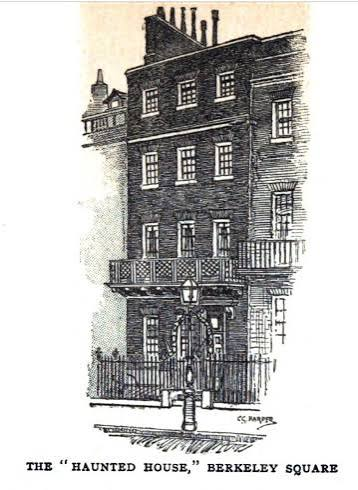
The Room at the Top of Berkeley Square
In the 19th century, a townhouse at 50 Berkeley Square in London developed a reputation that set it apart from the rest of the quiet, wealthy neighborhood. While the exterior appeared no different from the surrounding buildings, reports began to circulate about a particular room on the upper floor that people refused to occupy.
Accounts from the period describe the space as consistently unsettling, even to those who did not believe in anything supernatural. Visitors reported a strong sense of unease upon entering, often accompanied by sudden cold spots and unexplained sounds—footsteps, scraping, or movement that could not be traced to any visible source. Servants and occupants allegedly avoided the room entirely, and in some versions of the story, it remained locked or unused for extended periods.
The most widely repeated incident involves a man—his identity varies depending on the source—who chose to spend the night in the room to disprove its reputation. According to the story, he arranged a signal system so he could call for help if needed. At some point during the night, the signal was triggered with urgency. When others reached the room, they found signs of disturbance and discovered that the man had either fallen or jumped from the window.
Descriptions of his condition differ. Some accounts claim he died immediately, while others suggest he survived briefly but was unable to clearly explain what he had experienced. A common detail across retellings is that he appeared to have been in a state of extreme fear just before leaving the room.
It is important to note that while the house’s reputation for being “haunted” is well documented in newspapers and local accounts from the 1800s, the specific story of a man jumping to his death is not firmly verified by historical records. Much of what is known comes from repeated retellings, later compilations of ghost stories, and variations that grew over time.
Despite this, the association between the house and the incident has persisted. The room itself became the focal point of the legend, often described not in terms of a visible apparition, but as a place where something was felt rather than seen. This lack of a clear, consistent description contributed to the story’s longevity, allowing it to be retold without being tied to a single fixed version of events.
Today, 50 Berkeley Square remains part of London’s long tradition of urban ghost stories. Whether viewed as folklore, exaggeration, or something less easily explained, the reports connected to the house continue to center on the same idea: a single room, avoided over time, where multiple people experienced something they could not account for, and where at least one story claims the experience ended in fatal panic.
19
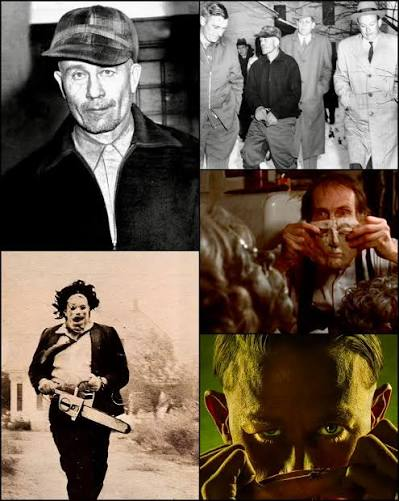
In the small farming community of Plainfield, Wisconsin, nothing about the land suggested what would be uncovered there in the 1950s. The roads were quiet, the houses spaced out, the routines predictable. Ed Gein lived alone on a worn, isolated property at the edge of town, known more as an odd recluse than anything else. He kept to himself, spoke softly when he did speak at all, and rarely drew attention. That made what was found inside his home feel even more unreal.
In 1957, local authorities searching for a missing hardware store owner traced their investigation back to Gein’s property. What they found inside the farmhouse did not resemble anything expected in a rural home. Furniture and household items had been fashioned from human remains—chairs upholstered with skin, bowls made from skulls, objects assembled in ways that blurred the line between use and fixation. The interior of the house was dim, cluttered, and sealed off in places, as if certain rooms had been deliberately preserved.
Gein admitted to digging up recently buried bodies from local graveyards, bringing them back to his home, and using parts of them to construct what he described as a kind of “second skin.” He had also murdered at least two women, though the full extent of his actions remains partially obscured by the condition of the evidence and the state of his confessions. His explanations did not follow a clear logic. He spoke about his mother often, about trying to recreate her presence, about wanting to inhabit something that no longer existed.
The case spread quickly beyond Wisconsin, not just because of the crimes, but because of the imagery. It reshaped how people understood horror rooted in real life. The idea of a man wearing human skin, living quietly in isolation while constructing something grotesque behind closed doors, became a blueprint that would later echo through fiction. Characters like Leatherface drew directly from the core elements of Gein’s story, even if the details were exaggerated or reimagined.
What remains most unsettling is not just what Gein did, but how contained it all was. There was no outward sign that matched the interior reality. No pattern of public violence, no visible escalation. Just a single property, a quiet man, and a series of acts carried out in isolation until something finally broke the surface.
The farmhouse itself was eventually destroyed, but the memory of what was found there never really faded. It persists not because of spectacle, but because of the disconnect—between appearance and reality, between the ordinary setting and what it concealed. That gap is what continues to define the story, long after the physical place is gone.
20
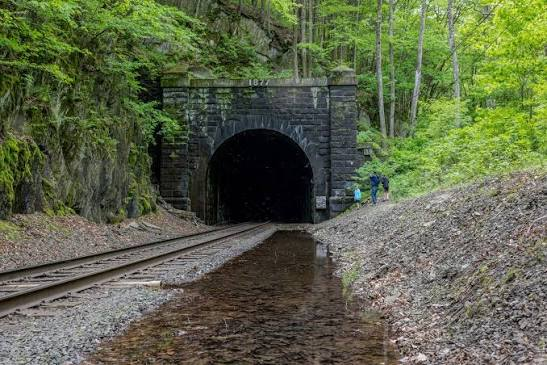
The Hoosac Tunnel cuts through the Berkshire Mountains of western Massachusetts, a long, cold passage driven through solid rock in the nineteenth century at a cost that never really left the place. It runs nearly five miles beneath the mountain, linking the towns of North Adams and Florida, and even now the air inside it feels different—heavy, damp, carrying a stillness that presses in on anyone who steps too far from the light.
During its construction, the tunnel gained a reputation long before it was finished. Work began in the 1850s and dragged on for decades, slowed by technical failures, flooding, cave-ins, and explosions. Nearly two hundred men died in the process. Some were crushed outright by falling stone. Others suffocated when ventilation failed or drowned when water broke through unfinished sections. One of the worst incidents came when an explosion trapped workers deep inside; attempts to rescue them only made things worse, and the men were left to die in the dark. Stories spread quickly among the crews. Men spoke of hearing voices where no one stood, of tools going missing and turning up in impossible places, of the constant sense that something was wrong beneath the mountain.
After the tunnel finally opened in 1875, the reports didn’t stop. Railroad workers assigned to maintenance shifts described hearing footsteps pacing alongside them in sections where no one else had been scheduled. Some claimed to see figures standing just beyond the reach of their lanterns, shapes that disappeared the moment they tried to approach. Others reported sudden drops in temperature, cold spots that seemed to move against the flow of air. The deeper sections, far from either entrance, were said to be the worst—places where sound carried strangely and where a man could feel watched without ever seeing anything at all.
Locals began to refer to it as the “Bloody Pit,” a name that stuck because it matched what people felt when they spoke about it. Even in daylight, the entrances appear dark and uninviting, the interior swallowing light after only a short distance. Modern visitors who walk or ride through the abandoned stretches often describe the same sensations reported more than a century ago: the echo of footsteps that don’t match their own, the impression of movement just behind them, the sudden urge to turn around and leave without knowing exactly why.
Nothing about the tunnel announces itself outright. There are no clear figures, no consistent sightings, nothing that can be pointed to and confirmed. What remains is the accumulation of small, repeated experiences—sounds, shifts, pressure, the feeling of not being alone—stacked over decades in a place where hundreds died without leaving. The mountain holds the tunnel in place, and the tunnel holds everything that happened inside it, sealed off from the surface but never entirely gone.
21
22
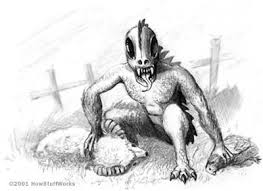
The Chupacabra is one of the rare cases where a cryptid can be traced almost to a single origin point. Unlike older legends that fade into folklore, this one begins clearly in 1995 in Puerto Rico, with a series of livestock killings and a witness who provided a detailed description. That witness, Madelyne Tolentino, described a creature that did not resemble any known animal. It stood upright, had a narrow body, spines along its back, and large glowing eyes. The description was specific enough to stick, and it spread quickly.
That original form matters, because it does not align well with any real predator. It reads more like something constructed than discovered. Researchers like Benjamin Radford have pointed out that Tolentino’s description closely matches the creature from the film Species, which had been released around the same time. This does not mean the events were fabricated. It suggests that when something unusual happened, the mind reached for a visual framework it already recognized. That is how modern folklore forms. Real events, filtered through familiar imagery.
At the same time, the livestock deaths were real. Animals were found with puncture wounds and minimal visible blood, which led to the idea that something was feeding in a way that did not match normal predation. This is where the legend shifts from observation to interpretation. The wounds were consistent with attacks to soft tissue, and the appearance of “bloodless” carcasses can be explained by postmortem blood settling. But to those experiencing it, the pattern felt deliberate. Not feeding for survival, but extracting something.
That is where the vampire archetype enters. The Chupacabra is not just a predator. It is described as something that drains rather than consumes. That distinction moves it out of biology and into symbolism. It becomes less about what the creature is and more about what it represents: something that takes life without leaving the expected evidence behind.
As the legend spread into mainland regions like Texas, the creature changed. The later version is almost entirely different. It is described as a hairless, thin, canine-like animal with damaged skin and erratic behavior. Unlike the Puerto Rican version, this one has physical evidence. Carcasses have been recovered and tested, including well-known cases in places like Cuero, Texas. The results have been consistent. These animals are not unknown species. They are coyotes, dogs, or hybrids suffering from severe mange.
This creates a clean divide. The original Chupacabra is an idea shaped by perception and context. The later Chupacabra is a misidentified animal shaped by physical evidence. Both are real in different ways, but they do not describe the same thing.
That split is what gives the phenomenon structure. It shows how a single set of events can evolve as it moves through different environments. In Puerto Rico, the creature took on an almost alien form, reflecting unfamiliarity and cultural framing. In the United States, it became grounded, tied to known animals and explainable conditions. The legend adapted without losing its core identity.
What remains consistent is the pattern. Something was killing livestock. People needed an explanation. The explanation took shape, spread, and then changed as new information replaced old assumptions.
The Chupacabra persists not because it has been proven, but because it sits in a narrow space between explanation and experience. The science addresses the later sightings clearly. The earlier accounts remain less defined. That gap is enough.
Not to confirm the creature, but to keep the question open.
And as long as that question remains open, the Chupacabra does not disappear. It simply changes form.
23
They are lying to us about so much. Everything from UFO’s, secret technology, alien life, illegal surveillance, epstien, government fraud, cia murdering people. Once you work on the assumption that most of what comes out of government representatives mouth is going to be a lie you are free because you are no longer slaves to their motives.

24
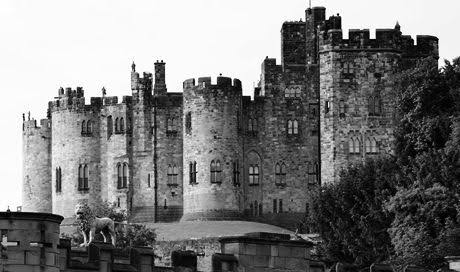
In medieval England, accounts of night visitations were not uncommon, but some stood out for their consistency and physical effects. One such case is tied to Alnwick Castle in Northumberland, where reports describe a man experiencing repeated encounters with what was believed to be a Succubus. Unlike exaggerated tales of violent hauntings, this account is quieter, more controlled, and focused on gradual decline.
The man was described as healthy before the events began. That changed when he started reporting the same experience each night. As he lay in bed, often between sleep and waking, he sensed a presence entering the room. He described it as taking the form of a woman, human in outline but distinctly wrong in feeling. It did not behave aggressively. It did not speak. It simply appeared, approached, and remained close.
After each encounter, he would wake in a weakened state. Not just tired, but drained in a way that did not match normal rest. This pattern repeated over multiple nights, and the effects began to accumulate. His strength declined. His energy did not return. Over time, the condition became noticeable to others.
Clergy were eventually brought in, and the situation was treated as a spiritual disturbance rather than a physical illness. At the time, such entities were believed to feed on vitality rather than cause direct injury. Prayers and protective measures were introduced into the room, and for a short period, the activity appeared to stop.
However, the relief was not permanent. The presence was said to return intermittently, though less frequently. The man survived the experience, but accounts describe him as permanently weakened, never fully returning to his previous condition.
What makes this case notable is the pattern. There is no single dramatic event. There is repetition, consistency, and physical decline without a clear cause. The figure is not described as monstrous, which makes the encounter more unsettling. It looks familiar, but does not feel right.
Modern explanations often point to sleep paralysis or night terrors, conditions that can produce vivid, physical-feeling experiences during the transition between sleep and waking. These explanations account for the timing and the sensation of presence.
But the historical account frames it differently. It describes something that enters, takes, and leaves, without noise or spectacle. The effect is not immediate harm, but gradual depletion.
25
In July 1994, the Solar System put on a display that had never been seen before. A fragmented comet, Comet Shoemaker-Levy 9 impact, collided with Jupiter over the course of several days. This was not a single impact. It was a sequence. Piece after piece of the same object, pulled apart by Jupiter’s gravity, returned and struck the planet one after another.
The comet itself had already been broken before impact. As it passed close to Jupiter, tidal forces stretched and tore it into a chain of fragments, often described as a “string of pearls.” Each of those fragments became its own impactor. By the time they came back around, they were no longer one object. They were dozens.
What made this event unique was not just the scale, but the certainty. Scientists knew it was going to happen. The trajectory was calculated in advance, and telescopes around the world were pointed at Jupiter, waiting. For the first time, a planetary collision was not something reconstructed after the fact. It was observed as it unfolded.
When the fragments began to hit, the scale became clear immediately. Each impact released an enormous amount of energy, comparable to millions of megatons of TNT. The objects entered Jupiter’s atmosphere at extreme speed, compressing the gas ahead of them and generating intense heat. The result was a series of explosions that drove plumes high above the cloud tops.
Some of those plumes rose thousands of kilometers into space.
That detail mattered. It meant the impacts were powerful enough to punch through layers of the atmosphere and eject material upward, where it could be seen clearly against the darkness of space. Bright flashes marked the entry points. Expanding fireballs followed. Then came the aftermath.
Dark scars formed at each impact site. Larger than Earth in some cases, these marks spread and shifted as Jupiter’s atmosphere carried them along. For days, even small telescopes could see the evidence. Jupiter did not look like itself. It looked marked, temporarily altered by a series of collisions that would have reshaped any smaller world.
The impacts did more than create a visual spectacle. They provided data that could not be obtained any other way. Scientists were able to study how energy moved through a gas giant atmosphere, how deep the fragments penetrated, and how material was ejected and redistributed. Chemical signatures appeared in the aftermath, offering clues about both the comet’s composition and the structure of Jupiter’s upper layers.
It also forced a broader realization. Events of this scale are not rare in the outer Solar System. They happen. Usually unseen, usually unrecorded, but happening all the same. What changed in 1994 was not the frequency of impacts. It was our ability to witness one.
For several days, a planet the size of Jupiter was struck repeatedly, in full view of anyone watching closely enough. Not imagined. Not inferred. Seen.
And that changed the way impacts are understood.
Because after that, there was no longer any question of what a large collision looks like in real time.
We had already watched one happen.
A few Video links: https://youtu.be/vxD-1RsL7gI cool music vibe https://youtube.com/shorts/aEX6dnwoUfQ Neil Degrassi Tyson on Rogan YouTube short https://youtu.be/CiLNxZbpP20 News report from the time https://youtube.com/shorts/JqZDqYTMVrg Another short

view more: next ›