Latin American Publications!

147 readers
34 users here now

A community for Latin American publications.

NOTE: All the publications in this feed are Latin American in origin; that does not mean they only report on Latin American news.

founded 6 months ago
MODERATORS
1


By Eoghan O’Neill – Apr 5, 2026

On 17 March 1991, over 148 million Soviet citizens voted in a national referendum on whether to preserve the Soviet Union. In those republics where it was held, 113 million—or 77.85 per cent—voted in favour. At the moment of victory of the counter-revolution, a clear majority supported the continuation of the Soviet Union.

This challenges the assumption that the Soviet Union fell because it lost popular support. Its dissolution was the result of decisions taken within the Party and state apparatus, layers that would soon become the basis of a new oligarchic class. The system was not rejected from below. It was dismantled from above.

To understand how this became possible, it is necessary to examine the longer trajectory of Soviet development, and in particular the shift that occurred after 1953.

The October Revolution emerged from decades of struggle and took power in a country that was economically backward, largely agrarian and devastated by war. Russia at this time was not comparable to advanced capitalist economies, but closer to the least developed regions of the global economy. Industrial capacity was limited, infrastructure weak, and the majority of the population remained tied to low-productivity agriculture.

Socialist construction therefore unfolded under conditions of profound backwardness, civil war and external threat. Within a generation, the Soviet Union emerged as the second industrial power in the world. No country at a comparable level of development in 1917 achieved a similar transformation.

From 1917 to the early 1950s, the general direction of development was clear. Socialised production expanded and commodity relations were increasingly subordinated to planning. Under Lenin, the New Economic Policy recognised the persistence of small commodity production, but within a framework in which the commanding heights remained under state control.

This orientation hardened during rapid industrialisation. It was driven not only by economic necessity, but by survival. The rise of fascism and the hostility of capitalist powers made clear that the Soviet Union faced an existential threat from the prospect of invasion and annihilation. The development of heavy industry, energy and machinery was therefore inseparable from defence.

The decisive principle was not simply state ownership, but the allocation of resources through plan targets rather than profitability. Industrialisation, electrification and defence were pursued according to social priorities rather than immediate return.

From the late 1920s through the post-war period, the Soviet economy developed along these lines. Heavy industry expanded even where it was not immediately profitable. Entire sectors were constructed that would not have survived under market discipline. This transformation underpinned the Soviet Union’s ability to defeat Nazi Germany and establish itself as a major industrial power.

Even non-sympathetic economic analysis recognises this. Robert C. Allen shows that Soviet growth before 1970 was among the most rapid in the world, driven by high levels of investment and structural transformation rather than market incentives, and that the stagnation of the 1970s and 1980s was not a by-product of planning per se, but of misdirected plans by the state apparatus.

However, it is possible to trace the origin of the decline of Soviet socialist economic planning. By the early 1950s, Soviet economic organisation had reached a relatively coherent form. Commodity production persisted, particularly in consumer goods, but the law of value did not regulate the economy as a whole. As argued in Economic Problems of Socialism in the USSR, the means of production were to be allocated through planning decisions rather than profitability.

With the death of Stalin and a new leadership in charge, Khrushchev’s 1956 “Secret Speech” marked a decisive political rupture. Beyond its denunciation of abuses, it reframed the preceding period as distortion rather than foundation. The ideological language of ongoing class struggle under socialism was gradually replaced by the notion of a “state of the whole people.” The sense of socialist construction as a contested process gave way to administrative normalisation.

Economic reforms accompanied this shift. Planning indicators were reduced or restructured. Greater emphasis was placed on profitability and material incentives. Enterprise managers gained expanded autonomy. These measures were presented as technical improvements. But they also altered the system’s regulatory logic. The means of production were progressively treated as commodities, allocated in ways that approximated capitalist categories.

This shift reflected the development of a bureaucratic layer within the Party and state apparatus whose interests became increasingly tied to managerial control and enterprise performance. Over time, this orientation was accompanied by a weakening of class struggle as a guiding principle and a decline in systematic Marxist education within the Party and in its relationship with the wider population.

As this layer consolidated its position, those committed to deepening planning were increasingly marginalised. The growing separation between the Party apparatus and the working class weakened the social and political foundations of the system, contributing to a situation in which the Soviet Union lacked the organised capacity to resist its eventual dissolution.

The result was a hybrid system. It was neither coherently planned nor governed by genuine market competition. Enterprises were expected to respond to profitability without facing full market discipline. Prices remained administrative, but increasingly reflected cost and return.

Destruction of the Soviet Union: a Crime Without Statute of Limitations

This generated structural contradictions. Under earlier planning, new technologies could be introduced through deliberate allocation. Under the reformed system, enterprises faced high costs without clear incentives for innovation. Conservatism became rational behaviour, and technological development slowed.

The slowdown that followed was not simply the result of planning itself. As the phase of rapid industrial catch-up came to an end, new challenges emerged. Investment decisions became increasingly complex. Resources were directed toward energy extraction in remote regions such as Siberia, often requiring high levels of capital and infrastructure for relatively lower returns. At the same time, there was a continued emphasis on domestic production even where more efficient alternatives may have existed, and significant resources were allocated to upgrading ageing industrial and energy facilities rather than constructing new, technologically advanced systems.

Taken together, these shifts reduced the overall efficiency of investment and contributed to declining productivity growth compared to earlier periods of rapid expansion.

At the same time, a growing share of scientific and technical capacity was directed toward the military-industrial sector. The diversion of research and development resources toward military priorities contributed significantly to the decline in productivity growth. The most advanced technical capacity was increasingly directed toward strategic rather than civilian development. The issue was not the absence of planning, but the direction of planning.

By the 1970s and 1980s, the effects of these shifts were clear. Growth slowed, innovation lagged, and the system’s coherence weakened. Planning remained, but its ability to direct development had been diluted. The final phase of reform did not attempt to restore planning discipline. Instead, it expanded market mechanisms further. In doing so, it deepened the system’s contradictions and accelerated its disintegration.

The events of 1991 must be understood in this context. The population did not demand the system’s destruction. But the bureaucratic layers that had developed over decades stood to gain from its transformation. The transition to capitalism allowed sections of the Party and state apparatus to convert administrative control into private ownership. The emergence of the post-Soviet oligarchy was the outcome of this process.

Two errors dominate discussion of the Soviet experience.

The first is the claim that planning is inherently inefficient. The historical record does not support this. Planning drove rapid industrialisation under extremely difficult conditions. The second is the failure to distinguish between phases of development. Treating the entire Soviet period as a single system obscures the real shifts that occurred. The key question is how the balance between planning and commodity production evolved over time.

For contemporary socialist strategy, the implications are clear. Socialism is not reducible to state ownership. The decisive question is what regulates the allocation of the means of production. If profitability increasingly determines that allocation, the system will tend toward capitalist restoration.

At the same time, the Soviet experience shows that socialist transformation is a process. Commodity forms may persist, but they must be subordinated to planning if development is to remain socialist. It also demonstrates that socialist construction remains a site of class struggle. Bureaucratic layers with distinct material interests can emerge within the system itself. Without mechanisms to maintain the primacy of the plan, the direction of development can shift.

The significance of 1991 lies in what it reveals about that process. A society in which the majority supported its continuation was dismantled by layers positioned to benefit from its transformation.

(Socialist Voice)


From Orinoco Tribune via This RSS Feed.

2


Following the presentation of the report Labor Rights of Healthcare Personnel in Medical Missions from Cuba by the Inter-American Commission on Human Rights (IACHR), Mexico’s representative to the Organization of American States (OAS), Alejandro Encinas, expressed reservations on Friday regarding its conclusions and defended the working conditions of Cuban doctors in Mexico.

During the event in which the document was released, held as part of the OAS’s regular session, the Mexican diplomat emphasized the importance of recognizing the scope and limitations of the study while highlighting the substantial differences between the reality in Mexico and the cases reported in other nations.

The report, prepared by the special rapporteur on economic, social, cultural, and environmental rights (Redesca), details, based on 71 testimonies, alleged labor and human rights violations in medical missions, with an emphasis on Venezuela.

The Organization of American States is based in Washington, DC, USA, and was formed in 1948 to facilitate US control of electoral processes and political developments across the Americas in the post-World War 2 era. Neither Cuba nor Venezuela belong to the imperialist organization, although Mexico does.

At the ceremony to present the document, Encinas noted that Mexico “takes note” of the document and agreed on the importance of promoting respect for human rights in the region, though he emphasized that the findings cannot be generalized.

“The situation referred to in the report cannot be generalized based on an analysis of only 71 cases out of the thousands that exist,” he stated, noting that more than 2,500 Cuban doctors have worked in Mexico.

In that context, he defended the cooperation agreement with Cuba to address the shortage of specialists, particularly in remote and highly marginalized communities, and highlighted that this program has been key to bringing health services to historically underserved populations.

Encinas stated that in Mexico, international medical personnel have working conditions comparable to those of national specialists: “the same salary as a national specialist; payment is made directly to the doctor without any special subsidies,” he noted.

He also added that in many cases, they are provided with housing and meals and that some have established family ties in the communities where they serve, which demonstrates a process of integration that respects the host communities.

He also denied that there are restrictions on the doctors’ freedom. “Their documents are not withheld, and they have full freedom to join any public or private institution,” he said.

Cuban Health Cooperation Continues Under Attack

As an example, he mentioned that in at least 75 cases, the Mexican government has directly hired these professionals upon completion of their participation in the program, demonstrating a willingness to retain the talent developed during the collaboration.

He also assured that hiring foreign doctors does not displace staff from Mexico. “Every position filled by an international doctor was preceded by at least three public calls for applications that went unanswered,” he explained.

In his view, these professionals fill vacancies that would otherwise remain unfilled and help reduce the gap in specialized care in vulnerable areas, a structural problem affecting several regions of the country.

Encinas argued that cooperation with Cuba is a matter of sovereign and solidarity-based policy. “This is a legitimate and necessary agreement that draws on the best of the peoples’ traditions,” he stated.

At the same time, he cautioned that the defense of human rights must not involve “violating international law or seeking any form of guardianship,” in a clear reference to criticisms that seek to discredit South-South collaboration mechanisms.

He indicated that Mexico will follow up on the special rapporteur’s observations, although he considered that the Mexican experience “is not adequately reflected in this report,” and therefore, a more detailed analysis of the documented cases will be conducted.

In this regard, he reiterated his government’s willingness to share its model of health cooperation as an example of best practices that could enrich the regional debate on the labor rights of migrant medical personnel.

(Resumen Latinoamericano – English) with Orinoco Tribune


From Orinoco Tribune via This RSS Feed.

3


Editorial note: Orinoco Tribune does not generally publish pieces older than two weeks. However, an exception is being made in this case as the current article remains as relevant today as when it was first published.

By Nikita Mazurov, Jonah Valdez – Nov 4, 2025

The tech giant deleted the accounts of three prominent Palestinian human rights groups — a capitulation to Trump sanctions.

A documentary featuring mothers surviving Israel’s genocide in Gaza. A video investigation uncovering Israel’s role in the killing of a Palestinian American journalist. Another video revealing Israel’s destruction of Palestinian homes in the occupied West Bank.

YouTube surreptitiously deleted all these videos in early October by wiping the accounts that posted them from its website, along with their channels’ archives. The accounts belonged to three prominent Palestinian human rights groups: Al-Haq, Al Mezan Center for Human Rights, and the Palestinian Centre for Human Rights.

The move came in response to a U.S. government campaign to stifle accountability for alleged Israeli war crimes against Palestinians in Gaza and the West Bank.

“YouTube is furthering the Trump administration’s agenda to remove evidence of human rights violations and war crimes.”

The Palestinian groups’ YouTube channels hosted hours of footage documenting and highlighting alleged Israeli government violations of international law in both Gaza and the West Bank, including the killing of Palestinian civilians.

“I’m pretty shocked that YouTube is showing such a little backbone,” said Sarah Leah Whitson, executive director of Democracy for the Arab World Now. “It’s really hard to imagine any serious argument that sharing information from these Palestinian human rights organizations would somehow violate sanctions. Succumbing to this arbitrary designation of these Palestinian organizations, to now censor them, is disappointing and pretty surprising.”

After the International Criminal Court issued arrest warrants and charged Israeli Prime Minister Benjamin Netanyahu and former Israeli Defense Secretary Yoav Gallant with war crimes in Gaza, the Trump administration escalated its defense of Israel’s actions by sanctioning ICC officials and targeting people and organizations that work with the court.

“YouTube is furthering the Trump administration’s agenda to remove evidence of human rights violations and war crimes.”

“It is outrageous that YouTube is furthering the Trump administration’s agenda to remove evidence of human rights violations and war crimes from public view,” said Katherine Gallagher, a senior staff attorney at the Center for Constitutional Rights. “Congress did not intend to allow the president to cut off the flow of information to the American public and the world — instead, information, including documents and videos, are specifically exempted under the statute that the president cited as his authority for issuing the ICC sanctions.”

“Alarming Setback
YouTube, which is owned by Google, confirmed to The Intercept that it deleted the groups’ accounts as a direct result of State Department sanctions against the group after a review. The Trump administration leveled the sanctions against the organizations in September over their work with the International Criminal Court in cases charging Israeli officials of war crimes.

“Google is committed to compliance with applicable sanctions and trade compliance laws,” YouTube spokesperson Boot Bullwinkle said in a statement.

According to Google’s Sanctions Compliance publisher policy, “Google publisher products are not eligible for any entities or individuals that are restricted under applicable trade sanctions and export compliance laws.”

Al Mezan, a human rights organization in Gaza, told The Intercept that its YouTube channel was abruptly terminated this year on October 7 without prior notification.

“Terminating the channel deprives us from reaching what we aspire to convey our message to, and fulfill our mission,” a spokesperson for the group said, “and prevents us from achieving our goals and limits our ability to reach the audience we aspire to share our message with.”

The West Bank-based Al-Haq’s channel was deleted on October 3, a spokesperson for the group said, with a message from YouTube that its “content violates our guidelines.”

“YouTube’s removal of a human rights organisation’s platform, carried out without prior warning, represents a serious failure of principle and an alarming setback for human rights and freedom of expression,” the Al-Haq spokesperson said in a statement. “The U.S. Sanctions are being used to cripple accountability work on Palestine and silence Palestinian voices and victims, and this has a ripple effect on such platforms also acting under such measures to further silence Palestinian voices.”

The Palestinian Center for Human Rights, which the UN describes as the oldest human rights organization in Gaza, said in a statement that YouTube’s move “protects perpetrators from accountability.”

“YouTube’s decision to close PCHR’s account is basically one of many consequences that we as an organisation have faced since the decision of the US government to sanction our organisations for our legitimate work,” said Basel al-Sourani, an international advocacy officer and legal advisor for the group. “YouTube said that we were not following their policy on Community Guidelines, when all our work was basically presenting factual and evidence-based reporting on the crimes committed against the Palestinian people especially since the start of the ongoing genocide on 7 October.”

“By doing this, YouTube is being complicit in silencing the voices of Palestinian victims,” al-Sourani added.

Looking Outside U.S.
The three human rights groups’ account terminations cumulatively amount to the erasure of more than 700 videos.

The deleted videos range in scope from investigations, such as an analysis of the Israeli killing of American journalist Shireen Abu Akleh, to testimonies of Palestinians tortured by Israeli forces and documentaries like The Beach, aboutchildren playing on a beach who were killed by an Israeli strike.

Some videos are still available through copies saved on the Internet Archive’s Wayback Machine or on alternate platforms, such as Facebook and Vimeo. The wiping only affected the group’s official channels; videos which were produced by the nonprofits but hosted on alternate YouTube channels remain active. No cumulative index of videos deleted by YouTube is available, however, and many appear to not be available elsewhere online.

Videos posted elsewhere online, the groups fear, could soon be targeted for deletion because many of the platforms hosting them are also U.S.-based services. The ICC itself began exploring using service providers outside the U.S.

Al-Haq said it would also be looking for alternatives outside of U.S. companies to host their work.

YouTube isn’t the only U.S. tech company blocking Palestinian rights groups from using its services. The Al-Haq spokesperson said Mailchimp, the mailing list service, also deleted the group’s account in September. (Mailchimp and its parent company, Intuit, did not immediately respond to a request for comment.)

YouTube Wipes UK Journalist’s Archive After Israeli-Linked Pressure

Caving to Trump’s Demand
Both the U.S. and Israeli governments have long shielded themselves from the ICC and accountability for their alleged war crimes. Neither country is party to the Rome Statute, the international treaty that established the court.

In November 2024, the ICC prosecutors issued arrest warrants for Netanyahu and Gallant, charging the leaders with intentionally starving civilians by blocking aid from entering into Gaza. Both the Biden and Trump administrations rejected the legitimacy of the warrants.

Since his re-election, Trump has taken a more aggressive posture against accountability for Israel. In the early days of his second term, Trump renewed sanctions against the ICC and issued new, more severe measures against court officials and anyone accused of aiding their efforts. In September, in a new order, he specifically sanctioned the three Palestinian groups.

The U.S. moves followed Israel’s own designation of Al-Haq as a “terrorist organization” in 2021 and an online smear campaign by pro-Israeli activists attempting to link Palestinian Centre for Human Rights with militant groups.

The sanctions freeze the organizations’ assets in the U.S. and bar sanctioned individuals from traveling to the country. Federal judges have already issued preliminary injunctions in two casesin favor of plaintiffs who argued the sanctions had violated their First Amendment rights.

“The Trump administration is focused on contributing to the censorship of information about Israeli atrocities in Palestine and the sanctions against these organizations is very deliberately designed to make association with these organizations frightening to Americans who will be concerned about material support laws,” said Whitson, of DAWN, which joined a coalition of groups in September to demand the Trump administration drop its sanctions.

Like many tech firms, YouTube has shown a ready willingness to comply with demands from both the Trump administration and Israel. YouTube coordinated with a campaign organized by Israeli tech workers to remove social media content deemed critical of Israel. At home, Google, YouTube’s parent company, secretly handed over personal Gmail account information to U.S. Immigration and Customs Enforcement in an effort to detain a pro-Palestinian student organizer.

Even before Israel’s genocidal campaign in Gaza, YouTube had been accused of unevenly applying its community guidelines to censor Palestinian voices while withholding similar scrutiny from pro-Israeli content. Such trends continued during the war, according to a Wired report.

Earlier this year, YouTube shut down the official account of the Addameer Prisoner Support and Human Rights Association. The move came after pressure from UK Lawyers for Israel, which wrote to YouTube to point out that the organization had been sanctioned by the State Department.

Whitson warned that YouTube’s capitulation could set a precedent, pushing other tech companies to bend to censorship.

“They are basically allowing the Trump administration to dictate what information they share with the global audience,” she said. “It’s not going to end with Palestine.”

Nikita Mazurov is a security researcher focusing on privacy issues revolving around source protection, counter-forensics, and privacy assurance.

Jonah Valdez is a reporter for The Intercept covering politics, U.S. foreign policy, Israel and Palestine, human rights issues, and protest movements for social justice.

(The Intercept)


From Orinoco Tribune via This RSS Feed.

4


By Alexander Main, Joe Sammut, Mark Weisbrot, Guillaume Long – Apr 27, 2026

Press Release
New Report Shows That Hardening of US Sanctions on Cuba Since 2017 Fueled a Sharp Increase in Cuba’s Infant Mortality Rate

Executive Summary
A country’s infant mortality rate (IMR) is often considered a key barometer for a population’s overall health as well as its access to quality health care.1 In Cuba, where for decades the state has invested substantially in health care services, the IMR was, until recently, among the lowest in the Western Hemisphere and lower than in the US. Since 2018, however, Cuba’s IMR has increased from an annual rate of 4.0 per 1,000 live births to a rate of 9.9 as of 2025,2 representing an increase of 148 percent. If the rate of infant mortality had remained unchanged, then approximately 1,800 fewer babies would have died since 2018.

This striking increase in Cuba’s IMR, which is at variance with trends seen in other countries in the region, has taken place over a period (2017–2025) that has seen an unprecedented expansion and tightening of the US commercial and financial embargo that has been in place since the early 1960s. It is worth noting that, in the years following the global COVID-19 pandemic and again in contrast with nearly all of its regional neighbors, Cuba failed to experience a substantial economic rebound, averaging 0.4 percent annual per capita GDP growth between 2020 and 2024 versus 3.2 percent for the Latin American and Caribbean region as a whole.3

Recent studies show a strong causal relationship between sanctions imposed and increased death rates. In August 2025, a Lancet Global Health study estimated, based on a panel regression incorporating data from 152 countries, that broad, unilateral sanctions resulted in approximately 564,000 deaths annually over the years 2012–2021.4 The study also found that children under five years old accounted for 51 percent of these deaths. Infant mortality is generally about three-quarters of under-five mortality. These numbers therefore reflect a profound disproportionality in the impact of sanctions on infants and children under five years of age as compared with other age groups; infants are only about 1.6 percent of the world population.5

Sanction measures adopted by US administrations since 2017 are designed to cause economic damage to Cuba by further reducing its access to foreign exchange and international financial markets; such measures can, and appear intended to, cause recessions, depressions, balance of payments crises, and higher inflation, even hyperinflation — as similar sanctions have done in other countries. A 2022 paper published by the Bank for International Settlements found that “child mortality rises in a highly significant way in recessions in EMDEs [emerging market and developing economies], by about 6 deaths per 1000 births.”6 Again, these numbers are for mortality of children under five years old. As mentioned above, about three-quarters of this mortality in the world is infant mortality, so this study implies that a recession would increase mortality by 4.5 deaths per 1,000 births. This is most of the increase that the data show for Cuba (from 4.0 to 9.9, so an additional 5.9 deaths per 1,000 births).

The unparalleled hardening of US sanctions against Cuba during the first Trump administration, the Biden administration’s decision to largely maintain these policies, and the further expansion of sanctions during the second Trump administration, including a devastating fuel blockade, is very likely the primary cause of the current economic and humanitarian crisis in Cuba, which is widely considered to be the worst in the island’s contemporary history.

Among the most harmful measures imposed over the last eight years are the following:

• The Cuba Restricted Entities List, prohibiting transactions with most of Cuba’s major hotels and many other state-run businesses (created in 2017 by President Donald Trump).7

• Reduction of the de minimisthreshold on Cuba to 10 percent, blocking all exports of foreign-made products to Cuba that include more than 10 percent US-origin content (tightened from 25 percent to 10 percent in October 2019).

• Far-reaching restrictions on US travel to Cuba, including ending the main travel license allowing travel to Cuba for individuals (June 2017) and for groups (June 2019; rescinded in 2022, reinstituted in 2025) and the banning of cruise and most private vessels/aircraft from calling at Cuba (June 2019).

• Re-inclusion of Cuba on the State Sponsor of Terrorism****list,8 triggering potential onerous fines for international financial institutions that do business with Cuban entities and blocking citizens of 42 Electronic System for Travel Authorization-applicable countries (EU, UK, Japan, Australia, South Korea, etc.) from traveling to the US visa-free if they travel to Cuba (instituted on January 12, 2021).9

• The nonrenewal of the presidential waiver on Title III of the Helms-Burton Act, allowing US citizens and entities to sue third-party individuals and companies — including non-US companies — that engage in business with Cuban entities benefiting from nationalized properties (President Trump let the waiver expire in May 2019).10

• Measures restricting the flow of remittances, including caps on family remittances ($1,000 per quarter), bans of all donative remittances (ordered by President Trump on September 9, 2019; removed by Biden on June 9, 2022), and the addition of the Cuban firm that processes remittances for Western Union and other US companies to the Cuba restricted list in 2020. Operations resumed with a new Cuban partner in 2023, but this firm was also added to the list in January 2025, again closing the main channel for formal remittances and forcing reliance on costlier alternatives.11

• Sanctions and other pressure targeting officials of governments hosting Cuban international medical missions, leading to the departure of many of these missions and the steady erosion of Cuba’s primary source of foreign income (pursued by both Trump administrations).

• US fuel blockade — by far the most damaging US unilateral measure to date — consisting in the blocking of nearly all oil shipments from Venezuela through the use of coercive tactics employed by the US military, including the interception of tankers destined to Cuba by the US Coast Guard,12 as well as threats, including threats of tariffs directed at countries considering exporting oil to Cuba (pursued by President Trump since early January 2026).

In the aggregate, these measures have — by fueling steep reductions in export earnings from tourism, medical services, foreign investment, remittances, and so on and by cutting Cuba off from most international credit — stifled economic growth and significantly contributed to major balance of payments difficulties, leading to increased inflation, reduced imports of essential goods, and reduced economic growth. Given these conditions, it is unsurprising that Cuba is experiencing an acute economic crisis that has led to a major decline in living standards that has, in turn, resulted in an unprecedented number of departures from the island over the last few years. This crisis has been compounded by this year’s fuel blockade, which has prompted increasingly frequent and prolonged power outages and brought many essential services and economic activities to a halt.

While there aren’t available data to begin measuring the impact of this year’s fuel blockade yet, the other sanction measures cited above played a very large, sometimes predominant, role in the following developments:

• Tourist arrivals in Cuba fell by 53 percent between 2018 and 2024;13 neighboring countries with similar volumes of tourism experienced increases in arrivals or no significant change.

• Income from tourism fell 59 percent, from $3.2 billion in 2017 to $1.3 billion in 2024.14

• Export earnings from medical services (international medical missions) fell 23 percent, from $6.4 billion in 2018 to around $4.9 billion in 2022, the last year for which there are data.15

• Remittances fell 42 percent from $4 billion in 2018 to just $2.3 billion in 2024.16

• Domestic spending on goods imports fell from $11.5 billion in 2018 to $8.1 billion in 2024,17 a steep fall of 30 percent (or 19 percent in per capita terms) that is likely understated in the official data.

According to Cuba’s National Statistics Office, Cuba’s population fell by 13 percent from 11.2 million in 2020 to 9.8 million in 2024,18 a rate of out-migration that far surpasses all prior episodes of intense out-migration from Cuba (such as the Mariel Boatlift in 1980).

These and other similar data reflect a rapidly deteriorating social and economic reality that has taken a major toll on the Cuban people. The human consequences of this decline include widespread undernourishment, a significant worsening of sanitary conditions, a rise in disease and sickness, and — as underscored above — an increase in deaths, particularly the deaths of infant children.

CEPR staff has also observed in situ how US sanctions measures have directly contributed to the deterioration of Cuba’s once exemplary health care sector, which is undoubtedly a factor that has contributed to the marked increase in Cuba’s IMR. During a 2024 trip to Cuba to assess the impact of the hardening of US sanctions, CEPR visited Cuban health care facilities and spoke to numerous health care providers. The visit confirmed that, as a result of the reduction of the de minimis threshold in 2019, Cuban medical importers were no longer able to obtain at affordable prices many basic medical supplies, such as syringes, inhalers, and even saline solution; more sophisticated medical equipment, such as imaging and ultrasound systems; and inputs for the manufacturing of pharmaceuticals. The re-designation of Cuba as a State Sponsor of Terrorism in 2021 has made it extremely challenging to obtain financing for the purchase of these goods — at any price — or to simply execute international payments to purchase them. The end result of these multiple barriers generated by these sanctions has been massive shortages of medical goods — supplies, equipment, medicines — that had once been far more readily available in spite of the long-standing US embargo.

The situation in Cuba has declined even further since last year and could devolve into an even more severe humanitarian crisis as a result of the US fuel blockade. As a number of recent media reports have noted, the blockade has had a particularly dire effect on Cuba’s health care infrastructure, with frequent power outages interrupting the use of critical equipment for the treatment of patients, including incubators for premature babies and ventilators to help sick newborns breathe.19 There is virtually no available fuel to transport sick patients, whether by ambulance or in private vehicles — NBC reported in March that 300 ambulances are sitting idle for lack of fuel or parts, leaving only 25 electric ambulances to serve the entire island.20 Public transportation is paralyzed,21 leading to an even greater absence of medical workers in key facilities.22 None of this is surprising. In fact, these are precisely the consequences that could be expected from a fuel blockade targeting an island nation that only produces roughly 40 percent of the energy required to meet its domestic needs.

Given the effects of the US energy blockade, it is highly likely that Cuba’s infant mortality rate has increased significantly since December 2025 when it had reached 9.9 per 1,000 live births. Other key health indicators, such as life expectancy and maternal mortality, have also very likely deteriorated since the beginning of the year.

A Dramatic Increase in Cuban Infant Mortality
A country’s infant mortality rate (IMR) — defined as the number of deaths of infants under one year of age per 1,000 live births — is often considered a key barometer for a population’s overall health as well as its access to quality health care.23 Until recently, Cuba’s IMR was among the lowest in the Western Hemisphere — lower even than the rate for the US — with, for instance, a rate of 4.3 in 2015 according to Cuba’s health authorities, or 4.8 according to World Bank/UN estimates versus an average regional rate of 15.6 and a US rate of 5.8.

Cuba’s exceptionally low rate, particularly for a country that has lagged behind the majority of the rest of the region economically, was attributable in part to significant public investment —over many years — in health care. For decades, Cuba’s government has spent proportionately more on health care than nearly all of its regional neighbors. Among other things, it greatly expanded preventive primary care services, increased the number of health care facilities, and trained large numbers of health care professionals, resulting in one of the highest rates of physician density in the world.24 This robust and consistent investment in health care explains, at least in part, why Cuba has had, until recently, higher average life expectancy, much lower maternal mortality, and far lower infant mortality than the Latin American and Caribbean average (see Table 1). Table 1 uses internationally comparable World Bank data for these indicators to show how, in 2017, Cuba had superior results than the regional average as well as a sample of its neighbors.

Since 2019, Cuba’s IMR has increased dramatically — rising from a rate of 4.0 that year to 9.9 for 2025 (Table 2), an increase of 148 percent. If the mortality rate had remained at its 2018 level, then approximately 1,800 fewer babies would have died between 2019 and 2025. This is a very different trajectory to other countries in the sample. For the countries that have published recent infant mortality rates (Argentina, Brazil, Colombia, Mexico, and Jamaica), only Brazil saw an increase in the mortality rate, which rose by 3 percent from 11.9 in 2019 to 12.3 in 2024.25 All of the others saw declines or stagnation in the rates.26

In Table 2 we use official government statistics — which, unlike the World Bank database, provide data for 2024 and 2025 — to provide a picture of the sharp increase in Cuba’s IMR between 2017 and 2025.

It’s worth noting that, like most countries in the world, the Cuban economy underwent a severe COVID-related contraction; gross domestic product (GDP) per capita growth was -10.7 percent in 2020, one of the worst in the region (Table 3). However, unlike most other countries in the region and around the world, Cuba did not subsequently experience a sizable post-COVID rebound during the years that immediately followed. Average annual GDP per capita growth from 2020 to 2024 was just 0.4 percent, as compared with the regional average of 3.2 percent. During this period, the quality of health care and access to health care services in Cuba sharply deteriorated amid widespread shortages of medicines and medical supplies and amid the departure of many health professionals.

In spring 2024, CEPR staff visited health care facilities in Cuba and observed firsthand some of the mounting challenges that the health care sector was experiencing. There were shortages of basic, critical medical supplies, such as syringes, inhalers, and even saline solution. At a cardiological center for children, we observed a toddler who needed to undergo a surgical operation that would have been avoidable had the center had access to catheters. We met a young doctor who lamented being the only graduate from his class that was still practicing medicine in Cuba, and he attributed this to the shrinking wages for doctors. At the National Oncological Institute we learned that medical staff were having great difficulty obtaining basic laboratory chemicals and were unable to access spare parts for radiotherapy equipment; as a result, they were unable to treat many cancer patients in a timely manner. The institute once had a total of 60 medical physicists (who were specialized in cancer treatment) and now had only 16. They previously had 16 anaesthesiologists and now had only five.

Since then, reports indicate that the situation in the Cuban health care sector has grown far worse. Due to a continuous increase in fuel shortages and electricity blackouts around Cuba, many hospitals have been unable to provide critical services, and all but vital surgeries have been put on hold. Ambulances are often unavailable for urgent care due to a lack of sufficient fuel. Medical providers in pediatric clinics have reported having to take small children off of ventilators during power shortages and manually pump air into their lungs in order to try to keep them alive.27

The direct and indirect impact of the tightening of US sanctions on Cuba that began in 2017 very likely played a substantial role in the extremely large jump in Cuba’s infant mortality rate.

Sanctions and Infant Mortality: What Recent Studies Tells Us
Over the past decade, Cuba has been subjected to a dramatic increase in the scope and intensity of sanctions imposed by the United States. The resulting negative effects on the Cuban economy, which we will look at in greater detail in the next section, would be expected to lead to increased mortality. There is also considerable empirical and statistical evidence that economic sanctions of the type imposed and intensified in Cuba over the past decade can cause substantial increases in deaths in target countries.

Most recently, an August 2025 study for The Lancet Global Healthby economists Francisco Rodríguez, Silvio Rendón, and Mark Weisbrot estimated that broad, unilateral sanctions — mostly imposed by the United States — increased deaths in sanctioned countries by approximately 564,000 annually, based on a panel regression including 152 countries.28 This is comparable to worldwide annual deaths from armed conflict.29

This study incorporated a number of statistical methods to demonstrate the causal relationship between the sanctions imposed and the increased death rates that resulted.30

The Lancet Global Health study found that children under five years old accounted for 51 percent of the deaths caused by these sanctions. Infant mortality is generally about three-quarters of under-five mortality. So these numbers indicate a profound disproportionality in the impact of sanctions on infants as compared with other age groups; infants are only about 1.6 percent of the world population.31

This would indicate that a rise in infant mortality of the size that has taken place over the past decade in Cuba — or even greater — might be expected under the conditions that Cuba experienced during that period. There is other compelling statistical evidence that would also strongly indicate the sanctions that Cuba has been subjected to would cause a substantial increase in infant mortality. Some of this can be found in another study based on panel regressions and published by the Bank for International Settlements (BIS). It involves 180 countries and examines the relationship between recessions and mortality in emerging market and developing economies (EMDEs).32

These results are directly relevant to the relationship between sanctions and mortality. That is partly because economic slowdowns, recessions, depressions, and even hyperinflation — which is generally economically devastating — are among the most important types of economic damage from sanctions that increase death rates. In one of the most well-documented experiences of sanctions, Venezuela lost 74 percent of its GDP from 2012 to 2020,33 more than three times the contraction of the US economy during the Great Depression. Most of this was due to economic sanctions. The first year of the Trump administration’s sanctions on Venezuela (2017–18) saw an increase of 40,000 deaths,34 with many more in the years that followed.

Cutting a country off from most international financial markets, including normal levels of borrowing, would be expected to cause recessions. Fiscal and debt crises, balance of payments crises, and the loss of essential imports that are needed for production as well as for the maintenance of critical infrastructure often follow the loss of financial access. Direct restrictions on imports play a similar role in damaging the economy; in Cuba’s case this has been seen most acutely following the near-total blockade of oil imposed by the Trump administration over the past few months. Restrictions on exports and remittances can also contribute to recessions and balance of payment crises.

These ways in which sanctions cause, and worsen, recessions and crises mean that they will also spur higher levels of mortality through this economic impact. The statistical relationship between recessions and mortality therefore provides important statistical evidence for the impact of sanctions on mortality.

Economists at the BIS found that “child mortality rises in a highly significant way in recessions in EMDEs, by about 6 deaths per 1000 births.”35 The authors of the BIS paper define a recession for a country as a year in which the economy has negative growth.

Again, these numbers are for mortality of children under five years old. As mentioned above, about three-quarters of this mortality in the world is infant mortality, so this study implies that a recession would increase mortality by 4.5 deaths per 1,000 births. This is most of the increase that the data show for Cuba (from 4.0 to 9.9 or 5.9 deaths per 1,000 births) (see Table 2).

Of course there is considerable lethal impact of sanctions in Cuba that is not brought about through the impact of recessions: the lack of access to medicines and medical supplies; the breakdown of care that depends on electricity or fuel for transport; water, hygiene, and sanitation failures; and the loss of repair capacity or spare parts. Mosquito control, prenatal outreach, vaccination campaigns, and many other public health measures can be seriously weakened from the direct impact of sanctions, with or without a recession.36

It is worth noting the causal relationship between the sanctions inflicted on Cuba and the increase in infant mortality is pretty clear from observable, physical, medical, and other evidence — much of which is described below. Statistical studies, including the panel regressions cited here, provide further quantitative, empirical, and replicable evidence of the magnitude of deaths and harm caused by this economic violence, which has been accelerating in Cuba over the past decade.

The Economic and Social Impact of Recent US Cuba Policy
The United States has maintained an extensive economic embargo against Cuba since the early 1960s.37 While the effects of this embargo were widely felt on the island, for decades they were largely offset by preferential trade access, credit on favorable terms, and subsidies from the Soviet Union.38 The shock caused by the termination of Soviet economic support to Cuba in the early 1990s led to a deep and prolonged economic downturn.

In the years that followed, the US sanctions regime against Cuba intensified and was more difficult to remove through the passage of two key pieces of legislation. The 1992 Cuban Democracy Act (or Torricelli Act) blocked US aid to any country giving “assistance” to the government of Cuba, barred foreign subsidiaries of US firms from transacting with Cuba, and prohibited any ship that made a stop in Cuba from docking in the US for 180 days thereafter.39 The 1996 LIBERTAD (or Helms-Burton) Act codified the ongoing US embargo, which had mostly been imposed via executive action, into US law and, through Title III of the Act, included extraterritorial effects by creating potential liability for both US and foreign companies engaged in business with Cuban entities. In response to strong opposition from other countries, especially in Europe, President Bill Clinton and every subsequent US president blocked the application of Title III until, in 2019, President Donald Trump changed course and allowed it to be enforced.40

The sanctions regime began to be eased in the 2000s, a change that accelerated with the Obama administration’s policy of progressive normalization of relations with Cuba, announced in December 2014. Over the following months, the US reestablished diplomatic relations; removed Cuba from the State Sponsors of Terrorism list; softened travel and remittances restrictions; and loosened restrictions on exports, imports, and financial transactions. For example, foreign-made exports to Cuba from third-party countries were subject to US export controls if more than 10 percent of their content by value is of US origin (the de minimisrule).41 President Barack Obama raised this threshold to 25 percent. However, in part due to the Helms-Burton Act, the decades-old US embargo largely remained in place.

Trump 1.0: An Unprecedented Expansion of US Sanctions
After taking office in 2017, President Trump began to reverse key aspects of Obama’s normalization policy and progressively added new restrictive measures, leading to the most severe sanctions regime that Cuba had yet faced. First, a 2017 presidential memorandum created what came to be called the Cuba Restricted List, which identified Cuban entities for which all “direct or indirect” financial transactions were banned.42 It would be repeatedly expanded in the years that followed, with many of the sanctioned entities linked to Cuba’s vital tourism sector, including most major hotels.43 In 2019, the de minimis threshold was reduced back to 10 percent, significantly limiting Cuba’s access to many imported goods. Travel was further restricted with the end of an Office of Foreign Assets Control general license for “people-to-people” educational trips in 2019 — resulting in an abrupt decline in US tourism to the island and the end of all cruise-line travel there — and the suspension of charter flights from the US in 2020.44 Various restrictions on remittances culminated in Western Union, the only US entity authorized to manage private remittance flows, being forced to close its Cuban operations in 2020.45

Potentially the two most damaging sanction measures were the lifting of the suspension of the Helms-Burton Act’s Title III in May 2019 and the redesignation of Cuba as a State Sponsor of Terrorism (SSOT) in 2021, just before President Trump left office.

Title III entitles US citizens and entities (including citizens who were Cuban at the time of the nationalization) to sue third-party individuals and companies that have “trafficked” in property that was nationalized after the revolution. While there have been relatively few cases filed since 2019 — although there are two cases currently before the Supreme Court46 — Title III increases the risks of investing and trading with Cuban firms and reportedly has had a major chilling effect by deterring potential investment and business partnerships from all over the world.47

The re-inclusion of Cuba on the SSOT list in early 2021 caused wide-ranging disruption as risk-averse firms closed their Cuba operations.48 Many international financial institutions, which were already reluctant to engage with Cuba due to recent multibillion dollar fines against banks that violated sanctions, stopped processing transactions with Cuban entities and individuals.49 According to the Cuban government, between August 2021 and February 2022, “a total of 100 foreign banks were identified as being involved in 261 actions” that included “closing accounts and established banking contracts, returning transactions, refusing to create accounts,” and “canceling passwords for the exchange of financial information” through SWIFT.50 Even companies that conduct transactions permitted under US law, such as those engaged in exporting food to Cuba, can expect increased scrutiny from the US Securities and Exchange Commission because of the designation. Many businesses prefer avoiding the likely red tape they would encounter if they continued working with Cuban entities, even if doing so were entirely legal under US law.51

Cuba’s SSOT designation has also had a major impact on travel to Cuba. With the designation in place, foreign nationals from the 42 countries that qualify for visa-free travel to the US — through the US Electronic System for Travel Authorization (ESTA) — are required to apply for US visas if they travel to Cuba. This requirement deters tourism and business trips from ESTA-qualifying countries, including most European countries, the UK, Japan, Australia, Chile, New Zealand, Taiwan, South Korea, and Qatar, among others. This measure, along with increased restrictions on US travel to Cuba, severely hampered Cuba’s ability to recover from the COVID-19 shock that had decimated tourist arrival numbers and caused a proportional fall in tourist revenue, one of the primary sources of foreign income for the country.52

Health services exports via international medical “missions” have been another key target of US sanctions in recent years. Key Trump administration allies, President Jair Bolsonaro’s Brazil and President Nayib Bukele’s El Salvador, ended their countries’ medical cooperation programs with Cuba in late 2018 and in April 2019, respectively.53 From July 2019, the US began to impose visa restrictions on foreign officials involved in the programs.54 The US Department of State issued a statement in September 2019 calling on all countries to stop using Cuba’s medical missions.55 Subsequently, the governments of Ecuador and Bolivia also ended their missions.56 As the pandemic got underway, Senators Marco Rubio and Bob Menendez called on the Department of State to issue instructions to embassies encouraging governments to withdraw from these programs.57 US Secretary of State Mike Pompeo also pressured the Pan American Health Organization to investigate what he characterized as Cuba’s “slave trade in doctors.”58

The targeting of these medical missions by the US government causes harm not just to Cuba. The missions are directed at economically deprived and marginalized sectors of the populations of mostly poorer countries and the fees are based on solidaristic pricing, with some countries receiving the aid as donations.59 The missions’ work in West Africa during the Ebola crisis was particularly highly praised, including by the then-head of the World Health Organization (WHO) and by senior figures in the Obama administration.60 This mutually beneficial trade has been an important contribution to Cuba’s foreign currency revenues, and the attacks on the programs by the first Trump administration can be seen in the data, with medical services exports falling from $6.4 billion in 201861 to just under $4 billion in 2020.62

Income from tourism fell from $3.3 billion in 2017 to $2.6 billion in 2019,63 and it then fell drastically during the pandemic to just over $400 million in 2021, but by 2024 it had only recovered to $1.3 billion — just 40 percent of its 2017 level.64

In Chart 1, we can see how, between 2018 and 2024, the number of foreign visitors to Cuba has fallen dramatically both in absolute terms and relative to neighboring countries whose economies are also heavily reliant on income from tourism. From receiving 4.6 million international tourists in 2017 and 4.7 million in 2018, Cuba’s tourist arrivals fell sharply during the pandemic and had only partially recovered by 2024, with 2.2 million tourists arriving that year.65

Remittances, which are one of the main financing channels for the private sector,66 were restricted through caps, restrictions on recipients, and the addition of the main Cuban remittance processing firm to the State Department’s Cuba Restricted List in June 2020.67 The latter addition had the effect of forcing Western Union to exit the Cuban market, greatly complicating the sending of remittances to the island, causing a diversion toward informal and more costly channels.68 Transaction costs from other remittance agencies in Miami reportedly reached as high as 40 percent after the closure of Western Union (which had charged fees of about 11 percent).69 Remittances peaked at just over $4 billion in 2018; they then fell to $2.8 billion in 2020 and to just $1.8 billion in 2022.70 The remittances partially recovered — likely attributable to actions taken by the Biden administration — to $2.3 billion by 2024.71

A rough indicator of the economic decline since 2018 can be seen in import levels, changes in which can suggest changes in levels of domestic demand and, by implication, purchasing power. Imports of goods fell72 substantially from $11.5 billion in 2018 to $8.1 billion in 2024, a fall of almost 30 percent or 19 percent in per capita terms.73 There is a lack of detailed balance of payments data that could show the drivers of these changes with more confidence,74 but it is plausible that the hardening of US sanctions were a major factor as they reduced Cuba’s access to foreign currency,75 curtailed its access to credit, and raised the cost of imports. An econometric study of the period 1994–2020 found that the tightening of US sanctions against Cuba were associated with a statistically significant reduction in GDP and household consumption.76

The fall in Cuban imports is also likely understated in the official data. First, note that this is a nominal indicator; if adjusted for price inflation, the decline would be more dramatic. For example, if we deflate Cuba’s food imports by a price index, then food imports, which increased in nominal terms by 19 percent over the period 2018–2024, actually fell in real terms by 6 percent.77 Second, many of the sanctions raised the cost of international transactions. For example, the de minimis change has, in many cases, forced importers to source alternative, more expensive goods as the previously purchased imports contained more than 10 percent US-made components. Therefore, the volume of imports — data for which the Cuba National Statistics Office does not publish — could have fallen more sharply still.

The rise in out-migration from Cuba beginning in 2021 (Table 4) is likely another result of the sharp decline in living standards. According to Cuba’s statistics agency, the population fell by 13 percent,78 from 11.2 million in 2020 to 9.8 million in 2024,79 and this was led largely by a massive rise in net migration — which had ranged from 15,000 to 25,000 per year between 2015 and 2019, rising to hundreds of thousands annually from 2021.80 As a point of comparison, every year since 2021 has surpassed the previous peak in 1980, when (on net) 142,000 Cubans left during the Mariel Boatlift.81

Effects on Cuba’s Health Care Sector
Cuba’s health care sector has been particularly hard hit by the “maximum pressure” coercive economic measures imposed by US administrations since 2017. We previously noted the sharp degradation of health care services in the years that have followed. As we have seen, the expansion and tightening of US sanctions have played a substantial role in this deterioration of health conditions and services. In addition, during CEPR’s fact-finding trip to Cuba in March 2024, we learned more about how these sanctions have directly hampered the provision of health care by blocking, or greatly limiting, the procurement of essential medicines, inputs, supplies, and equipment.

For instance, not long before our 2024 visit to Cuba, the state enterprise MEDICuba — which imports and exports medicines and medical supplies for the state health care system — was forced to shut down a production line of vaccines for six months after a US company suspended the shipment of critical inputs. Similarly, Cuba has struggled to import many basic medical supplies, with formerly reliable suppliers suddenly halting shipments. The health care providers that we interviewed told us that in many cases this appeared to be the result of the Trump administration’s 2019 decision to lower the de minimis threshold from 25 percent to 10 percent, thereby prohibiting the export to Cuba of any goods containing more than 10 percent US-origin content. Given that the vast majority of medication, medical equipment, and many medical supplies contain more than 10 percent US-origin content (including US-patented technology or components), MEDICuba has had to seek medical goods from distant locations, often at higher-than-market rates and in many cases has been unable to find alternatives with less than 10 percent US-origin components.

Staff at Cuba’s primary pharmaceutical manufacturer and research facility — BioCubaFarma — recounted how the German company Sartorius — one of the world’s leading suppliers of lab equipment — abruptly stopped supplying the facility with filtration bags and other indispensable products once the 10 percent de minimis rule came into effect. They have struggled to find reliable alternative suppliers ever since.

The staff of various medical institutions also described the extreme difficulty that they’d had in obtaining credit lines to purchase essential medical goods following the Trump administration’s decision to put Cuba on the SSOT list — a designation that, as we have explained above, has led to many international financial institutions refusing to engage with Cuban entities. Staff at Cuba’s primary cardiological center for children recounted how, following the SSOT designation, it became extremely challenging to obtain financing for the purchase of supplies and medication. In another instance, medical practitioners recounted how there was suddenly a lack of HPV vaccines due to a foreign credit line having been suspended. Given how cash-strapped Cuba has become in recent years — in large part as a result of sanctions designed to reduce the country’s access to foreign exchange — the financial embargo resulting from the SSOT designation has greatly constrained medical providers’ ability to effectively meet the needs of their patients.

Cuba Seeks Mutual Understanding With US, Denounces Intensified Blockade

Trump 2.0: A Further Hardening of Sanctions and a Fuel Blockade
The second Trump administration has taken additional measures designed to further debilitate the Cuban economy with the goal of achieving regime change. On his first day in office, President Trump reversed two of President Joe Biden’s actions, one of which had begun the process for removing Cuba from the SSOT list and the other of which had eliminated the Cuba Restricted List. On January 29, 2025, Secretary of State Rubio withdrew Biden’s waiver of Title III of the Helms-Burton Act.82 On February 6, 2025, the administration reactivated the Cuba Restricted List.83 The list was also expanded with the inclusion of the main firm for processing remittances, which forced the exit of Western Union from Cuba and greatly complicated remittances to the island.84 Then, in June 2025, the administration tightened restrictions on transactions with Cuban entities and on US travel to Cuba.85 These measures further limited Cuba’s access to international financial markets and further dampened the flow of US visitors — and US dollars — to the island.

In addition, Secretary of State Rubio and other State Department officials have doubled down on their efforts to terminate Cuban medical missions abroad through sanctions or threats of sanctions on officials in host countries and other forms of pressure directed at host country governments. A senior Caribbean official told POLITICO that the State Department’s campaign has generated “a lot of fear” in the region86 and that US pressure — which has included the cancellation of US visas of foreign officials87 — has “never been this open.” As a result of this pressure campaign, Jamaica, Honduras, Guatemala, and Guyana have terminated decades-old Cuban medical missions, leading to the departure of well over 1,000 Cuban medical professionals who had been providing primary care services to primarily low-income communities in those countries.88 After the US military
5


This article by Angeles Cruz and Emir Olivares originally appeared in the April 30, 2026 edition of La Jornada, Mexico’s premier left wing daily newspaper.

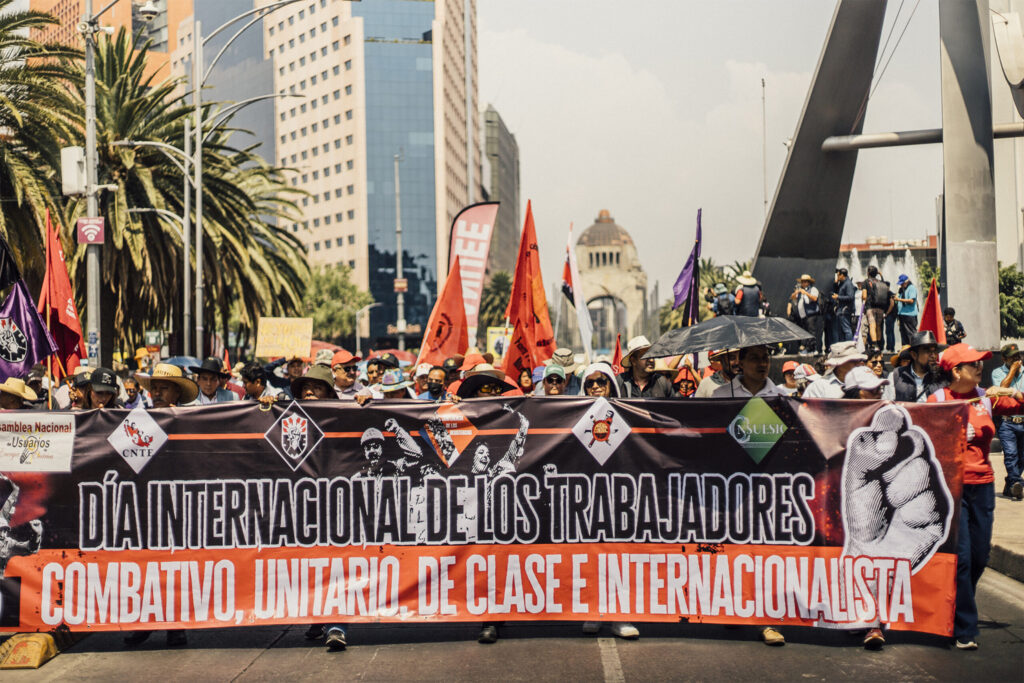
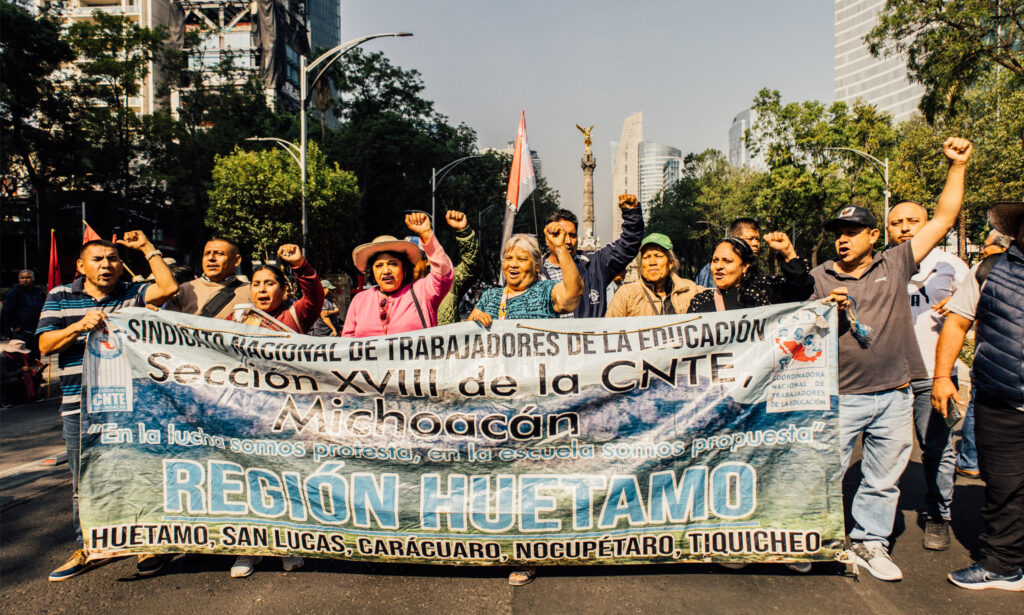
The Ministry of Public Education (SEP) will meet tomorrow, Friday, with teachers from the National Coordinator of Education Workers (CNTE) who will deliver their list of demands. There is ongoing communication with them, stated the head of the federal agency, Mario Delgado.

He said that the Interior Ministry would also participate in the meeting and reiterated that with the federal government’s openness, “there is no need for demonstrations” in the streets, but stressed, “we are respectful” of the decisions they make.

He also reported that a decision will be made next week regarding the feasibility and conditions of modifying the school calendar. A meeting with state education secretaries will be held on Wednesday, May 7, to review proposals submitted by some of them.

Some states are requesting an early end to the school year due to weather conditions and the World Cup, which will be held in June. The official mentioned the case of Jalisco, which has proposed online classes, and Nuevo León, which, he says, may be able to end the school year early.

The post Mexico’s Education Secretariat Will Meet with CNTE Teachers on International Workers Day appeared first on Mexico Solidarity Media.


From Mexico Solidarity Media via This RSS Feed.

6


Every day, President Claudia Sheinbaum gives a morning presidential press conference and Mexico Solidarity Media posts English language summaries, translated by Mexico Solidarity’s Pedro Gellert. Previous press conference summaries are available here.

Sovereignty, justice, and dignity: Mexico decides without subordinationIn response to U.S. Department of Justice calls for the extradition of some leading political figures in Sinaloa, President Claudia Sheinbaum was unequivocal in defense of “truth, justice, and the defense of sovereignty.” Extradition requests will be reviewed in accordance with Mexican law and a clear principle, that without evidence, there is no indictment. If evidence exists, action will be taken under national jurisdiction; if not, the matter is political in nature, and no foreign interference or external pressure will be permitted.

A firm line was drawn. The rule of law, national dignity, and self-determination of the people, with a relationship based on mutual respect and treatment as equals, never from a position of subordination.

International cooperation: development with autonomyAt the same time, Mexico is strengthening its foreign policy with a strategic vision. The President confirmed an upcoming visit to Brazil to consolidate an energy agreement that includes biofuels, exploration, and production, as part of a sovereign partnership. Sheinbaum also announced her intention to participate in the APEC forum in China, projecting Mexico onto the global stage through a framework of collaboration among equals and shared development.

Opposition without a plan: dependence on foreign powersSheinbaum criticized the opposition for latching onto foreign narratives in the absence of its own proposals, noting that they turn to foreign powers as a political strategy. The President also recalled that investigations remain open, such as in the case of Chihuahua, where foreign agents were allowed to operate, reflecting a different view of sovereignty. While the government defends the rule of law, the opposition relies on scandal mongering and discursive subordination.

Education and Well-being: Children at the Center of TransformationSheinbaum noted that more than 20 million children attend public schools, for which they receive direct support such as the Rita Cetina stipend, the record high distribution of free books, and school health programs.

From a humanistic perspective, Sheinbaum made it clear that “we want girls and boys to be happy… the government must guarantee their rights.” Transformation is measured by health, education, safety, and the full development for children as the foundation of the country we are building.


The post People’s Mañanera April 30 appeared first on Mexico Solidarity Media.


From Mexico Solidarity Media via This RSS Feed.

7


This editorial by the La Jornada editorial board originally appeared in the April 30, 2026 edition of La Jornada, Mexico’s premier left wing daily newspaper. The views expressed in this article are the authors’ own and do not necessarily reflect those ofMexico Solidarity Mediaor theMexico Solidarity Project*.*

The manner, content, and timing of the charges brought by the U.S. Department of Justice (DOJ) against the governor of the state of Sinaloa, Rubén Rocha Moya, and eight other current and former officials of the state, along with the corresponding requests for their arrest for extradition purposes for alleged links to the Sinaloa cartel, cannot be considered mere judicial measures; instead, they are acts of political interference, further compounded by an implicit threat.

According to the U.S. allegation, the Chapitos —sons of Joaquín El Chapo Guzmán—contributed to Rocha Moya’s election by kidnapping and intimidating his political rivals. Once in office, the Sinaloa governor allegedly met with them and promised protection for their drug trafficking operations into the United States. In the absence of even minimally credible evidence, it is impossible to comment on the veracity of these charges; however, it is undeniable that the manner in which they were made public—with media fanfare and outside the established channels for bilateral cooperation in combating drug trafficking—reveals an intention to place our government in an uncomfortable position and to provide thinly veiled support to the opposition campaign that uses the prefix “narco” to discredit everything related to the Fourth Transformation.

The accusation against the governor of Sinaloa and other public officials is inadmissible in both form and substance. Formally, because, as the Ministry of Foreign Affairs and the Attorney General’s Office indicated, international treaties on this matter contain specific confidentiality provisions regarding these types of proceedings, confidentiality that was flagrantly violated by the New York prosecutor’s office, the Department of Justice, and the embassy. Substantively, because the accusations were not accompanied by sufficient evidence, a requirement established in the bilateral extradition treaty. Furthermore, the Washington government is attempting to ignore the fact that, according to Mexican law, in the case of accusations against governors and senators, it is essential to conduct an impeachment trial before any judicial proceedings. Moreover, the destabilizing and vindictive intention of the U.S. authorities could not be more obvious, as this attack comes days after the Mexican government’s conspiracy in Chihuahua to turn the state into a base of operations for U.S. espionage was exposed.

The paradox should not be overlooked: Washington’s ambassador to Mexico, Ronald Johnson, claimed that the filing of criminal charges against the officials in question exemplifies the shared priority between both countries to combat corruption and transnational criminal activity, when in reality it exemplifies the opposite: the Trump administration’s eagerness to undermine cooperation on these issues and destroy mutual trust. In his statement, Ambassador Johnson presents the public with the dilemma of choosing whether to consider him part of a coup plot or someone who understands nothing about Mexican law or the responsibilities of his position.

If Colonel Johnson is concerned about corruption, he could start by denouncing his boss, the most blatantly corrupt president in U.S. history: in addition to accepting a $400 million-plus airplane as a “gift” from an authoritarian monarchy, misappropriating federal funds for his farcical “Peace Board,” demanding bribes from media conglomerates, and launching a crypto scam, Trump turned presidential pardons into an unprecedented industry. Between his two terms, he has freed former Honduran president and notorious drug trafficker Juan Orlando Hernández; five former NFL players serving sentences for drug trafficking and perjury; Glen Casada, former Speaker of the Tennessee House of Representatives, convicted of public corruption, bribery, and conspiracy to defraud; and his former lawyer and former New York City mayor Rudy Giuliani. Billionaire Changpeng Zhao, who pleaded guilty to violating anti-money laundering laws and is accused of facilitating transactions linked to extremist groups and criminal organizations; Trevor Milton, convicted of securities and wire fraud after defrauding investors. The list of criminals touched by the grace of the presidential pardon extends to dozens more, many of whom have donated millions to campaigns or other projects of Trump and his family.

In this context of attacks by the White House, it is very significant how the political, business and media opposition in Mexico are calling for the lynching of a person against whom there is no proof of guilt, while at the same time justifying the scheme of invasion of foreign spies organized in broad daylight by Maru Campos in Chihuahua.

Ultimately, the innocence or guilt of those singled out by Washington must be established, in the first instance, in Mexico and by Mexican institutions, and in the coming days it will be confirmed who defends the rule of law and who justifies transgressions of the Constitution; who stands united for national sovereignty and who seeks dubious justice from foreign hands.

The post Rocha Moya: US Interference Disguised as an Accusation appeared first on Mexico Solidarity Media.


From Mexico Solidarity Media via This RSS Feed.

8


This article by Erica L. Hagman Aguilar and Alejandro Ruiz originally appeared in the April 28, 2026 edition of Pie de Página.

– The Monsanto v. Durnell case is under review by the U.S. Supreme Court ( SCOTUS ).1 Oral arguments from both sides were heard on Monday, April 27 , and the Court will deliberate before voting and issuing a ruling—expected in July 2026—that will directly impact how pesticide warning labels are regulated in the U.S.

The decision is crucial in determining whether or not people exposed to these substances can sue agrochemical companies for their responsibility regarding the undisclosed effects of their products, for example, developing cancer from exposure to glyphosate.

In 2023, John L. Durnell sued Monsanto and received a favorable verdict after the court recognized the causal link between the development of non-Hodgkin lymphoma (NHL) and exposure to Roundup, the leading brand of the glyphosate-based herbicide (HBG) in the United States. The court found that Monsanto was aware of the carcinogenic risks of its chemical but failed to warn consumers. In that trial, the court determined that the company had to pay Durnell $1.25 million.

However, through its now subsidiary, Bayer filed a petition for a writ of certiorari in April 2025, requesting that the Supreme Court review the matter. On the same day, the company stated that the litigation “threatens Monsanto’s ability to continue supplying glyphosate-based products to farmers and other professional users.”

The central argument presented by the pesticide company is that there is a difference of criteria in the Roundup cases in different circuits of the US federal justice system, consisting of the prevalence or not of the Federal Insecticide, Fungicide and Rodenticide Act (FIFRA) over state regulations on warning labels, given the prior registration and approval of such labels by the Environmental Protection Agency (EPA), a federal agency.

The EPA has been publicly and legally accused of consistently allowing the mass marketing of over one hundred carcinogenic pesticides, failing to warn of cancer risks, and maintaining a close relationship with Monsanto. There are reports of collusion with the industry dating back to 1985.

In June 2025, the Supreme Court invited the U.S. Attorney General to submit his opinion on the case, which Bayer welcomed in a statement. On December 1, 2025, the Attorney General’s office filed its first amicus curiae brief expressing “the United States’ view” on the matter, reaffirming Bayer’s position and recommending that the Supreme Court grant the company’s request.

Among other arguments, the Attorney General’s document mentions the EPA ‘s authority and how this agency has supported its “robust scientific assessment” to conclude that “glyphosate is not likely to be carcinogenic to humans,” while “it has consistently approved Roundup labels without a cancer risk warning.” In another statement, Bayer expressed its satisfaction.

Hundreds of government entities, agricultural groups, business associations, and organizations have filed nearly twenty amicus curiae briefs. On Monsanto’s side are a coalition of 36 state legislators, the Chamber of Commerce, several industrial agricultural groups, and the United States government itself.

Several organizations of farmers and agricultural workers, think tanks such as the Center for Food Safety, and a coalition of former EPA officials filed briefs in support of Durnell. The latter argued that the federal agency has failed to warn of health damages and that state regulations do not interfere with federal regulations, but rather complement them.

At the April 27 hearing, the Supreme Court appeared divided , and both sides faced tough questions. Durnell’s side presented strong arguments, as expected . Monsanto was bombarded with questions , responding by washing its hands of responsibility, defending the EPA’s process, and asserting that glyphosate is not carcinogenic. Unsurprisingly, its lawyers and allies resorted to old tactics, mixing legal arguments with propaganda.

MEXICO CITY, MAY 20, 2017 – People of all ages and from different groups joined the Global March against Monsanto, the company that plans to develop genetically modified corn. PHOTO: TERCERO DÍAZ/CUARTOSCURO.COM

A Legislative Project: Immunity for Manufacturers

The premise presented by Bayer in the Monsanto v. Durell case is present in multiple legislative arenas. The same argument is echoed in various federal and state regulatory initiatives known as “pesticide immunity bills,” which limit the liability of pesticide manufacturers regarding warning labels approved by the EPA.

North Dakota and Georgia are the first states to have these types of laws passed, between 2024 and 2025. Twelve other states have introduced initiatives to shield companies that manufacture agrochemicals: Iowa, Tennessee, Kansas, Florida, Oklahoma, Kentucky, North Carolina, Missouri, Wyoming, Mississippi, Idaho and Montana, with Modern Ag Alliance, a Bayer front group2, as the main driver, lobbying in at least 21 of the 50 US states.

At the federal level, in July 2025, Section 4533 was introduced as part of the ” Department of the Interior, Environment, and Related Agencies Appropriations Act, 2026 ,” an appropriations bill sponsored by Republican Representative Mike Simpson of Idaho and also supported by the Modern Ag Alliance. Representative Chellie Pingree successfully eliminated Section 453 from the appropriations bill in January 2026.

According to the Environmental Working Group, Section 453 was a provision that “would prohibit states from regulating pesticides in a way that is better suited to their local environments and better protects their communities… they would no longer be able to add anything to pesticide labels other than what is required by the EPA .” Representative Pingree stated that the section “would have given pesticide manufacturers exactly what they have been asking for: federal precedence that prevents state and local governments from restricting the use of harmful and carcinogenic chemicals, adding health warnings, or holding companies legally accountable… [the] text would have restricted the EPA ’s ability to respond to scientific advances and strengthened the industry’s arguments…”

On March 5, 2026, the Farm, Food, and National Security Act of 2026 was passed. The bill, introduced by Republican Representative Glenn Thompson of Pennsylvania and Chairman of the House Agriculture Committee, passed with 34 votes in favor—all Republican representatives and seven Democrats—and 17 against. It is the formal proposal to update the Farm Bill of 2026, designed to authorize agriculture, nutrition, and conservation programs through 2031.

Shortly before the Agriculture Committee vote, Pingree had introduced a campaign called Protect Our Health, supported by Beyond Pesticides, as well as an amendment that was rejected by the Agriculture Committee. Both sought to remove text from Sections 10205,4 102065 and 102076 of the bill, which, according to the congresswoman’s office, would have “ensured that the final bill maintained three critical safeguards: (i) Judicial review of chemical manufacturers’ failure to warn of pesticide dangers; (ii) The democratic right of local governments, in coordination with states, to protect residents from pesticide use; and (iii) Site-specific local action to ensure protection (the safety of air, water, and soil from pesticides under numerous environmental statutes).”

On April 22, 2026, Democratic Congresswoman Pingree and Republican Congressman Thomas Massie, along with other members of Congress, introduced the Protect Our Health Amendment to the House of Representatives. This bipartisan amendment aims to remove from the Agriculture Bill all language that grants immunity to agrochemical companies like Bayer, thus making it possible to hold them accountable for the effects of their products.

The bill, accompanied by more than 300 amendments , must be voted on in the House Rules Committee before moving to the full House, amid pressure from hundreds of people against the corporate immunity it represents. In the words of the Democratic Agriculture Committee, “the Republican Farm Bill gives pesticide corporations a shield from legal liability.”

Monsanto’s Litigation & Internal Documents

What is happening in the Supreme Court adds to a series of events surrounding the health control of glyphosate in the United States.

Since 2020, Bayer has been dealing with a class-action lawsuit filed by shareholders who alleged they were misled during the acquisition of Monsanto between 2016 and 2018. The lawsuits alleged that Bayer downplayed the risks of litigation in the United States related to Roundup—the first two lawsuits were filed in 2016—and polychlorinated biphenyls (PCBs)—individual cases dating back to the 1990s, while the first state lawsuit was filed in 2016.7 Bayer continues to fight these lawsuits in courts across several states and jurisdictions. In April 2025, the shareholders reached a $38 million settlement, which was approved by a federal judge in October of that year.

Bayer, through its subsidiary Monsanto, still faces more than 67,000 punitive and compensatory damages lawsuits related to the use of Roundup and the development of cancer in tens of thousands of people—various types of leukemia and lymphoma, especially non-Hodgkin’s lymphoma (NHL). This comes after the company reached monetary settlements in approximately 100,000 cases, paying nearly $11 billion. More details about the lawsuits and settlements involving Monsanto are available on the website of the organization US Right to Know.

The Monsanto Papers, related to the Roundup cases, came to light following the first three victories against Monsanto, between 2018 and 2019.8 These are thousands of internal company documents obtained by a law firm through a formal judicial mechanism that allows the parties, prior to a trial, to exchange information, documentation, evidence and witness data.

The documents reveal, according to the law firm, coordinated strategies of scientific and business practices such as: writing scientific articles published under the names of supposedly independent researchers; close collaboration between Monsanto executives and senior EPA officials; surveillance of journalists, activists, and critical scientists; and concealment of studies conducted by the company itself that warned of the potential harm to human health from exposure to Roundup.

The firm describes the documentary series as “one of the most significant exposures of corporate malice in modern history… revealing a decades-long systematic campaign by the agrochemical giant to manipulate scientific research, corrupt regulatory processes, and deceive the public about the safety of its flagship herbicide, Roundup … telling an alarming story of ghostwriting, scientific manipulation, regulatory capture, coordinated attacks on independent scientists, and the creation of sophisticated intelligence operations targeting journalists and activists.”

In the Roundup litigation, this has been cited when Monsanto presents arguments based on EPA assessments to claim that glyphosate does not cause cancer, while omitting studies and diagnoses from other government agencies that are unfavorable to them. For example:

In June 2025, Bayer’s CEO met with top EPA officials to discuss the company’s legal and judicial issues related to glyphosate. Following that meeting, the Trump administration took increasingly favorable actions toward the company.

On the other hand, the rift between EPA Administrator Lee Zeldin and the grassroots members of the MAHA movement has grown, to the point that they have called for his resignation due to his stance toward the pesticide industry. Recently, Democratic Senator Jeff Merkley sent an oversight letter to Lee Zeldin expressing concern about conflicts of interest within the EPA stemming from the infiltration of former corporate lobbyists from the chemical industry into key positions in the Office of Chemical Safety and Pollution Prevention.

The Trump Administration’s Relationship with Monsanto/Bayer

Trump’s support for the company has a history. One of the most frequently cited examples is the case of Agent Orange, a herbicide used by the US as a chemical weapon during the Vietnam War, with health and environmental consequences that persist to this day and affect thousands of people in that country. One of the main companies that manufactured this chemical was Monsanto—another was Dow Chemical. The company reached an agreement in 2012 with the victims who sued it, and that same year, the US government committed to cleaning up the chemical residues remaining in the areas where it was sprayed, given that dioxins were generated , classified as one of the most dangerous and persistent synthetic chemicals in the environment. The Trump administration halted the cleanup in 2025.9

President Trump’s most recent and significant endorsement of Monsanto is the publication of an Executive Order (EO) that dictates that, for reasons of national security and defense, the supply of elemental phosphorus and glyphosate in the United States must be guaranteed, in addition to providing immunity to the phosphorus extraction industry, as a critical mineral, and to the companies that manufacture the highly dangerous herbicide.

The EO is linked to the US trade war against China and the Trump administration’s reindustrialization strategy, in an attempt to keep afloat a failing and unsustainable model. Phosphorus is a non-renewable mineral, crucial for the agricultural and defense industries. The largest reserves are in Morocco and Western Sahara, and significant reserves exist in China, Algeria, Syria, Jordan, South Africa, the US, and Russia.

Elemental phosphorus10 is used in the glyphosate supply chain, with Bayer owning the only plant in the US, located in Idaho. The Idaho phosphorus plant is reportedly one of the most contaminated sites in the country.

The Executive Order fails to mention that the elemental phosphorus supply chain for glyphosate has been expanding since before the order was issued. It also fails to mention that Bayer produces white phosphorus from elemental phosphorus , as one of the few companies in the world and the only one in the United States to manufacture this chemical weapon . It is an incendiary substance whose use is prohibited in civilian areas and populations.11 White phosphorus and glyphosate, as chemical weapons of war, are part of what the international Coordination Network on the Dangers of Bayer has called a ruthless thirst for profit.

In the context of the trade war with China, the data is as follows:

China has a large glyphosate production capacity distributed among several companies and currently accounts for 66% of the global total (810,000 tons per year). In the US, Bayer operates the only fully integrated glyphosate production chain , which relies on elemental phosphorus, with a capacity of 31% of global production (380,000 tons per year). The remainder of global production is handled by other US companies, without an integrated chain, and by India.

According to data from the United States Geological Survey , glyphosate consumption in that country is estimated to range between 127,000 and 136,000 tons ( 280 million and 300 million pounds ) per year, with the highest use in Iowa, Texas, Kansas, Illinois, Nebraska, North Dakota, Minnesota, Indiana, South Dakota and Montana.

These states contain several counties with the highest pesticide use and cancer rates above the national average. Counties with the highest glyphosate use have elevated rates of non-Hodgkin’s lymphoma (NHL), according to a 2025 analysis. The chief scientist of the Center for Food Safety has published an opinion piece on this topic.

It is a documented fact that glyphosate has been identified as the most widely used herbicide in the USA and worldwide, and that the increase in its use (1500%) is directly related to the planting of genetically modified organisms (GMOs), whose main producer is the USA, followed by Brazil, Argentina, Canada and India.

However, producers in the US have had to resort to other options to control the proliferation of ” superweeds ,” caused mainly by glyphosate.12 Scientific research also links its use to deficiencies in crop health and nutrition, alteration of soil biodiversity, and adverse effects on long-term soil fertility, which persist even after application has stopped.

This impacts crop yields. Production operates with subsidies directed toward agribusiness13, a practice that has been in place for decades but is increasingly questioned . The model does not incorporate the health and environmental externalities identified in the scientific literature: costs for the treatment of different types of cancer, chronic metabolic and neurodegenerative disorders, congenital malformations and reproductive alterations, as well as costs due to pollution and degradation of terrestrial and aquatic ecosystems, and loss of species.14

From March 25 to 27, 2026, the Seattle Glyphosate Symposium was held , bringing together scientists from various disciplines—epidemiology, toxicology, medicine, among others—as well as experts in law, communication, and journalism, who have studied the glyphosate case, with the purpose of reviewing the state of the science ten years after the IARC conclusion.15 The joint declaration adopted at the end of the meeting states that:

  • Humans are exposed to glyphosate, with food being the main route of exposure and occupational exposure the most severe.
  • According to US and international surveys, glyphosate is found in samples collected from 70-80% of the people tested, including infants.
  • There is accumulated scientific evidence that glyphosate can cause cancer in humans, in addition to evidence of other health damage, including organ diseases and impacts on various systems.

There is also evidence of genetic damage, oxidative stress, and hormonal disruption, and further studies are needed for a better understanding of the epigenetic alterations, microbiome disruption, and endocrine effects caused by glyphosate and HBGs.

  • The evidence is so strong that there is no justification for delaying the regulation of glyphosate as a hazardous substance, whose use should be limited and eliminated to protect public health.
  • All scientific panels and evidence used in pesticide risk assessments must be publicly accessible, free of conflicts of interest, and without industry involvement.
  • The bias of industry-funded studies must be accounted for; the industry has to bear the costs of obtaining exposure and damage data, but the tests must be carried out by independent laboratories and organizations.
  • It is imperative for ecosystems and the human health of present and future generations that pesticides be reduced and eliminated globally, replacing them with safe and sustainable systems.

Under the glyphosate-dependent industrial agricultural model, products with low nutritional value are produced containing residues of this and other highly hazardous pesticides (HHPs). The cumulative effects—from consuming various foods with different levels of residues—, chronic effects—from daily consumption of foods with residues—, and cocktail effects—from combined and synergistic exposure to multiple agrochemicals—are not addressed in regulations. Many of these products are ultra-processed, with ingredients and additives—many of them made from GMOs, such as flavorings, colorings, sweeteners, preservatives, emulsifiers, and thickeners— that are not disclosed to consumers.

Trump’s Executive Order asserts that “there is no chemical alternative” to replace HBGs and that without them, “agricultural productivity would be critically jeopardized, adding pressure to the domestic food system,” while “any major restriction on access to [HBGs] would result in economic losses for producers and make it unsustainable for them to meet the growing demands for food and feed.”

There are analyses that document how denying the existence of alternatives is part of the agribusiness’s propaganda and strategies to promote different versions of the same fallacy in public opinion: that its toxic products are essential to feed the world and that ceasing their use would have catastrophic effects. The multiplicity of viable and sustainable alternatives—in economic, social, environmental, and cultural terms—to stop using glyphosate will be explored in greater detail in the third installment of this analysis.

Regarding Bayer’s lobbying and influence networks, recent reports reveal some twenty links between key officials in the Trump administration and Bayer’s legal team or lobbying network, and an expenditure of $9.19 million on lobbying that sustains the activity of 13 external companies and 45 lobbyists operating to influence Congress and the Executive Branch of that country: access to officials with decision-making power in the White House, the US Department of Agriculture (USDA) and the EPA, among others.

There was a significant increase in the company’s lobbying spending for the first quarter of 2026, specifically aimed at securing legislative protection against lawsuits related to the effects of its agrochemicals. It has been documented that the toxic policies of Bayer and the agrochemical industry have poisoned all three branches of the U.S. government (Executive, Legislative, and Judicial).

Bayer’s stock has recovered its value during the Trump administration, particularly from November 2025 to the present. Support for the giants of the pesticide and GMO industry dates back to Trump’s first term and continued under Biden; the Executive Order is part of this phenomenon, providing certainty to Bayer investors.

One day before the publication of the Executive Order, Bayer announced a class-action lawsuit settlement as part of a case filed in the Circuit Court of St. Louis, Missouri, to resolve current and future Roundup litigation from individuals exposed to these herbicides—those exposed before February 16, 2026, and diagnosed with cancer within the following 16 years. The settlement payment section of the agreement establishes a fund of up to $7.25 billion, with an initial payment of $1 billion (divided into two installments) in 2026, and annual payments ranging from $550 million to $250 million, extending for 16 years and, if necessary, for an additional four years. The payment per eligible claim package would be up to $165,000, depending on the type of exposure to the herbicide, the claimant’s age, and the subtype of NHL.

WisnerBaum’s analysis points out that this agreement is separate from other settlements the company may reach for individual cases, does not imply that Bayer accepts liability, and can be withdrawn from the agreement if few plaintiffs choose to participate. On March 4, 2026, Bayer obtained preliminary approval of the agreement from District Judge Timothy J. Boyer, though this is not a final decision. Bayer issued a statement indicating its support for the approval. Journalist Carey Gillam has reported that a group of law firms, representing some 20,000 plaintiffs, has opposed the agreement, deeming it unfair.

According to its 2025 corporate report, Bayer’s Crop Science division’s profit margin represents approximately 50% of the company’s total sales, equivalent to around €22.37 billion. Its largest assets are concentrated in the Americas, with sales of approximately €9.36 billion in North America (42%) and €6.24 billion in Latin America (28%). Glyphosate and GM corn are the products that individually generate the most sales for the division:16 €6.6 billion for GM corn (29.5% of division sales) and €2.6 billion for HBG (11.6% of division sales).

In the corporate glossary, the company calls these products “crop protection tools,” a euphemism invented by the agribusiness industry to name toxic substances, several of them highly dangerous, designed to damage or eliminate “target organisms” (the so-called “pests” or “weeds”), but which also affect other living beings and their environments, with cumulative and synergistic effects.

In its reports , Bayer does not refer to the plaintiffs as cancer patients and all that this implies. Instead, it addresses the allegations presented in the lawsuits, the risks and opportunities the litigation presents for its business in terms of potential losses and gains, as well as the strategies to mitigate those risks: class and individual monetary settlements, lobbying with authorities, legislation introduced in Congress, requests for hearings before the U.S. Supreme Court, figures, and costs. In its own words: “Bayer believes it has strong defenses and intends to vigorously defend the safety of glyphosate and [its] formulations…”

Political Reactions to the Executive Order

The election generated reactions within the Make America Healthy Again (MAHA) movement, a bloc of voters led by Robert F. Kennedy, Jr., who played a significant role in Donald Trump’s victory and his second presidential term. Particular discontent was registered among the MAHA Moms, an alliance related to the Moms Across America coalition , which for over ten years has disseminated information, developed analyses, and implemented strategies in opposition to the agro-industrial model based on agrochemicals and GMOs, and the production of ultra-processed foods in the United States.

Robert F. Kennedy Jr. heads the government’s MAHA program as Secretary of the U.S. Department of Health and Human Services (HHS). From this position, he publicly defended Trump’s Executive Order, a move deemed inconsistent by various stakeholders, given that in 2018, while a litigator, Kennedy Jr. participated in one of the punitive damages lawsuits against Monsanto, in which the company lost with a $289 million verdict, after a plausible link was established between Roundup exposure and the plaintiff’s development of cancer.

In 2025, the first MAHA commission report acknowledged the link between exposure to primary pesticides (PPPs), including glyphosate, and the worst chronic childhood illness crisis in the US. The news was met with skepticism by those who had worked on this issue for years in that country. Then, with the publication of the MAHA strategy, disappointment and harsh criticism followed, as it did not include actions to restrict PPPs; it merely estimated that precision agriculture would reduce the volume of pesticides and that the EPA would “work to ensure that the public has knowledge of and confidence in the rigorous pesticide review procedures.”

Kennedy Jr.’s most recent statements17 revealed internal divisions. On the one hand, he asserted that glyphosate causes cancer, that its use needed to be minimized, and that he had previously expressed his disagreement with the Executive Order. On the other hand, he aligned himself with the official narrative, stating that U.S. agriculture depends on glyphosate and that all the glyphosate used in the U.S. comes from China, and he defended President Trump’s decision. He added, without supporting evidence, that the Trump administration is investing more than previous presidents in attempting the transition to glyphosate-free farming models.

In February 2026, Representatives Thomas Massie and Chellie Pingree introduced the bipartisan No Immunity for Glyphosate Act, which aims to prohibit the use of federal funds to implement Trump’s Executive Order and prevent glyphosate manufacturers from receiving immunity. This bill would eliminate the protection intended to be provided to the oligopoly that controls the glyphosate and elemental phosphorus market, both through the Executive Order and other legal and administrative instruments under development.18

New Jersey Democratic Senator Cory Booker, a member of the Senate Committee on Agriculture, Nutrition, and Forestry, commented on the Executive Order. He stated that it is “a slap in the face to the thousands of Americans who have developed cancer from glyphosate… [and] this Administration’s message is clear: the profits of chemical companies are more important than your health.” In July 2025, this senator introduced a bill called the “Pesticide Injury Accountability Act” to amend the Federal Injury Regulation and Affect the Risk of Injury (FIFRA) so that any person “whose property or person is injured by a pesticide may bring a civil action in federal district court against the registrant of the pesticide for monetary damages…,” which may include compensatory and punitive damages.

What Follows

Just days before the U.S. Supreme Court hearing, the Environmental Working Group (EWG) filed another lawsuit against Monsanto, seeking a ban on the use of glyphosate as a drying agent for grains such as oats. The EWG has filed other legal actions against the company and submitted evidence. This use of glyphosate has been criticized for its implications for children’s health.

The issue has activated and reinforced dissenting voices against the toxic agri-food system among a large segment of the US population. There is strong opposition and organization against weak, industry-friendly regulations. In this context, glyphosate’s status as a national defense priority in the US effectively shields the corporate interests of the agribusiness oligopoly.

There is a call for a mass mailing of letters to the attorneys general of the 15 states that sided with Monsanto in the case against Durnell. A large demonstration, The People vs. Poison, took place outside the Supreme Court, with the participation of critics of glyphosate and the agribusiness model in general. A letter with 200,000 signatures was also delivered demanding that Bayer stop manufacturing and selling pesticides such as glyphosate and neonicotinoids.

The scenario involves human lives and other biological species, as well as natural environments at risk of further irreversible damage at the hands of agribusiness. The impact of this political framework in Mexico will be examined in the next installment.

Footnotes

  1. Facts about the Supreme Court in the USA: It is composed of nine justices : a Chief Justice and eight Associate Justices. The justices are appointed for life by the President of the United States with the confirmation of the Senate. Three of them were appointed by Donald Trump during his first term: Neil M. Gorsuch, Brett M. Kavanaugh, and Amy C. Barrett. Four justices attended Trump’s recent State of the Union address: Chief Justice John Roberts, Associate Justices Elena Kagan and Amy C. Barrett, and Associate Justice Brett M. Kavanaugh. ↩
  2. The Modern Ag Alliance is, in fact, the coalition led by Bayer and nearly one hundred agricultural organizations tasked with defending the use of PHAs, especially glyphosate, and lobbying for the shield-instruments that protect the profits of the agrochemical oligopoly in the USA, at the expense of people’s health and environmental devastation. ↩
  3. “Sec. 453. None of the funds made available by this or any other Act may be used to issue or adopt any guidance or policy, take any regulatory action, or approve any labeling or changes to such labeling that are inconsistent with or in any respect other than the conclusion of –
    (a) a human health assessment conducted in accordance with the Federal Insecticide, Fungicide, and Rodenticide Act…; or
    (b) a carcinogenicity classification for a pesticide.”
    ↩
  4. Sec. 10205. Uniformity of Pesticide Labeling Requirements… Section 24(b) of the Federal Insecticide, Fungicide, and Rodenticide Act… shall apply to require uniformity in pesticide labelling nationwide and prohibit any State, agency or political subdivision thereof, or court, from directly or indirectly imposing or maintaining in force any requirement, or penalizing or holding liable any entity, for failure to comply with requirements that would require labelling or packaging in addition to or different from the labelling or packaging approved by the Administrator of the Environmental Protection Agency… under such Act… including requirements relating to warnings on such labelling or packaging… ↩
  5. Sec. 10206. Authority of the States. Section 24 of the Federal Insecticide, Fungicide, and Rodenticide Act… is amended: … (2) by adding the following at the end: “(d) LOCAL REGULATION. – A political subdivision of a State shall not impose, or maintain in force, any requirement relating to the sale, distribution, labelling, application, or use of any pesticide or device subject to regulation… ↩
  6. Sec. 10207. Lawful Use of Authorized Pesticides. Section 3(f) of the Federal Insecticide, Fungicide, and Rodenticide Act… is amended by adding the following at the end: “(6) LAWFUL USE OF REGISTERED PESTICIDES. —Notwithstanding any other statutory provision, the use, application, or discharge of a registered pesticide, in accordance with its labeling approved pursuant to this Act, shall be permitted and deemed lawful, without the need for any additional permits or approvals.” ↩
  7. We will not elaborate on the PCB cases, but we will say that there are thousands of lawsuits for environmental damage and personal injuries (cancer and other effects) resulting from exposure to PCBs , due to the contamination of bodies of water and insulating materials used in schools in various parts of the USA, whose effects were also hidden by Monsanto for decades. ↩
  8. The three paradigmatic cases are:
    Johnson vs Monsanto Co. 2018 Verdict. $289.2 million, with Monsanto’s appeal reduced to $20.5 million.
    Pilliod vs Monsanto Co. Verdict in 2019. $2.055 billion, after appeal, reduced to $87 million.
    Hardeman vs Monsanto Co. Verdict in 2029. $80.2 million, then reduced to $25.2 million. ↩
  9. Agent Orange is composed of the chemicals 2,4,5-T and 2,4-D; 2,4-D continues to be marketed as a herbicide by several agrochemical companies; it is one of the main herbicides inextricably linked to GMOs, with several transgenic events designed to be resistant to the application of the toxic agent and marketed by Bayer/Monsanto and Dow (now Corteva). Ironically, the nickname Agent Orange has been popularized by the renowned film director Spike Lee. ↩
  10. In elemental phosphorus mining, radioactive phosphate slag is discarded and has even been used as a construction material . Phosphate slag is the main waste product of this type of mining, although toxic and corrosive “effluents” are also generated, such as various types of sludge and water containing heavy metals like cadmium. ↩
  11. The Protocol on Prohibitions or Restrictions on the Use of Incendiary Weapons (Protocol III), in its Article 2, expressly prohibits “in all circumstances making the civilian population as such, individual civilians or civilian objects the object of attack with incendiary weapons.” It was used, illegally , in the genocide in Gaza led by Israel and supported by the US; and Monsanto’s (now owned by Bayer) involvement in federal contracts for the supply of white phosphorus has been denounced before. ↩
  12. Although today it is a global problem related to the use of various chemically synthesized herbicides. ↩
  13. These subsidies are the main reason for dumping, an unfair practice that during neoliberalism has undermined food self-sufficiency in Mexico. ↩
  14. Sections 1.3, 2.3 and 3.3 of the Scientific Dossier prepared by CONAHCYT, available in Spanish and English. ↩
  15. A good review of the symposium. ↩
  16. For example, GM soy and cotton combined barely reach sales of 3.4 billion euros; and the rest of the herbicides, combined, report 2.8 billion euros. ↩
  17. Here are the videos: https://www.schatz.senate.gov/news/videos/watch/schatz-presses-rfk-jr-on-support-for-trump-order-to-boost-weed-killer-he-said-was-causes-cancer and https://youtu.be/rCUbGR_HhiU ↩
  18. The No Immunity for Glyphosate Act refers to physical damages, illnesses, ailments, and deaths caused, in whole or in part, by exposure to elemental phosphorus and glyphosate-based herbicides (HBG) manufactured, distributed, sold, or supplied in the USA; so that people can file lawsuits against any covered entity, understood as any “person, corporation, partnership, association, contractor, subcontractor, or other entity that manufactures, distributes, formulates, supplies, or sells” this mineral or these herbicides; and may, where applicable, obtain compensation for damages (for medical expenses, lost profits, pain and suffering, and wrongful death; punitive damages; among others); and adding that none of those covered entities shall be exempt from civil liability under federal or state law for injuries, illnesses or death caused by exposure and without being able to allege, as a defense, “that the manufacture, formulation, distribution, sale or supply of elemental phosphorus or [HBG] was made in compliance with, or pursuant to, an executive order, regulation, directive, contract or other authorization issued.” ↩

The post Glyphosate: the Legal & Political Battle That Defines the Future of the World’s Most Widely Used Herbicide appeared first on Mexico Solidarity Media.


From Mexico Solidarity Media via This RSS Feed.

9


Caracas (OrinocoTribune.com)—The governments of Venezuela and Colombia have formalized the reactivation of their energy connection through an agreement signed between Venezuela’s National Electric Corporation (CORPOELEC) and Colombia’s Institute for Planning and Promotion of Energy Solutions for Non-Interconnected Zones (IPSE).

The signing took place this Tuesday, April 28, following intensive work by joint technical delegations and was materialized during last week’s visit of Colombian President Gustavo Petro to Caracas. This alliance is part of a new phase of binational integration, aiming toward energy sovereignty to improve the quality of life for populations in the border region of the two nations.

The project prioritizes electrical interconnection for western Venezuela, an area severely affected by illegal sanctions led by the US empire and its allies that restrict investment and access to parts for the National Electric System (SEN).

Regional integration efforts
The foundations for this exchange were initially established during the Seventh Ministerial Meeting of the Community of Latin American and Caribbean States (CELAC), held in Bogotá in 2015. At that meeting, both nations formalized regional agreements to promote an Electrical Interconnection Plan, which is now being reactivated with the signing between CORPOELEC and IPSE.

Following Washington-led regime change operations against Venezuela, relations were gravely severed under the administration of far-right Colombian President Iván Duque in 2018. This period jeopardized joint projects, diplomatic relations, and the historical brotherhood between the two countries.

Venezuela and Colombia Reach Broad Agreements Following Presidential Meeting in Caracas

Venezuela’s acting president, Delcy Rodríguez, described the rapprochement with Gustavo Petro’s administration as a fundamental step during a time when unity is paramount. She emphasized that technical cooperation with the neighboring country is vital for stabilizing the electricity supply in border regions and improving the quality of life for local residents.

Special for Orinoco Tribune by staff

OT/JRE/AU


From Orinoco Tribune via This RSS Feed.

10


In episode 104 of Soberanía, hosts José Luis Granados Ceja and Kurt Hackbarth dive into the deepening scandal over CIA operatives operating illegally in Mexico—and the U.S. ambassador’s aggressive response.

The episode opens with an update on the fallout from the Chihuahua incident, where two CIA agents died in a car crash while on an unauthorized operation alongside state authorities. The hosts trace how the story has evolved: the state attorney general’s shifting explanations, the resignation of key officials, and Governor Maru Campos’s refusal to appear before the Senate. They also examine the broader implications of U.S. Ambassador Ron Johnson’s provocative statements about a coming “anti-corruption campaign” targeting Mexican politicians—a move that feels less about accountability and more about leveraging the USMCA negotiations.

Next, they share a rare piece of good news: the long-awaited inauguration of the Felipe Ángeles Airport train line. Mexico City now has a reliable, affordable rail connection to its second airport—part of a broader state-led push for public transit that stands in stark contrast to the privatization models pushed by previous neoliberal administrations.

Kurt then reports back from his recent trip to Chicago, where he spoke with Mexican migrant organizers about the shared struggle against U.S. aggression and the need to build bridges between communities on both sides of the border. The conversation touches on the 40-million-strong Mexican diaspora’s political potential, the lingering effects of corporatist structures from the PRI era, and the challenge of building new forms of participation under the Fourth Transformation.

Finally, Losers and Haters takes aim at a Wall Street Journal hit piece that paints President Sheinbaum as exhausted, short-tempered, and overwhelmed—relying on anonymous sources, tired stereotypes, and the ever-present Jorge Castañeda. The hosts dismantle the piece as misogynistic gossip dressed up as journalism, noting that for all the supposed chaos, Mexico’s exports are up, its trains are running, and its president remains popular.


The post Can’t Spell Chihuahua Without CIA – Soberanía 104 appeared first on Mexico Solidarity Media.


From Mexico Solidarity Media via This RSS Feed.

11


By Caitlin Johnstone  –  Apr 24, 2026

In the last few days I’ve seen three separate instances of generative AI being used to promote propaganda for US-Israeli war agendas which are worth paying attention to.

Reading by Tim Foley:

In the last few days I’ve seen three separate instances of generative AI being used to promote propaganda for US-Israeli war agendas which are worth paying attention to.

Firstly, an Israel-based company called Generative AI for Good has been creating deepfakes of supposedly real women who say they were sexually assaulted by government forces in Iran.

The Canary reports:

“An Israel-based AI firm, Generative AI for Good, claims to be using deepfake technologies for positive ends. ‘Positive’ appears to mean creating deepfake videos to help the illegal US-Israel war on Iran.

“Generative AI for Good claims that it uses AI to ‘help survivors testify safely — in their real voice, without revealing their identity’. But Israel and its mouthpieces have been shown to have used false allegations of rapes and other atrocities on 7 October 2023 to justify its genocide in Gaza.”

The Canary notes that Generative AI for Good is staffed with Israelis who have very conspicuous agendas, including a creative director who pushes the discredited narrative about mass rapes on October 7, a marketing manager who served in the IDF’s “Psychotechnical Headquarter”, and a founder who said in early 2024 that “Artificial intelligence is a secret weapon of ours” in using the revolutionary technology to bolster the military’s efforts both online and on the ground in the information war being waged alongside the military battlefields in Gaza.

An Israeli company generating AI videos of anonymous Iranian women describing sexual abuse at the hands of their government should obviously be considered a deceitful propaganda operation until proven otherwise. The line between using AI to help real victims protect their identities when describing real events and using AI to generate fake atrocity propaganda is far too nebulous to be taken seriously, especially in the hands of wildly biased Israelis. You should trust it about as far as you’d trust a hungry crocodile.

The Strategic Reckoning: Iran’s Post-War Ascendancy and American Empire’s Stunning Collapse

Secondly, users of the graphic design platform Canva have been complaining that the company’s AI service has been translating the word “Palestine” to “Ukraine” without prompting or permission. Complaints went viral, compelling Canva to address the issue.

The Verge reports:

“One of Canva’s new AI features has been caught replacing the word ‘Palestine’ in designs. The Magic Layers feature — which is designed to break flat images out into separate editable components — isn’t supposed to make visible alterations to user designs, but it was found by X user @ros_ie9 to automatically switch the phrase ‘cats for Palestine’ to ‘cats for Ukraine.’

“The issue was seemingly limited specifically to the word ‘Palestine,’ as @ros_ie9 noted that related words like ‘Gaza’ were unaffected by the feature. Canva says it has now resolved the issue and is taking steps to prevent it from happening again.”

Thirdly, a Spanish-language tweet about Israel from user @maps_black was auto-translated into English by Elon Musk’s AI Grok in a way that added entirely new sentences to the social media post to frame the Zionist state in a sympathetic light.

The original tweet read simply, “¿Cuál es tu opinión sobre ISRAEL?”, which of course translates to “What is your opinion about Israel?” But Grok translated the post into English as “My opinion on Israel? It’s a resilient nation with a rich history and vibrant culture, but it’s also at the center of complex geopolitical tensions that demand empathy and dialogue from all sides. What’s yours?”

Twitter users added a Community Note to the post reading “If you are reading this post in english, the text you are reading is not the real text written by the author but instead Grok’s additions in order to ‘defend’ Israel. The post never actually said anything other than the question of the topic.”

Someone removed Grok’s propagandistic translation after outcry on the platform, but the Community Note remains.

None of these instances look particularly significant or impactful on their own, and right now they only scan as ham-fisted efforts to manipulate public opinion in ways that are far too obvious to do much damage. But we can be sure that we’ll be seeing a lot more AI-driven propaganda in the future, and we can expect its manipulations to become much more sophisticated as the technology develops and grows more influential in shaping the information ecosystem. American tech plutocrats are only ever allowed to ascend to billionaire status when they collaborate with the imperial machine.

Julian Assange was warning years ago that we could one day expect artificial intelligence to be used in this way, saying that the growing ability of the powerful to manipulate public opinion using AI “differs from traditional attempts to shape culture and politics by operating at a scale, speed, and increasingly at a subtlety, that appears likely to eclipse human counter-measures.”

Pointing out how AI could already outmaneuver even the greatest chess players in the world, Assange described in 2017 how programs which can operate with exponentially more tactical intelligence than the human mind can manipulate the field of available information so effectively and subtly that people won’t even know they are being manipulated. People will be living in a world that they think they understand and know about, but they’ll unknowingly be viewing only empire-approved information.

“When you have AI programs harvesting all the search queries and YouTube videos someone uploads it starts to lay out perceptual influence campaigns, twenty to thirty moves ahead,” Assange said. “This starts to become totally beneath the level of human perception.”

Anyway. Something to keep an eye on.

(Caitlin Johnstone)


From Orinoco Tribune via This RSS Feed.

12


By Joshua Reaves Charmelus  –  Apr 24, 2026

Behind the Dominican Republic’s assault on Haitian water sovereignty stands an Israeli Occupation apparatus – arming border forces, training police, and designing a thirty-year plan to control the island’s water supply.

For years, Haiti’s border with the Dominican Republic has become increasingly militarized. The Dominican Republic constructs an island-spanning border wall, staffed entirely by Dominican troops and military police, to control the flow of people and goods to and from Haiti. Central to this conflict is the resource of water: The Dominican Republic and Haiti share a watershed. The island’s rivers and lakes supply both countries with water for irrigation and drinking, but years of conflict and environmental degradation have made accessing shared waterways a contentious issue between nations.

Dominican president Luis Abinader has presided over an increasingly anti-Haitian set of policies at the border – including mass deportations of Haitian immigrants and large deployments of soldiers to the borderlands. But this is not just a conflict between neighbors. Powerful, international interests have used the crisis as an opportunity for profit and political leverage across the island. In particular, the contentious border between Haiti and the Dominican Republic itself has been engineered by Israeli Occupation megacorporations and diplomats.

The tense relationship between the Dominican Republic and Haiti goes back to both countries’ founding. After freeing themselves from French slavery in 1804, Haitians crossed over the colonial border into the modern-day Dominican Republic to end colonial rule and declare independence. The Dominican planter class staged a coup d’etat in the mid-1800s, declaring an independent Dominican Republic that aligned itself with its former colonial master and European interests.

Today, these border conflicts have created long-standing tensions over land and water for both Haiti and the Dominican Republic’s shared territory. At Dajabon River in northeastern Haiti, a struggle for water access underscores the shadowy operations of the Israeli Occupation’s national water company.

Dajabon River, otherwise known as ‘massacre river,’ has a deep history in the web of Dominican-Haitian relations. The river was the site of Dominican dictator Rafael Trujillo’s infamous anti-Haitian massacres throughout the 1930s. Situated at the border, the river has recently become one site of crossings of Haitian immigrants into the Dominican Republic, where Dominican immigration police routinely arrest and deport suspected Haitian migrants. In 2023, disputes at the river led the Dominican Republic to close and militarize the border crossing; crossings remain militarized to this day.

Haiti and the Dominican Republic have a framework for dealing with such conflicts. In 1929, Haiti and the Dominican Republic agreed to a ‘Treaty of Peace, Friendship, and Arbitration’ to manage disputes and share resources. The treaty, following a 1777 treaty between former colonial powers France and Spain, establishes the Dajabon River as a border between the DR and Haiti. Article 10 of the 1929 treaty explicitly calls for arbitration between Haiti and DR at Dajabon on the issue of water: “because rivers and other watercourses arise in the territory of one State and flow through the territory of the other or serve as boundaries between the two States, both High Contracting Parties undertake not to carry out or consent to any work likely to change the stream of those or altering the product of their sources.” The Dominican Republic defended its unilateral decision to close the border at the 78th United Nations General Assembly, wherein the Dominican president accused Haiti of treaty violations with Haiti’s construction of a canal at Dajabon.

The canal at Dajabon is a first-of-its-kind project. While the Dominican Republic has ten such canals on the Dominican side of the Dajabon River, for the purposes of irrigation and potable water, Haiti has none. Lack of irrigation has turned the soil on the Haitian side of the border arid, and exacerbated the island-wide food crisis. To combat this, Haiti launched a project constructing a canal in Ouanaminthe, along the Dajabon River.

Image of the Dajabon border area. The red line is the Dominican border, the purple the projected Haitian canal.

Image of the Dajabon border area. The red line is the Dominican border, the purple the projected Haitian canal.

The project was first pioneered by a combination of Haitian civil society, farmers, and engineers from Haiti’s department of agriculture. In compliance with the 1929 treaty, Haiti went to the Dominican Republic to discuss sharing the water of the Dajabon River. Designed in 2011 by the Cuban state engineering company DINVAI, the canal would be Haiti’s first-ever extraction from the river. However, in spite of the Dominican Republic having ten such canals within its own territory, the Dominican government refused each time: in 2013, 2015, and 2017. Undeterred, the Haitian project moved forward in 2018, but was halted in 2021 following the assassination of Haitian president Jovenel Moise.

This did not stop the Haitian people. In August of 2023, a grassroots movement of workers – volunteers, farmers, diaspora donors, and community members – arrived at the construction site.

Dominican response came swiftly: The Dominican Republic launched a project to dam the river in Dominican territory in September of 2023. This dam directly bypasses the 1929 agreement between DR and Haiti, giving the Dominican government a unilateral instrument to enforce its will. If Haiti does not comply with the Dominican government’s directives, the DR can completely shut off water access to Haiti. During the dry season, the river flows 4.2 cubic meters per second, Dominican extractions already total 3.22, and the Haitian canal adds 1.5, meaning total withdrawals would exceed the mean dry season flow entirely. The dam gives the DR a chokehold precisely when water is scarcest.

Haitian farmers were undeterred by border closings and the dam’s construction, and the Haitian grassroots coalition completed construction on its canal in 2024. The project was lauded by Haitian writer Edxon Francisque, claiming that it is “beating all expectations in record time.” The project has sparked economic growth, increasing local farmers’ incomes by over 35% since its completion, and providing home-grown rice to Haiti’s embattled food system. In spite of intense Dominican pressure, the project became a resounding success for the Haitian people’s food and water sovereignty.

Haitian writer Maismy-Mary Fleurant describes the Dominican response to the canal as an example of “hydro-hegemony,” heavyhanded use of force to control natural resources: “If the international custom and the fundamental principles of the international rightto rivers and lakes provide for an equitable, reasonable and non-harmful use of common water resources, it turns out that many States that share an international watercourse want to establish a hegemony in their use of the resource for their own benefit, to the detriment of others taking advantage of their geographical position, their economic, political or military power, or even the appropriation of a historical continuumin a logic of first user-owner (Duhautoy, 2014).” The project’s specifications are a clear violation of this international right.

There’s only one problem: the Dominican Republic shares a watershed with Haiti. Unilateral actions on one side of the island’s ecology can have drastic effects on the other side of the island. And the pretext for the DR’s operation is not collaboration, but control.

While this was happening, the Dominican Republic negotiated with an Israeli Occupation-run water corporation to design the future of the Dominican Republic’s water access. Regarded as a ‘first-of-its-kind deal,’ the Israeli Occupation corporation has negotiated a contract that is unusual both in its scope and its implications across the region. Mekorot is an entity wholly owned by the Israeli Occupation, not a private engineering firm; its contract with the Dominican Republic is also an act of diplomacy on behalf of the Zionist state.

Three Destroyers and One Order: How the US Imposed Its Rule on Haiti

The scope of Mekorot’s contract is also unusual. In other countries, Mekorot has negotiated smaller-scoped agreements for desalination, wastewater management, and other water-supply concerns. In the Dominican Republic, Mekorot is responsible for the whole-systems development of Dominican water systems. This includes a thirty-year master plan for Dominican waterways, desalination, wastewater, and civil/government water access. Also irregular is the scope of confidentiality for a public water contract. Several Dominican civil society groups challenged the government’s agreement with Mekorot in court. The legal challenges revealed that the proposal came directly from Israeli Occupation diplomats to the Dominican government, bypassing any bidding process entirely and violating Dominican law. As a result, the contract is in jeopardy, but it is not the only one that the Dominican government has negotiated with Israeli Occupation parties.

This contestation has not stopped collaboration between DR and the Israeli Occupation on the issue of water at the Haitian border. At the southern border, in the Pedernales province of the Dominican Republic, the Israeli Occupation announced in 2024 its donation of a massive water filtration system at the El Banano river to supply Dominican troops at the Haitian border.

However, water is only one element of militarized cooperation with the Israel Occupation at the Dominican border. Zionist military technology and training loom overhead. For the past six years, the Israeli Occupation has offered extensive military cooperation to the Dominican Republic’s brutal anti-Haitian military and police units. In 2019, Israeli ambassador Daniel Biran offered military technologies – including drones, satellite surveillance, and other undisclosed technologies – explicitly to combat Haitian migration.

In November of 2020, the Israeli Occupation Embassy conducted a joint training operation between Dominican national police and special forces of the Dominican military. Further, the Dominican government’s notorious Military Police have been trained and equipped with Israeli weapons. The Israeli regime’s history of selling weapons to the Dominican Republic stretches back decades, wherein Israel reportedly sold weapons to dictators Trujillo and Balaguer, even after the Dominican Republic’s crimes against the Haitian people were exposed to the world. Together, these agreements constitute a security partnership that has deepened significantly under Abinader, placing Israeli Occupation military infrastructure at the heart of Dominican border enforcement against Haiti.

What is happening at the Haitian border, at Dajabon, is nothing short of water apartheid. Both the Dominican Republic and the Israeli Occupation know this from experience. Mekorot has been repeatedly condemned internationally for its practice of draining Palestinian waterways – the Dominican Republic’s plan to do the same coincides exactly with the country’s contract with Mekorot. In addition, the Zionist regime is providing technology, training, and arms to the Dominican Republic with the aim of influencing Dominican border policy. This is more than mere diplomacy – the Israeli regime is exporting apartheid to the Dominican Republic, in a coordinated attempt to assist and profit from the Dominican Republic’s ‘hydro-hegemony’ in the region.

As both Dominican and Haitian grassroots organizations challenge the Dominican military establishment’s hold over resources across the island, the Israeli Occupation works across diplomatic channels to strengthen the Dominican government’s strong-armed tactics. Diplomacy is legally required under both international law and the framework of the DR and Haiti’s 1929 treaty – but while Israel arms, backs, and trains one side for a brutal border confrontation, diplomatic resolution remains out of reach.

Beyond the legal implications of one country weaponizing its water supply against others, the strangulation of a neighbor’s water is a moral problem. In the Holy Quran, water is described as the foundation of all life. “And We have made from every [living] thing water,” Quran 21:50.

Water is a sacred resource to be treasured and shared with neighbors, not hoarded for the sake of greed and manipulation. The Prophet Muhammad SAW once said: “The best charity is giving water to drink.” Ali RA embodied these beliefs during a battle against Muawiya. When Ali’s forces seized a critical well prior to a battle, Ali RA allowed the enemy’s forces to drink from it. Even with one’s enemies, water is meant to be shared.

(Vox Ummah)


From Orinoco Tribune via This RSS Feed.

13


Paraguay has begun receiving deportation flights from the US as part of an agreement allowing for the repatriation of 25 people per month. Experts consulted by Sputnik warned of the difficulties the government of President Santiago Peña would face in setting its own conditions and avoiding logistical and security problems.

The first flight carrying migrants deported by Washington arrived in Paraguay in late April, under a so-called “Safe Third Country” agreement that the Peña administration signed with the US in August 2025. Given that the agreement allows for up to 25 additional migrants to arrive each month, the obligations Paraguay has assumed are beginning to raise concerns in Asunción.

The plane, which landed on April 23 at Silvio Pettirossi Airport in Asunción, carried 16 passengers from Bolivia, Colombia, Ecuador, El Salvador, Spain, and the Dominican Republic who had been deported by US immigration authorities. The flight was originally scheduled to carry 25 migrants, but the Paraguayan government objected to the arrival of nine of them for not meeting the requirements established by the National Directorate of Migration.

While the government assures that the migrants will be quickly returned to their countries of origin and that the costs will be covered by the US and the International Organization for Migration (IOM), opposition legislators have questioned the government’s silence regarding the exact content of the memorandum.

“This agreement did not go through Congress and we are unaware of its contents,” said Congressman Cleto Giménez, president of the Migration and Development Commission, according to the local media outlet ABC.

🛬🇵🇾 Envío mensual de deportados desde EEUU coloca a Paraguay en un problema, advierten expertos

🇺🇸 Paraguay comenzó a recibir vuelos de deportados desde EEUU, producto de un acuerdo que contempla el envío de 25 personas al mes. Expertos consultados por Sputnik alertaron sobre… pic.twitter.com/PXmiwEfmH8

— Sputnik Mundo (@SputnikMundo) April 27, 2026

An agreement that raises concernsIn an interview with Sputnik, Paraguayan lawyer and international analyst Héctor Sosa Gennaro stated that his country’s government sought to give the agreement “a memorandum or agreement makeover” to avoid it being considered a “treaty” and thus circumvent its approval in Congress.

The expert noted that the lack of participation of legislators in the process meant that several of the technical aspects surrounding the agreement remain opaque, without being clarified, such as whether deported migrants can request asylum or refuge in Paraguay and what obligations the country would have in that case.

“The IOM is supposed to cover the costs of the stay, but I don’t know to what extent it will. That already implies a more complex process, because there is an intermediary role involved, since Paraguay will have to communicate with the relevant countries to arrange onward travel,” explained Sosa Gennaro.

Indeed, one of the points of contention raised by the Paraguayan opposition is that an extension of the agreement, signed in February 2026, added “Paraguay’s assistance” in returning migrants to their countries of origin. In fact, the Chargé d’Affaires of the US Embassy in Asunción, Robert Alter, told Paraguayan media that Washington expects the Peña administration to “share the work” of ensuring that migrants return to their countries.

Sosa Gennaro stressed that Paraguay’s obligations could be even greater if the deportees request refuge or asylum, which would require Paraguay to “make the corresponding efforts and investigations to determine if they deserve that treatment.”

“This is definitely to solve US problems. So, I don’t see why Paraguay has to get involved in this,” the analyst said.

Also consulted by Sputnik, Paraguayan former diplomat and analyst Luis Fretes Carreras noted that Paraguay has a long tradition of asylum and refugee status, having received several waves of migrants throughout its history. However, he emphasized that this agreement has different implications, as it involves migrants expelled by the United States.

“This agreement was signed within the broader context of military cooperation and the fight against organized crime, so it is associated with military matters. That’s where it gets a little more complex,” he warned.

Fretes Carreras also lamented the Paraguayan government’s “great lack of transparency” regarding the terms of the agreement and its linking of a humanitarian issue like the reception of migrants to US security interests. In that regard, he questioned Paraguay’s “disrespectful stance toward international law” in supporting the US position on attacks against Iran, Gaza, and Lebanon.

Will Paraguay be able to maintain its ban on ‘dangerous’ migrants?
Asunción’s alignment with the US leads analysts to be skeptical about the ability of Paraguay to interfere in the list of deportees.

Regarding the arrival of the first contingent, the president of the National Commission for Stateless Persons and Refugees (CONARE) of Paraguay, Carlos Vera, explained in a press conference that the Peña government demanded that the migrants sent by the US be Spanish-speaking and have no criminal record in the US, nor in their countries of origin.

The official assured that “Paraguay, in the exercise of its sovereignty, retains at all times the power to accept or reject each case individually, after reviewing the corresponding information.”

Paraguay Congress Approves Controversial Military Cooperation Agreement With US

According to Fretes Carreras, the Paraguayan government will have little chance of contradicting Washington in this process. “The US has so much power that the Peña government cannot offer even the slightest resistance,” he asserted.

Sosa Gennaro, meanwhile, appreciated that the Peña administration was able to object to some of the migrants Washington intended to send on the first flight, but acknowledged his doubts about “whether that can be maintained” in the future, given the US interest in removing as many undocumented migrants as possible from its territory. “Paraguay doesn’t know how to say no, especially not to the US,” he added.

The analyst also pointed out that Paraguay may encounter a problem when it comes to making “the control” of migrants sent by the US government “so strict.”

“I don’t think we have the means to more thoroughly monitor every person who is coming. It’s truly impossible: we need a system to control not only common crimes or terrorism, but also to determine who is coming, where they are coming from, what they were doing, and so on,” he explained.

This problem will only worsen if the US maintains its current rate of 25 deportations per month. “By the end of the year, we will easily have one hundred people in Paraguay from different countries, of different backgrounds, among other factors,” he estimated.

(Sputnik) by Sergio Pintado

Translation: Orinoco Tribune

OT/JB/SH


From Orinoco Tribune via This RSS Feed.

14


By Alfred W. McCoy  –  Apr 23, 2026

Or How Defeat in the Iran War Will Accelerate American Global Decline

Writing more than 2,000 years ago, the Greek historian Plutarch gave us an eloquent description of what modern historians now call “micro-militarism.” When an imperial power like Athens then, or America now, is in decline, its leaders often react emotionally by mounting seemingly bold military strikes in hopes of regaining the imperial grandeur that’s slipping through their fingers. Instead of another of the great victories the empire won at its peak of power, however, such military misadventures only serve to accelerate the ongoing decline, erasing whatever aura of imperial majesty remains and revealing instead the moral rot deep inside the ruling elite.

There is mounting historical evidence that America is indeed an empire in steep decline, while President Donald Trump’s war of choice against Iran is becoming the sort of micro-military disaster that helped destroy successive empires over the past 2,500 years — from ancient Athens to medieval Portugal to modern Spain, Great Britain, and now the United States. And at the core of every such ill-fated war-making decision lay a problematic leader, often born into wealth and prestige, whose personal inadequacies reflected and ramified the many irrationalities that make imperial decline such a painful process.

During that demoralizing downward spiral, imperial armies, so lethal in an empire’s ascent, can err by plunging their countries into draining, even disastrous “micro-military” misadventures — psychologically compensatory efforts to salve the loss of imperial power by trying to occupy new territories or display awe-inspiring military might. Although such micro-militarism often chose targets that proved strategically unsustainable, the psychological pressures upon declining empires are so strong that they all too often gamble their prestige on just such misadventures. Not only did such disasters add financial pressures to a fading empire’s many troubles, but in a humiliating fashion, they also invariably exposed its eroding power while exacerbating the destabilizing impact of imperial decline in the capitals of empire (whether Athens, Lisbon, Madrid, London, or Washington, D.C.).

In our moment, when the bombs stop falling and the rubble is finally cleared from the streets of Tehran and Beirut, the impact on U.S. global power of such a de facto defeat will become all too clear — as alliances like NATO atrophy, American hegemony evaporates, legitimacy is lost, global disorder rises, and the world economy suffers.

Let me now turn from the disasters of the present imperial moment to the lessons of history to explore the sort of lasting damage that Donald Trump’s micro-military misadventure in the Middle East might be inflicting on this country’s declining imperium.

The Defeat of Athens in SicilyThe date was 413 BC. The place was ancient Athens, then the seat of a powerful empire, long dominant around the rim of the Aegean Sea but losing influence to a sustained military challenge by Sparta. At the port of Piraeus, a “certain stranger,” as the historian and philosopher Plutarch recalled, “took a seat in a barber’s shop, and began to discourse [on] what had happened as if the Athenians already knew all about it.” Stunned by this stranger’s report of a military debacle in far-off Sicily, the barber “ran at the top of his speed to the upper city” of Athens, where the news sparked “consternation and confusion.”

What that stranger described was the greatest military disaster in the history of the Athenian empire. Two years earlier, in the midst of the protracted Peloponnesian Wars, the aristocrat Nicias — an indifferent, indecisive leader who used his inherited wealth to court popularity with lavish spectacles — persuaded the citizens of Athens to deliver a theoretically bold blow against a rival imperial power, Sparta, by attacking its ally Syracuse in Sicily in hopes of crippling the enemy, capturing riches, and recovering Athens’ ebbing hegemony.

Instead of victory, however, Athens’ vast armada of 200 ships and some 12,000 soldiers suffered a devastating defeat. Not only was the fleet destroyed (largely because Nicias proved “an incompetent military commander”), but his surviving soldiers were captured, confined on a starvation diet in a stone quarry, and sold into slavery. Athens never recovered.

Within a decade, the city had been starved into submission by Sparta’s impenetrable blockade of a naval chokepoint in the Dardanelles Strait, stripped of its empire, and subjected to autocratic rule by a pro-Spartan oligarchy.

Portugal’s Debacle in MoroccoOur next date is 1578. The place is Portugal, the seat of a lucrative empire that had controlled commerce across the Indian Ocean for decades but now found its hegemony challenged by Muslim merchant princes allied with the Ottoman Empire.

In its capital, Lisbon, a headstrong young king, Sebastian, suffered from sexual impotence and a fiery temperament that made him a fanatical “captain of Christ.” With the idea of striking a lethal blow in his country’s global war against Islam, the young king persuaded the flower of his nation’s aristocracy to follow him on a latter-day crusade across the Mediterranean Sea to Morocco. There, at the fateful Battle of Alcácer Quibir, Portugal’s army was slaughtered by local Muslim forces. Some 8,000 Portuguese troops were killed, 15,000 captured, and only 100 escaped.

Buy the Book

The defeat was so devastating that it not only destroyed the king and his court but also precipitated the country’s incorporation into the Spanish empire for the next 60 years. In the aftermath of such reverses, the Portuguese Estado da India (or state of India) at Goa was reduced to selling permits to any ship captain who could pay, whether Hindu, Muslim, or Christian. With Portuguese commercial dominance removed from the Indian Ocean, Muslim merchants and pilgrims could once again move across it unimpeded.

Though the Portuguese empire would survive for another three centuries, it would never recover the commercial hegemony that had once allowed it to dominate the world’s sea lanes from the Spice Islands of Indonesia, across the Indian Ocean and the South Atlantic to the coast of Brazil.

Spain’s Disaster in the Atlas MountainsAnd now to jump several centuries, another significant date for imperial disasters is 1920. The place was Madrid, where Spain’s leaders were already reeling from the psychological stress of their country’s long imperial decline, culminating in the loss of its last colonies, Cuba, Puerto Rico, and the Philippines in the Spanish-American War of 1898 with the rising United States.

Seeking regeneration through further colonial conquest, Spain’s conservative leaders reacted to that demoralizing defeat against America by expanding their small coastal enclaves in northern Morocco to establish a protectorate over the whole region and its arid Atlas Mountains. Spain’s inept monarch Alfonso XIII, who liked to play soldier, cultivated a clique of military favorites who shared his passion for the recovery of lost imperial glory by pacifying that rugged terrain. As resistance to Spanish rule by Berber Muslims escalated into the bloody Rif War of 1920, one of the king’s favorite generals led his troops into the Battle of Annual, where Berber fighters slaughtered some 12,000 of them.

Nonetheless, through the influence of the king and his military cronies, Spain clung desperately to those profitless Moroccan mountains. The Spaniards would, in fact, dispatch 125,000 more troops there, including its Foreign Legion led by the man who, in the 1930s, would become the leader of a fascist Spain, Francisco Franco, for a protracted pacification campaign that featured both mass slaughter and military innovation. In a desperate quest for a victory that defied both economic and strategic rationality, Spain produced some 400 metric tons of lethal mustard gas to conduct history’s first aerial bombardment using poison gas, raining mass death down upon Berber villages. And in military history’s first successful amphibious operation, the Spanish navy also landed 18,000 troops and a squadron of light tanks at Al Hoceima Bay in September 1925 to flank and soon defeat the Berber guerrillas there.

Such micro-militarism, however, not only plunged Spain into a protracted pacification campaign with soaring costs, heavy casualties, and mass atrocities, but also unleashed political forces that would destroy its struggling democracy. As the masses protested that misbegotten war, King Alfonso backed a military favorite, General Primo de Rivera, in imposing a decade of dictatorship that finally gave way to a short-lived Second Republic. In 1936, however, only a decade after the Rif War ended, General Franco flew his Army of Africa back from Morocco over the Mediterranean Sea, launching a Spanish civil war that would defeat the Republic and establish a fascist dictatorship that would rule the country for nearly 40 dismal years of economic stagnation.

Imperialism and War

The End of the British Empire at SuezArguably, when it came to imperial decline, however, the most revealing date was 1956. The place was London, the seat of the once-proud British Empire, where the suffocating stress of a painful, protracted global imperial retreat had pushed British conservatives into a disastrous micro-military intervention at Egypt’s Suez Canal, leading to what one British diplomat would term the “dying convulsion of British imperialism.”

In July 1956 (as described in my recent book Cold War on Five Continents), Egypt’s charismatic president Gamal Abdel Nasser nationalized the Suez Canal, ending British colonial control there, electrifying the Arab world, and elevating himself to the first rank of world leaders. Although British ships could still pass freely through the canal, the country’s conservative prime minister, Anthony Eden, a vain aristocrat and determined defender of empire, would be deeply unsettled, if not unhinged, by Nasser’s assertive nationalism. Indeed, his leadership throughout the crisis would prove so unbalanced that senior Foreign Office officials would become convinced “Eden has gone off his head.”

In response to the news of the canal’s nationalization, an apoplectic Eden would immediately convene a council of war at 4:00 in the morning. Calling Nasser a “Muslim Mussolini,” a reference to the former fascist ruler of Italy, Eden ordered “him removed and I don’t give a damn if there’s anarchy and chaos in Egypt.” Making his meaning perfectly clear, Eden asked his foreign minister: “What’s all this nonsense about isolating Nasser or ‘neutralising’ him as you call it?” He then added pointedly: “I want him destroyed, can’t you understand? I want him murdered.” With the British secret service MI6 failing in multiple assassination attempts, however, Eden’s government began plotting with the French and Israelis to launch a secret, two-phase invasion of the Suez Canal Zone.

On October 29th, the Israeli army led by the dashing General Moshe Dayan swept across the Sinai Peninsula, destroying Egyptian tanks and bringing his troops within 10 miles of the canal. Using that fighting as a pretext for its own intervention (supposedly to restore peace), in just three days, an armada of six Anglo-French aircraft carriers smashed the Egyptian air force, destroying 104 of its new Soviet MIG jet fighters and 130 additional aircraft.

With Egypt’s strategic forces destroyed and its military virtually helpless before the might of that imperial juggernaut, Nasser deployed a geopolitical strategy brilliant in its simplicity. He had dozens of rusting cargo ships filled with rocks and then scuttled them at the canal’s northern entrance, quickly closing one of the world’s main maritime choke points and so cutting off Europe’s oil lifeline to the Persian Gulf. By the time 22,000 British and French forces began storming ashore at the canal’s north end on November 6th, their objective of securing the free movement of ships had already been snatched from their grasp.

By the end of that micro-military disaster, Britain would be reprimanded by the United Nations; its currency would require an International Monetary Fund bailout to save it from utter collapse; its aura of imperial majesty would have evaporated; and the once mighty British Empire would be on the road to extinction. In retrospect, the Suez Crisis would not only expose the full-scale decline of British power, but also show the world that the country’s ruling Conservative establishment, with its illusions of imperial and racial superiority, was no longer capable of global leadership.

America’s Defeat in the Strait of HormuzAnother date likely to prove all too significant when it comes to the history of imperial decline is February 28, 2026. The place was Washington, D.C., home to what had been history’s most powerful imperial state that had dominated much of the globe for nearly 80 years through a mixture of military alliances, deft diplomacy, and economic leadership. By then, however, cracks had distinctly begun to appear in its edifice of power as U.S. global hegemony faced an increasingly strong economic challenge from China, its massive military suffered two searing defeats in Afghanistan and Iraq, and its economic globalization produced an angry populism at home.

After a populist campaign based on promises to restore both working-class prosperity and America’s global power, Donald Trump took office a second time in January 2025 promising a “golden age of America,” a “thrilling new era of national success” in which the country would “reclaim its rightful place as the greatest, most powerful, most respected nation on earth, inspiring the awe and admiration of the entire world.” Born to wealth and privilege himself, Trump returned to office convinced of his unique “genius” for leadership and believing that “I was saved by God to make America great again.”

Wielding raw economic and military might to compel obeisance from friend and foe alike, the president, inspired by a delusional sense of divine mission, began attempting to bend the world to his will. But during his first year in office, nothing seemed to work as planned. Indeed, most of his initiatives produced the sort of backlash that only served to show how far the United States had fallen from 1991, when the break-up of the Soviet Union made it the world’s sole superpower.

On April 2, 2025, on what he called “Liberation Day,” Trump announced a roster of punitive tariffs to protect domestic manufacturing largely from Chinese imports that faced an initial duty of 34% — later raised to a fully punitive 100%. But at their October 2025 meeting in South Korea, China’s leader Xi Jinping forced Trump to back down by cutting U.S. access to his country’s storehouse of strategic rare earth minerals.

In January, with his tariff initiative losing its luster, Trump plunged the NATO alliance into crisis by demanding that Denmark give him the island of Greenland, threatening to impose new tariffs on European allies unless they complied. Within a week, however, vociferous European resistance had led him to retract that threat at the Davos economic summit, claiming he was satisfied with NATO’s offer of a “framework of a future deal.”

On February 28th, 2026, with his tariff initiative failing and his Greenland gambit checkmated, Trump joined Israel in a seemingly bold strike on Iran that soon had the makings of the sort of fateful “micro-military” maneuver that appears to go with imperial powers in decline.

In the first few days of war, U.S. and Israeli bombing killed Iran’s leadership, destroyed its navy, and eliminated its air defenses, leaving the country seemingly prostrate before the might of America’s air-power juggernaut. After a week of devastating bombardment that seemed to stun the world with its lethality and precision, on March 6th Trump demanded that Iran offer an “unconditional surrender” and signal its capitulation by “the selection of a GREAT & ACCEPTABLE Leader.” In exchange, he promised that the U.S. would “work tirelessly to bring Iran back from the brink of destruction.”

But much as Nasser had done at Suez in 1956, Iran’s leadership reversed the war’s geostrategic balance by closing a critical maritime choke point in the Strait of Hormuz. By striking five freighters with drones in the first week of war, Iran’s leaders, taking a leaf from Nasser’s geopolitical playbook, effectively shut the Strait of Hormuz to tanker traffic, cutting off gas, fertilizer, and oil shipments that plunged the world economy into an unprecedented energy crisis. By the end of March, Iran’s chokehold over the strait was so tight that it began collecting “tolls” from freighters to permit passage.

Blindsided by the Strait’s unexpected yet utterly predictable closure, on April 5th, Easter Sunday, an unsettled Trump posted a social media message saying: “Tuesday will be Power Plant Day, and Bridge Day, all wrapped up in one, in Iran. There will be nothing like it!!!” He added: “Open the Fuckin’ Strait, you crazy bastards, or you’ll be living in Hell — JUST WATCH. Praise be to Allah.” Two days later, Trump threatened that, unless Iran opened the Strait of Hormuz, he would attack its civilian infrastructure so severely that “a whole civilization will die tonight, never to be brought back again.”

After the collapse of subsequent negotiations between the two sides at Islamabad, Pakistan, on April 12th, Trump plunged ever deeper into the Iran quagmireordering the U.S. Navy to “begin the process of BLOCKADING any and all Ships trying to enter, or leave, the Strait of Hormuz,” and “interdict every vessel in International Waters that has paid a toll to Iran.” With characteristic bluster, he added: “We are fully ‘LOCKED AND LOADED,’ and our Military will finish up the little that is left of Iran!”

Even if Trump destroys Iran’s infrastructure or eventually negotiates a face-saving peace deal, by every metric that really matters, Washington has already lost its war with Iran. Like all weaker powers in asymmetric warfare, Tehran has been willing to absorb relentless punishment, while inflicting pain that the dominant power can ill sustain. The U.S. will soon run out of targets in Tehran, but Iran has a whole world of damage that its cheap drones can do to the elaborate, exposed petroleum infrastructure on the south shore of the Persian Gulf.

Like Britain at Suez in 1956, Washington will likely pay a heavy price for its “micro-militarism” in the Strait of Hormuz. Close allies, the bedrock of U.S. global power for 80 years, have refused any military support for Washington’s war of choice, prompting Trump to call them “cowards.” In response to his thundering threats of civilian and civilizational destruction (both war crimes), Trump has been condemned by world leaders. Oblivious to the dangers of war in a region that is the epicenter of global capitalism, Washington is now proving ever more dangerously disruptive of the global economy, making China look like a far more stable choice for world leadership. Moreover, while the U.S. military has proven its tactical agility in destroying targets, it clearly can no longer capture meaningful strategic objectives.

With its alliances in tatters, its world leadership forfeited, and its aura of military might evaporating, the only trajectory for U.S. global hegemony now seems to be downward (like so many great powers of the past). By the time Trump’s micro-military misadventure in the Strait of Hormuz is over, the decline of U.S. global power will have accelerated drastically and the world will be trying to move beyond the old Pax Americana toward a new, distinctly uncertain global order.

Alfred W. McCoy, a TomDispatch regular, is the Harrington professor of history at the University of Wisconsin-Madison. He is the author of In the Shadows of the American Century: The Rise and Decline of U.S. Global Power and To Govern the Globe: World Orders and Catastrophic Change (Dispatch Books). His new book, just published, is Cold War on Five Continents: The Geopolitics of Empire & Espionage.

(TomDispatch)


From Orinoco Tribune via This RSS Feed.

15


By Hiba Morad  –  Apr 27, 2026

Hezbollah’s battlefield performance since early March – after more than a year of strategic patience – has exposed not only Israeli vulnerabilities but also a profound ignorance regarding the nature of the resistance and its ability to recover.

Speaking to the Press TV website, a security source close to the Lebanese resistance movement said the movement continues to successfully target Israeli troops and settlements with “steady barrages of rockets and drones, which evade interception and strike their targets.”

He noted that the performance of the resistance on the battlefield, its ability to strike deep into Israeli settlements in the occupied territories, its new tactics on the ground, especially using hard-to-detect fiber-optic FPV drones, as well as the steadfastness of its people, will enable it to reshape the deterrence equation once again.

“The drones, in particular, are changing the equation on the ground quite efficiently,” the source said, referring to the barrage of drones launched by the resistance fighters for weeks before the ceasefire was announced last week.

These drones – equipped with fiber-optic spools that physically connect them to their operators – are effectively immune to electronic jamming, allowing uninterrupted real-time video transmission and command control.

Hezbollah has released footage of a precision FPV drone strike that successfully targeted an Israeli military Humvee in Quneitra, southern Lebanon, on April 22. pic.twitter.com/IaufQyCJ5M

— Press TV 🔻 (@PressTV) April 25, 2026

This capability enables operators to guide the drones precisely toward targets, even in heavily contested electronic warfare environments.

The source said the Israeli regime must fear that “the walls, even the skies, have ears” – whether inside the battlefield or inside the occupied territories – noting that the regime and its military apparatus “is exposed wherever it exists.”

“We are keeping track of their movement, their plans in many instances, and they must understand that yes, it is as if they are fighting ghosts,” the source, who has been closely involved in the retaliatory operations that came over a year after the last ceasefire. “We master the new tech-war pretty well, but they keep underestimating our capabilities.”

Miscalculations regarding Hezbollah
Since the 2024 Israeli war on Lebanon, the mainstream narrative in the US, the Israeli-occupied territories, US-backed governments in the region, and the Lebanese government has suggested that Hezbollah is experiencing nothing more than a “cadaveric spasm.”

According to the source, these miscalculations – that Hezbollah is on its last legs – constituted a success in themselves, proving time and again that the Israeli enemy remains fundamentally ignorant about the resistance movement and its dynamics.

The new Hezbollah leader, Sheikh Naim Qassem, has reassured audiences in several speeches that the resistance is in a “rehab” phase and has nearly recovered.

In his latest speech on Monday, the Hezbollah leader noted that the Tel Aviv regime is currently at an impasse, and the Lebanese movement remains fully prepared, strong, and invincible.

“The resistance continues to be strong and cannot be defeated, and the enemy was surprised by the steadfastness of the fighters,” the Hezbollah leader said.

He added that the Islamic Resistance fighters will continue their resistance in defense of Lebanon and its people, like it has always done, particularly since early March.

“We will not return to what existed before March 2. We will respond to Israeli aggression and confront it,” Sheikh Qassem stressed, referring to over a year of strategic patience during which the Israeli regime continued to breach the ceasefire almost regularly.

Hezbollah bounces back stronger
The deadly spark of the war against the Lebanese nation was a devastating attack targeting thousands of Hezbollah fighters and ordinary citizens across the country through the detonation of their pagers and walkie-talkies in September 2024.

That attack was followed by an all-out war on Lebanon, the assassination of Hezbollah Secretary General Sayyed Hassan Nasrallah, his successor Sayyed Hashem Safiedine, and dozens of other resistance leaders and commanders.

It prompted many military pundits in the West to write Hezbollah’s premature obituary.

Yet, during the past 15 months of non-stop Israeli violations and breaches of the ceasefire, Hezbollah rebuilt itself and pulled itself together to emerge stronger and more determined to defend and liberate its land and people.

Speaking to the Press TV website, Abou Jawad – a resistance fighter who has been with the movement since its establishment – said the resistance knew that November 27, 2024, was not a call to end the war, but a temporary ceasefire.

“It was a phase during which we were able to recover, rethink and reconstruct ourselves and strategies in the face of a cunning Israeli enemy that enjoys committing immense war crimes,” said Abou Jawad, who lost one eye and three fingers in the pager blast.

Since the first day following the ceasefire, the resistance started its “rehab” journey on all levels, he told the Press TV website.

“The rhetoric among analysts was that Israel had destroyed the resistance and its capabilities by 80%. Israel thought the resistance had collapsed. But we were growing stronger and more resilient despite the injuries, pain and loss,” he stated.

On September 27, Sheikh Naim Qassem said that “Hezbollah sustains broad social support and has recovered operationally, that it is advancing, rebuilding, and prepared to defend Lebanon.”

New footage shows a Hezbollah FPV drone striking and penetrating an Israeli Merkava tank in southern Lebanon.

Follow: https://t.co/mLGcUTS2ei pic.twitter.com/derVljmMmK

— Press TV 🔻 (@PressTV) April 23, 2026

A pre-emptive move
Striking its enemy in response to the assassination of the Leader of the Islamic Revolution, Ayatollah Seyyed Ali Khamenei, a revered spiritual authority for many Shias in Lebanon, Hezbollah launched six missiles toward Israeli-occupied territories on March 2.

Meanwhile, the media exposed the forever-cunning nature of the illegitimate regime, proving once again that the resistance movement was righteous in taking action.

Based on media reports from early March 2026, Israeli regime officials revealed their own foolhardiness, stating that Israel had planned a pre-emptive strike against Hezbollah, but the resistance group “beat Israel to it” by launching rockets first.

As Abou Jawad puts it, “the cunning and expansionist identity of the Israeli regime was also put in the limelight during the first days of the war as Israeli goals in the war against Lebanon shifted from immediately disarming Hezbollah to reestablishing a ‘South Lebanon Security Zone’, and from ‘targeting what they dub as Hezbollah infrastructure’ into killing innocent civilians even while sleeping at night.

The cumulative toll from Israeli aggression against the country – since its resumption on March 2 until April 25 – has reached 2,496 martyrs and 7,725 wounded, according to the Lebanese Ministry of Health.

Even after the ceasefire was reached last week, due to pressure imposed by the Islamic Republic of Iran, the Israeli occupation launched a wave of attacks against South Lebanon, targeting several villages and particularly civilians, in a blatant violation of the ceasefire.

The Killing Fields of Lebanon as ‘Israel’ Lashes Out at Civilians

Strategic patience, high performance
Abou Jawad told the Press TV website that what the Israelis do not understand is that Hezbollah “knows well how to practice strategic patience.”

“We do not fight with missiles and drones only. We initially depend on our strategic patience, will, beliefs and insight. Of course, we have also developed skills on the different levels, including AI, but that has no value if it is not combined with patience and faith,” he said.

“Let Israel wait for our coming surprises in the future. I think as time goes by and events unfold, the Israeli soldiers will prefer to commit suicide before entering Lebanon’s territory.”

Earlier this month, Haaretz reported nearly a dozen suicides in one month as Israeli media warned that the occupation army is bogged down in Lebanon, noting that Hezbollah holds the buffer zone and no exit strategy exists for the occupying forces.

Abou Jawad asserted that the Israeli regime has achieved no real goals in the so-called “Lion’s Roar” aggression, noting that its inability to secure any real victory prompts it to kill more civilians and create “fake targets” to compensate for its catastrophic failure on the battlefield and its inability to hold ground.

Israeli media seconds that. In a report published on Friday, the Maariv Israeli newspaper stated that Israel’s war on southern Lebanon is “falling apart on itself,” and that the situation there has deteriorated to the point where the original framing of the war has lost all meaning.

“There are more surprises in the offing for the Israeli regime. We held back for more than a year to honor the ceasefire despite repeated provocations. Now the game has changed,” the source close to the resistance movement told the Press TV website.

(PressTV)


From Orinoco Tribune via This RSS Feed.

16


The Attorney General of Chihuahua, César Gustavo Jáuregui Moreno, resigned from his post on Monday, April 27, following the unauthorized incursion of US agents who participated in an anti-drug operation in El Pinal, Morelos, between April 17 and 19.

Four people died during the operation, including two alleged members of the US Central Intelligence Agency (CIA) and two Mexican citizens. The resignation comes amid a national sovereignty scandal.

Jáuregui Moreno admitted in a press conference that the initial information shared about the case was inconsistent and that there were serious failures in the control, communication, and institutional management mechanisms of the state attorney’s office.

The now former official acknowledged that the presence of these foreign agents, who identified themselves as officials from another country, seriously violated the legal protocols established in Mexico for security cooperation.

The incident came to light after a road accident in the Sierra Tarahumara, where the deaths of the four individuals involved in the operation were confirmed.

This event revealed the participation of US agents in an operation on Mexican territory without proper notification or authorization from the federal government, raising concerns about institutional integrity and national security.

The Western Powers Are Not Against Drug Trafficking; They Profit From It

Mexican President Claudia Sheinbaum strongly questioned Chihuahua state authorities, led by Governor Maru Campos, for allowing US agents to participate without notifying the federal government.

Sheinbaum warned that these events represent a possible violation of the Mexican Constitution and stressed that security cooperation with Washington must be conducted under clear rules and with absolute respect for national legislation. This statement comes amid ongoing criticism from Donald Trump regarding Mexico’s control of drug cartels.

Although Jáuregui attempted to highlight the destruction of a historic drug lab during the operation, he acknowledged that this achievement was completely overshadowed by the illegal actions and disregard for the law, which compromise the integrity of Mexican institutions. The federal government maintains its commitment to defending national sovereignty and strictly enforcing the law against any unauthorized foreign interference on its territory.

(Telesur)

Translation: Orinoco Tribune

OT/JB/SH


From Orinoco Tribune via This RSS Feed.

17


Every day, President Claudia Sheinbaum gives a morning presidential press conference and Mexico Solidarity Media posts English language summaries, translated by Mexico Solidarity’s Pedro Gellert. Previous press conference summaries are available here.

Mexican Steel: Historic Agreement to Produce More and Reduce DependencePresident Claudia Sheinbaum presided over the signing of the Agreement for the Promotion of the Mexican Steel Industry, together with representatives from the steel, housing, and construction sectors. The agreement seeks to prioritize domestic steel in public work projects, replace imports, and boost employment. Sheinbaum defined it as follows: “Perhaps an agreement like this has never been signed before; it is historic—an agreement to promote the national steel industry.”

The President summarized it as “an agreement that benefits everyone… it benefits the people of Mexico, workers, companies, and the country,” based on a central principle, namely, what is produced in Mexico is also consumed in Mexico.

State and Industry: Investment, Employment, and Productive SovereigntyAnti-Corruption and Good Governance Minister Raquel Buenrostro explained that the agreement coordinates public procurement processes, infrastructure financing, and industrial policy to substitute imports, ensuring supply, quality, and fair prices. From the industry’s perspective, it was highlighted that this alliance underpins nearly 90,000 direct jobs.

This consolidates a core principle of the Fourth Transformation (4T): when the state and the productive sector work together, the national economy is strengthened, well-being is generated, and dependence on foreign sources is reduced.

Moral economy in action: diesel at 27 pesos to protect the peopleSheinbaum explained that the agreement to set diesel prices at 27 pesos (US$1.55) per liter is the result of a coordinated effort between Pemex, the Ministry of Energy, the Ministry of Finance, the gasoline sector, banks, and voucher companies. The President explained the process as follows: “We were able to get diesel to be sold at 27 pesos next week… we spoke with them and they all said, ‘Yes, we’ll join in to support the economy of Mexican families.’”

This is a decision that reflects the central principle of the FT: when the government coordinates and works with all sectors, agreements are reached that directly benefit the people and counter external pressures.

People’s income first: decent wages as the foundation of well-beingSheinbaum made it clear that more than taxes, what matters most is how much people earn. Today, Mexico is among the Latin American countries with the highest minimum wage, whereas during the neoliberal era it fell below the level in Haiti.

This change is due to a policy implemented by the López Obrador government. The minimum wage has increased by about 150% since 2018, thereby raising overall income as well. The logic of the 4T is clear: first, dignify work and strengthen income, because that is where true well-being begins.


The post People’s Mañanera April 29 appeared first on Mexico Solidarity Media.


From Mexico Solidarity Media via This RSS Feed.

18


This article by Gaspar Vela originally appeared in the April 29, 2026 edition of Milenio.

The steel purchases made by the Mexican government will be exclusively domestic or produced in the country, following the signing of an agreement announced by President Claudia Sheinbaum Pardo with the steel industry.

“It’s essentially what the government buys in relation to steel, whether it’s Mexican steel or steel produced in Mexico , that’s it in a nutshell… It’s an agreement that benefits everyone, that’s its virtue. It benefits the people of Mexico , the workers of the national steel industry, it benefits the companies, and it benefits the country,” she stated.

During the morning press conference from the National Palace, the president stated that the objective is to strengthen national production and strengthen supply chains in the Mexican economy, through Plan Mexico.

Therefore, “the issue is very important; it is a signing, perhaps a signing like this has never been done before, it is historic, of an agreement to promote the national steel industry,” he said.

The United States – the main importer of Mexican steel – maintains tariffs on steel and aluminum from Mexico.

“So this agreement linking the national steel industry and the government in its entirety to acquire what is produced in Mexico , well, it helps everyone and that obviously implies acceptance from everyone, when everyone benefits, then obviously everyone feels included,” he explained.

The Secretary of Infrastructure, Communications and Transportation ( SICT ), Jesús Esteva, highlighted that this year, the plan is to use more than one million tons of steel for bridges, schools and trains, which will translate into an approximate investment of 18 billion pesos.

Meanwhile, the Secretary of Anti-Corruption and Good Governance, Raquel Buenrostro, explained that the agreement consists of coordinating working groups between institutions to ensure results, business meetings between public buyers and steel companies, as well as incentives such as points and percentages to promote national content in public purchases.

“We need to coordinate the public and private sectors to establish how we reach supply agreements, to guarantee supply, quality, fair prices and therefore promote the industry, and finally also incentives to promote this type of contracting and also establish negotiation tables, both between the steel industry and the construction industry to also strengthen dialogue and promote national purchasing,” she said.

Public Private Partnerships (P3s)

“The other focus is on public-private partnerships and the financing of infrastructure projects. In terms of financing, we want both public-private and mixed investments to receive support and be given special consideration by development banks, so that the Mexican steel industry can be strengthened,” he added.

Buenrostro stated that the industry is committed to guaranteeing product quality, fair prices, and timely supply.

For his part, the Secretary of Economy, Marcelo Ebrard, highlighted that the Mexican steel industry is important for the autonomy and security of the Mexican production chain, since it is responsible for the production of inputs.

“So, the agreement being presented today, in essence, is that, in government purchases, by all government institutions, we must be very clear that the preference is to buy what is produced in Mexico,” he said. “It’s not just the price, it matters a lot where it’s made. Sometimes we don’t make everything, right? We have to import some things, but we have to make the effort to, first, see what we can do here in our country,” he pointed out.

According to Sheinbaum, Raquel Buenrostro will be in charge of ensuring that the announced commitment is fulfilled.

“In short, Raquel will be the guardian of the agreement’s fulfillment, and she also helped us draft the agreement,” Sheinbaum stated.

Who participated in the agreement?

Also participating in the Treasury Room at the National Palace were Marcelo Ebrard, Secretary of Economy, and Jesús Antonio Esteban Medina, Secretary of Infrastructure, Communications and Transportation (SICT).

Sheinbaum stated that the SICT will guarantee that all public works carried out by the Mexican government will use steel produced in the country.

Edgar Amador Zamora, Secretary of Finance and Public Credit (SHCP), as well as Luz Elena Gonzalez, Secretary of Energy (SENER) on behalf of Pemex and CFE, also participated.

Also in attendance were Mario Delgado, head of the SEP, “for the construction of schools”, Martín Batres, “who builds hospitals”, and Alejandro Encinas Nájera, Undersecretary for Anti-Corruption and Good Governance.

Also present were Luis Rosendo Gutiérrez , Undersecretary of Commerce of the Ministry of Economy , Andrés Lajous, head of the Federal Government’s Railway Transport Regulatory Agency , and Martí Batres Guadarrama, Director General of the Institute of Security and Social Services for State Workers (ISSSTE), “who builds hospitals.”

Sheinbaum also introduced Efraín Morales, director of CONAGUA, Víctor Rodríguez Padilla, director general of  PEMEX, and Emilia Esther Calleja, director general of the Federal Electricity Commission (CFE).

Also present were Cuitláhuac García Jiménez, general director of CENEGAS, and Octavio Romero, general director of Infonavit and coordinator of the Housing Construction for Well-being program. Altagracia Gómez, coordinator of the Regional Economic Development and Relocation Advisory Council, who serves as a link between government and the business sector, was also among the attendees.

Representing the steel industry, Sergio de la Maza Jiménez, president of the National Chamber of the Iron and Steel Industry, attended.

Finally, Carlos Ramírez Capó, president of the National Chamber of Housing Development and Promotion Industry, and Luis Méndez Jared, from the Mexican Chamber of the Construction Industry (CMIC), among other representatives of steel companies, were in attendance.

The post President Sheinbaum Presents Steel Industry Supports appeared first on Mexico Solidarity Media.


From Mexico Solidarity Media via This RSS Feed.

19


This article by Jessica Xantomila and Jared Laureles originally appeared in the April 29, 2026 edition of La Jornada, Mexico’s premier left wing daily newspaper.

Union leaders from various unions will meet with President Claudia Sheinbaum on May 1st, Labor Day, at the National Palace; but, unlike other years, this time the aim is for it to be a more direct dialogue where several of them raise the problems facing the working class.

In a meeting with the Secretary of Labor and Social Welfare, Marath Bolaños, last Monday, they expressed that while they support the actions of the federal government, they hope to have a closer relationship with the President and greater participation, instead of the traditional format of a meal, after the commemorative march and rally.

Rodolfo González, general secretary of the Regional Confederation of Mexican Workers (CROM), pointed out that although there has been dialogue, the labour sector never held a meeting to hear firsthand the needs of the workers and improve their conditions “in a more real way”.

“We never had an official meeting to learn about the needs of the working class in the government of Andrés Manuel López Obrador, and it seems to me that now the President (Sheinbaum) will probably take us into account and we will have a meeting that will be very beneficial for the labour movement, for Mexico and for the President as well.”

Arturo Zayún, leader of the National Union of Workers of Nacional Monte de Piedad, clarified that the details are being analyzed, such as the format and the number of union representatives who could speak.

González indicated that union representatives are working on an agenda of priority issues for the sector and “giving our support and backing to the President in her defense of national sovereignty.”

In the private meeting with Bolaños, union representatives of pilots, electricians, university students and labour unions expressed grievances such as the lag of contractual wages compared to the minimum wage, the reduction of taxes on some benefits and that pensions are paid in minimum wages, not in unit of measurement and updating.

For his part, Jesús Ortiz, leader of the Mexican Air Pilots Union, expressed his concern that the Ministry of Infrastructure, Communications and Transportation “intends to authorize again” the hiring of foreign pilots through outsourcing.

The post Mexican Unions Demand Direct Dialogue with President Sheinbaum on May 1st, International Workers Day appeared first on Mexico Solidarity Media.


From Mexico Solidarity Media via This RSS Feed.

20


This editorial by Arturo Huerta González originally appeared in the April 28, 2026 issue of La Jornada de Oriente, the Puebla edition of La Jornada, Mexico’s premier left wing daily newspaper. The views expressed in this article are the authors’ own and do not necessarily reflect those ofMexico Solidarity Mediaor theMexico Solidarity Project*.*

Editor’s note: Arturo writes that several Canadian cities have removed US alcoholic beverages from their stores but the move has been far more significant: all Canadian provinces with the exception of Alberta and Saskatchewan (which only represent about 14% of Canada’s population) have banned US alcoholic beverages. This includes Ontario’s LCBO, which is publicly-owned and operated by the provincial government and one of the largest buyers of alcohol in the world.

On April 21, 2026, Omar Mejía, Deputy Governor of the Bank of Mexico (Banxico), stated that “the effects of inflation in Mexico are concentrated in the non-core basket of goods and services—agricultural products, energy, and government-regulated tariffs—which is characterized by its high volatility and sensitivity to supply shocks. Monetary policy, specifically the interest rate, has limited influence over this basket… and therefore has little impact on reversing the rise in agricultural prices.” He is mistaken in this assertion. If the national economy faces significant production shortfalls in basic grains, as well as in fertilizers, gas, and gasoline (which are the products of non-core inflation), putting pressure on prices and leading us to depend on imports to meet domestic consumption, it is due to the prevailing high interest rates that make credit and investment more expensive, thus hindering national production. Added to this is the fact that high interest rates encourage capital inflows, which appreciate the national currency, make the dollar cheaper, and increase imports. These imports displace domestic producers, threatening food sovereignty and self-sufficiency in basic grains and energy products. The rise in international prices for gasoline, gas, fertilizers, and food, among many other products, will affect us due to the already present international inflation. Mexico depends on imports of these products as a consequence of the prevailing high interest rates, which, along with the cheap dollar and budget cuts and reduced private investment (resulting from the high cost of debt servicing due to high interest rates), undermine national self-sufficiency in these products. Therefore, the national economy will face inflationary pressures that will not be temporary, as the Deputy Governor of the Bank of Mexico stated.

For his part, the country’s Secretary of Economy [Marcelo Ebrard] acknowledged on April 23, 2026, that it is unlikely the United States will eliminate the tariffs it has imposed on the automotive sector and the steel and aluminum industries. He stated that “the new U.S. trade approach moves away from free trade and favors a system of selective tariffs and stricter rules that require a greater proportion of products to be manufactured in North America.” He reiterated that “the ideal world is to have virtually no tariffs or as few as possible, and to maintain an open flow of trade,” which reflects his neoliberal stance in favor of free trade, as if Mexico were doing well. He completely disregards the fact that this has led us to import more and export less, to have less manufacturing, less production of basic grains, lower economic growth, less formal employment, lower wages, high levels of foreign ownership of the economy, high levels of indebtedness, and dependence on capital inflows, for which economic policy is geared toward promoting capital inflows at the expense of economic policies that favor productive growth and employment.

The Secretary of Economy stated that “we see ourselves as a highly integrated region. The United States wants to reduce its dependence on Asia. Mexico can be the United States’ great ally in producing all of that.” This reflects wishful thinking, given that the national economy lacks the technological, productive, and financial capacity to domestically produce the goods that transnational corporations have been importing from Asia. There is no monetary, exchange rate, credit, fiscal, or trade policy to promote import substitution, so the U.S. will force Mexico to import goods from the U.S. that previously came from Asia in order to comply with the region’s rules of origin. This will not result in any growth for national industry or the country as a whole.

The Secretary of Economy said that “we have to get used to a new reality; we’re going to have tariffs, there’s no more free trade.” If this is already a reality, it means that Mexico must not only establish tariffs on products from China and the rest of Asia, but also on those from the US, and safeguard the nation’s production of staple grains and other strategic products that have a high domestic multiplier effect. Industrial and agricultural policies must be implemented, which requires low interest rates, subsidies, increased public spending and investment, tariffs, and a competitive exchange rate.

Mexico should follow Canada’s example. Its Prime Minister has stated that if the US imposes tariffs, they will do the same, and other Canadian officials have indicated they will not allow US companies to participate in public procurement bids. Furthermore, several cities have already removed American alcoholic beverages from their stores in response to the tariffs imposed by Donald Trump.

The US isn’t just coming to Mexico in the USMCA negotiations to buy more and sell less; it’s coming for energy, especially now because of the war in the Middle East. The president of the American Society of Mexico (AmSoc) said on April 22, 2026, that “energy integration between Mexico and the United States is structural and strategic.” He stated that “Mexico cannot develop its energy fields alone; it absolutely needs to partner with US companies if it wants to make progress in the energy sector.” He is mistaken. Our country can perfectly well develop the energy sector by financing it with its own currency. It’s simply a matter of Banxico (the Bank of Mexico) buying direct government debt so that the government can spend sufficiently on energy development. This wouldn’t be inflationary, nor would it put pressure on the external sector or the exchange rate, since it’s a sector that saves and generates foreign currency. And this official added that “the review and renegotiation of the United States-Mexico-Canada Agreement (USMCA) is a priority for the thousands of companies participating in AmSoc; maintaining it is and will be a priority.” This demonstrates that the companies that have benefited from the USMCA have been transnational corporations, not domestic ones. Domestic producers have been displaced by imports, and those who remain are junior partners of transnational corporations, without this translating into greater growth for the national economy.

The post Mexico’s Misguided Monetary & Trade Policies appeared first on Mexico Solidarity Media.


From Mexico Solidarity Media via This RSS Feed.

21


This article by Laura Arana and Rafael García originally appeared in the April 28, 2026 edition of El Sol de México.

The Secretary of Public Education (SEP), Mario Delgado, asserted that there is no need for members of the National Coordinator of Education Workers (CNTE) to protest during the FIFA World Cup in Mexico City, stating that a dialogue and technical forum is already in place to address their demands.

Today, the CNTE confirmed that the national strike during the sporting event is “already a done deal,” and indicated that they will go as far as the government allows.

“We don’t see the need for demonstrations aimed at disrupting an international event in our country. The President’s proposals are there, as is the dialogue forum, because the issue won’t be resolved in public squares,” said the head of the SEP.

He recalled that this technical working group, to which he called for representatives of the teachers’ union, has been available since October 2024, but for one reason or another, it has not yet been formed.

Therefore, he reiterated his call for dialogue and for the CNTE to designate its representatives, as well as experts and technical staff, to hold the meeting and address their demands. He stated that not everything can remain at the level of political debate, but must be addressed technically.

President Sheinbaum had promised to repeal the 2007 ISSSTE Law during her Presidential campaign.

Mario Delgado says Government Also Doesn’t Agree with Individual Afores System

Regarding the Coordinator’s main demand, which is the repeal of the 2007 ISSSTE Law that eliminated the solidarity pension systems so that workers now retire with what they manage to save throughout their lives, Mario Delgado assured that this government also does not agree with this individual Afores system.

However, he indicated that the money not saved over 19 years cannot be recovered, but there are alternatives. One of them, he explained, involves the Mexican government contributing resources to these pensions, so that the total fund can be larger.

He also noted that with the welfare pension system implemented by former President Andrés Manuel López Obrador, the situation is no longer what it was before.

Another demand of the CNTE is the elimination of certain aspects of the Education Reform presented in 2019 by López Obrador, such as the implementation of the Unit of the System for the Career of Teachers (USICAMM), a system for teacher admission and promotion. They argue that this system fails to recognize teachers’ tenure, seniority, and participation in obtaining appointments.

Regarding this, Mario Delgado asserted that USICAMM will indeed be eliminated, as it was one of the 100 promises made by the President of Mexico, Claudia Sheinbaum. However, he reiterated the call for a technical working group to conduct a thorough analysis.

He recalled that during neoliberal governments the demands of the CNTE were not met, so the dialogue that this government has established with them is already a step forward.

Photo: Jay Watts

The post Delgado Asks CNTE Not To Obstruct World Cup appeared first on Mexico Solidarity Media.


From Mexico Solidarity Media via This RSS Feed.

22


This editorial by La Jornada’s editorial board was originally published in the April 29, 2026 edition of La Jornada, Mexico’s premier left wing daily newspaper. The views expressed in this article are the authors’ own and do not necessarily reflect those ofMexico Solidarity Mediaor theMexico Solidarity Project*.*

The Attorney General’s Office (FGR) has opened an investigation into the alleged involvement of Central Intelligence Agency (CIA) agents in anti-drug operations, in collaboration with the Chihuahua State Investigation Agency (AEI). The FGR explained that it launched the investigation due to concerns about potential national security violations during “the events that occurred in recent days in the Sierra del Pinal region, following the confirmed presence of two U.S. citizens, apparently members of U.S. security agencies, who tragically died along with two other individuals after the discovery of a clandestine open-air drug production facility.”

The federal prosecutor’s action is necessary and even urgent given the mockery of national sovereignty by the state governor, María Eugenia Campos Galván, who refuses to explain her administration’s illegal and potentially seditious ties to the U.S. intelligence apparatus. Instead of appearing before the Senate so that the Mexican people could hear her account of the constitutional violations perpetrated by her government, the PAN (National Action Party) governor created a specialized unit to investigate the case, which in less than 72 hours of existence revealed itself to be a cover-up and a tool for seeking impunity. According to the head of this farce, Wendy Chávez Villanueva, the four (not two, as originally believed) CIA agents who participated in a supposed operation to dismantle drug labs in the mountainous region of Chihuahua were invited by the director general of the AEI (State Investigation Agency), Pedro Román Oseguera Cervantes, who died in the same incident. “Up to the time of the investigations, we have no record that the director of the state agency had requested authorization, or informed his superiors that these foreign individuals would be accompanying him in the convoy,” the official stated.

Besides the poor taste of blaming a dead person, Chávez Villanueva’s statements are patently false and attempt to portray as anecdotal what is systematic: the infiltration of U.S. forces into the Chihuahua government. In this regard, it should be recalled that the state’s Secretary of Public Security, Gilberto Loya Chávez, himself boasted that an entire floor of the agency’s headquarters is designated to serve as a bunker for agents belonging to the U.S. Drug Enforcement Administration, as well as the Federal Bureau of Investigation, Customs and Border Protection, and Homeland Security Investigations, among others. Furthermore, Loya Chávez expressed hee conviction that federal permits are not required “to cooperate with these agencies on a permanent basis,” which demonstrates a serious disregard for the letter of the Constitution and the Homeland Security Law.

Given this series of inconsistencies and attempts to bury a case of the utmost gravity, President Claudia Sheinbaum Pardo is right to point out that the investigation cannot be halted following the resignation of César Jáuregui Moreno, the Attorney General of Chihuahua, as it is a matter of upholding the law and the Mexican people’s right to know the truth. As part of this investigation, it is crucial that Campos Galván inform her constituents and the entire country about her motives in opening the state, which comprises more than 12 percent of the national territory, wide open to U.S. espionage—an unacceptable maneuver under any circumstances, and one that takes on the character of treason when the White House is headed by someone who has repeatedly threatened to launch violent incursions against our country.

The post Chihuahua: Silences & Lies appeared first on Mexico Solidarity Media.


From Mexico Solidarity Media via This RSS Feed.

23


This article originally appeared in the April 28, 2026 edition of Milenio.

The CIA agents who died in Chihuahua were indeed carrying firearms and wearing uniforms of the State Attorney General’s Office (FGE), according to a photograph obtained by Milenio, in which they are seen alongside ministerial personnel.

The image shows the four victims of the road accident: the two US agents, the then head of the State Investigation Agency, and the officer who was driving the truck that went off the road last Sunday. There are also two more members of the State Investigation Agency (AEI) and another unidentified person.

The photograph includes:

  1. Pedro Román Oseguera Cervantes , director of the State Investigation Agency (AEI)
  2. Genaro Manuel Méndez Montes , driver of the group belonging to the AEI
  3. American embassy agent
  4. American embassy agent
  5. Unidentified
  6. AEI Agent.
  7. AEI Agent.

The six individuals are wearing official uniforms of the Chihuahua Attorney General’s Office and carrying institutional weapons . Some are wearing blue latex gloves, others have gas masks, and some are wearing face masks—protective equipment typically used in drug lab raids.

The photograph was allegedly taken on April 18, the day the AEI located a drug lab, an operation after which the road accident occurred.

The image obtained by Milenio contradicts the version given yesterday by prosecutor Wendy Paola Chávez Villanueva, whom Governor María Eugenia Campos tasked with investigating the events that occurred from April 17 to 19.

“There is no indication that suggests that, during the operation, the people of foreign origin presented themselves, claimed to be, or acted as members or agents of any national or foreign security institution or agency,” Chávez Villanueva stated. “The testimonies agree that these people were not wearing the AEI tactical uniform nor carrying insignia of this corporation; that they kept their faces covered most of the time and that they were not carrying firearms.”

The special prosecutor also asserted that the US agents were not formally part of the institutional operational deployment and that their inclusion in the convoy was not reported to higher command.

“Statements from personnel involved in the operation indicate that the only interaction the foreign nationals had was with the director and the security team protecting him,” the special prosecutor stated. “There are elements that suggest a possible unofficial collaboration, the nature of which will have to be determined more precisely in the following stages of the investigation.”

This morning, at a press conference, the federal Secretary of Security, Omar García Harfuch, reported that the governor of Chihuahua, María Eugenia Campos, assured him that she was unaware of the presence of foreign agents, “The governor of Chihuahua told me that she had no knowledge of any operation being carried out with American agents in the field.”

The post CIA Agents Killed in Chihuahua Were Carrying Weapons & Wearing Uniforms appeared first on Mexico Solidarity Media.


From Mexico Solidarity Media via This RSS Feed.

24


Caracas (OrinocoTribune.com)—US Southern Command (SOUTHCOM) reported two new “kinetic strikes” in the Eastern Pacific this week, bringing the total number of deaths in its ongoing imperialist campaign to 173. Despite the persistent use of the term “survivors” in initial military reports, the lethal pattern of these operations continues to draw sharp condemnation from international legal experts and human rights advocates.

On Friday, April 24, US Joint Task Force Southern Spear conducted a strike against a small boat in the Eastern Pacific, resulting in two fatalities. This was followed by another engagement on Sunday, April 26, also in the Eastern Pacific, which resulted in three additional deaths. Both operations were carried out as part of the US military’s bloody maritime campaign, which US and international experts have long labeled as a spree of extrajudicial killings.

On April 26, at the direction of #SOUTHCOM commander Gen. Francis L. Donovan, Joint Task Force Southern Spear conducted a lethal kinetic strike on a vessel operated by Designated Terrorist Organizations. Intelligence confirmed the vessel was transiting along known… pic.twitter.com/br2znnUM1x

— U.S. Southern Command (@Southcom) April 27, 2026

Analysts have noted that the “survivor” designation is often a temporary label used by SOUTHCOM to deflect immediate criticism. Historically, individuals initially reported as survivors are almost invariably added to the death toll once search-and-rescue operations are terminated.

The lack of transparency, combined with the summary execution of individuals on small boats—frequently referred to as “vessels” by the military to circumvent maritime protections—violates international law and the right to due process.

The campaign has effectively turned SOUTHCOM into “judge, jury, and executioner” on the high seas. While the US characterizes these actions as necessary counter-narcotics measures, legal scholars have noted that the US’s systematic use of lethal force against unarmed individuals is similar to the Israeli approach which exhibits total disregard for human life and international legal frameworks.

Statistical analysis
According to the latest data tracked by Orinoco Tribune, the death toll from these maritime operations has reached a grim new milestone. Since the strikes began in September 2025, a total of 173 people have been murdered in 52 separate strikes.

The statistical breakdown of the 173 fatalities highlights the geographical distribution of the violence:

• Eastern Pacific: 109 deaths recorded in 36 strikes.
• Caribbean Sea: 64 deaths recorded in 16 strikes.

Venezuela and Barbados Consolidate Alliance for Integration and Shared Prosperity

The data continues to reflect a near-total death rate. While search-and-rescue operations are occasionally mentioned, they are typically terminated shortly after the “kinetic” engagement, leading to victims being presumed dead without trial, formal identification, or any further public update. This consistent lack of accountability has fueled international calls for an independent investigation into what is described as a systematic policy of extrajudicial executions.

Special for Orinoco Tribune by staff

OT/JRE/SL


From Orinoco Tribune via This RSS Feed.

25


By Press TV Strategic Analysis Desk – Apr 28, 2026

Forty days of aggression. Forty days of defiance. And now, a new strategic reality.

When the ceasefire took hold after 40 days of unprovoked and illegal US-Israeli war against Iran, during which the Iranian armed forces imposed heavy costs on the enemy, many expected the Islamic Republic to go back to the negotiating table with the same old playbook.

Instead, Tehran launched a strong diplomatic push that has left Washington humiliated, its military threats in tatters, and its political leadership trapped in a dead end of its own making.

Even German Chancellor Friedrich Merz – who, until just a few months ago, was betting on ‘regime change’ in Iran – was forced to admit that the United States is being ‘humiliated’ by Iran’s leadership and outwitted at the negotiating table.

It is no small admission from one of the staunchest detractors of the Islamic Republic

Foreign Minister Abbas Araghchi’s three-nation diplomatic tour – to Pakistan, Oman, and Russia – just two weeks into the fragile truce, was no exercise in diplomatic courtesies.

It was a resounding show of diplomatic power. A masterclass in psychological warfare. A public humiliation of an arrogant enemy that had vowed to obliterate a proud ‘civilization.’

The message from the diplomatic tour was clear and decisive: You threaten us? We ignore you. You raise the stakes? We raise ours – on your own chessboard.

✍️ Analysis – Iran's principled red lines and Trump's desperation to exit the quagmire show who holds the cards

By Press TV Strategic Analysis Deskhttps://t.co/lxdFw4ObLy

— Press TV 🔻 (@PressTV) April 26, 2026

The symbolism that shattered American credibility
What happened in those first weeks after the guns fell silent? American officials had issued explicit threats to target and kill senior Iranian diplomats, even in the middle of talks.

Trump’s inner circle spoke of decapitation strikes. The usual script. The expected bullying.

And how did the Islamic Republic of Iran respond?

It sent its top diplomat on a high‑visibility, multi‑capital tour through Islamabad, Muscat, and Moscow. Not in secret. Not with apologies. Openly, proudly, as if to say: Your threats are worthless. Your red lines are invisible. We are here, and there is nothing you can do about it.

This is not usual diplomacy. This is power projection through a strong presence on the scene, refusing to be cowed down by hollow threats. With this, Iran effectively invalidated, in one stroke, every warning Washington had issued. The enemy’s intimidation was reduced to noise.

The Islamic Republic, holding a clear upper hand and all the cards after the 40-day war and its aftermath, turned American bluster into a backdrop for its own strategic advance.

FM Araghchi’s regional tour was not about symbolism. The substance of Iran’s communications with its allies, as confirmed by foreign media and even initial, begrudging reactions from the Trump administration, was nothing short of path-breaking.

While the United States expected a war‑weary Tehran to bargain, to trade nuclear concessions for relief, to slowly capitulate, Iran did the opposite. It declared, without ambiguity, that there will be no negotiations on nuclear matters or even missile capabilities. Those files are closed.

And in the same breath, Iran doubled down on the one chokepoint that terrifies global markets: the strategic Strait of Hormuz. Tehran’s position is now clear, immovable, and publicly stated: We will manage the Strait. We will set the terms. We are the gatekeepers.

✍️ Analysis – Iran's new calculus: Full Strait of Hormuz control, no retreat on nuclear rights, and unused cards – including NPT

By Press TV Strategic Analysis Deskhttps://t.co/JuJnfEKf7O pic.twitter.com/QnkIprd2g4

— Press TV 🔻 (@PressTV) April 25, 2026

United we stand, divided they fall
In the most telling contrast of this entire crisis, the Iranian political and military establishment stands united – in letter and spirit. Patiently, resolutely, it has advanced its strategic positions, whether on the battlefield, where tactical combat management kept the Israeli-American war machine off balance, or in the political management of the truce period.

As Iran’s top leaders recently made clear through a series of tweets, they stand united – more than ever – and the enemy’s desperate attempts to fracture that unity have already failed

Now look at the other side, which pretends that everything is hunky-dory. They seem to have traded reality for a caffeinated optimism.

The Trump administration is eating itself alive. Internal feuds among US military commanders and the inexperienced, impulsive Secretary of War Pete Hegseth are public, ugly, and paralyzing.

Navy Secretary John Phelan is the latest to be shown the door. But he is far from alone. Army Chief of Staff General Randy George, Army Transformation and Training Command chief General David Hodne, and Army Chaplain Corps head Major General William Green Jr. have all been removed or forced to resign.

That is not a war machine in control. That is a war machine in meltdown. And the rot continues.

Iran’s Foreign Minister Leaves Pakistan as Trump Cancels Visit by US Envoys ‌

Vice President JD Vance and the Secretary of War Hegseth are trading insults through the media. Trump’s own former allies – men like Tucker Carlson, the face of his presidential campaign – now openly express regret for ever supporting him.

Joe Kent, the former head of the so-called “counterterrorism” unit and a man once deemed extremely close to Trump, also resigned and is now leaking damaging revelations, protesting that Netanyahu pulls the strings on American foreign policy. The Democratic Party is savaging Trump daily. Figures like Wendy Sherman and John Kerry have launched blistering attacks.

This is not opposition. This is disintegration. Every time Iran states, clearly and publicly, that the Strait of Hormuz is permanently under its control, and that the nuclear file is forever off the table – every single declaration deepens the fractures in Washington.

The chaos inside the ‘Divided States’ is not incidental. It is a direct result of Iran’s refusal to bend. Tehran has made the dysfunction visible. And the world is watching.

✍️ Analysis – Trump’s unilateral ceasefire extension not a sign of goodwill, but fear of re-entering an unwinnable war

By Press TV Strategic Analysis Deskhttps://t.co/qrhcDPbT21

— Press TV 🔻 (@PressTV) April 22, 2026

The trap America built for itself
Let us count the ways the United States is trapped in a quagmire of its own making.

On one hand, returning to full‑scale war is a nightmare. The risks are astronomical. The Pentagon knows it. Trump may not admit it, but his generals reluctantly do.

A new war, a new escalation from the American side, would not produce a better deal. It would not force Iranian submission. It would close every door to future diplomacy of any kind – probably forever. The military option is, for all practical purposes, dead.

On the other hand, the current situation is a slow, grinding defeat. The Strait of Hormuz is effectively blockaded by Iran’s imposing presence. Oil prices are climbing relentlessly. Global economic indicators and stock markets are rattled, sliding, panicking.

Iran continues to hold 400 kilograms of 60‑percent enriched uranium. As Iranian officials have asserted, it’s not going anywhere. Enrichment has not stopped. Iran’s missile forces, its combat capacities, its strategic reserves – they are not only intact, but improved and upgraded.

And here is the kicker: Iran’s political system remains united, stable, steady, and stronger.

Think about that. Iran lost its beloved Leader – the supreme moral and strategic anchor of the Islamic Revolution. It lost dozens of senior military commanders, government officials, and thousands of ordinary citizens. It endured a 40‑day war of unprecedented intensity. And yet, the system stands. The decision‑making apparatus works. There is no collapse, no panic, no retreat.

That, more than any missile or centrifuge, is the true measure of victory. America has failed to achieve a single one of its strategic objectives. Not even one. And the world knows it.

✍️ Analysis – Iran wields leverage and strategic assets – concessions must flow from the embattled side

By Press TV Strategic Analysis Deskhttps://t.co/WP11YXygsw

— Press TV 🔻 (@PressTV) April 27, 2026

The inevitable conclusion: Surrender or more humiliation?
Trump’s strategic dead end is now so obvious that even some of his own allies and media supporters are advising him to give up and accept Iran’s current terms in order to stop struggling for concessions that will never come. It’s like chasing the mirage.

Why? Because time is not on America’s side. Every day that passes with the Strait of Hormuz under firm and unchallenged Iranian control, with Iranian nuclear progress intact, with its military capacity steadily growing, is another day of American failure.

The options presented to Trump either do not actually exist or are catastrophically risky. There is no winning move left on the board for the US. It has to retreat and abandon the adventurism.

Importantly, the world is beginning to understand – slowly, hesitantly, but unmistakably – that the Islamic Republic is calling the shots. One by one, global leaders are opening their eyes to a new dawn, a new era, which marks the quiet but irreversible twilight of American hegemony.

Consider Merz’s words. Read them again and again. Just weeks ago, this man saw the US and Israel as the rightful representatives of the entire world against Iran. Now he stands before the world and declares: Iran has humiliated Trump – and all of America. Let those words sink in.

Yes, many countries are still too afraid to speak openly. Decades of American bullying and coercion do not vanish overnight. But the tectonic plates are shifting.

As the scale of America’s defeat and the Zionist regime’s failure in this third imposed war becomes undeniable, a new wave will begin – a wave in favor of Iran and the resistance axis.

✍️ Analysis – Why no power can undermine Iran's eternal dominance over the Strait of Hormuz

By Mohammad Molaeihttps://t.co/ej1kJTj9FV

— Press TV 🔻 (@PressTV) April 10, 2026

Survival of the strongest
The 40‑day unprovoked war and the Islamabad talks that followed have produced a clear verdict. Iran has not only survived; it has emerged stronger, more respected by allies, and more feared by enemies. Its positions are now the baseline. Its red lines are now the world’s constraints. Its presence in the Strait of Hormuz is now a fact of global economics.

The United States, by contrast, has failed on the battlefield, failed at the negotiating table, and is now failing before our eyes on the domestic front – ripped apart by feuds, resignations, betrayals, and a president who cannot deliver on any front.

With midterm elections fast approaching in the US and his approval ratings plummeting to record lows, Trump has written an obituary – for himself and for his Republican Party.

The party could have stopped him over the past two months. They could have invoked a war resolution, even symbolically. But they chose to be mute spectators.

The Iranian leadership and its people stand buoyed with confidence, ready for all scenarios

(PressTV)


From Orinoco Tribune via This RSS Feed.

view more: next ›