India: Lal Salaam

101 readers
12 users here now

A community for news and discussion regarding in India.

founded 5 years ago
MODERATORS
1
1
submitted 5 years ago* (last edited 5 years ago) by ksynwa@lemmygrad.ml to c/india@lemmygrad.ml


Original post on /r/IndiaLeft. The content is copy-pasted below.


Comrades, Here is a list of study materials and marxist literature regarding India. The list consists of selected materials to avoid reading burn-outs. The focus here is on the relevant materials as per the historical period. I have only added a small section of materials, so all suggestion are welcome for further addition.

British India:

  1. On the result of british rule in India
  2. Effects of british imperialism in India
  3. Hunger and revolution in India
  4. To young political workers
  5. India Past, Present and Future
  6. Indian Bourgeoisie and the national revolution
  7. Manifesto

India pre-neoliberalization and post-british :

  1. Neo-colonization
  2. Revolutionary outburst in India
  3. Crisis in culture
  4. On communal problems
  5. Raja Rammohun Roy
  6. Untouchables: Who are they and how they became Untouchables

Present India:

  1. Fascism, fundamentalism and patriarchy
  2. Effects of US imperialism in India
  3. A megathread on the conflict in kashmir
  4. On indian elections
  5. Capitalism and hijack of India
  6. Fightback: 250 million on strike
  7. Kerala's COVID-19 success story
  8. Malevolent republic - K.S Komireddi

2


Spoilerm.thewire.in Not Reform But Regression: Opposition Stages Walkout as Lok Sabha Passes Transgender Bill Sravasti Dasgupta 11 - 14 minutes

The Bill was cleared by voice vote during an opposition walkout over the government's refusal to send it to a parliamentary committee. The LGBTQIA+ community has been opposing the provisions of the Bill and a cross-section of MPs from across the country voiced their opposition in parliament as the bill was suddenly taken up.

New Delhi: Lok Sabha on Tuesday (March 24) passed the Transgender Persons (Protection of Rights) Amendment Bill, 2026, by voice vote, after the opposition staged a walkout in protest against the proposed legislation not being sent to a select committee. The Bill was passed after a discussion that lasted only about two and a half hours. While opposition members demanded it be sent to a parliamentary committee, not passed in haste, Union parliamentary affairs minister Kiren Rijiju made it clear that the Bill needed to be passed on Tuesday itself.

Rijiju did not provide any explanation for why the legislation, which he called “important”, was being taken up in a hurry, or why it needed to be passed urgently. He also did not explain why he stopped the discussion on the Finance Bill, 2026 midway to take up the Transgender Bill.

The Bill, which was taken up around 4.20 pm, was passed by 6.45 pm by voice vote, in the absence of opposition members. Only 15 Members of Parliament spoke during the discussion, apart from Union Minister for Social Justice and Empowerment Virendra Kumar. During the discussion, opposition members called the Bill a “regression” and criticised it for violating dignity, invading privacy and taking away the right to self-determination of gender.

In his about two minute long reply to the discussion, Kumar did not provide any clarification to the concerns raised by the opposition members. He simply said that the Bill's “sole purpose" was to protect individuals who "face severe social exclusion due to their biological condition".

The Bill amends the Transgender Persons (Protection of Rights) Act, 2019 legislated in response to the Supreme Court’s landmark 2014 judgment in National Legal Services Authority v. Union of India (the NALSA judgement). The Bill was being opposed by transgender groups, opposition parties and legal experts, who said it weakened the principle of gender self-determination and narrowed the definition of a transgender in the 2019 Act. The opposition to the Bill included that it erased trans men as well as non-binary persons who fell outside these categories, while criminalising community groups and chosen families of transpersons on the premise of trans identities being coerced. Tearing hurry

While Lok Sabha was discussing the Finance Bill, 2026, at about 4.15 pm Rijiju rose to say that the Transgender Rights Amendment Bill, should be taken up. He said Union Finance Minister Nirmala Sitharaman would deliver her reply to the discussion on the finance bill Wednesday. Sitharaman was present in the House and seated next to Rijiju when he made this statement.

Rijiju also said that while opposition members had raised objections to the Bill in the Business Advisory Committee (BAC) meeting, it needed to be passed on Tuesday (March 24) itself.

“At the Business Advisory Committee, opposition members had some disagreements over the Transgender Bill. Our position is clear, that this Bill is not against anyone. When we discuss the Bill, clarity will come. We can take up the Transgender Bill now, as it has to be passed, and tomorrow, after Question Hour, the finance minister will give her reply to the Finance Bill. I would like the sense of the House for its approval on this,” he said.

Opposition members protested and said that the Bill should be sent to a parliamentary committee and not passed in haste.

“We are willing to cooperate. Our only demand was not to bring this Bill in haste and to send it to a select committee or standing committee. We requested this in the BAC too," said Supriya Sule, the Nationalist Congress Party (Sharad Pawar) Member of Parliament from Baramati, Maharashtra.

Despite objections from members of the Congress party, Trinamool Congress and Samajwadi Party, demanding the Bill be sent to a committee, Rijiju insisted on discussing and passing it immediately. He did not provide any explanation for why the government was unwilling to send the Bill to a committee, despite acknowledging it was the opposition's demand.

Instead, Rijiju said the Bill did not include any major changes, despite the members of the transgender community and activists contending that its provisions amounted to erasure and undid decades of hard-won rights.

Also read: Full Text | The Future of Queer Rights in India and Why the Judiciary Must Play Catalyst

The Bill introduces large-scale changes, including redefining who a transgender person is by doing away self-identification, erases trans men and non-binary people and gives sweeping new powers to medical boards and district magistrates.

"It is true that in the BAC, Congress, TMC, NCP (SP) had given a combined request. We said then also this is not a major amendment. There has already been a detailed discussion. The amendment has been discussed in the standing committee for a year. The government is not against anyone; we only want to remove any shortcomings. During the discussion, you can raise all your concerns. We have noted your opposition but this is a very important Bill and should not be delayed, and passed today itself,” said Rijiju.

Moving the Bill, Kumar said that to ensure "transgender persons can avail themselves of the benefits of this Act, it was necessary to provide a precise definition for them". He said that the Bill would provide for the establishment of a medical board, while district magistrates would issue identity cards to transgender persons. Regression, violates dignity, privacy

During the debate, opposition members criticised the Bill for being a “regression”, and said it was not based on consultation and demanded it be sent to a select committee.

Congress MP Jothimani representing Karur, Tamil Nadu, said the Bill was not a "reform but a regression" and showed the "callous attitude" of the Narendra Modi government.

"They are saying this Bill is important, how is this coming to parliament without consultation?" she said. "This Bill is not a reform; it is a regression. It takes away what the constitution and the Supreme Court of India have already guaranteed," she said.

Jothimani said the NALSA judgement recognised gender identity was a matter of self-determination, whereas this Bill, by involving the approval of medical boards and district magistrates, was fundamentally altering the relationship between the citizen and the state.

"The Bill deletes the right to self-determination, it tells citizens you are not who you say you are until the state approves you. Identity is not a certificate, dignity is not subject to verification,” she said,

Dravida Munnetra Kazhagam MP T. Sumathy, elected from Chennai South constitutency, said she opposed the Bill as it represented a "moral regression" by replacing self-determination with certification and narrowed the definition to a "biological or socio cultural checklist".

"The Bill pretends to protect while actually narrowing identity, expanding surveillance and reintroducing state control over the most personal truth a human being can hold – who they are," she said.

Sumathy said the amendment Bill showed that the state did not trust transgender persons, and believed that identity must be certified and that autonomy was negotiable. She said that while the legislative policy was brought to protect those who face severe discrimination, “who decides what counts as biological? Who decides what is "severe"? Is there a biological checklist? Do transmen and non-binary people suffer less? Since when did the government acquire the power to rank identities? When did dignity become selective?" she asked.

Samajwadi Party MP Anand Bhadauria representing Dhaurahra in Uttar Pradesh pointed to the protests being held across the country against the Bill and said that if the government had sought to bring welfare and protect the transgender persons, then "why are they opposing it on the streets?"

LGBTQIA+ community members protest against the Transgender Persons (Protection of Rights) Amendment Bill, 2026, in Kolkata, Sunday, March 22, 2026. Photo: PTI.

Bhadauria, opposing the Bill, said that the BJP wanted to make people stand in queues – from demonetisation to their identity. "Now, you want to make transgender people stand in line for their identity,” he said.

Opposition members also raised objections to the Bill requiring hospitals that perform gender-affirming surgery to report details of their patients to state authorities and the creation of criminal offences in cases of trans identities are coerced.

Sule said that the reporting of invasive medical procedures was "intrusive". "The government should withdraw it. This is exactly why we wanted the Bill to go to a select committee, because it is completely against the privacy and personal lives of every citizen. Why are you criminalising help provided by NGOs? There is so much ambiguity in this. Are we making this an inclusive Bill or excluding them?" NDA gives support

The Bharatiya Janata Party's allies, including the Telugu Desam Party (TDP) and the Janata Dal (United) or JD(U) extended their support for the Bill. However, TDP MP Byreddy Shabari, representing Nandyal, ended her speech in support of the Bill saying that the government should listen to the many concerns being raised by the community.

Shabari, however, supported gender affirmation at birth and said birth certificates are used until death and said, "Why can't a transgender have an identification?"

Also read: ‘Queering the Law’: A Policy Brief Seeks Equality Beyond 'Supriyo'

"Fake cases have been increasing, where people are posing as transgender. When the opposition was in power, did they do justice? They were left to rot on the road," she said.

JD(U) MP Alok Kumar Suman (Gopalganj, Bihar), supporting the legislation, said the 2019 Act was historic, but had some shortcomings due to which welfare benefits like SMILE were not reaching the intended beneficiaries in the LGBTQIA+ communities.

"Medical boards are being opposed, but in any sector are benefits given without scrutiny? For instance SC, ST, OBC [community members] have certificates as proof, divyangan have medical certificates under which they are given welfare benefits. Why is the medical board being opposed in this case?" he said.

"There are many countries which require certification. India has created a system under which benefits will be given and accountability will also be sought. This legislation gives confidence to transgender persons that they are equal citizens of this country." Minister’s reply

In his reply, Kumar said the sole purpose of the amendments was to "protect those individuals who face severe social exclusion due to their biological condition".

He said that the Bill also sought to protect children from being kidnapped and subjected to hormone therapy or coercion to change their gender so that they could be made to beg for alms.

"Following this amendment, upon the recommendation of the medical board, the District Magistrate will issue an identity certificate as a transgender person," he said.

He did not provide any specific response to concerns raised by opposition members on the Bill taking away the right to self-determination, dignity and invasion of privacy, or why the medical board was being brought in, or new criminal offences were being included. His reply lasted for barely two minutes before the Bill was put to vote.

Opposition members, who were demanding that the Nill be sent to a committee during his reply, then staged a walkout and the Bill was passed by a voice vote.

This article went live on March twenty-fifth, two thousand twenty six, at fifty-nine minutes past twelve at night.

The Wire is now on WhatsApp. Follow our channel for sharp analysis and opinions on the latest developments.

Read article if you want your blood to boil, bill revokes the constitutional right to self determination of gender, erases queer people, requires state approval and surveillance for transition and criminalises those who help queers as brainwashers among other things.

Filled with lies, queer and transphobia and doublespeak about protecting the disabled from evil fake trans people.

Bill has passed but one can keep an eye on the Supreme Court, this is unconstitutional by its own previous interpretation of the constitution.

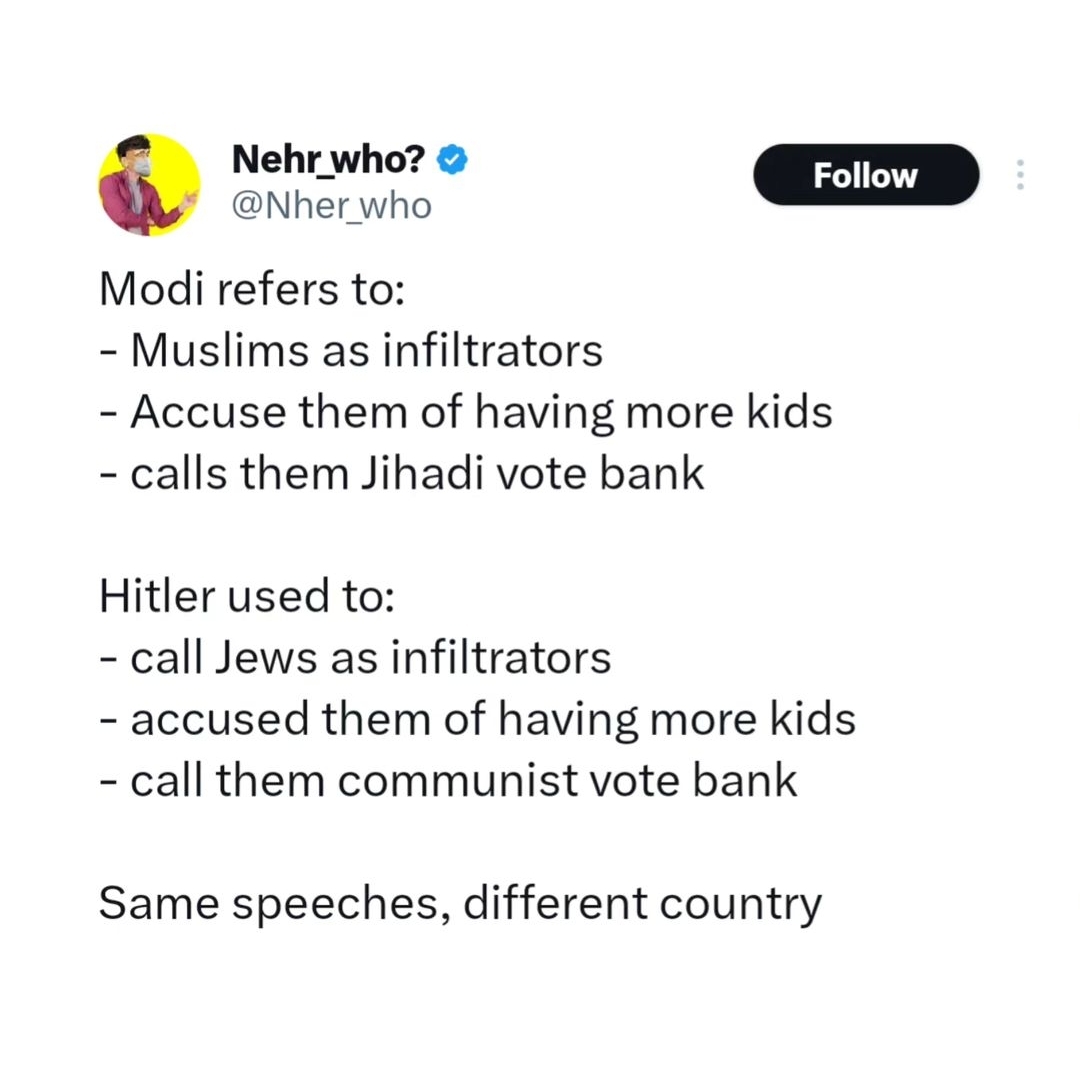
3
4


CW: Pertains to a SA, violence criminal case in IndiaThere was this high profile criminal case that happened recently. From Wikipedia:

On 9 August 2024, a 31-year-old female postgraduate trainee doctor at R. G. Kar Medical College and Hospital in Kolkata, West Bengal, India, was raped and murdered in a college building. Her body was found in a seminar room on campus.

While India is extremely unsafe for women and crimes against women are like an epidemic, every few years a case comes to light that ends up getting a lot of attention in the form of protests, discussion/debates, media coverage and, sadly, political parties slinging shit at each other. This particular case fits the bill because it is especially egregious, happened at a government medical college, to an educated woman, and the hospital and Kolkata police tried their best to sweep this under the rug.

Recently a statue was installed near the principal's office at R.G Kar Hospital (where the crime took place). This is what it looks like:

It's called Cry of the Hour. From an article:

The statue, made by artist Asit Sain, shows a woman crying, symbolizing the pain and suffering the victim went through in her last moments.

I think this statue is terrible. Don't know what the point of it is. IMO it just solidifies the framing of the issue where women are showed as weak and in need of protection from men by men whereby the proposed solutions are always just punitive measures. In truth, the country is extremely misogynistic. It has always been and the problem has exacerbated under BJP. The ubiquitous misogyny prevents the instatement of the supposed solutions. I really hate this place.

Those who installed the statue said this in its defense:

Despite the criticism, the junior doctors defended their actions, emphasizing that the statue is symbolic and does not reveal the victim’s identity.

The junior doctors explained that the statue was not meant to directly portray the victim but was a symbol of the ongoing protests and the agony she went through.

5


CW: SA, murder, terrible shit

Don't know if you folks are aware but the conditions around the lack of safety for women in India is getting a lot of attention lately because a rape-murder case has generated major outcry because of the sheer brutality.

Following this aforementioned case, the media has begun to report more on cases of sexual violence against women and minor girls.

It is a very depressing situation because women are incredibly unsafe in the country but no one has any answers to fix this. Protests and activism try to find solutions within the existing political and economic framework which simply do not exist. The result is that this righteous anger materialises into screaming into the void until the energy dissipates. Some time passes and another terrible case happens again, after which the cycle repeats. In fact, there was a similar outcry against another horrific case some years ago the details of which are too tragic for me to repeat.

The ruling party, BJP, is well known for harboring and protecting rapists. This aforementioned high profile case, like the others of its kind, are merely being used by opportunistic poltical parties to sling shit at each other rather than trying to find a solution, not that it surprises me even a little bit. This current case for example has turned into a boxing match between BJP and TMC (Trinamool Congrees, West Bengal's fascist ruling party) slandering (using this term very liberally) each other.

Times like serve as a sad reminder for me that I see no way out of the mire of reaction the country is bogged down in thanks to the political system that was "handed over" to us from the British. And I say this as an optimistic person.

Nevertheless I respect those who struggle.

6


Some points I think deserve mentioning

  • Jai Bhim Nagar consists of mostly Dalit and Bahujan people. Them being chosen as easy targets multiplies the inhumanity of this action.
  • Some popular builders in Powai (Hiranandani and the like) have seized most of the land to build their own estates and this continues to today.
  • That the demolition is illegal is based in the inhuman way it was carried out, which was in contravention of a Government Resolution that resolves not to demolish structures within the monsoon months. Slum rehabilitation laws exist for this purpose as well.
7
8


cross-posted from: https://lemy.lol/post/25765512

9


cross-posted from: https://lemy.lol/post/25678930

There are three classes in India.

The Rich- They commit frauds, scam, borrow money from public banks never to return and flee the country when they gamble and lose.

The poor- These people are helplessly dependent on freebies from the government for survival. Most of these are found in villages where a feudal system prevails.

The government claims to lift 400 million people from extreme poverty since 2014. However they are giving free rations to 810 million people today. Such people who couldn't afford to buy food will obviously be considered extremely poor.

And that 60% of Indian population. These are also the poor who are responsible for 90% of the voter turnout.

To form the government you need to get funding from the rich for campaigns and in return give them cheap loans, lower corporate taxes and sell government assets and natural resources for pennies on the dollar.

The third is the forgotten middle class who pay for everything and get none of the benefits.

Because they are not a majority. Even if they were they wouldn't go to vote for whatever reasons. Political parties know that the middle class is happy being milked for nothing in return and won't influence vote share.

To shift focus on the middle class we need significant urbanization so they become a majority and electoral education. Taxpayers have every right to right to ask what they will get in return. Free good quality healthcare and education is a bare minimum.

10


Our system is based on trust to a large extent. And I don't mean just monetarily. It is basically how "liberal society" functions right from daily life to the rationale behind systemic activities.

Yet, fake news is basically propagated everywhere with impunity. Facts are alleged and agreed on social media without any deference to proof that says otherwise. There are probably more such examples in media - Prashant Kishore said in his recent interview with Karan Thapar he cannot count on newspapers, he wants a recording of what he said (aside from the fact that this is laughable beyond measure), the fact that people are beginning to claim that newspapers (rather multiple) are not reliable is quite something even for the fascist timeline we are in.

Perhaps what has been most concerning has been the way in which the Election Commission of India has avoided all responsibility for the most basic repositories of trust, the general elections. It does seem like this point in our decay was a long time coming with the fascists in power and them dogwhistling any opposition's efforts, but some of these effects will be long-lasting. I do not think the political system can recover from a compromised EC.

As leftists, how do we interpret this? What impacts does this have for the working class that is forced to sell its labour in exchange for participating in a trust based economy? We surely are placed more precariously but organising around this will require some acceptance of seemingly contradictory positions regarding the role of trust in a political system (IMO we have to make efforts around thinking of a system without trust in the same way it exists in liberalism and consequently, neoliberalism)

11


cross-posted from: https://lemy.lol/post/25149127

12


cross-posted from: https://lemy.lol/post/24726809

European union, Hongkong and Singapore have recently banned 522 Indian products that includes spices and dry fruits because of high levels of cancer causing pesticide like Ethylene oxide. But they are still legal to be sold in India.

13


cross-posted from: https://lemy.lol/post/24664489

14
15


cross-posted from: https://lemy.lol/post/24627460

16


cross-posted from: https://lemy.lol/post/24424682

17


cross-posted from: https://lemy.lol/post/24408074

  1. Keep rallying in support of rapists like Brij Bhushan, Kuldeep Singh Sengar and Prajwal Revanna.

  2. Abki baar 400 paar rapists in BJP.

  3. Keep garlanding rapists because we take sadistic pleasure in the sufferings of other communities.

  4. Instigate more riots like Delhi and Manipur and refuse to fix the conflicts.

  5. 95% of the taxpayers money will be invested in Gujarat. From bullet trains, diamond exchange, semiconductor plants, everything will go to Gujarat.

  6. Cow politics will continue in the North while promoting beef in South and Northeast.

  7. In cases of Rape of Dalit women by high caste men like hathras we will arrest the journalists and launch rallies in support of rapists.

  8. Get rid of the reservation for OBC and SC, ST and install manusmriti to put lower caste Hindus back in their place.

  9. Women will need written consent from parents to date someone as prescribed by uttarakhand UCC.

  10. Keep Lynching minorities in India, killing local demand for beef and kissing Khalifa @#$ in gulf exporting all the beef there for 25x price.

  11. Keep the youth unemployed to work as keyboard warriors and street saffron gangs.

  12. Kill public education. Make study of science and logic a crime under UAPA. Already the periodic table, evolution and dozens of other topics are removed from the syllabus. This way people will believe all nonsense.

  13. Too many political parties are cluttering it. Introduce one party system.

  14. An Electoral bond tax of 20% will be levied on all sales and income taxes.

  15. Supreme court will be replaced with a temple where Asharam bapu, Brij Bhushan Singh and Prajwal Revanna will handle all rape cases.

  16. Inflation will be increased to 20 percent so the government can print away your purchasing power and make a lot more money than tax collections.

  17. Corruption will be relabelled as Service tax.

  18. Inaugurate more hospitals and airports but 90% will only stay as boundary walls like AIIMS Darbhanga or AIIMS Madurai.

  19. Rape will be India's national sport.

  20. Death penalty for criticising government policy or any MP or MLA.

  21. The money in your Bank account will belong to Adani as rising NPAs causes the banks to go bankrupt.

  22. Learn lessons from Covishield and create a more potent vaccine for poverty that eliminates the poor.

  23. The government will take 15 lakh from everyone's bank account converting white money into black.

  24. Every youth will get an unpaid internship in Adani's factories.

  25. Increase import target from China from $100 billion to $1 trillion. Make in India will be reduced to get spare parts from China and assemble in India.

  26. Will unleash keyboard warriors to boycott China from Chinese phones.

  27. If a Brahmin rapes a woman from other community it will be called good sanskaar as happened in Bilkis Bano case.

  28. Hospitals will be replaced with Ayushman Arogya Mandir.

  29. Gaumutra and gobar will be the only approved medicine for Cancer and other major illnesses.

  30. Brij Bhushan Singh will get Padma Bhushan for saving India from the dangers of women wrestlers.

  31. More people will be pushed into poverty by ruining public education making people unemployable and ruining public healthcare so even having a splinter removed at a private hospital will get you into a lifetime of debt.

  32. Extremely poor who will be dependent on food rations from the government will be increased from 810 million to 1.2 billion. This will improve the food for vote campaign.

18


cross-posted from: https://lemy.lol/post/24345867

BJP is an anti-women party. Women should not vote for BJP. The way they let rapists get away and instead rally in support of rapists, garland the rapists. In hathras, Unnao, Manipur, Revanna, Brij Bhushan, Sengar, kathua, Bilkis Bano. It's not a one-off offence. It's a pro-rapist party as long as the rapist support the party.

https://archive.is/X5WP8

19


cross-posted from: https://lemy.lol/post/24199518

20


cross-posted from: https://lemy.lol/post/23824148

21
22


cross-posted from: https://lemy.lol/post/23802173

23
24


Nutrition

The nutritional status of the Indian population has been going down slowly but surely during the last three decades, the period of neo-liberal economic reforms.

  • The five-yearly National Sample Survey reports on nutritional intake in India have been registering decline in per capita calorie intake as well as protein intake
  • Shows rise in fat intake, concentrated with the top spending groups.
  • The nutritional decline started earliest in rural India, with urban areas joining in the decline later.
  • The most important source of energy and protein for our population is the food grains namely cereals plus pulses, with cereals alone - that account for over nine-tenths of foodgrains --providing two-thirds of the average rural person's energy and protein intake. Per capita cereal consumption fell during the three-decade period of neo-liberal reforms to such an extent, that for many years now India has registered a consumption level (taking both direct use of cereals as food and indirect use as feed for producing animal products like milk, eggs, poultry meat and so on) that is well below the level of Africa and below the level of the least developed countries.

Per capita real expenditure on food[^1] has been falling as well for decades.

  • Spending less per head on food starting from inadequate levels, is very strange for a country with high rates of growth of per capita GDP.
  • This unprecedented trend, is only consistent with a sharp rise not only in inequality of incomes but also in absolute nutritional poverty within the population.

We see that every populous developing region in the world--including those with a similar population age structure and higher levels of mechanisation than India--consumes substantially more than Indians do and has better nutritional outcomes.

  • The latest figures from the UN Food and Agricultural Organisation for the year 2019, give us:
    • India's per capita cereals consumed as food plus feed, right at the bottom at 171 kg
    • 190 kg for Africa
    • 205 kg for the least developed countries
    • 360 kg for both China and Brazil (above the world average of 304 kg)
    • 407 kg for Russia
    • 494 kg in the Industrial North in the European Union
    • 590 kg in the US

The NSS report Key Indicators of Household Consumer Expenditure 2017-18 was available briefly online last year in a publicly accessible domain.

  • It was promptly removed by the government in an unprecedented action of denying vital information to the public.

Health

The NFHS 5, 2019-21, compared to the previous NFHS 4 of 2015-16, continued to show decline in infant and child mortality rates though at a lower rate compared to earlier years.

  • But the incidence of anaemia in both children and adults, already very high, showed a further rise over the period.
    • While 59 per cent of children (sample aged 6 months to 59 months) were anaemic in 2015-16, this rose to 67 per cent by 2019-21.
    • What is particularly disturbing is that the incidence of moderate to severe anaemia rose from 30.6 per cent to 38.1 per cent, while the incidence of mild anaemia remained unchanged at 28.4 and 28.9 per cent at the two dates.
    • Among women (up to age 49 years) the rise was from 53 per cent (of which 28.4 per cent was moderate to severe anaemia), to 57 per cent at the later date (of which 31.4 per cent was moderate to severe anaemia). Three-quarters of the rise was in moderate to severe anaemia.
    • Among men (sample: up to the age of 49 years) the incidence was much lower, rising from 23 per cent to 25 per cent with the moderate to severe anaemia within this, rising from 5 per cent to 8 per cent and the mild anaemia category dropping slightly.
    • Rural children and adults showed higher anaemia incidence than the average and children of anaemic mothers were at higher risk of being anaemic.

Child nutrition indicators too were worse than expected.

  • As high as 36 per cent and 38 per cent of children under 5 years, were found to be underweight (low weight for age) and stunted (low height for age) respectively in 2015-16 with a marginal decrease in these figures by 2019-21, to 32 per cent and 36 per cent while the percentage affected by wasting (low weight for height) also fell marginally from 21 to 19.
  • But these overall figures of slight improvement at the all-India level are the outcome of worsening child nutrition indicators though to a small extent in a large number of states which had lower than average deprivation values in 2015-16, combined with considerable improvement in the five states that had the highest initial values.

Poverty

Recently the central government has claimed substantial 'decline in poverty' by floating a new index which has nothing to do with poverty as understood and measured for the last 70 years at the international and national levels.

  • This index is a weighted average of the access a family has to different items of modern amenities (like piped water, electricity, non-thatched huts, clinic, and bank account even if the balance is zero) and 'nutrition' is given a weight only of one-sixth in the index. The definition of adequate 'nutrition' moreover is confined to body mass index (BMI) not being below 18.8.
  • On this 'poverty' index, there is no poverty at all in industrially advanced capitalist societies.

In India where a substantial share of the population whether rural or urban, is nutritionally deprived and their deprivation is increasing over time, the indicator of body mass index for adults, which is a ratio, has to be treated with scepticism.

  • We have a situation where a large proportion of the present adult population is both underweight and of low height for age.
  • There are no indices being applied at present for adult stunting or underweight status.
  • The body mass index which is defined as weight in kilogrammes divided by the squared height in metres, will show a 'normal' range of values for millions of undernourished people, since both numerator and denominator are lower than they should be in a healthy population.

[^1]: Namely the nominal spending per capita on all food items, deflated by a consumer price index to make later years comparable to earlier years.

25
view more: next ›